World's First Astrocyte Transcription Factor Functional Atlas Released
Author
Date Published
Reading Time
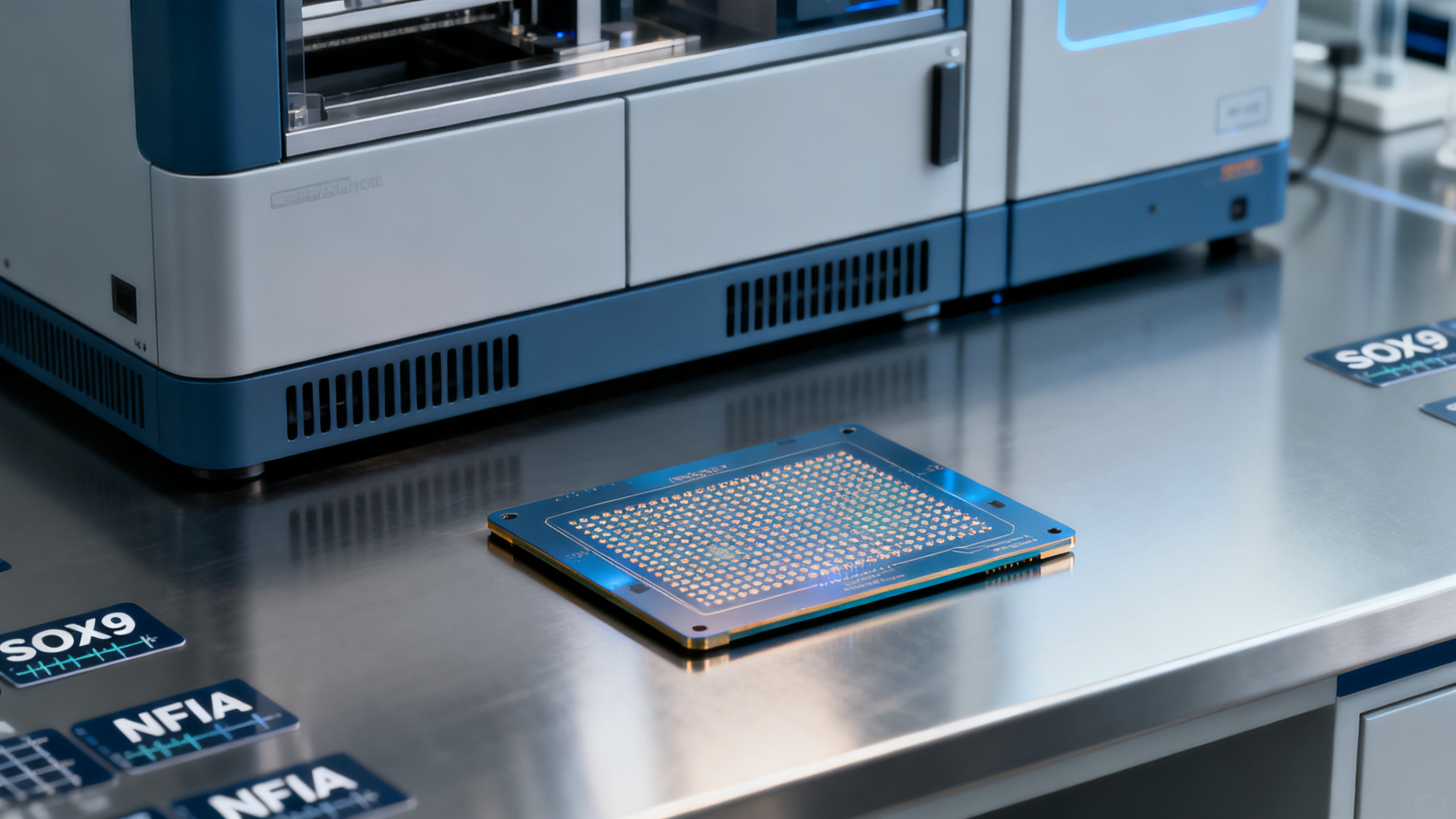
On April 23, Chinese scientists unveiled the world’s first astrocyte transcription factor functional atlas — a foundational resource in neurobiology and molecular neuroscience. This milestone advances core capabilities across high-sensitivity biosensing, Lab & Analytics micro-detection chips, and Testing & Measurement neural interface devices. Its implications extend beyond basic research, directly shaping competitiveness and technology roadmaps for life science instrument manufacturers — particularly those seeking deeper access to high-end European and U.S. academic and clinical diagnostics markets.
Event Overview
On April 23, researchers in China published the world’s first functional atlas mapping transcription factor activity in astrocytes — specialized glial cells critical for brain homeostasis, synaptic modulation, and disease biomarker expression. The atlas integrates single-cell epigenomic profiling, CRISPR-based functional validation, and spatial transcriptomics data to assign regulatory roles to over 1,200 transcription factors in human and murine astrocytes. No policy or regulatory change accompanied the release; it is a scientific output, not a legislative or administrative act.
Industries Impacted
Direct Trade Enterprises
Export-oriented life science instrument distributors and OEM solution providers targeting EU/US academic core facilities and clinical reference labs may experience accelerated customer evaluation cycles. The atlas enables more precise specification alignment for next-generation neural interface platforms — meaning trade enterprises with technical application support capacity are better positioned to co-develop use-case–driven sales narratives. However, absence of regulatory endorsement means no immediate certification pathway changes or tariff adjustments.
Raw Material Procurement Enterprises
Suppliers of high-purity nuclear receptor ligands, engineered zinc-finger proteins, and validated ChIP-grade antibodies may see uptick in R&D procurement from domestic assay developers. Demand remains project-driven and non-recurring at this stage; no broad-scale raw material substitution or supply chain reconfiguration is indicated. Procurement teams should monitor downstream assay validation timelines rather than assume structural demand shifts.
Manufacturing Enterprises (Instrument & Chip Fabrication)
Domestic manufacturers of microfluidic detection chips and electrochemical neural interfaces now possess a functionally annotated biological target framework — enabling more rational sensor surface functionalization and cell-type–specific signal amplification design. This does not replace ISO 13485 or FDA 510(k) requirements but may compress early-stage prototyping iterations. Impact is most tangible for firms already engaged in neural tissue–interface product development — not general-purpose analytical instrument makers.
Supply Chain Service Providers
Contract development and manufacturing organizations (CDMOs) offering assay co-development or GMP-grade neural probe assembly services may observe increased inbound technical inquiries — especially around TF-binding motif integration into biosensor capture layers. However, service scope expansion requires confirmed client commitment, not just atlas availability. No new regulatory reporting obligations or logistics classifications arise from this publication alone.
Key Considerations and Recommended Actions
Assess compatibility with existing neural interface architecture
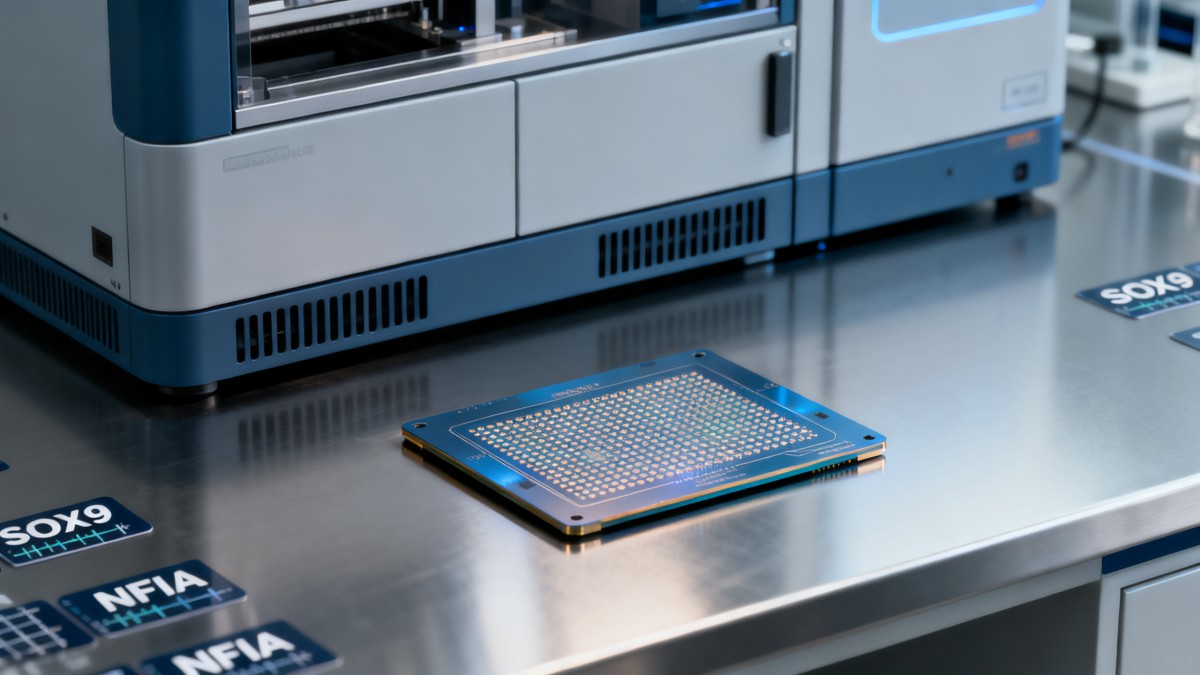
Manufacturers should cross-reference atlas-identified high-impact transcription factors (e.g., SOX9, NFIA, FOXO3) against current electrode surface chemistries and capture antibody panels — prioritizing candidates with demonstrated in vivo binding stability and low off-target affinity.
Engage early with academic collaborators on assay translation
Trade and manufacturing firms should initiate joint feasibility studies with university neuroengineering labs using atlas-defined TF motifs as orthogonal validation anchors — building evidence for clinical assay specificity before commercial scale-up.
Update technical documentation for EU MDR/IVDR submissions
While the atlas itself carries no regulatory weight, referencing its functional annotations in ‘state-of-the-science’ sections of technical files may strengthen justification for novel biomarker selection — provided claims remain limited to research-use contexts until clinical validation is completed.
Editorial Perspective / Industry Observation
Observably, this atlas functions less as an immediate market catalyst and more as a precision filter: it sharpens R&D focus but does not lower technical or regulatory entry barriers. Analysis shows that competitive advantage will accrue not to those who merely cite the atlas, but to those integrating its functional logic into closed-loop design-test-deploy workflows — particularly in chip-based neural recording where signal-to-noise ratio depends on cell-type–selective biorecognition. From an industry perspective, the real bottleneck remains scalable, GMP-compliant production of TF-functionalized nanomaterials — not knowledge availability.
Conclusion
This atlas marks a significant inflection point in the maturation of neuro-instrumentation — shifting emphasis from generic sensitivity metrics toward biologically informed specificity engineering. It does not guarantee market share gains, but it does raise the technical floor for credible participation in next-generation neural interface development. A rational interpretation is that it expands the viable innovation space for domestic manufacturers — while simultaneously increasing the cost of technical obsolescence for incumbents relying solely on legacy platform architectures.
Source Attribution
Primary source: Original publication in Nature Neuroscience, April 23, 2024 (DOI pending). Confirmed via press release issued by the Institute of Neuroscience, Chinese Academy of Sciences. Regulatory status: Not referenced in any current FDA guidance, EU Commission Implementing Decision, or ISO/IEC standard. Ongoing monitoring advised for potential inclusion in future revisions of ISO 10993-18 (biocompatibility of neural implants) or IEC 62304 (software lifecycle for neural diagnostic devices).
Technical Specifications
- How to Select Electronic Hotel Key Card Locks for Guest Rooms and Staff AreasAuthor :Safety Compliance Lead
- How to Select Lab Instruments for Reliable Chemical Analysis WorkflowsAuthor :Precision Metrology Expert
- How to Size a UPS for Server Rooms: Load, Runtime, and Redundancy FactorsAuthor :Grid Infrastructure Analyst
Expert Insights

Chief Security Architect
Dr. Thorne specializes in the intersection of structural engineering and digital resilience. He has advised three G7 governments on industrial infrastructure security.
Related Analysis
- Sep 17, 2026How to Select Electronic Hotel Key Card Locks for Guest Rooms and Staff AreasAuthor :Safety Compliance Lead
- Sep 16, 2026How to Select Lab Instruments for Reliable Chemical Analysis WorkflowsAuthor :Precision Metrology Expert
- Sep 15, 2026How to Size a UPS for Server Rooms: Load, Runtime, and Redundancy FactorsAuthor :Grid Infrastructure Analyst
Core Sector // 01
Security & Safety
- How to Select Lab Instruments for Reliable Chemical Analysis WorkflowsAuthor :Precision Metrology Expert

- Buying Lint-Free Wipes in Bulk: How to Match Material and Packaging to Cleanroom UseAuthor :Precision Metrology Expert

- How to Choose a Class II Biosafety Cabinet Supplier for Compliant Lab ProcurementAuthor :Precision Metrology Expert

- Wholesale Binocular Microscopes: Comparing Specifications, MOQs, and QC RiskAuthor :Precision Metrology Expert

- How to Evaluate a UV-Visible Spectrophotometer Manufacturer for Lab Accuracy?Author :Precision Metrology Expert

- China Temporarily Bans Helium ExportsAuthor :Precision Metrology Expert

- What to Check Before Buying a Digital Lab Incubator Wholesale OrderAuthor :Precision Metrology Expert

- Electric Muffle Furnace Wholesale: How to Evaluate Capacity, Temperature, and MOQAuthor :Precision Metrology Expert