Hainan FTZ Zero-Tariff Imports Exceed $220M Since Closure
Author
Date Published
Reading Time
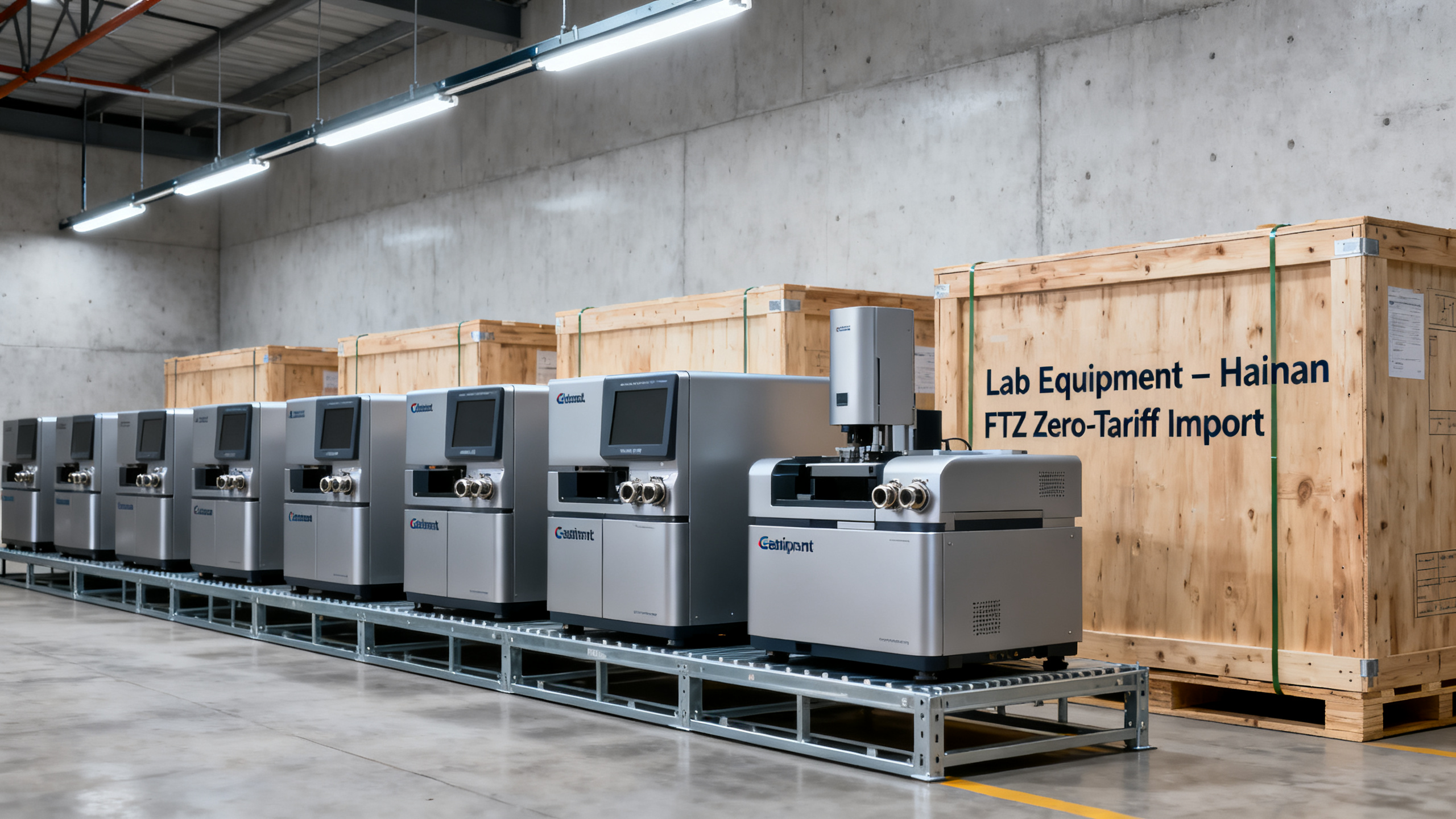
Since the operational closure of Hainan Free Trade Zone (FTZ), zero-tariff import value has surpassed USD 220 million — a milestone signaling accelerated integration of global high-end lab, testing, and measurement equipment into China’s innovation supply chain. While the exact date of closure remains unspecified in official disclosures, the policy’s tangible impact is now measurable across multiple industrial segments, particularly those reliant on precision instrumentation, regulatory compliance, and rapid product validation.
Event Overview
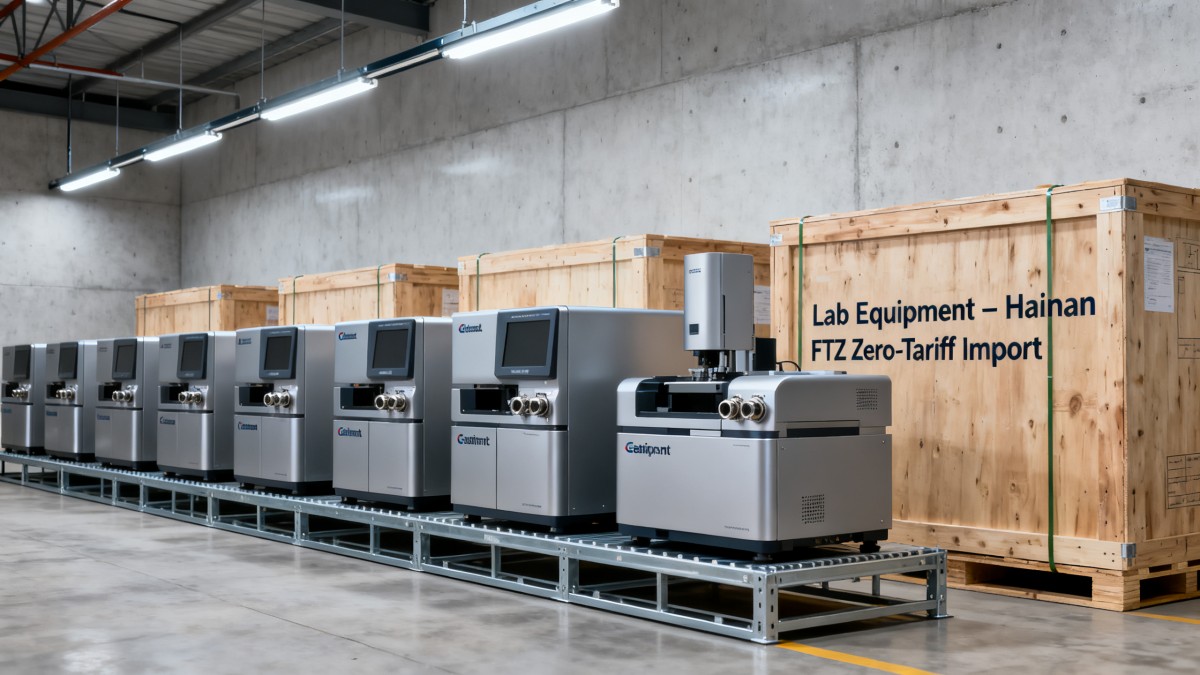
On May 15, the Hainan Provincial Commission for Deepening Reform disclosed that zero-tariff import value under the Hainan FTZ framework had exceeded RMB 2.2 billion (approx. USD 220 million). The imports cover scientific research equipment, advanced medical devices, and industrial testing & measurement instruments. No further details on customs clearance timelines, eligible entities, or tariff line item breakdowns were provided in the release.
Industries Affected
Direct trading enterprises — Importers and distributors specializing in Lab & Analytics or Testing & Measurement equipment face revised cost structures and margin opportunities. With zero-tariff access, landed costs drop significantly for high-value capital goods; however, eligibility requires registration in Hainan and adherence to ‘used exclusively in Hainan’ usage conditions — limiting re-export flexibility unless operating via approved bonded logistics models.
Raw material procurement enterprises — Firms sourcing specialized components (e.g., optical sensors, calibration standards, or certified reference materials) benefit indirectly. Reduced import duties on upstream test platforms enable tighter specification alignment between imported analytics hardware and domestically procured consumables — improving traceability and accelerating qualification cycles for regulated sectors like pharma and semiconductor manufacturing.
Contract manufacturing and OEM enterprises — Manufacturers serving global clients in diagnostics, environmental monitoring, or industrial automation gain faster access to benchmark equipment for process validation and design verification. This shortens time-to-sample for overseas customers undergoing new product introduction (NPI), especially where local regulatory pre-testing (e.g., NMPA pre-submission testing) is required before mainland market entry.
Supply chain service providers — Third-party logistics operators, technical adaptation labs, and regulatory support firms are observing increased demand for ‘Hainan-first’ validation services. The emergence of Asia-Pacific distribution hubs and joint laboratories in Hainan implies growing need for localized calibration, software localization, and documentation translation — functions not fully covered by standard freight-forwarding or customs brokerage.
Key Considerations and Recommended Actions
Evaluate Hainan entity setup feasibility
Companies importing eligible equipment should assess whether establishing a registered entity in Hainan — or partnering with an existing one — unlocks zero-tariff access without compromising mainland sales channels. Note: Equipment must remain physically used within Hainan unless transferred under specific bonded transfer rules.
Map product eligibility against HS codes
The current zero-tariff list covers over 1,000 HS code items, but exclusions apply — notably for dual-use goods and certain AI-integrated systems. Firms must verify classification with Hainan Customs prior to shipment; retroactive duty refunds are not available for misclassified entries.
Assess logistics and technical service readiness
While tariffs fall to zero, non-tariff barriers persist: equipment requiring installation, commissioning, or regulatory certification still depends on qualified local partners. Early engagement with Hainan-based technical service networks — especially those co-located with newly established joint labs — mitigates deployment delays.
Editorial Perspective / Industry Observation
Observably, the USD 220 million threshold reflects early-stage adoption rather than systemic scale — most imports to date are capital-intensive, low-volume assets rather than recurring consumables. Analysis shows this phase prioritizes infrastructure build-out over volume trade. From an industry perspective, the real inflection point will be when zero-tariff access expands beyond ‘equipment’ to include certified spare parts, proprietary software licenses, and cloud-based analytics subscriptions — all currently outside the scope. Current momentum better signals strategic positioning than immediate commercial transformation.
Conclusion
This milestone confirms Hainan’s evolving role as a regulatory and technical gateway — not merely a tariff-free warehouse. For global instrument makers and Chinese technology integrators alike, it represents a calibrated opportunity: one demanding careful entity planning, precise classification discipline, and deeper local technical collaboration. Rational assessment suggests measured expansion — not wholesale relocation — remains the optimal near-term posture.
Source Attribution
Primary source: Hainan Provincial Commission for Deepening Reform, May 15, 2024 disclosure. Data remains subject to revision pending full-year customs audit reports and updated eligibility lists (next scheduled update: Q3 2024). Ongoing observation is warranted on three fronts: (1) extension of zero-tariff treatment to consumables and software; (2) inter-provincial movement rules for zero-tariff equipment; (3) alignment of Hainan’s technical standards with GB, ISO, and IEC requirements for cross-border recognition.
Technical Specifications
- How to Select Electronic Hotel Key Card Locks for Guest Rooms and Staff AreasAuthor :Safety Compliance Lead
- How to Select Lab Instruments for Reliable Chemical Analysis WorkflowsAuthor :Precision Metrology Expert
- How to Size a UPS for Server Rooms: Load, Runtime, and Redundancy FactorsAuthor :Grid Infrastructure Analyst
Expert Insights

Chief Security Architect
Dr. Thorne specializes in the intersection of structural engineering and digital resilience. He has advised three G7 governments on industrial infrastructure security.
Related Analysis
- Sep 17, 2026How to Select Electronic Hotel Key Card Locks for Guest Rooms and Staff AreasAuthor :Safety Compliance Lead
- Sep 16, 2026How to Select Lab Instruments for Reliable Chemical Analysis WorkflowsAuthor :Precision Metrology Expert
- Sep 15, 2026How to Size a UPS for Server Rooms: Load, Runtime, and Redundancy FactorsAuthor :Grid Infrastructure Analyst
Core Sector // 01
Security & Safety
- How to Select Lab Instruments for Reliable Chemical Analysis WorkflowsAuthor :Precision Metrology Expert

- Buying Lint-Free Wipes in Bulk: How to Match Material and Packaging to Cleanroom UseAuthor :Precision Metrology Expert

- How to Choose a Class II Biosafety Cabinet Supplier for Compliant Lab ProcurementAuthor :Precision Metrology Expert

- Wholesale Binocular Microscopes: Comparing Specifications, MOQs, and QC RiskAuthor :Precision Metrology Expert

- How to Evaluate a UV-Visible Spectrophotometer Manufacturer for Lab Accuracy?Author :Precision Metrology Expert

- China Temporarily Bans Helium ExportsAuthor :Precision Metrology Expert

- What to Check Before Buying a Digital Lab Incubator Wholesale OrderAuthor :Precision Metrology Expert

- Electric Muffle Furnace Wholesale: How to Evaluate Capacity, Temperature, and MOQAuthor :Precision Metrology Expert