TÜV Rheinland Tightens EMC Rules for Industrial Optics
Author
Date Published
Reading Time
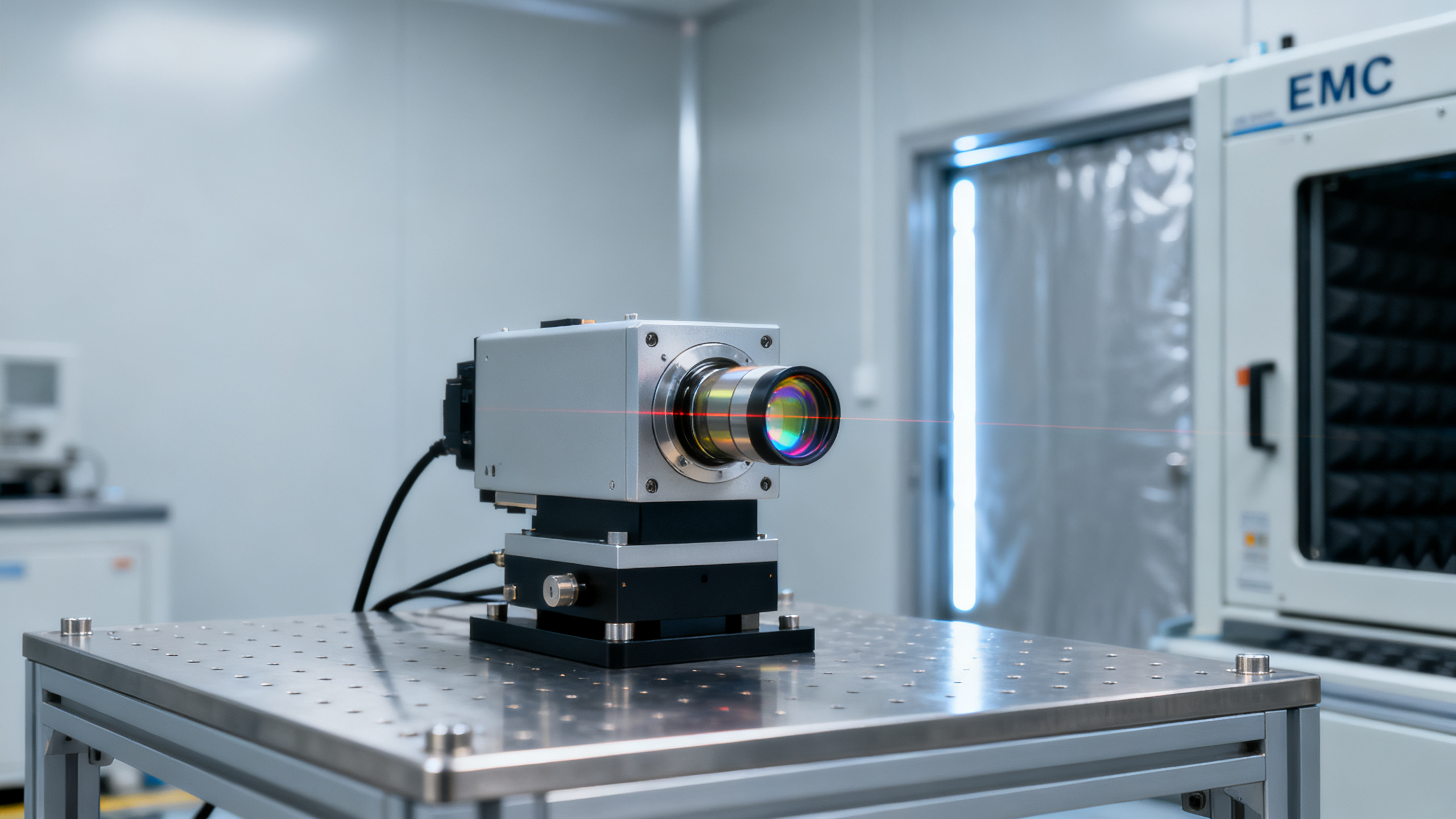
On May 13, 2026, TÜV Rheinland updated its Industrial Optics EMC Test Guideline v3.2, introducing stricter electromagnetic compatibility (EMC) requirements for optical components used in laboratory and analytical instrumentation. The revision raises technical barriers for exporters—particularly Chinese manufacturers of Lab & Analytics equipment—by mandating enhanced radiation immunity testing and new vibration-coupled interference simulation protocols.
Event Overview
TÜV Rheinland released the Industrial Optics EMC Test Guideline v3.2 on May 13, 2026. The update requires key optical subassemblies—including microscope objectives and spectrometer optical modules—to pass IEC 61000-4-3 radiation immunity testing at an elevated field strength of 20 V/m (previously 10 V/m), and introduces mandatory vibration-coupled EMC disturbance simulation. No transitional period is specified in the published guideline.
Industries Affected
Direct Exporters (Trade Enterprises): Companies exporting Lab & Analytics instruments into EU markets must now ensure optical subsystems comply with the revised EMC benchmark before CE marking. Non-compliant units risk rejection during notified body audits or post-market surveillance, delaying market entry and increasing reliance on third-party pre-certification validation.
Raw Material & Component Procurement Firms: Suppliers of optical mounts, lens barrels, and integrated optical modules face revised technical specifications from OEMs. Demand is shifting toward components pre-validated for 20 V/m radiated immunity under mechanical vibration—prompting procurement teams to reassess supplier qualification criteria and request updated test reports.
Manufacturing & Assembly Firms: Optical subassembly integration now requires co-design of shielding, grounding, and mechanical damping strategies early in the product development cycle. As reported by multiple Chinese manufacturers, optical subsystem rework timelines have extended by an average of four weeks, and redesign iterations often involve iterative EMC chamber testing.
Supply Chain Service Providers: EMC testing labs, certification consultants, and logistics firms offering CE conformity support are seeing increased demand for combined vibration–EMC test packages. Capacity constraints are emerging, particularly for facilities equipped to perform simultaneous mechanical excitation and RF field exposure per the new protocol.
Key Focus Areas and Recommended Actions
Review optical subsystem-level EMC test plans against v3.2 thresholds
Manufacturers should audit existing test reports for compliance with the 20 V/m IEC 61000-4-3 requirement—and confirm whether vibration coupling was simulated. Legacy reports based on earlier versions are no longer sufficient for CE submissions involving TÜV Rheinland as the notified body.
Engage optical component suppliers with v3.2-aligned validation data
OEMs should request updated EMC declarations—including test setup details for vibration coupling—from lens, filter, and module suppliers. Joint verification testing may be necessary where supplier documentation lacks traceability to the new guideline’s physical test conditions.
Factor in extended lead times for optical subassembly qualification
Given the reported +4-week average delay in optical subsystem rework cycles, project managers should revise NPI (New Product Introduction) schedules to include buffer time for iterative EMC debugging—especially for high-NA objectives or free-space optical paths prone to coupling.
Assess cost implications across certification and design phases
A 22% increase in total CE certification cost (as cited by industry respondents) reflects both expanded test scope and associated engineering labor. Finance and compliance teams should jointly model this impact—not only on unit certification but also on R&D budget allocation for EMC-aware optical mechanical design.
Editorial Insight / Industry Observation
Observably, this update signals a broader regulatory shift: EMC evaluation is moving beyond standalone electronic circuits toward system-level interactions—including electromechanical coupling. Analysis shows that TÜV Rheinland’s inclusion of vibration simulation is not merely procedural; it reflects real-world failure modes observed in fielded lab instruments subjected to facility HVAC or adjacent centrifuge operation. From an industry perspective, the change is less about raising arbitrary hurdles and more about aligning test rigor with actual operating environments. Current feedback suggests many optical designers still treat EMC as a ‘final-stage compliance gate’ rather than an integrated design parameter—making this revision a catalyst for deeper cross-functional collaboration between optical, mechanical, and EMC engineering teams.
Conclusion
This guideline revision does not represent a sudden policy shock—but rather a calibrated evolution in technical expectations for precision optical instrumentation entering regulated markets. Its significance lies not only in immediate compliance demands, but in how it reshapes design priorities, supplier engagement models, and the definition of ‘optical readiness’ in complex analytical systems. A rational interpretation is that the bar for optical subsystem maturity has risen—not just in resolution or stability, but in electromagnetic resilience.
Source Attribution
Official document: Industrial Optics EMC Test Guideline v3.2, TÜV Rheinland, published May 13, 2026 (Document ID: TR-IO-EMC-GD-3.2-2026). Available via TÜV Rheinland’s certified client portal; public summary accessible at tuv.com/emc-industrial-optics.
Note: Implementation timelines for notified body acceptance and potential harmonization with EN 61326-1 remain under observation.
Technical Specifications
- How to Select Electronic Hotel Key Card Locks for Guest Rooms and Staff AreasAuthor :Safety Compliance Lead
- How to Select Lab Instruments for Reliable Chemical Analysis WorkflowsAuthor :Precision Metrology Expert
- How to Size a UPS for Server Rooms: Load, Runtime, and Redundancy FactorsAuthor :Grid Infrastructure Analyst
Expert Insights

Chief Security Architect
Dr. Thorne specializes in the intersection of structural engineering and digital resilience. He has advised three G7 governments on industrial infrastructure security.
Related Analysis
- Sep 17, 2026How to Select Electronic Hotel Key Card Locks for Guest Rooms and Staff AreasAuthor :Safety Compliance Lead
- Sep 16, 2026How to Select Lab Instruments for Reliable Chemical Analysis WorkflowsAuthor :Precision Metrology Expert
- Sep 15, 2026How to Size a UPS for Server Rooms: Load, Runtime, and Redundancy FactorsAuthor :Grid Infrastructure Analyst
Core Sector // 01
Security & Safety
- How to Select Lab Instruments for Reliable Chemical Analysis WorkflowsAuthor :Precision Metrology Expert

- Buying Lint-Free Wipes in Bulk: How to Match Material and Packaging to Cleanroom UseAuthor :Precision Metrology Expert

- How to Choose a Class II Biosafety Cabinet Supplier for Compliant Lab ProcurementAuthor :Precision Metrology Expert

- Wholesale Binocular Microscopes: Comparing Specifications, MOQs, and QC RiskAuthor :Precision Metrology Expert

- How to Evaluate a UV-Visible Spectrophotometer Manufacturer for Lab Accuracy?Author :Precision Metrology Expert

- China Temporarily Bans Helium ExportsAuthor :Precision Metrology Expert

- What to Check Before Buying a Digital Lab Incubator Wholesale OrderAuthor :Precision Metrology Expert

- Electric Muffle Furnace Wholesale: How to Evaluate Capacity, Temperature, and MOQAuthor :Precision Metrology Expert