NZ Introduces New Border Service Fee for Low-Value Imports
Author
Date Published
Reading Time
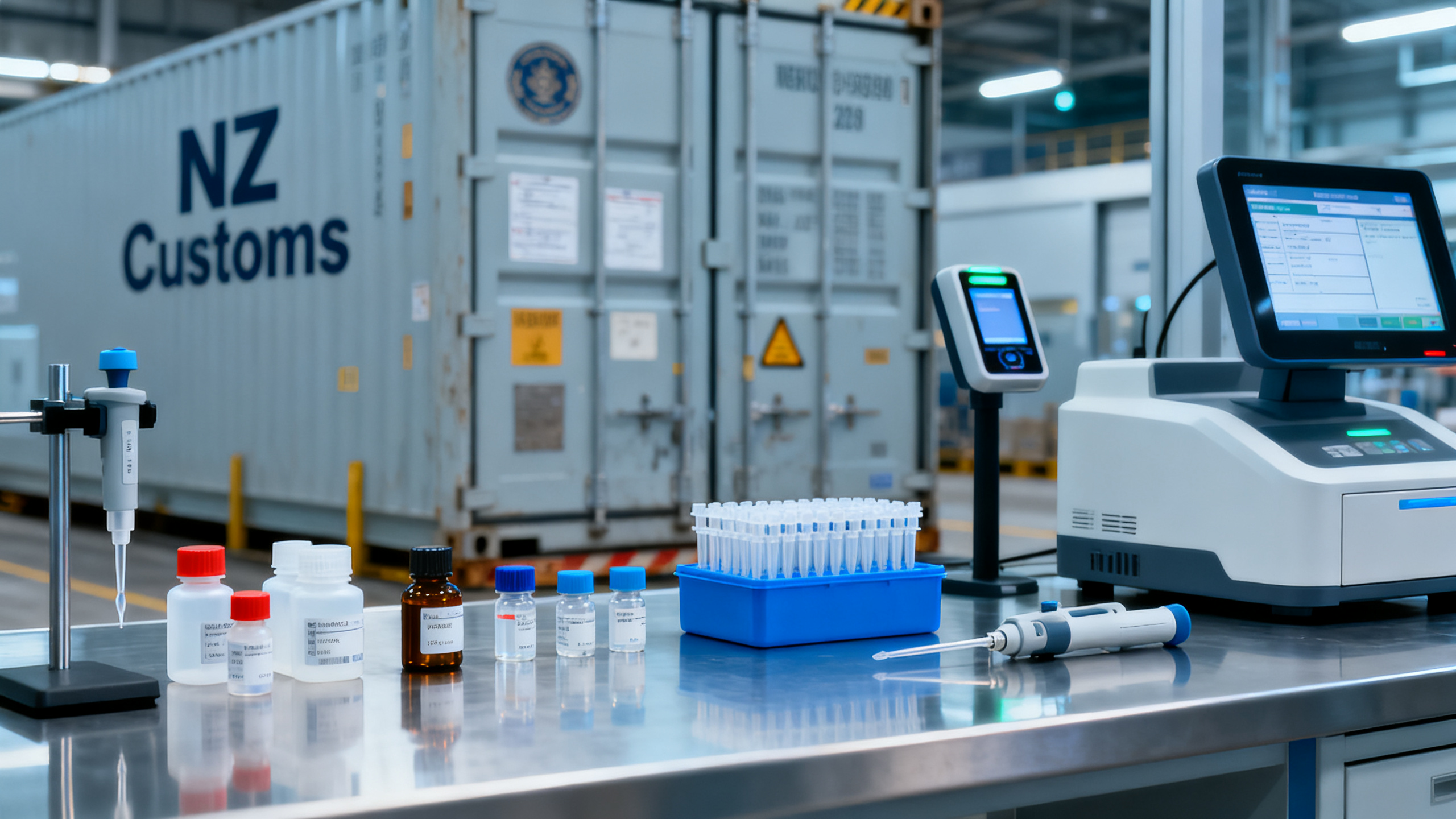
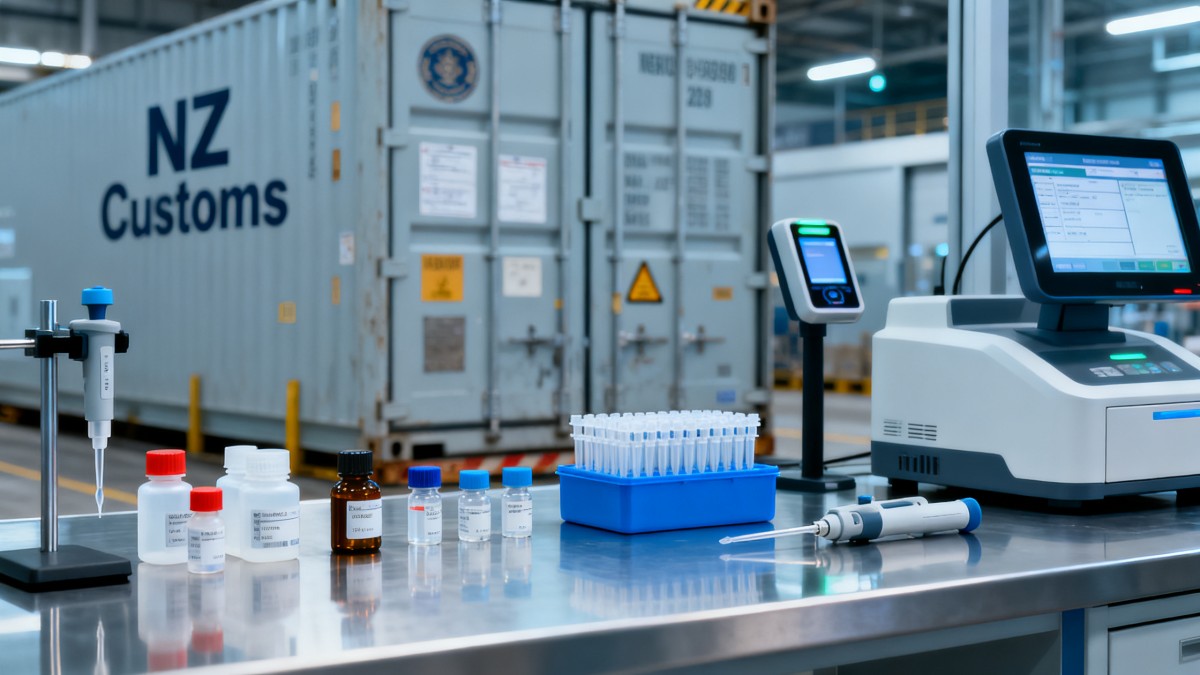
New Zealand Customs has implemented a new Border Service Fee (BSF) effective 15 May 2026, applying to all low-value imported parcels valued at NZ$1000 or less. This development directly affects laboratory equipment and consumables suppliers, distributors, and end-users operating in or trading with the New Zealand market — particularly those handling analytical instruments, calibration standards, and precision lab disposables.
Event Overview
Effective 15 May 2026, New Zealand Customs introduced a flat NZ$12.50 per-parcel Border Service Fee (BSF) on all low-value imports (≤NZ$1000). The fee is levied in addition to the existing Goods and Services Tax (GST). As confirmed in official announcements, this applies uniformly across eligible parcels regardless of origin, commodity type, or importer status. No exemptions or thresholds below NZ$1000 are specified in publicly available guidance.
Industries Affected by Segment
Direct Importers & Lab Equipment Suppliers
These entities ship individual parcels—such as replacement parts for analytical instruments, certified reference materials, or micro-volume pipette tips—directly to New Zealand customers. The BSF adds a fixed cost per shipment, eroding margin on lower-value items where freight and duties previously represented a smaller share of total landed cost. For high-frequency, low-unit-value shipments, the fee may shift breakeven points and reduce competitiveness versus locally stocked alternatives.
Distributors & Channel Partners
Distributors managing inventory and fulfillment for international lab brands face revised cost structures when clearing inbound consignments. The NZ$12.50/parcel charge increases administrative overhead per SKU line cleared and may compress margins on fast-turnover consumables. Some New Zealand-based distributors have already begun sourcing ‘pre-cleared kits’ from Chinese suppliers — bundles that include BSF prepayment and local warehousing — indicating operational adaptation is underway.
Supply Chain & Logistics Service Providers
Third-party logistics (3PL) providers and customs brokers handling parcel-level clearance for lab clients now bear additional compliance and invoicing responsibilities. The BSF must be collected, reported, and remitted separately from GST, requiring system updates and client communication. Unlike ad valorem duties, its fixed-per-parcel nature makes cost forecasting more predictable but volume-sensitive.
What Relevant Businesses and Practitioners Should Monitor and Do
Track official guidance on BSF implementation scope
While the fee currently applies to all parcels ≤NZ$1000, clarify whether consolidated shipments (e.g., multiple items under one air waybill but separate commercial invoices) are treated as one parcel or multiple. Monitor updates from New Zealand Customs regarding definitions of ‘parcel’, ‘consignment’, and treatment of multi-SKU shipments — these details materially affect cost allocation.
Review landed-cost models for high-volume, low-value lab consumables
Reassess unit economics for products such as pipette tips, filter membranes, or vial caps frequently shipped in small parcels. A 12–18% increase in total import-related costs (as observed in early clearance data) may justify shifting to bulk import + local distribution, or evaluating pre-cleared inventory models — especially where demand patterns support buffer stock.
Engage proactively with customs brokers and freight forwarders
Confirm how BSF will be invoiced (e.g., pass-through vs. bundled), whether it appears on formal customs declarations, and whether reconciliation mechanisms exist for overpayments. Early coordination helps avoid delays or disputes during the first months of enforcement.
Document and benchmark current clearance timelines and fees
Baseline current GST-only clearance costs and processing durations for representative SKUs (e.g., a standard calibration kit, a set of analyzer probes). Compare against post-15 May 2026 performance to isolate BSF impact from other variables — useful for internal reporting and supplier negotiations.
Editorial Observation / Industry Perspective
Observably, this policy signals a broader shift toward standardizing and monetizing border administrative services for e-commerce–scale imports — not just taxing goods, but charging for the act of processing them. Analysis shows the BSF is less about revenue generation from trade value and more about cost recovery for digital customs infrastructure. It does not replace GST, nor does it alter tariff classifications; rather, it introduces a procedural cost layer independent of product category. From an industry standpoint, this is best understood not as a temporary adjustment but as a structural change to the New Zealand import cost model — one likely to influence sourcing decisions, inventory strategies, and partner selection over the medium term.
Consequently, while the immediate impact is quantifiable (NZ$12.50/parcel + 12–18% landed-cost rise for targeted lab goods), the longer-term significance lies in how it reshapes expectations around border efficiency, transparency, and scalability for B2B lab supply chains.
Conclusion
For businesses supplying laboratory equipment and analytical consumables to New Zealand, the BSF represents a measurable, non-negotiable cost increment that affects margin, pricing, and channel design — especially for low-value, high-frequency items. It is neither a tariff nor a tax on goods, but a service fee tied to customs processing volume. Currently, it is most accurately understood as a permanent feature of New Zealand’s import framework for parcels, not a transitional measure. Stakeholders should treat it as a baseline operational cost — one that warrants recalibration of procurement logic, not just short-term cost absorption.
Information Sources
Main source: Official announcement by New Zealand Customs, effective 15 May 2026.
Note: Implementation details — including treatment of multi-item parcels, refund mechanisms, and integration with existing GST collection systems — remain subject to ongoing clarification and are recommended for continued monitoring.
Technical Specifications
- How to Select Electronic Hotel Key Card Locks for Guest Rooms and Staff AreasAuthor :Safety Compliance Lead
- How to Select Lab Instruments for Reliable Chemical Analysis WorkflowsAuthor :Precision Metrology Expert
- How to Size a UPS for Server Rooms: Load, Runtime, and Redundancy FactorsAuthor :Grid Infrastructure Analyst
Expert Insights

Chief Security Architect
Dr. Thorne specializes in the intersection of structural engineering and digital resilience. He has advised three G7 governments on industrial infrastructure security.
Related Analysis
- Sep 17, 2026How to Select Electronic Hotel Key Card Locks for Guest Rooms and Staff AreasAuthor :Safety Compliance Lead
- Sep 16, 2026How to Select Lab Instruments for Reliable Chemical Analysis WorkflowsAuthor :Precision Metrology Expert
- Sep 15, 2026How to Size a UPS for Server Rooms: Load, Runtime, and Redundancy FactorsAuthor :Grid Infrastructure Analyst
Core Sector // 01
Security & Safety
- How to Select Lab Instruments for Reliable Chemical Analysis WorkflowsAuthor :Precision Metrology Expert

- Buying Lint-Free Wipes in Bulk: How to Match Material and Packaging to Cleanroom UseAuthor :Precision Metrology Expert

- How to Choose a Class II Biosafety Cabinet Supplier for Compliant Lab ProcurementAuthor :Precision Metrology Expert

- Wholesale Binocular Microscopes: Comparing Specifications, MOQs, and QC RiskAuthor :Precision Metrology Expert

- How to Evaluate a UV-Visible Spectrophotometer Manufacturer for Lab Accuracy?Author :Precision Metrology Expert

- China Temporarily Bans Helium ExportsAuthor :Precision Metrology Expert

- What to Check Before Buying a Digital Lab Incubator Wholesale OrderAuthor :Precision Metrology Expert

- Electric Muffle Furnace Wholesale: How to Evaluate Capacity, Temperature, and MOQAuthor :Precision Metrology Expert