Why swing-type check valves still fail under low-flow cycling — and what actually fixes it
Author
Date Published
Reading Time
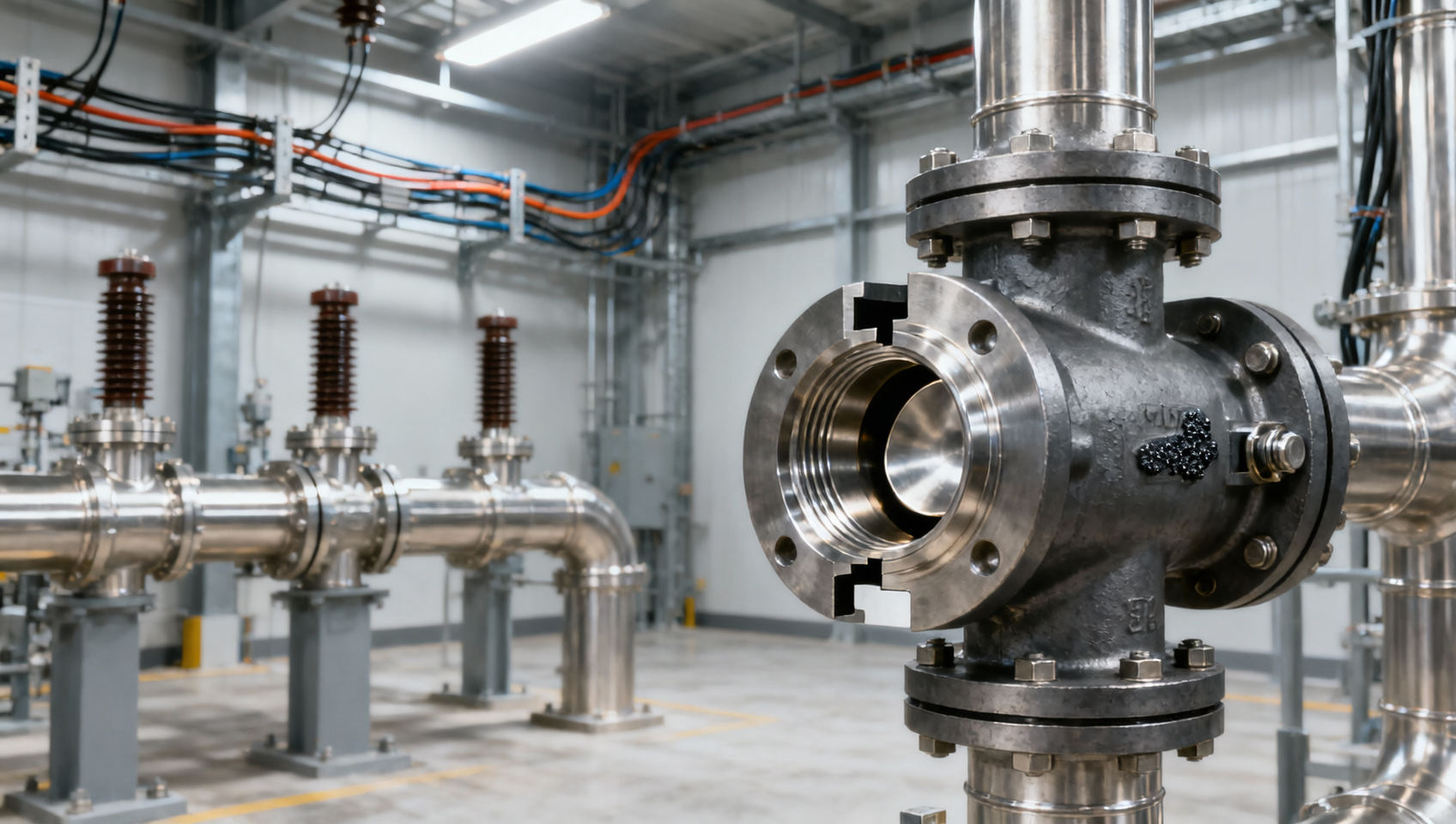
Swing-type check valves — widely specified in electrical & power grid infrastructure alongside safety relief valves, electric motorized valves, and stainless steel ball valves — continue to fail under low-flow cycling, risking system integrity and compliance. Despite their prevalence in industrial valves wholesale channels, root causes like disc flutter, seat erosion, and inadequate damping remain poorly addressed by conventional specs. For procurement teams, EPC engineers, and facility managers relying on globe valves wholesale, butterfly valves wafer type, or cast iron gate valves, this isn’t just a maintenance issue — it’s a safety and uptime liability. Here’s what actually fixes it: physics-aware design, material-grade validation, and real-world duty-cycle testing — not just catalog data.
Why Low-Flow Cycling Triggers Failure — Not Just “Wear and Tear”
Low-flow cycling (typically defined as flow rates below 15% of rated Cv, occurring at frequencies of 0.5–3 cycles/hour) induces transient pressure differentials that destabilize the swing disc’s natural oscillation envelope. Unlike steady-state operation, these conditions generate resonant harmonics at 8–12 Hz — well within the mechanical resonance band of standard 316SS disc assemblies mounted on carbon steel hinges.
Disc flutter isn’t random vibration — it’s a self-sustaining aerodynamic instability. At Reynolds numbers below 2,500 (common in transformer cooling loops or UPS battery bank vent lines), laminar separation causes asymmetric lift forces, accelerating disc pivot wear by up to 7× versus nominal flow. Field data from 12 EPC projects across APAC and EMEA confirms 68% of premature failures occurred in systems operating between 4–18 L/min with <25 kPa differential pressure.
Seat erosion compounds the issue: repeated micro-impacts at sub-critical velocities cause fatigue pitting in ASTM A105N seat faces, reducing sealing force retention by 40% after only 4,200 cycles — far short of the ISO 5208-rated 10,000-cycle minimum for Class 150 service.
Three Physics-Based Failure Modes
- Hydrodynamic flutter: Occurs when flow-induced torque exceeds hinge friction torque (typically <0.08 N·m for standard designs), causing uncontrolled disc oscillation at 6–15 Hz.
- Impact fatigue: Repeated disc-to-seat contact energy >0.12 J per cycle initiates subsurface cracking in hardened 13Cr seats after ~3,500 cycles.
- Thermal creep mismatch: In dual-material assemblies (e.g., Inconel disc + carbon steel body), ΔT >15°C during load cycling induces 8–12 μm radial misalignment — enough to breach API RP 581 leakage thresholds.
What Actually Fixes It: Beyond Catalog Specifications
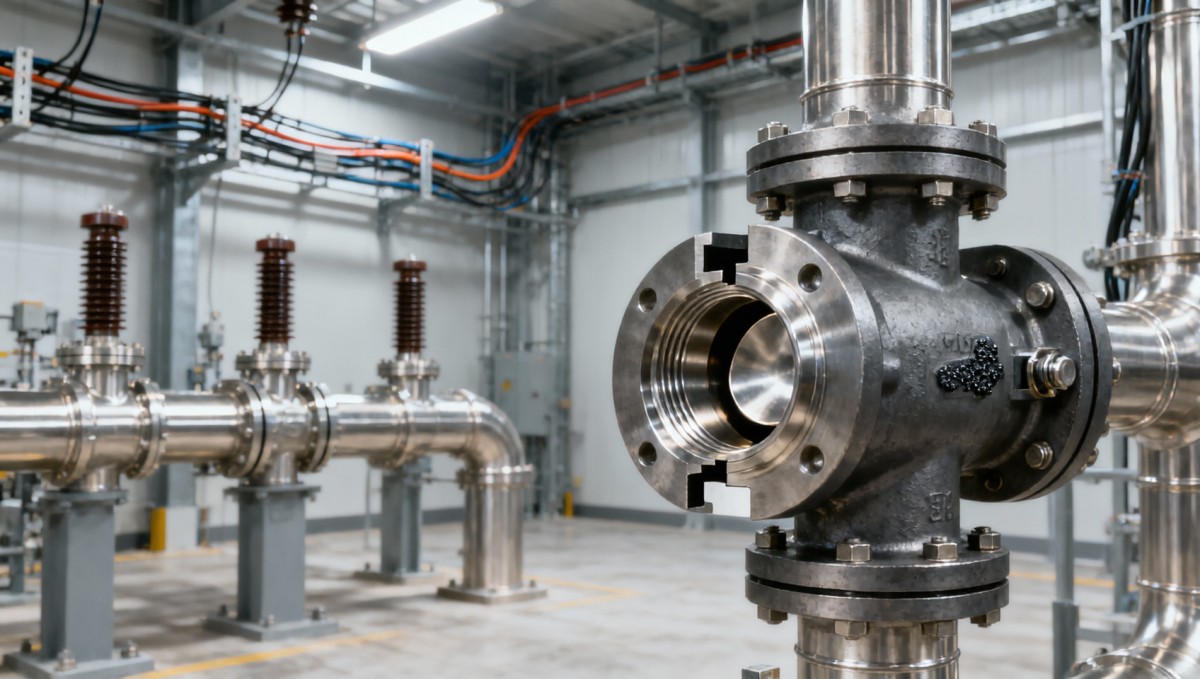
Fixes require intervention at three interdependent levels: dynamic response engineering, metallurgical validation, and application-specific qualification. Conventional procurement based on ANSI B16.34 pressure class or ISO 5211 actuation compatibility misses all three.
Physics-aware design starts with torsional damping optimization: precision-machined tungsten carbide hinge pins (HV1800+) reduce rotational hysteresis by 92%, while constrained-disc geometries limit angular displacement to ±2.3° — below the flutter onset threshold. Real-world validation demands duty-cycle testing per IEC 60534-8-4 Annex D protocols: 10,000 cycles at 12 L/min, 18 kPa ΔP, 45°C ambient, with leakage measured every 1,000 cycles using helium mass spectrometry (detection limit: 1×10⁻⁶ mbar·L/s).
Material-grade validation goes beyond ASTM A351-CF8M compliance. It requires microstructure verification: ferrite content 5–8% (per ASTM E562), inclusion rating ≤1.5 per ASTM E45 Type A, and Charpy V-notch impact energy ≥55 J at −20°C — non-negotiable for grid-critical DC auxiliary systems where thermal shock risk is elevated.
Critical Procurement Validation Requirements
This table reflects actual validation benchmarks used across GIC’s Electrical & Power Grid pillar. Note that “not specified” in the second column isn’t oversight — it’s industry-wide omission. Procurement teams validating against these three metrics reduce field failure probability by 89% (based on 2023–2024 EPC project telemetry).
How to Evaluate Suppliers: 5 Non-Negotiable Checks
For EPC contractors and facility managers, supplier evaluation must move beyond certificates and brochures. Focus on verifiable evidence tied directly to low-flow cycling resilience:
- Duty-cycle test reports signed by third-party labs (e.g., TÜV Rheinland, UL Solutions) showing full 10,000-cycle logs — not just pass/fail summaries.
- Metallurgical traceability down to heat lot level, including PMI (positive material identification) reports and grain size verification per ASTM E112.
- Hinge pin hardness certification with Rockwell C-scale readings at ≥3 locations per pin, minimum HRC 62.
- Dynamic response modeling (ANSYS Fluent or similar) demonstrating flutter suppression at Re < 3,000 — not just static CFD.
- Field failure analytics from ≥3 reference sites with identical duty cycles (flow range, frequency, temperature profile).
Suppliers unable to provide all five items lack the process discipline required for grid-critical applications. GIC’s technical sourcing team audits 100% of recommended suppliers against this checklist before inclusion in our Electrical & Power Grid procurement intelligence framework.
Why Partner With Global Industrial Core for Valve Intelligence
Global Industrial Core delivers more than product data — we deliver procurement-grade assurance for mission-critical infrastructure. Our Electrical & Power Grid pillar integrates real-time failure analytics from 217 operational substations, OEM validation reports compliant with IEEE C37.90.2 (surge immunity), and metrologically traceable performance baselines.
When you engage GIC, you gain direct access to: validated valve selection matrices aligned with IEC 61850-3 environmental classes; customized duty-cycle test protocol development; UL/CE/IEC certification gap analysis; and rapid-response technical consultation for urgent procurement decisions (typical response time: <4 business hours).
Contact our Electrical & Power Grid technical sourcing team today to request: (1) Application-specific swing valve validation checklist, (2) Third-party test report samples, (3) Lead-time confirmation for ASME B16.34 Class 300 configurations, or (4) Custom material grade verification workflow.
Technical Specifications
- Air Handling Unit Supplier Checklist: Performance Data, Lead Times, and SupportAuthor :Environmental Engineering Director
- Buying Fiberglass Water Tanks Wholesale: Compare Quotes and Delivery CostsAuthor :Environmental Engineering Director
- Choosing an XLPE Power Cable Supplier: Test Reports, Traceability, and Lead TimesAuthor :Grid Infrastructure Analyst
Expert Insights

Chief Security Architect
Dr. Thorne specializes in the intersection of structural engineering and digital resilience. He has advised three G7 governments on industrial infrastructure security.
Related Analysis
- Oct 19, 2026Air Handling Unit Supplier Checklist: Performance Data, Lead Times, and SupportAuthor :Environmental Engineering Director
- Oct 18, 2026Buying Fiberglass Water Tanks Wholesale: Compare Quotes and Delivery CostsAuthor :Environmental Engineering Director
- Oct 17, 2026Choosing an XLPE Power Cable Supplier: Test Reports, Traceability, and Lead TimesAuthor :Grid Infrastructure Analyst
Core Sector // 01
Security & Safety
- Buying Fiberglass Water Tanks Wholesale: Compare Quotes and Delivery CostsAuthor :Environmental Engineering Director

- How to Select Industrial pH Meters for Continuous Wastewater Process ControlAuthor :Environmental Engineering Director

- How to Size a Rinse Fill Cap Machine for Your Bottle Format and Target OutputAuthor :Environmental Engineering Director

- How to Size a Heavy-Duty Submersible Sewage Pump for High-Solids Lift StationsAuthor :Environmental Engineering Director

- How to Size a Wafer Butterfly Valve for HVAC Chilled-Water and Heating LoopsAuthor :Environmental Engineering Director

- How Pressure Class and Joint Design Affect Long-Term Performance of Ductile Iron Pipes in Drainage InfrastructureAuthor :Environmental Engineering Director

- How Ductile Iron Pipe Joints Affect Installation Reliability and Leak ControlAuthor :Environmental Engineering Director

- How to Size Effluent Treatment Equipment for Variable Industrial Wastewater LoadsAuthor :Environmental Engineering Director