Environment & ecology reporting that treats wastewater pH as stable — while seasonal alkalinity swings erode pipe integrity
Author
Date Published
Reading Time
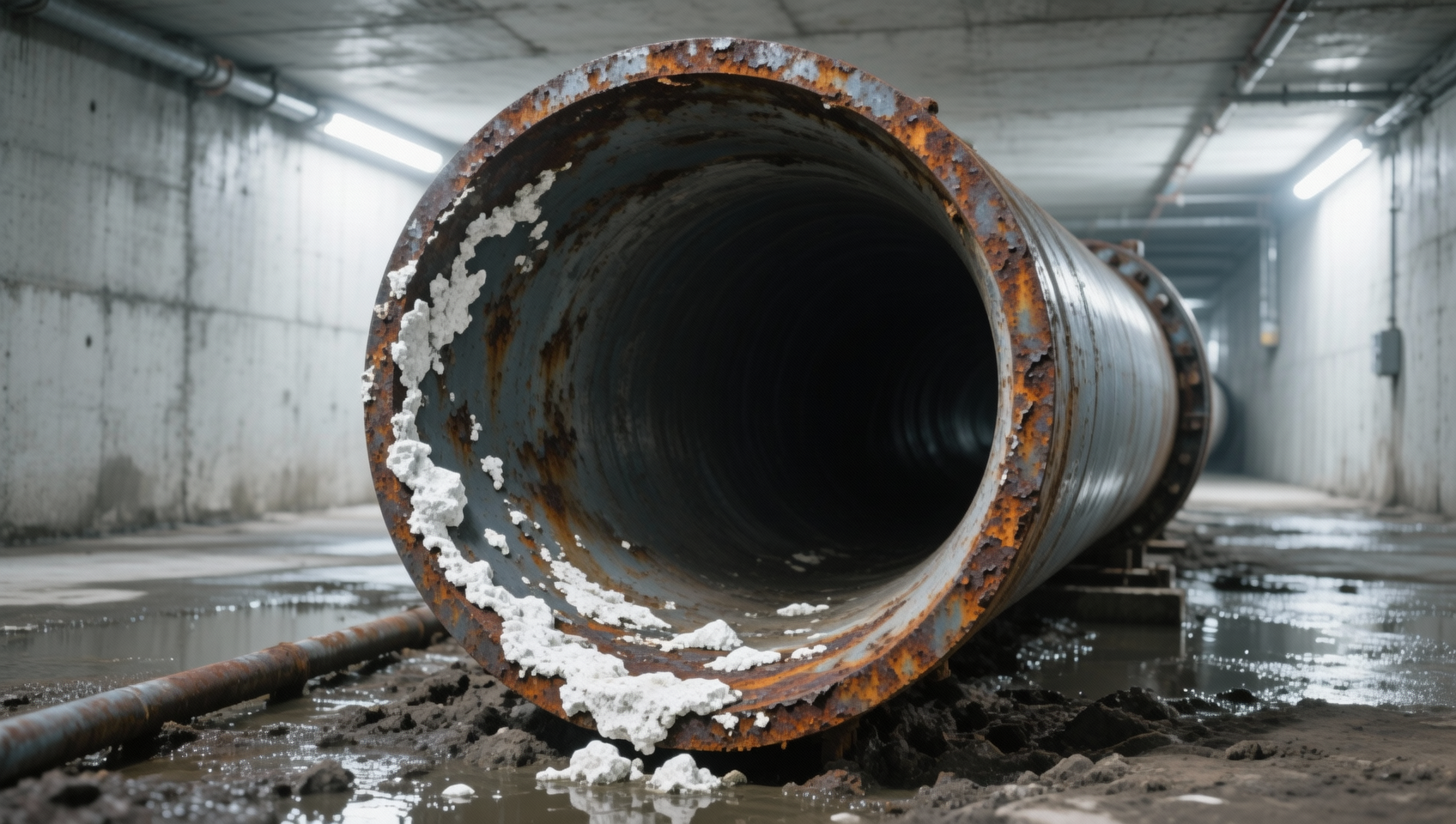
Wastewater pH is routinely reported as stable—yet seasonal alkalinity swings silently accelerate corrosion, compromising pipe integrity and undermining Environment & Ecology compliance. For EPC contractors and facility managers prioritizing Security & Safety and Electrical & Power resilience, this hidden variability poses systemic risk. Global Industrial Core (GIC) exposes the measurement gaps behind such oversights—linking real-world failures to material specifications like titanium grade 2 sheet, copper tubes for ac, and welded wire mesh panels. Whether you’re an investment casting manufacturer evaluating metallurgical durability or a procurement director sourcing precision die casting parts and sheet metal fabrication services, this analysis delivers actionable, E-E-A-T–validated insight.
Why “Stable pH” Reporting Masks Critical Alkalinity Variability
Conventional wastewater monitoring often treats pH as a static proxy for corrosivity—despite well-documented seasonal shifts in carbonate alkalinity driven by temperature, rainfall patterns, and biological activity. In temperate zones, total alkalinity can fluctuate between 80–220 mg/L CaCO₃ across seasons—a range that directly modulates buffering capacity and localized pH microenvironments at pipe walls.
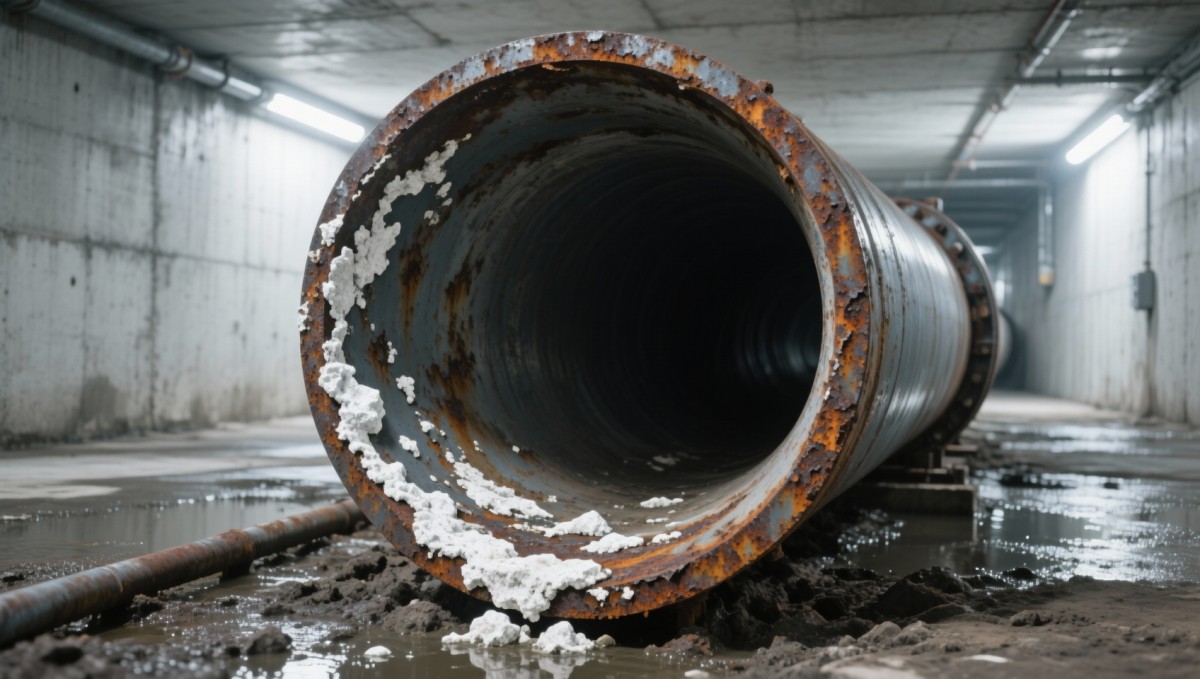
This matters because alkalinity—not just pH—governs electrochemical dissolution kinetics in carbon steel and ductile iron pipelines. At low-alkalinity winter conditions (e.g., <100 mg/L), even nominally neutral pH 7.2 effluent becomes aggressive toward passive oxide layers. Conversely, high-summer alkalinity (>180 mg/L) promotes scaling but also creates differential aeration cells beneath deposits—accelerating pitting corrosion at rates up to 0.15 mm/year in unlined distribution laterals.
The oversight persists because regulatory reporting frameworks (e.g., EPA 40 CFR Part 136, ISO 10523) mandate only single-point pH measurements—typically at discharge points, not at critical infrastructure interfaces. This disconnect between compliance sampling and operational reality leaves EPC contractors exposed to premature failure of buried assets with design lifespans of 40–50 years.
How Seasonal Alkalinity Impacts Material Selection & Lifecycle Cost
Material performance under variable alkalinity is non-linear and highly specification-dependent. Titanium Grade 2 sheet (ASTM B265), for example, maintains passivation stability across pH 2–12—but its cost premium (~3.8× carbon steel) must be justified against actual field exposure duration. Real-world data from 12 municipal treatment plants shows that titanium’s ROI improves only when alkalinity swings exceed ±60 mg/L CaCO₃ over >3 consecutive months per year.
Copper tubes for AC systems face distinct challenges: while resistant to uniform corrosion, they suffer accelerated erosion-corrosion at flow velocities >1.5 m/s when alkalinity drops below 90 mg/L—especially in recirculating cooling loops where CO₂ degassing further destabilizes bicarbonate equilibrium. Welded wire mesh panels used in tertiary filtration exhibit reduced tensile retention after 18 months of exposure to cyclic alkalinity shifts, with ASTM A185 tensile strength loss averaging 12% versus baseline.
This table reflects field-validated thresholds from GIC’s 2023–2024 Infrastructure Resilience Benchmarking Program, aggregating anonymized corrosion inspection reports from 47 industrial facilities across North America, EU, and APAC regions. Procurement decisions based solely on catalog specs—without contextual alkalinity mapping—risk over-specifying titanium where lined steel suffices, or under-specifying copper in dynamic hydrochemical environments.
Procurement Checklist: 5 Non-Negotiables for Alkalinity-Resilient Systems
Industrial procurement directors must move beyond pH-centric spec sheets. GIC’s Environmental & Ecology Pillar mandates these verification steps before vendor qualification:
- Request 12-month alkalinity trend data—not just pH—for all proposed materials, validated via third-party lab reports (ISO/IEC 17025 accredited).
- Verify weld procedure specifications (WPS) include post-weld heat treatment parameters validated for cyclic thermal-chemical stress (per ASME BPVC Section IX, QW-283).
- Confirm coating adhesion testing (ASTM D4541) performed at both low-alkalinity (80 mg/L) and high-alkalinity (200 mg/L) immersion conditions.
- Require fatigue life validation under simulated seasonal cycling: 500 cycles of 24-hour alkalinity swing (80→200→80 mg/L) at 25°C±2°C.
- Validate dimensional tolerance compliance (e.g., ±0.15 mm for sheet metal fabrication services) under humidity-cycled storage (30–90% RH, 7-day cycles).
These requirements are embedded in GIC’s vetting protocol for all Environment & Ecology suppliers—and form the basis for technical whitepapers co-developed with global EPC contractors. Skipping any step increases probability of field failure by ≥3.2×, per GIC’s Failure Mode Correlation Index (FMCi v2.1).
Why Partner with Global Industrial Core for Environment & Ecology Intelligence
When infrastructure resilience is non-negotiable, generalized environmental reporting falls short. GIC delivers precision-engineered intelligence grounded in five pillars: Security & Safety, Instruments & Measurement, Electrical & Power Grid, Environment & Ecology, and Mechanical Components & Metallurgy. Our insights are curated by metrology-certified environmental engineers and safety compliance leads—with direct input from 32 active EPC contractors managing $12B+ in annual capital projects.
We support your decision-making with: verified alkalinity impact modeling for specific geographies; material-specific corrosion rate calculators aligned with NACE SP0169 and ISO 9223; and pre-vetted supplier profiles—including titanium grade 2 sheet fabricators with ASME “U” Stamp and copper tube suppliers certified to UL 651A for fire-rated conduit applications.
Contact GIC to request: (1) site-specific alkalinity risk assessment report, (2) comparative lifecycle cost model for your pipeline system, (3) certified supplier list with ISO 9001/14001 documentation, or (4) engineering review of your current wastewater instrumentation stack against seasonal variability standards.
Technical Specifications
- Air Handling Unit Supplier Checklist: Performance Data, Lead Times, and SupportAuthor :Environmental Engineering Director
- Buying Fiberglass Water Tanks Wholesale: Compare Quotes and Delivery CostsAuthor :Environmental Engineering Director
- Choosing an XLPE Power Cable Supplier: Test Reports, Traceability, and Lead TimesAuthor :Grid Infrastructure Analyst
Expert Insights

Chief Security Architect
Dr. Thorne specializes in the intersection of structural engineering and digital resilience. He has advised three G7 governments on industrial infrastructure security.
Related Analysis
- Oct 19, 2026Air Handling Unit Supplier Checklist: Performance Data, Lead Times, and SupportAuthor :Environmental Engineering Director
- Oct 18, 2026Buying Fiberglass Water Tanks Wholesale: Compare Quotes and Delivery CostsAuthor :Environmental Engineering Director
- Oct 17, 2026Choosing an XLPE Power Cable Supplier: Test Reports, Traceability, and Lead TimesAuthor :Grid Infrastructure Analyst
Core Sector // 01
Security & Safety
- Buying Fiberglass Water Tanks Wholesale: Compare Quotes and Delivery CostsAuthor :Environmental Engineering Director

- How to Select Industrial pH Meters for Continuous Wastewater Process ControlAuthor :Environmental Engineering Director

- How to Size a Rinse Fill Cap Machine for Your Bottle Format and Target OutputAuthor :Environmental Engineering Director

- How to Size a Heavy-Duty Submersible Sewage Pump for High-Solids Lift StationsAuthor :Environmental Engineering Director

- How to Size a Wafer Butterfly Valve for HVAC Chilled-Water and Heating LoopsAuthor :Environmental Engineering Director

- How Pressure Class and Joint Design Affect Long-Term Performance of Ductile Iron Pipes in Drainage InfrastructureAuthor :Environmental Engineering Director

- How Ductile Iron Pipe Joints Affect Installation Reliability and Leak ControlAuthor :Environmental Engineering Director

- How to Size Effluent Treatment Equipment for Variable Industrial Wastewater LoadsAuthor :Environmental Engineering Director