What Drives Environment & Ecology Exporter Demand in 2026?
Author
Date Published
Reading Time
In 2026, demand for an Environment & Ecology exporter is being shaped by tighter ESG regulations, cross-border compliance pressure, and the urgent need for resilient industrial supply chains. For business evaluators, understanding what buyers now value—certified performance, traceable sourcing, and long-term operational reliability—is essential to identifying partners that can compete globally and reduce procurement risk.
Why is demand for an Environment & Ecology exporter rising in 2026?
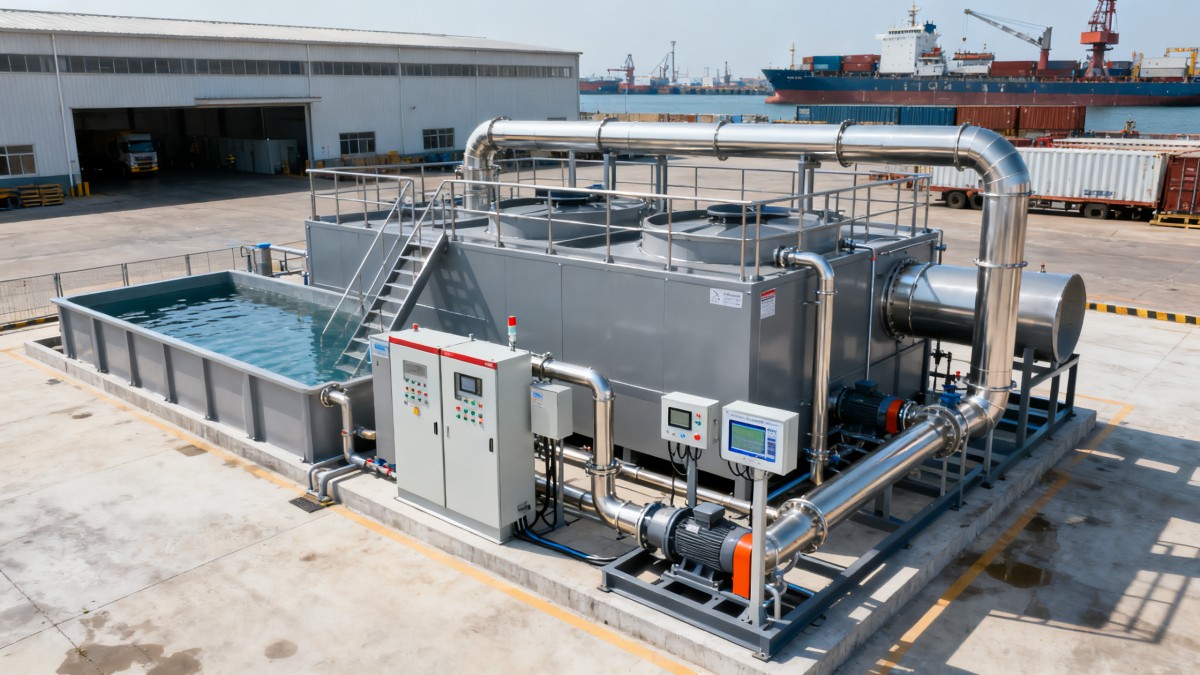
The role of an Environment & Ecology exporter has shifted from simple product supply to risk-managed industrial support. Buyers are no longer assessing only price and shipping capacity. They are screening exporters for compliance readiness, technical documentation, lifecycle reliability, and the ability to support projects across multiple jurisdictions.
This change is especially visible in heavy industry, utilities, EPC projects, and process facilities, where environmental systems interact with safety, power continuity, and production uptime. A failed filtration unit, delayed waste treatment module, or poorly documented emission-control component can trigger regulatory exposure and operational losses far beyond the original purchase value.
The core demand drivers business evaluators should watch
- Stricter environmental reporting requirements are pushing buyers to source from exporters that can provide material traceability, test data, and conformity records.
- Cross-border industrial projects increasingly require alignment with CE, UL, ISO, or equivalent documentation, even when the end market does not formally mandate every standard.
- Supply chain resilience has become a board-level issue. Buyers prefer an Environment & Ecology exporter with stable sourcing networks, backup production planning, and predictable lead-time control.
- Industrial operators are under pressure to reduce water use, emissions, contamination risk, and disposal cost without interrupting core production assets.
- Procurement teams now need suppliers that can communicate with engineering, compliance, operations, and finance at the same time.
For business evaluators, this means exporter demand is not merely growing in volume. It is becoming more selective. The winning Environment & Ecology exporter in 2026 is the one that lowers uncertainty across technical, regulatory, and commercial dimensions.
What do buyers actually expect from an Environment & Ecology exporter?
In industrial procurement, expectations are becoming measurable. Buyers want evidence that an exporter can support project execution, site conditions, and compliance review. The table below summarizes the practical evaluation points now shaping Environment & Ecology exporter demand.
The key takeaway is simple: demand rises when exporters help buyers make cleaner, safer, and more defensible decisions. In many tenders, the exporter that provides stronger technical and compliance visibility can outperform a lower-cost competitor.
Typical buyer expectations by function
- Procurement wants price transparency, lead-time reliability, and low dispute risk.
- Engineering wants specification accuracy and predictable field performance.
- Compliance teams want auditable records and standard-aligned documents.
- Operations wants durability, easy maintenance, and low downtime impact.
Which application scenarios are driving exporter demand fastest?
Environment & Ecology exporter demand is not uniform across all sectors. It is strongest where environmental control systems directly affect licensing, safety, or operating continuity. Business evaluators should link demand to project type rather than treating all environmental exports as a single category.
High-demand industrial scenarios
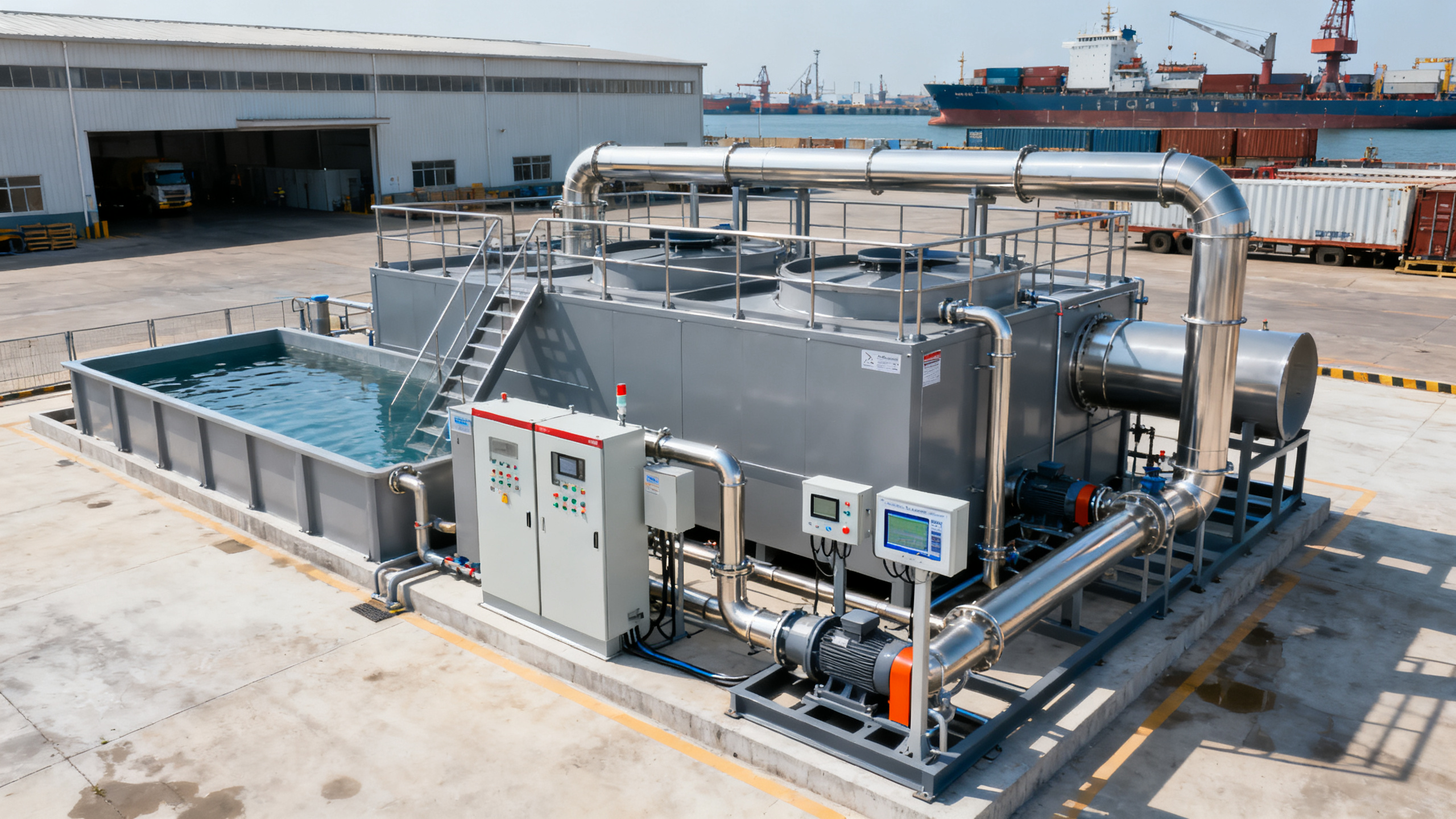
- Water and wastewater treatment upgrades for industrial parks, factories, and municipal-linked infrastructure.
- Air pollution control systems in metallurgy, cement, chemicals, and thermal processing facilities.
- Solid waste handling and contamination-control systems for high-volume production sites.
- Process monitoring and environmental measurement packages integrated into smart facility management.
- Retrofit projects where legacy plants must meet stricter discharge or emission limits without complete asset replacement.
These scenarios favor an Environment & Ecology exporter that can coordinate with adjacent systems such as power distribution, instrumentation, mechanical fittings, and safety controls. That is where a cross-disciplinary intelligence partner becomes valuable.
Global Industrial Core is particularly relevant here because environmental procurement rarely stands alone. A treatment skid may require measurement accuracy, corrosion-resistant components, electrical compatibility, and compliance review at the same time. Evaluators need joined-up intelligence, not isolated product claims.
How should business evaluators compare exporters in a realistic procurement process?
The most common sourcing mistake is comparing exporters on unit price before defining risk categories. In 2026, a structured comparison model gives a more accurate view of commercial value. The table below can be used in prequalification or shortlist reviews for any Environment & Ecology exporter.
A strong exporter reduces procurement noise. Instead of forcing evaluators to chase missing details, the supplier presents a clean decision package. That saves time during technical review and lowers the probability of rework after purchase order placement.
A practical shortlist checklist
- Ask whether the exporter can map product specifications to your operating environment, not just to nominal catalog values.
- Check if material traceability and conformity documents are available before contract award.
- Review packaging, preservation, and transit protection for sensitive environmental components.
- Confirm spare part continuity for at least one planned maintenance cycle.
- Evaluate responsiveness across commercial, engineering, and compliance questions, not only sales speed.
What standards and compliance signals influence Environment & Ecology exporter demand?
Export demand increasingly follows compliance confidence. Buyers do not always require the same standards in every country, but they consistently prefer exporters who understand documentation discipline, testing language, and product-use restrictions. This is especially true in industrial sectors where environmental systems affect worker safety, discharge permits, and community exposure.
Common signals that improve buyer confidence
- Alignment with recognized management or product standards such as ISO-related systems where applicable.
- Clear declarations regarding materials, safety handling, and intended operating conditions.
- Consistent labeling, batch identification, and shipping documentation.
- Test reports or inspection records that can be linked to supplied lots or assemblies.
- Technical files prepared in a format usable by EPC contractors and facility compliance teams.
Business evaluators should be careful, however, not to treat certification alone as proof of project fit. A compliant product can still be wrong for the process. The more mature approach is to combine standards review with application review, maintenance assumptions, and import execution checks.
How do cost pressure and risk pressure change exporter selection?
In 2026, many buyers face a difficult balance: environmental spending is rising, but capital discipline remains tight. That makes cost evaluation more nuanced. A low quoted price can be offset by shorter service life, heavier maintenance needs, higher energy use, or customs delays caused by incomplete documents.
Where hidden costs usually appear
- Frequent replacement of consumables because material compatibility was not reviewed properly.
- Re-engineering at site due to dimensional, electrical, or piping mismatch.
- Expedited freight after production delays or failed inspection readiness.
- Downtime losses caused by premature failure in corrosive, dusty, or high-load conditions.
- Administrative cost from incomplete records during customs clearance or client audits.
This is why many business evaluators now prefer a supplier review model based on total landed and operating cost. A qualified Environment & Ecology exporter should be able to discuss maintenance cycles, replacement planning, logistics options, and documentation readiness as part of the quotation process.
What mistakes do buyers make when evaluating an Environment & Ecology exporter?
Even experienced procurement teams can misread exporter capability. The most costly errors usually happen when environmental products are treated like standard commodities, despite being part of a regulated and performance-sensitive system.
Frequent misconceptions
- Assuming the lowest-cost offer is comparable without validating media compatibility, duty cycle, and site constraints.
- Focusing on one certificate while ignoring documentation completeness across the full shipment.
- Treating environmental equipment separately from instrumentation, safety, and power interfaces.
- Underestimating the value of traceability for replacement parts and long-term maintenance planning.
- Waiting until late-stage review to ask about inspection, packaging, or export marking requirements.
A more reliable method is to build a cross-functional review early. Procurement can lead commercial comparison, but engineering, operations, and compliance should validate the assumptions behind the offer. That is where GIC’s industry-spanning intelligence model helps evaluators connect the dots faster.
FAQ: What do business evaluators most often ask?
How do I identify a qualified Environment & Ecology exporter quickly?
Start with four filters: application fit, documentation readiness, delivery control, and lifecycle support. If an exporter cannot explain how its solution performs in your operating conditions or cannot provide early compliance documentation, the evaluation risk is already high.
Which scenarios require deeper technical review before purchase?
Projects involving corrosive media, variable loads, retrofits, tight emission thresholds, or integration with existing plant controls usually require more detailed review. In these cases, simple catalog matching is rarely enough for a sound procurement decision.
What procurement documents should I request from an Environment & Ecology exporter?
Request technical datasheets, material or component declarations where relevant, inspection or test records, packing details, batch or lot traceability information, and any conformity documentation needed for the destination market. Also ask for spare part recommendations and expected maintenance intervals.
Is price still the main decision factor in 2026?
Price remains important, but it is rarely decisive on its own in cross-border industrial environmental procurement. Buyers are increasingly weighting risk of delay, compliance failure, service interruption, and replacement cost. That is why better-documented offers often win, even when the initial quote is not the lowest.
Why GIC is useful when evaluating exporter demand and supplier fit
Global Industrial Core is built for decision environments where failure is expensive and fragmented information creates risk. For business evaluators reviewing an Environment & Ecology exporter, the advantage is not just access to market commentary. It is access to structured, industrial-grade insight that connects environmental systems with safety, instrumentation, electrical infrastructure, and mechanical reliability.
That perspective matters because environmental procurement decisions often depend on the performance of adjacent systems. A wastewater treatment component may need precise measurement inputs. An emission-control assembly may depend on stable power quality. A containment solution may require specific metallurgy or sealing performance. GIC helps evaluators assess these dependencies before they become procurement problems.
Why choose us
If you are assessing an Environment & Ecology exporter for a plant upgrade, EPC package, or cross-border sourcing program, GIC can support your review with practical, decision-ready guidance. You can consult us on parameter confirmation, application-based product selection, delivery-cycle considerations, certification expectations, documentation gaps, and sourcing risk across related industrial systems.
We can also help you compare supplier responses, identify weak points in technical submissions, clarify replacement and maintenance assumptions, and frame better questions before RFQ finalization. For teams under budget pressure and schedule pressure, that means faster shortlisting and fewer surprises after order placement.
Contact GIC if you need support with specification review, exporter screening, sample evaluation, compliance document planning, customized sourcing pathways, or quotation alignment for industrial Environment & Ecology projects in 2026.
Technical Specifications
- Air Handling Unit Supplier Checklist: Performance Data, Lead Times, and SupportAuthor :Environmental Engineering Director
- Buying Fiberglass Water Tanks Wholesale: Compare Quotes and Delivery CostsAuthor :Environmental Engineering Director
- Choosing an XLPE Power Cable Supplier: Test Reports, Traceability, and Lead TimesAuthor :Grid Infrastructure Analyst
Expert Insights

Chief Security Architect
Dr. Thorne specializes in the intersection of structural engineering and digital resilience. He has advised three G7 governments on industrial infrastructure security.
Related Analysis
- Oct 19, 2026Air Handling Unit Supplier Checklist: Performance Data, Lead Times, and SupportAuthor :Environmental Engineering Director
- Oct 18, 2026Buying Fiberglass Water Tanks Wholesale: Compare Quotes and Delivery CostsAuthor :Environmental Engineering Director
- Oct 17, 2026Choosing an XLPE Power Cable Supplier: Test Reports, Traceability, and Lead TimesAuthor :Grid Infrastructure Analyst
Core Sector // 01
Security & Safety
- Buying Fiberglass Water Tanks Wholesale: Compare Quotes and Delivery CostsAuthor :Environmental Engineering Director

- How to Select Industrial pH Meters for Continuous Wastewater Process ControlAuthor :Environmental Engineering Director

- How to Size a Rinse Fill Cap Machine for Your Bottle Format and Target OutputAuthor :Environmental Engineering Director

- How to Size a Heavy-Duty Submersible Sewage Pump for High-Solids Lift StationsAuthor :Environmental Engineering Director

- How to Size a Wafer Butterfly Valve for HVAC Chilled-Water and Heating LoopsAuthor :Environmental Engineering Director

- How Pressure Class and Joint Design Affect Long-Term Performance of Ductile Iron Pipes in Drainage InfrastructureAuthor :Environmental Engineering Director

- How Ductile Iron Pipe Joints Affect Installation Reliability and Leak ControlAuthor :Environmental Engineering Director

- How to Size Effluent Treatment Equipment for Variable Industrial Wastewater LoadsAuthor :Environmental Engineering Director