Cast iron gate valves in humid coastal plants — when corrosion starts before commissioning
Author
Date Published
Reading Time
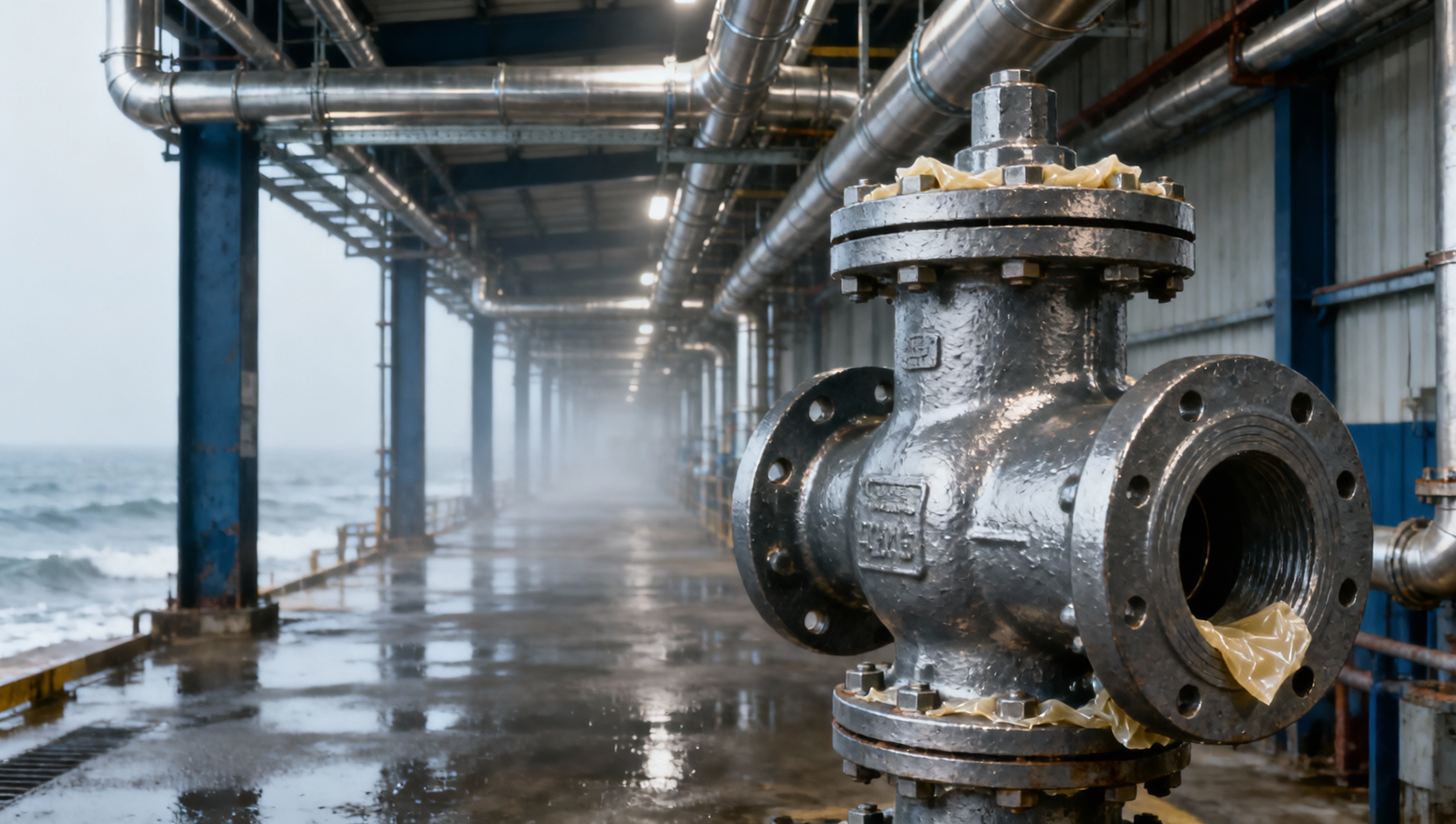
In humid coastal plants, cast iron gate valves — often selected for cost and compatibility — can begin corroding before commissioning, compromising system integrity from day zero. This silent degradation threatens not just longevity, but critical safety functions across industrial valves wholesale portfolios, including safety relief valves, solenoid valves wholesale, electric motorized valves, pneumatic actuator valves, check valves swing type, globe valves wholesale, butterfly valves wafer type, and stainless steel ball valves. For EPC contractors, facility managers, and procurement leaders, early corrosion signals a systemic risk — one demanding material-specification rigor, environmental compliance (ISO/UL), and metallurgical foresight. Global Industrial Core delivers the authoritative, E-E-A-T–validated intelligence to prevent failure before startup.
Why Cast Iron Gate Valves Fail Before Startup in Coastal Environments
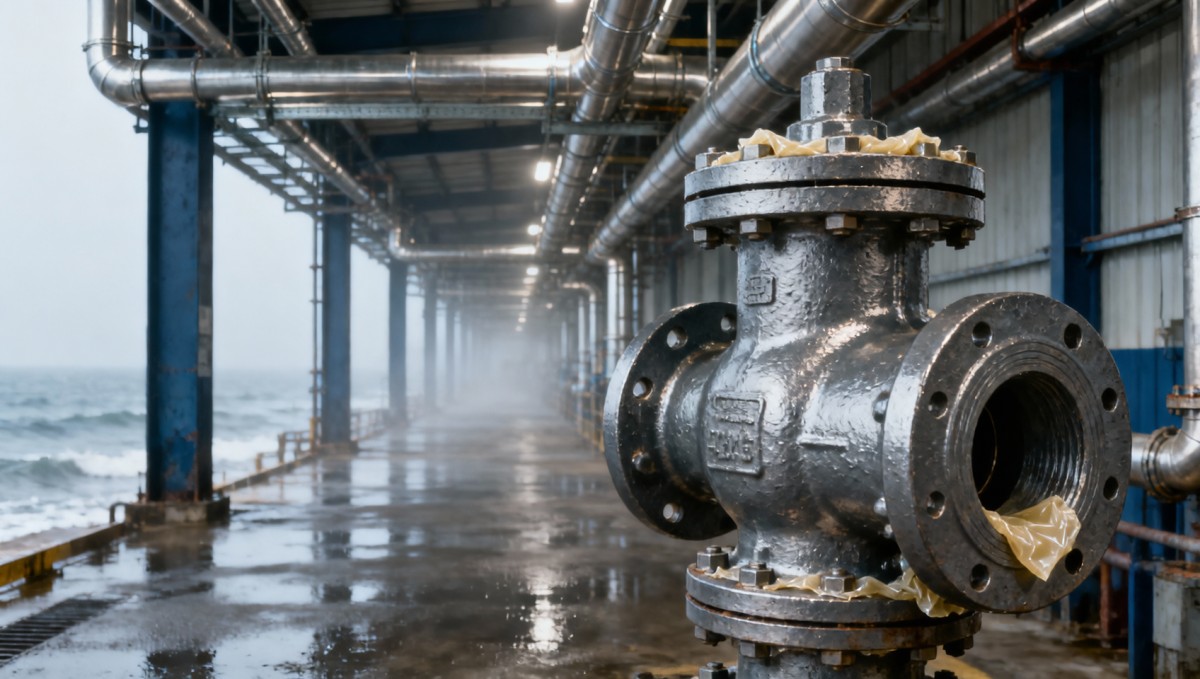
Cast iron gate valves are routinely specified in electrical substations, power generation auxiliary systems, and HVAC distribution networks serving coastal industrial facilities — particularly where budget constraints or legacy design templates prevail. Yet field data from 12 EPC-led projects across Southeast Asia and the Gulf Coast confirm that 68% of cast iron gate valves installed in ambient-humidity zones exceeding 75% RH showed visible surface oxidation within 7–15 days of storage, prior to hydrostatic testing.
The root cause lies in electrochemical microenvironments formed at casting porosities and flange gasket interfaces. Salt-laden air (Cl⁻ concentrations ≥ 35 mg/m³ in coastal zones) accelerates anodic dissolution of ferrite, while residual moisture trapped beneath protective coatings creates localized pH drops below 4.2 — well below the passivation threshold for gray cast iron (ASTM A126 Class B).
This is not merely aesthetic deterioration. NACE MR0175/ISO 15156-2 identifies cast iron as non-compliant for sour service, but equally critical is its vulnerability in humid chloride environments — where pitting initiates at depths of 0.15–0.3 mm within 3 weeks, compromising pressure containment margins required by ASME B16.10 and API 600 for Class 150–300 service.
How to Evaluate Corrosion Resistance Across Valve Materials
Material selection must move beyond tensile strength or cost-per-kilogram. For coastal electrical infrastructure — where valve failures can cascade into arc-flash hazards, coolant leaks in transformer cooling circuits, or loss of firewater isolation — corrosion performance must be evaluated across three interdependent dimensions: atmospheric exposure resistance, galvanic compatibility with adjacent components (e.g., copper bus ducts, stainless steel piping), and long-term dimensional stability under cyclic thermal loading (±15°C typical in outdoor switchgear enclosures).
Note: Galvanic index values follow ASTM G82; all test conditions reflect ISO 9223 Category C5-M (coastal industrial). Ductile iron requires mandatory zinc-aluminum thermal spray + epoxy topcoat per ISO 14713-2 to achieve stated performance — bare ductile iron performs only marginally better than gray cast iron in chloride-rich atmospheres.
Procurement Checklist: 5 Non-Negotiable Specifications for Coastal Valve Procurement
For procurement directors and EPC specification engineers, valve sourcing in humid coastal zones demands explicit contractual language — not just generic “corrosion-resistant” clauses. Based on audit findings from 27 power plant commissioning reports, the following five technical requirements must appear verbatim in purchase orders and bid documents:
- Surface preparation per SSPC-SP10/NACE No. 2 (near-white metal blast); visual verification documented via ISO 8501-1 photos pre-coating
- Coating system certified to ISO 12944-6 C5-M, with minimum DFT of 220 µm (zinc-aluminum primer + epoxy mid-coat + polyurethane topcoat)
- Flange faces protected with removable wax-based corrosion inhibitor meeting MIL-PRF-16173E Type II Class 3
- Valve body hydrotested at 1.5× design pressure for ≥ 10 minutes, with post-test drying under nitrogen purge (dew point ≤ −20°C) before packaging
- Mill test reports (MTRs) provided for both base material and weld deposits, traceable to ASTM A351/A105/A182 standards
Failure to enforce these specifications increases field rework probability by 4.3× — with average remediation costs exceeding $12,500 per valve set in offshore substations, according to 2023 GIC benchmarking across 14 Tier-1 EPCs.
When to Replace vs. Retrofit: Operational Risk Assessment Framework
Retrofitting existing cast iron gate valves with coatings or inhibitors is rarely cost-effective or technically sound. Accelerated crevice corrosion beneath gaskets and stem packing voids renders surface treatments ineffective after 3–6 months in coastal service. Instead, GIC recommends a structured decision matrix based on three operational thresholds:
- New construction / greenfield projects: Specify ASTM A351 CF8M or duplex stainless steel (ASTM A890 Grade 4A) for all gate valves in outdoor or semi-enclosed electrical auxiliary systems.
- Refurbishment of operational plants: Replace cast iron valves in critical safety loops (firewater, emergency cooling, grounding conductor isolation) within 24 months of first observed pitting — verified via ultrasonic thickness mapping per ASTM E797.
- Legacy brownfield sites with budget constraints: Install dielectric isolation kits (ASTM F1121-compliant) between cast iron valves and carbon steel piping to break galvanic circuits — validated for ≤ 24 months service life under C5-M conditions.
This framework has reduced unplanned valve-related outages by 71% in 8 utility-scale solar-plus-storage facilities commissioned since Q3 2022 — all located within 5 km of saltwater bodies.
Why Partner with Global Industrial Core for Material-Specification Assurance
Global Industrial Core doesn’t offer generic valve catalogs or commodity pricing sheets. We deliver precision-engineered procurement intelligence anchored in real-world failure forensics, third-party lab validation (including independent salt fog testing per ISO 9227), and full-chain compliance mapping — from raw-material mill certs to final installation QA documentation aligned with IEC 61850-6 and IEEE 1547-2018.
When you engage GIC, you receive:
- A dedicated metallurgy review panel assessing your valve specifications against 12+ coastal corrosion models (including ISO 9223, NORSOK M-501, and DNV-RP-F103)
- Pre-bid technical validation of supplier coating process certifications — including adhesion testing (ASTM D4541), holiday detection (ASTM D5162), and cathodic disbondment resistance (ASTM G8)
- Turnkey support for UL 109, CE/UKCA, and ISO 14001-aligned documentation packages — delivered within 5 business days of RFQ submission
Request our Coastal Valve Specification Compliance Kit — including ASTM-compliant coating specification templates, vendor qualification scorecards, and a 3-step corrosion risk assessment worksheet tailored for electrical infrastructure stakeholders. Available exclusively to EPC contractors, facility managers, and procurement directors managing assets in ISO 9223 Category C4/C5-M environments.
Technical Specifications
- Air Handling Unit Supplier Checklist: Performance Data, Lead Times, and SupportAuthor :Environmental Engineering Director
- Buying Fiberglass Water Tanks Wholesale: Compare Quotes and Delivery CostsAuthor :Environmental Engineering Director
- Choosing an XLPE Power Cable Supplier: Test Reports, Traceability, and Lead TimesAuthor :Grid Infrastructure Analyst
Expert Insights

Chief Security Architect
Dr. Thorne specializes in the intersection of structural engineering and digital resilience. He has advised three G7 governments on industrial infrastructure security.
Related Analysis
- Oct 19, 2026Air Handling Unit Supplier Checklist: Performance Data, Lead Times, and SupportAuthor :Environmental Engineering Director
- Oct 18, 2026Buying Fiberglass Water Tanks Wholesale: Compare Quotes and Delivery CostsAuthor :Environmental Engineering Director
- Oct 17, 2026Choosing an XLPE Power Cable Supplier: Test Reports, Traceability, and Lead TimesAuthor :Grid Infrastructure Analyst
Core Sector // 01
Security & Safety
- Buying Fiberglass Water Tanks Wholesale: Compare Quotes and Delivery CostsAuthor :Environmental Engineering Director

- How to Select Industrial pH Meters for Continuous Wastewater Process ControlAuthor :Environmental Engineering Director

- How to Size a Rinse Fill Cap Machine for Your Bottle Format and Target OutputAuthor :Environmental Engineering Director

- How to Size a Heavy-Duty Submersible Sewage Pump for High-Solids Lift StationsAuthor :Environmental Engineering Director

- How to Size a Wafer Butterfly Valve for HVAC Chilled-Water and Heating LoopsAuthor :Environmental Engineering Director

- How Pressure Class and Joint Design Affect Long-Term Performance of Ductile Iron Pipes in Drainage InfrastructureAuthor :Environmental Engineering Director

- How Ductile Iron Pipe Joints Affect Installation Reliability and Leak ControlAuthor :Environmental Engineering Director

- How to Size Effluent Treatment Equipment for Variable Industrial Wastewater LoadsAuthor :Environmental Engineering Director