Environment & Ecology cost gaps between compliance and overdesign
Author
Date Published
Reading Time
In industrial projects, the real pressure around Environment & Ecology cost is rarely the regulation itself. The larger financial risk often comes from unclear scope, conservative assumptions, and design choices that exceed real operating needs without improving measurable compliance outcomes. In capital-intensive facilities, the gap between compliant design and overdesign can reshape total project economics, delay approvals, and burden operations with avoidable maintenance complexity. A practical understanding of Environment & Ecology cost gaps helps organizations protect environmental performance while preserving capital efficiency and long-term resilience.
Why the compliance versus overdesign question changes by project scenario
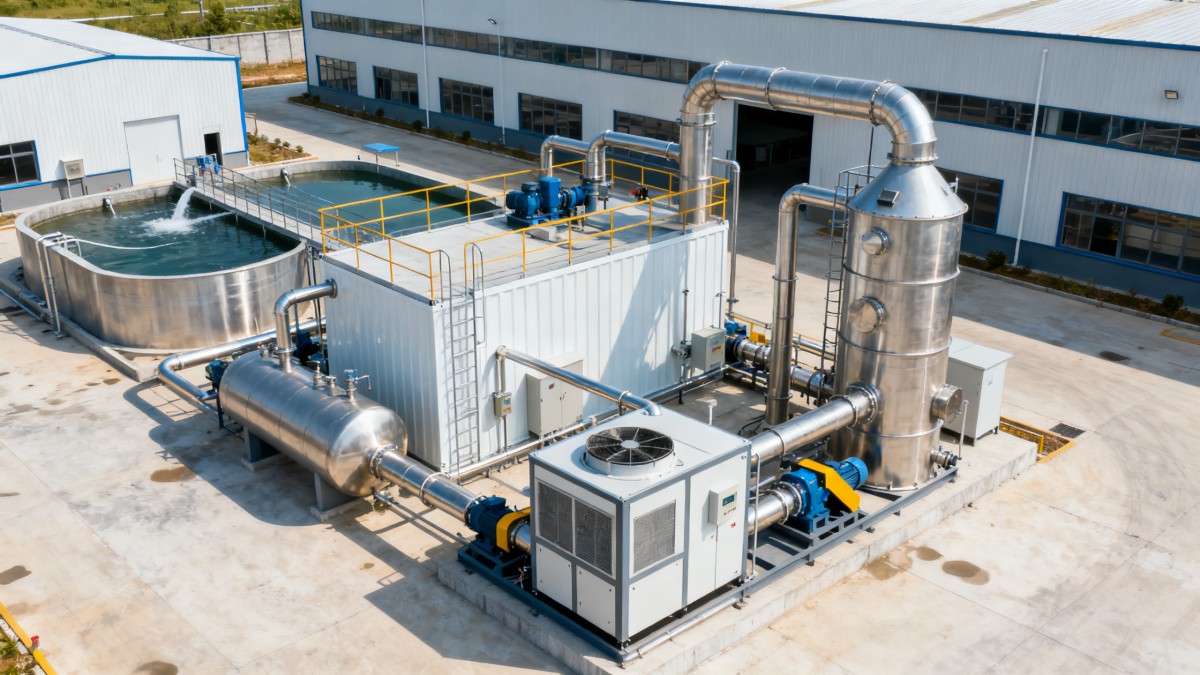
Not every industrial site faces the same environmental exposure, permit structure, or stakeholder pressure. A wastewater package for a brownfield upgrade, for example, should not be evaluated with the same design margin as a greenfield hazardous materials site near a sensitive watershed. The true Environment & Ecology cost profile depends on discharge limits, local enforcement intensity, process variability, expansion plans, shutdown tolerance, and reputational consequences if performance drifts.
This is why a simple “more equipment equals safer compliance” mindset can be expensive. In some scenarios, redundancy, advanced monitoring, or oversized treatment capacity is justified. In others, those same choices create higher capital expenditure, larger energy draw, more operator intervention, and more failure points without materially reducing regulatory risk. The smart question is not whether to spend more, but where additional spending changes risk in a measurable way.
Scenario 1: Brownfield retrofits where hidden constraints distort Environment & Ecology cost
Brownfield upgrades are one of the most common sources of Environment & Ecology cost overruns. Existing pipe routing, civil limitations, utility bottlenecks, and legacy process fluctuations often push engineering teams toward oversized environmental systems “just in case.” That instinct may feel prudent, but it can lock in unnecessary tanks, redundant blowers, larger pumps, or complex controls that are only required because the original process characterization was incomplete.
The key judgment point in this scenario is data quality. If influent loads, emission peaks, or operating cycles have not been measured across representative conditions, the project may pay for uncertainty rather than compliance. A better approach is to segment variable loads, verify actual peaks, and identify whether localized pretreatment or operational changes can solve the issue more efficiently than a system-wide overbuild. Here, controlling Environment & Ecology cost starts with narrowing uncertainty before final sizing decisions are made.
Scenario 2: Greenfield projects where future-proofing becomes costly overdesign
Greenfield developments often include aggressive assumptions about future expansion, tighter future standards, and investor expectations for “best available” environmental performance. Some future-proofing is rational, especially where permitting windows are long or site access is constrained. However, greenfield projects are also where overdesign can become embedded early and remain unchallenged throughout procurement and construction.
The deciding factor is whether flexibility has been engineered in the right layer. Reserving physical footprint, utility tie-ins, modular skids, and control system scalability is often more cost-effective than immediately installing excess treatment trains or oversized abatement units. In this scenario, the best Environment & Ecology cost strategy is phased capacity readiness rather than full upfront buildout. Compliance is achieved on day one, while expansion risk is managed through staged investment.
Scenario 3: High-risk process environments where additional spending is justified
There are cases where what looks like overdesign is actually disciplined risk control. Facilities handling corrosive streams, toxic air pollutants, unstable effluents, or highly variable process chemistry may require stronger containment, continuous monitoring, backup treatment paths, and premium materials. In these situations, the Environment & Ecology cost of underdesign is far higher than the capital premium of robust systems.
The judgment point here is consequence severity. If a single environmental failure could trigger permit suspension, production shutdown, remediation liability, or severe community impact, added design margin is often justified. The objective is still not blind overspending. It is targeted investment linked to consequence analysis, failure mode review, and recovery time requirements. The additional cost should be traceable to identified risks, not simply inherited from conservative precedent.
Scenario 4: Utility-intensive systems where operating cost exposes hidden overdesign
Many environmental systems appear acceptable at procurement stage because capital budgets dominate decision-making. Yet oversized aeration, unnecessary polishing stages, excessive fan duty, or premium filtration trains can turn into a long-term operating burden. In this scenario, Environment & Ecology cost should be evaluated across energy use, consumables, calibration workload, spare parts, sludge disposal, and operator hours.
A design can meet every standard and still perform poorly from a lifecycle perspective. The strongest signal of overdesign is when operating complexity rises faster than risk reduction. If a simpler configuration can achieve permit stability with better maintainability and lower utility demand, it may be the more resilient option. For many industrial facilities, the real cost gap emerges only after commissioning, when process teams inherit systems that are technically impressive but commercially inefficient.
How scenario-based requirements create different Environment & Ecology cost thresholds
Practical ways to match environmental investment to the right scenario
- Define the compliance baseline first: permit limits, applicable standards, discharge pathways, monitoring frequency, and reporting obligations.
- Separate legal requirements from internal preferences. This prevents “nice to have” design features from being treated as mandatory Environment & Ecology cost.
- Use scenario-specific risk registers. Rank environmental failure modes by probability, detectability, and consequence rather than by habit.
- Test modularity before oversizing. Extra nozzles, spare control capacity, and reserved tie-ins may offer better flexibility than full excess equipment.
- Model lifecycle cost, not just capex. Energy, media, sludge, maintenance, calibration, and downtime determine the true Environment & Ecology cost.
- Challenge vendor proposals against operating data. Premium configurations should show measurable compliance, reliability, or recovery benefits.
Common misjudgments that make compliant projects unnecessarily expensive
One frequent mistake is treating the most stringent global standard as automatically necessary for every site, even when local permits, process chemistry, and customer obligations do not require it. Another is using worst-case design conditions as permanent operating conditions, which pushes all equipment sizing upward. These habits inflate Environment & Ecology cost without proving real compliance value.
A second misjudgment is assuming instrumentation density always lowers environmental risk. More analyzers, alarms, and sampling points can help in unstable processes, but they also add calibration burden, false alarms, and maintenance exposure. If the monitoring architecture is not aligned with decision-making and response capability, it becomes another form of overdesign.
A third blind spot is failing to revisit assumptions after pilot data, FEED updates, or early operating trials. Once a conservative design basis enters procurement packages, it often becomes difficult to scale back. Structured design reviews at each project gate are essential to keep Environment & Ecology cost anchored to evidence rather than momentum.
A grounded next step for reducing Environment & Ecology cost gaps
A reliable path forward is to build a decision framework that compares each environmental design feature against three tests: is it required for compliance, does it materially reduce consequence, and does it improve lifecycle resilience at an acceptable cost? If a feature passes none of these tests, it is likely overdesign. If it passes one or more with documented evidence, the investment is easier to defend.
For organizations evaluating complex industrial infrastructure, Global Industrial Core supports this process with data-driven technical insight across Environment & Ecology, instrumentation, power, safety, and foundational engineering systems. The most effective decisions come from connecting compliance realities, operating conditions, and sourcing choices into one clear commercial picture. That is where Environment & Ecology cost stops being a vague budget concern and becomes a controllable strategic variable.
Technical Specifications
- How to Select an Emissions Monitoring System Analyzer for Compliance ReportingAuthor :Precision Metrology Expert
- How to Select an Access Control Management System for Multi-Site FacilitiesAuthor :Safety Compliance Lead
- Portable Gas Monitor Calibration: How Often Is It Needed for Safe Confined-Space Work?Author :Precision Metrology Expert
Expert Insights

Chief Security Architect
Dr. Thorne specializes in the intersection of structural engineering and digital resilience. He has advised three G7 governments on industrial infrastructure security.
Related Analysis
- Sep 21, 2026How to Select an Emissions Monitoring System Analyzer for Compliance ReportingAuthor :Precision Metrology Expert
- Sep 20, 2026How to Select an Access Control Management System for Multi-Site FacilitiesAuthor :Safety Compliance Lead
- Sep 19, 2026Portable Gas Monitor Calibration: How Often Is It Needed for Safe Confined-Space Work?Author :Precision Metrology Expert
Core Sector // 01
Security & Safety
- How to Size a Wafer Butterfly Valve for HVAC Chilled-Water and Heating LoopsAuthor :Environmental Engineering Director

- How Pressure Class and Joint Design Affect Long-Term Performance of Ductile Iron Pipes in Drainage InfrastructureAuthor :Environmental Engineering Director

- How Ductile Iron Pipe Joints Affect Installation Reliability and Leak ControlAuthor :Environmental Engineering Director

- How to Size Effluent Treatment Equipment for Variable Industrial Wastewater LoadsAuthor :Environmental Engineering Director

- US Battery Push Raises New Entry Rules for SuppliersAuthor :Environmental Engineering Director

- EU EMC Rule Tightens for Water Treatment ExportsAuthor :Environmental Engineering Director

- EU REACH Restriction Targets PFAS Water Treatment ImportsAuthor :Environmental Engineering Director

- EU Mandates EN 14113:2026 for Water Treatment ExportsAuthor :Environmental Engineering Director