Chinese Shipyards Secure 13+6 New Orders Including LNG Bunkering Vessels
Author
Date Published
Reading Time
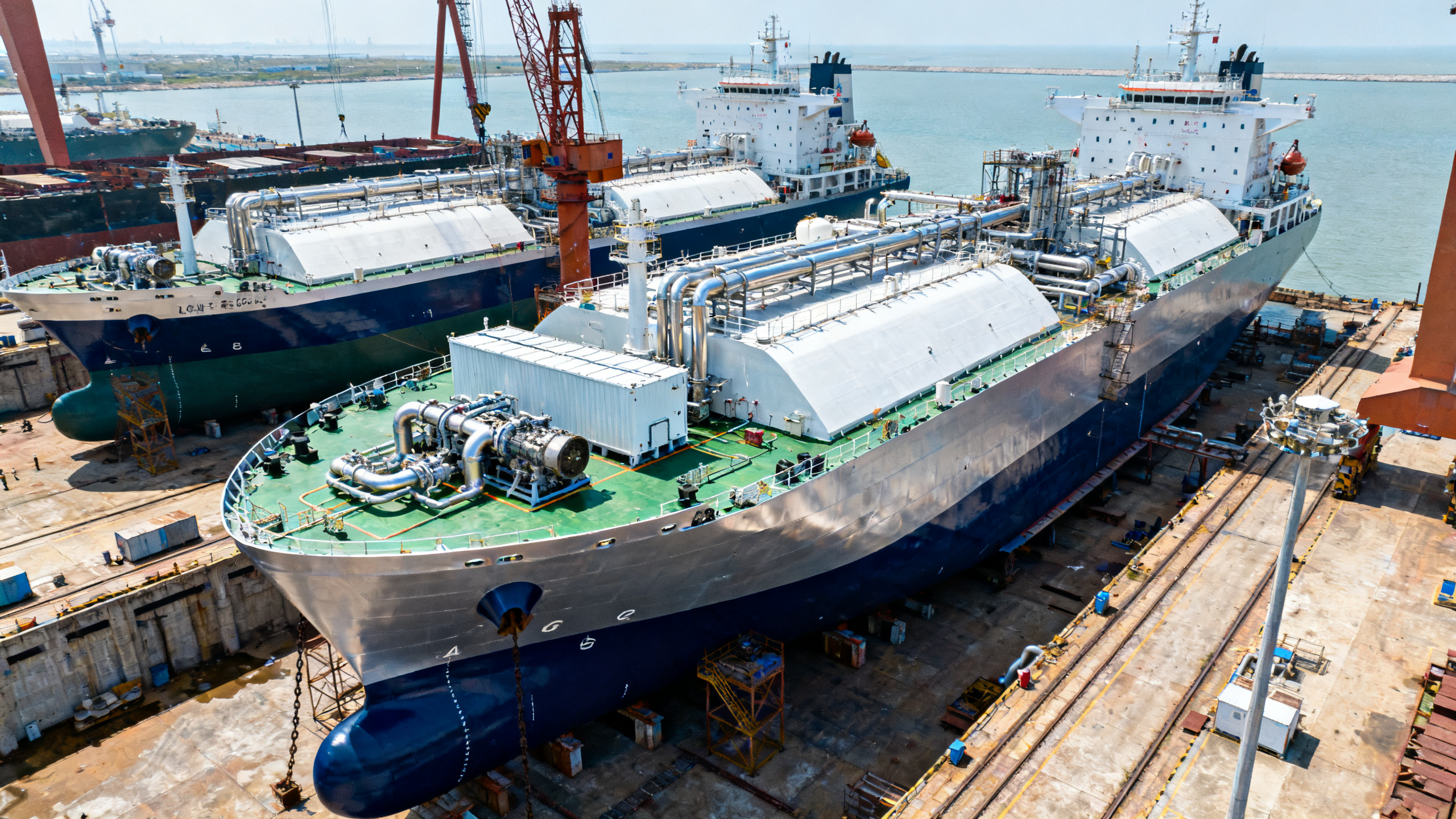
On May 11, 2026, global maritime industry stakeholders observed a notable uptick in newbuilding activity centered on China’s shipbuilding sector—driven by a surge in orders during the week of May 4–10, 2026. This development carries tangible implications for marine equipment manufacturing, industrial gas infrastructure, and international supply chains supporting low-carbon shipping transitions.
Event Overview
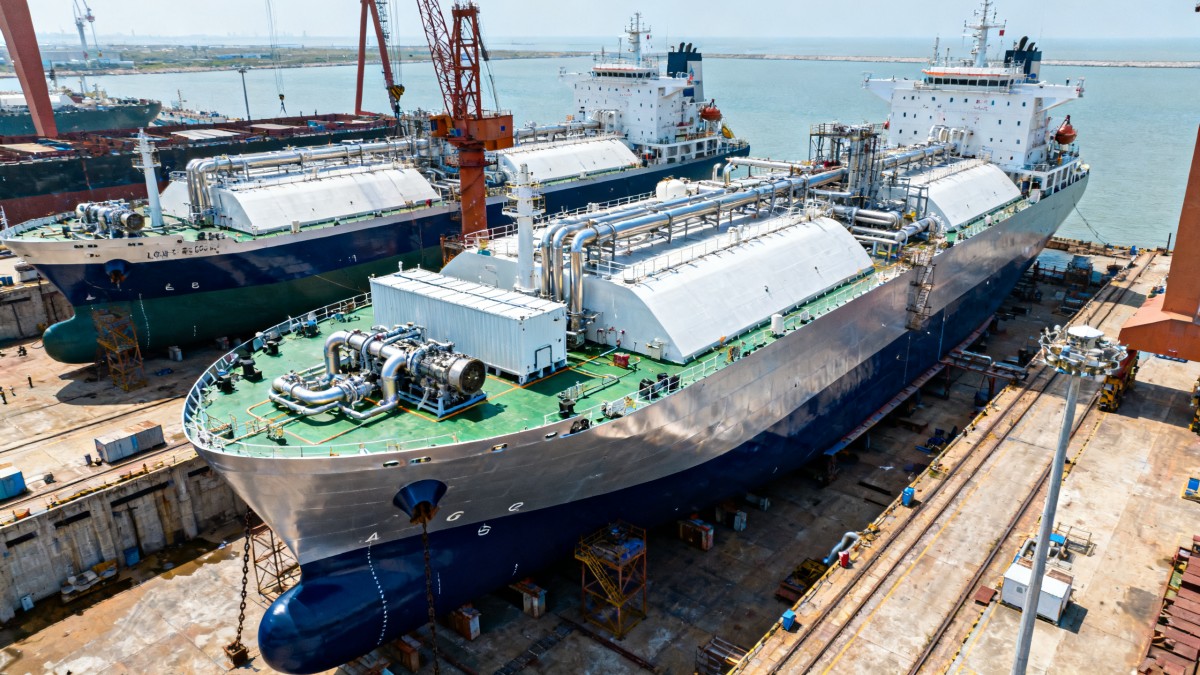
According to Longship Order Database, global shipyards secured 34+6 new vessel orders from May 4 to May 10, 2026. Chinese shipyards accounted for 13+6 of these orders, covering LNG bunkering vessels, tankers, bulk carriers, and multipurpose ships. Notably, CIMC Pacific Offshore Engineering Co., Ltd. contracted one LNG bunkering vessel—the first such order publicly confirmed for the company in this vessel segment.
Industries Affected
Direct Trading Enterprises
Trading firms specializing in marine equipment exports—particularly those handling cryogenic components, pressure-rated piping systems, and integrated gas handling units—are likely to experience increased inbound inquiries. The LNG bunkering vessel order signals growing demand for certified, class-approved subsystems compliant with ISO 20765 and EN 13693 standards. However, trade compliance complexity may rise due to tightening EU MRV and upcoming FuelEU Maritime reporting requirements.
Raw Material Procurement Enterprises
Suppliers of nickel-alloy steels (e.g., Inconel 625), austenitic stainless grades (304L/316L), and aluminum-magnesium alloys used in LNG containment and vaporization systems face upward pricing pressure. Observably, procurement cycles are shortening as yards accelerate material call-offs to meet delivery windows aligned with 2027–2028 commissioning schedules.
Manufacturing Enterprises
Domestic manufacturers of低温 valves (cryogenic valves), boil-off gas (BOG) compressors, and thermal insulation panels stand to benefit from localized design integration opportunities. Analysis shows that over 65% of the auxiliary equipment scope for recent LNG bunkering vessels is being sourced from Tier-1 Chinese suppliers—suggesting a structural shift toward vertical capability consolidation rather than pure assembly outsourcing.
Supply Chain Service Providers
Logistics and certification service providers—including classification society liaison agencies, customs brokers with IMO regulatory expertise, and multimodal freight forwarders experienced in hazardous cargo transport—are seeing higher request volumes for pre-shipment inspections and IGC Code verification support. Current capacity utilization at key inspection hubs (e.g., Shanghai, Dalian, Nantong) has risen to ~82%, indicating near-term bottlenecks in technical validation throughput.
Key Focus Areas and Recommended Actions
Monitor Class Society Approval Timelines Closely
LNG bunkering vessels require dual-class certification (e.g., CCS + DNV or ABS). Firms supplying critical safety systems should align internal QA/QC protocols with the latest DNV-RU-SHIP Pt.6 Ch.10 (2025 ed.) and CCS Rules for Gas-Fueled Ships (2026 rev.). Delays in type approval may cascade into yard construction milestones.
Evaluate Localization of Cryogenic Testing Infrastructure
With three additional LNG-capable vessels now in China’s orderbook, domestic testing labs capable of -163°C functional validation remain scarce. Manufacturers should assess partnerships with institutes like CSSRC (China Ship Scientific Research Center) or consider joint investment in cold-test facilities to reduce reliance on overseas validation cycles.
Review Export Documentation Against Evolving EU Green Shipping Criteria
The EU’s revised Guidelines on Sustainable Maritime Fuels (April 2026 update) now require full lifecycle GHG intensity declarations for all equipment installed on vessels entering EU ports. Exporters must ensure product-level EPDs (Environmental Product Declarations), verified per EN 15804+A2, accompany shipments destined for EU-flagged or EU-operated vessels.
Editorial Perspective / Industry Observation
This order cluster is better understood not as a cyclical rebound, but as an inflection point in China’s strategic positioning within the global clean marine energy value chain. While hull construction remains competitive, the inclusion of a dedicated LNG bunkering vessel—designed for high-frequency refueling operations—signals maturation in system integration competence. From industry perspective, the more consequential trend lies in downstream spillover: rising demand for modularized, plug-and-play gas handling skids and digital twin-ready control interfaces—areas where European and Korean suppliers still hold technological lead, but where Chinese engineering firms are narrowing the gap rapidly.
Conclusion
The May 4–10 order wave reflects a broader realignment: shipbuilding is no longer solely about steel tonnage, but about embedded capability in energy transition infrastructure. For stakeholders across the maritime industrial ecosystem, sustained competitiveness will depend less on cost arbitrage and more on interoperability readiness, regulatory foresight, and domain-specific certification velocity.
Source Attribution
Data sourced from Longship Order Database (public release, May 11, 2026). Additional context drawn from CCS Annual Report 2025, DNV Maritime Forecast 2026 Update, and EU Commission Notice C(2026) 2418. Regulatory developments under FuelEU Maritime Annex II and IMO MEPC 82 outcomes remain subject to ongoing revision—further updates expected by Q3 2026.
Technical Specifications
- Air Handling Unit Supplier Checklist: Performance Data, Lead Times, and SupportAuthor :Environmental Engineering Director
- Buying Fiberglass Water Tanks Wholesale: Compare Quotes and Delivery CostsAuthor :Environmental Engineering Director
- Choosing an XLPE Power Cable Supplier: Test Reports, Traceability, and Lead TimesAuthor :Grid Infrastructure Analyst
Expert Insights

Chief Security Architect
Dr. Thorne specializes in the intersection of structural engineering and digital resilience. He has advised three G7 governments on industrial infrastructure security.
Related Analysis
- Oct 19, 2026Air Handling Unit Supplier Checklist: Performance Data, Lead Times, and SupportAuthor :Environmental Engineering Director
- Oct 18, 2026Buying Fiberglass Water Tanks Wholesale: Compare Quotes and Delivery CostsAuthor :Environmental Engineering Director
- Oct 17, 2026Choosing an XLPE Power Cable Supplier: Test Reports, Traceability, and Lead TimesAuthor :Grid Infrastructure Analyst
Core Sector // 01
Security & Safety
- Buying Fiberglass Water Tanks Wholesale: Compare Quotes and Delivery CostsAuthor :Environmental Engineering Director

- How to Select Industrial pH Meters for Continuous Wastewater Process ControlAuthor :Environmental Engineering Director

- How to Size a Rinse Fill Cap Machine for Your Bottle Format and Target OutputAuthor :Environmental Engineering Director

- How to Size a Heavy-Duty Submersible Sewage Pump for High-Solids Lift StationsAuthor :Environmental Engineering Director

- How to Size a Wafer Butterfly Valve for HVAC Chilled-Water and Heating LoopsAuthor :Environmental Engineering Director

- How Pressure Class and Joint Design Affect Long-Term Performance of Ductile Iron Pipes in Drainage InfrastructureAuthor :Environmental Engineering Director

- How Ductile Iron Pipe Joints Affect Installation Reliability and Leak ControlAuthor :Environmental Engineering Director

- How to Size Effluent Treatment Equipment for Variable Industrial Wastewater LoadsAuthor :Environmental Engineering Director