How to compare Environment & Ecology exporters by compliance
Author
Date Published
Reading Time
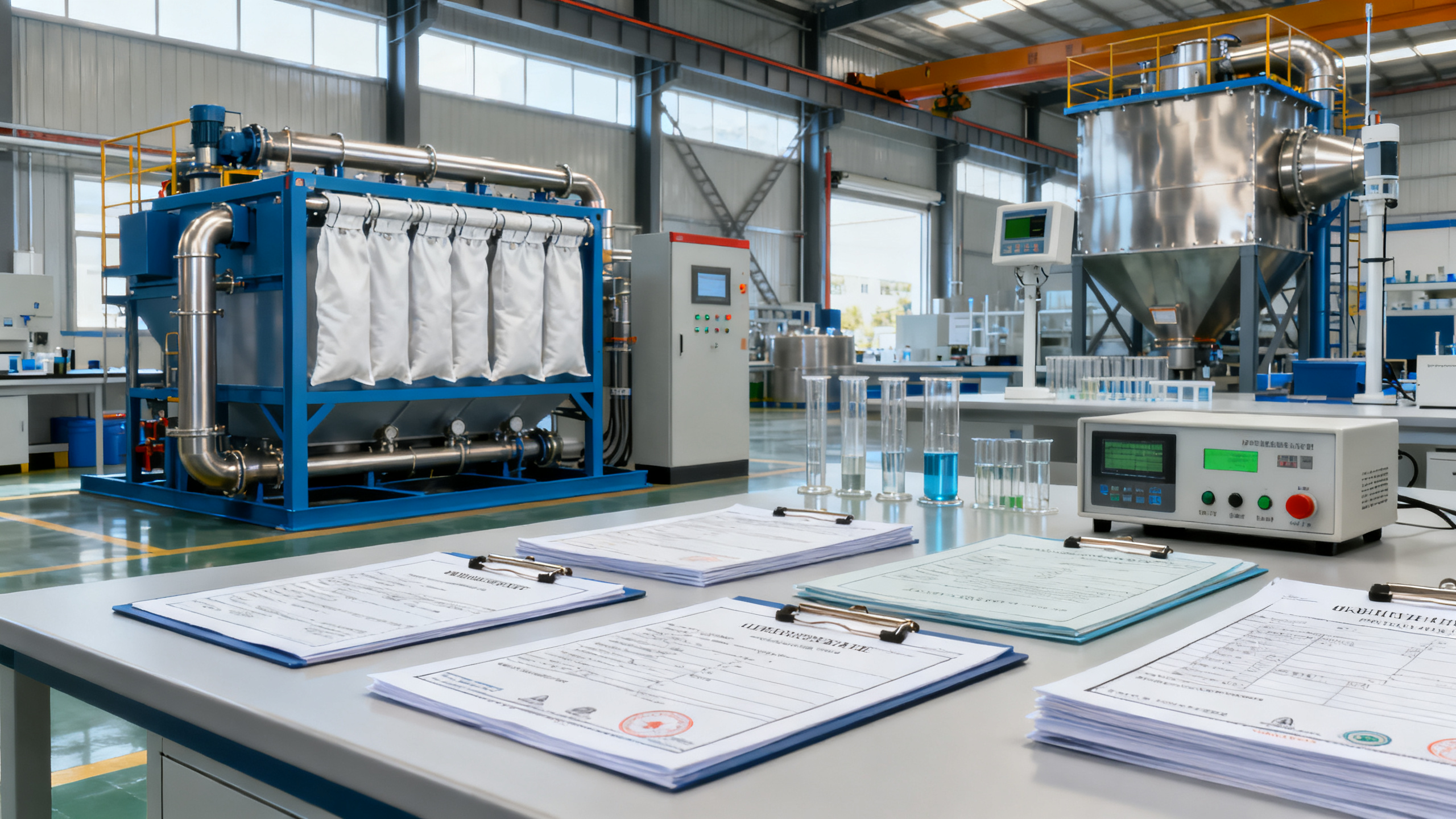
Choosing an Environment & Ecology exporter by compliance is a practical risk-control exercise, not a simple price check. In industrial projects, weak compliance can trigger customs delays, failed inspections, safety incidents, or expensive retrofits.
A qualified Environment & Ecology exporter proves regulatory readiness through certifications, audited production, traceable testing, and export discipline. That evidence helps compare suppliers across wastewater systems, emission control equipment, solid waste solutions, and ecological monitoring technologies.
This guide explains how to compare suppliers in real buying scenarios. It focuses on certifications, environmental standards, product testing, and shipment records that support reliable, sustainable industrial performance.
When compliance matters most in Environment & Ecology export scenarios
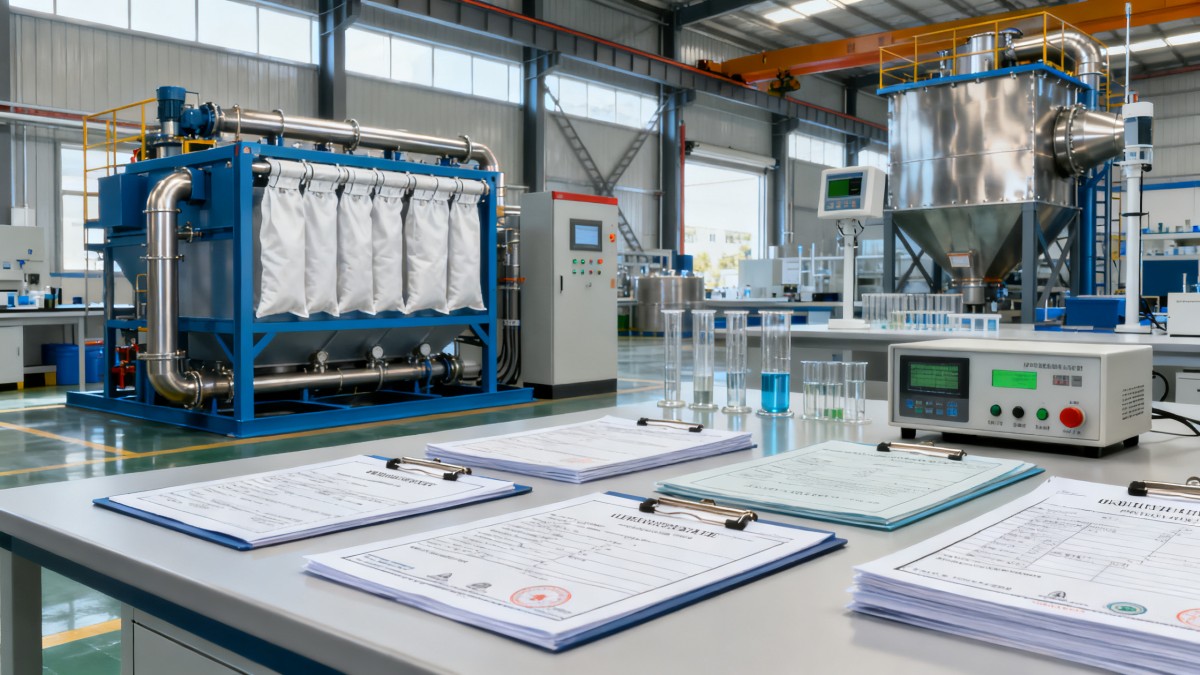
Not every project carries the same compliance burden. Comparing an Environment & Ecology exporter should start with the operating scenario, because legal exposure, technical risk, and documentation needs vary sharply.
For example, a dust collection system for a cement line faces different standards than a biological wastewater module for food processing. Both require evidence, but the compliance checkpoints are not identical.
Scenario 1: Exporting into highly regulated markets
If the destination is the EU, North America, or developed Asia, regulatory acceptance becomes a frontline filter. Here, an Environment & Ecology exporter must show product conformity, labeling accuracy, and technical files ready for review.
Key checks include CE marking relevance, RoHS or REACH impact, electrical safety where applicable, and complete Declarations of Conformity. Missing files often signal future shipment or site-acceptance problems.
Scenario 2: Projects tied to EPC specifications
EPC-driven projects usually require strict document alignment. In this case, the best Environment & Ecology exporter is one that can match datasheets, ITPs, FAT records, and approved vendor list requirements.
A supplier may be technically capable yet commercially risky if revision control is weak. Document inconsistency can delay approvals, fabrication release, and commissioning milestones.
Scenario 3: Equipment for hazardous or continuous operations
Continuous-duty applications need stronger proof than low-risk utilities. If environmental equipment protects worker health, air quality, or discharge compliance, reliability data matters as much as certificate count.
Look for endurance testing, material traceability, corrosion resistance reports, and maintenance documentation. A credible Environment & Ecology exporter should connect compliance directly to operational stability.
How to compare certifications and audit evidence across supplier types
Certificates alone do not guarantee a reliable Environment & Ecology exporter. The better approach is to compare whether each certificate is relevant, current, verifiable, and supported by process controls.
Start with core management certifications
ISO 9001 remains a baseline for quality management. For environmental solutions, ISO 14001 is especially valuable because it reflects structured environmental management inside the supplier’s own operations.
ISO 45001 may also matter for factories producing heavy filtration units, scrubbers, pumps, or process skids. It shows whether health and safety are managed systematically during manufacturing.
Check product-level conformity, not only factory-level systems
A strong Environment & Ecology exporter should show which products carry which approvals. Factory certificates describe management systems. Product certificates describe whether a specific model meets applicable rules.
- CE or equivalent conformity for relevant product families
- Third-party test reports from recognized laboratories
- Material safety and chemical compliance records
- Calibration certificates for monitoring instruments
- Explosion-proof approvals where hazardous areas apply
Audit the validity behind the paperwork
Ask who issued the certificate, when it expires, and whether the scope covers the exported product. Many weak suppliers present unrelated certificates or outdated files with no audit trail.
A dependable Environment & Ecology exporter can explain testing methods, certification scope, and change-control procedures without hesitation. Confidence usually comes from documented systems, not sales language.
Typical application scenarios and the core compliance judgment points
Different environmental systems require different compliance priorities. Comparing exporters by application helps reveal whether a supplier truly understands the field conditions behind the paperwork.
Wastewater treatment modules
For pumps, membranes, dosing skids, and packaged treatment units, focus on material compatibility, pressure testing, discharge design assumptions, and electrical compliance for controls.
The right Environment & Ecology exporter should also provide performance references, operating parameter limits, and maintenance instructions linked to water chemistry and local discharge rules.
Air pollution control systems
Dust collectors, bag filters, scrubbers, and VOC treatment systems require evidence on filtration efficiency, fan performance, coating durability, and emissions measurement support.
An experienced Environment & Ecology exporter should also clarify fire risk controls, anti-corrosion strategy, and whether design assumptions match dust load, temperature, and humidity.
Environmental monitoring instruments
Continuous monitoring devices need stronger calibration discipline. Compliance should include traceable calibration, sensor accuracy records, data output standards, and service intervals.
For this scenario, an Environment & Ecology exporter with strong after-sales documentation often outperforms one with a lower unit price but weak metrology support.
How scenario-based requirements differ when comparing an Environment & Ecology exporter
Practical fit suggestions before selecting an Environment & Ecology exporter
Use a weighted comparison instead of a simple checklist. This makes supplier differences visible and prevents attractive pricing from hiding compliance gaps.
- Define the target market and its mandatory standards.
- Match each product family to the required certificates.
- Score document quality, not only certificate presence.
- Review test evidence for operating conditions.
- Confirm export history for similar destinations.
- Check complaint handling and corrective action records.
A strong Environment & Ecology exporter usually shows consistency across documents, factory process, and field references. Gaps between those areas should lower confidence immediately.
Common mistakes when judging compliance in environmental export scenarios
One common error is treating ISO 9001 as complete proof of capability. It is useful, but it does not replace product-specific validation, market access compliance, or application testing.
Another mistake is ignoring destination-country rules for packaging, labeling, electrical interfaces, and language requirements. A capable Environment & Ecology exporter plans for import acceptance, not only ex-factory release.
A third error is overlooking post-shipment support. Environmental systems often need commissioning records, spare parts traceability, and performance troubleshooting after installation.
Finally, many comparisons ignore negative signals. Reused reports, inconsistent signatures, missing scopes, and non-matching model numbers are often stronger indicators than polished brochures.
Next steps for a confident exporter comparison
Build a comparison file around scenario, standards, and evidence. Ask each Environment & Ecology exporter for the same document set, then review relevance, validity, and traceability side by side.
Prioritize suppliers that combine regulatory discipline, tested performance, and export execution. In industrial infrastructure, compliance is not an administrative detail. It is a direct measure of supply-chain resilience and long-term project safety.
For higher-stakes sourcing, use technical content, certifications, and case-based validation together. That approach creates a clearer path to selecting an Environment & Ecology exporter that supports durable, compliant, and sustainable operations.
Technical Specifications
- Air Handling Unit Supplier Checklist: Performance Data, Lead Times, and SupportAuthor :Environmental Engineering Director
- Buying Fiberglass Water Tanks Wholesale: Compare Quotes and Delivery CostsAuthor :Environmental Engineering Director
- Choosing an XLPE Power Cable Supplier: Test Reports, Traceability, and Lead TimesAuthor :Grid Infrastructure Analyst
Expert Insights

Chief Security Architect
Dr. Thorne specializes in the intersection of structural engineering and digital resilience. He has advised three G7 governments on industrial infrastructure security.
Related Analysis
- Oct 19, 2026Air Handling Unit Supplier Checklist: Performance Data, Lead Times, and SupportAuthor :Environmental Engineering Director
- Oct 18, 2026Buying Fiberglass Water Tanks Wholesale: Compare Quotes and Delivery CostsAuthor :Environmental Engineering Director
- Oct 17, 2026Choosing an XLPE Power Cable Supplier: Test Reports, Traceability, and Lead TimesAuthor :Grid Infrastructure Analyst
Core Sector // 01
Security & Safety
- Buying Fiberglass Water Tanks Wholesale: Compare Quotes and Delivery CostsAuthor :Environmental Engineering Director

- How to Select Industrial pH Meters for Continuous Wastewater Process ControlAuthor :Environmental Engineering Director

- How to Size a Rinse Fill Cap Machine for Your Bottle Format and Target OutputAuthor :Environmental Engineering Director

- How to Size a Heavy-Duty Submersible Sewage Pump for High-Solids Lift StationsAuthor :Environmental Engineering Director

- How to Size a Wafer Butterfly Valve for HVAC Chilled-Water and Heating LoopsAuthor :Environmental Engineering Director

- How Pressure Class and Joint Design Affect Long-Term Performance of Ductile Iron Pipes in Drainage InfrastructureAuthor :Environmental Engineering Director

- How Ductile Iron Pipe Joints Affect Installation Reliability and Leak ControlAuthor :Environmental Engineering Director

- How to Size Effluent Treatment Equipment for Variable Industrial Wastewater LoadsAuthor :Environmental Engineering Director