What to check before choosing an Environment & Ecology exporter
Author
Date Published
Reading Time
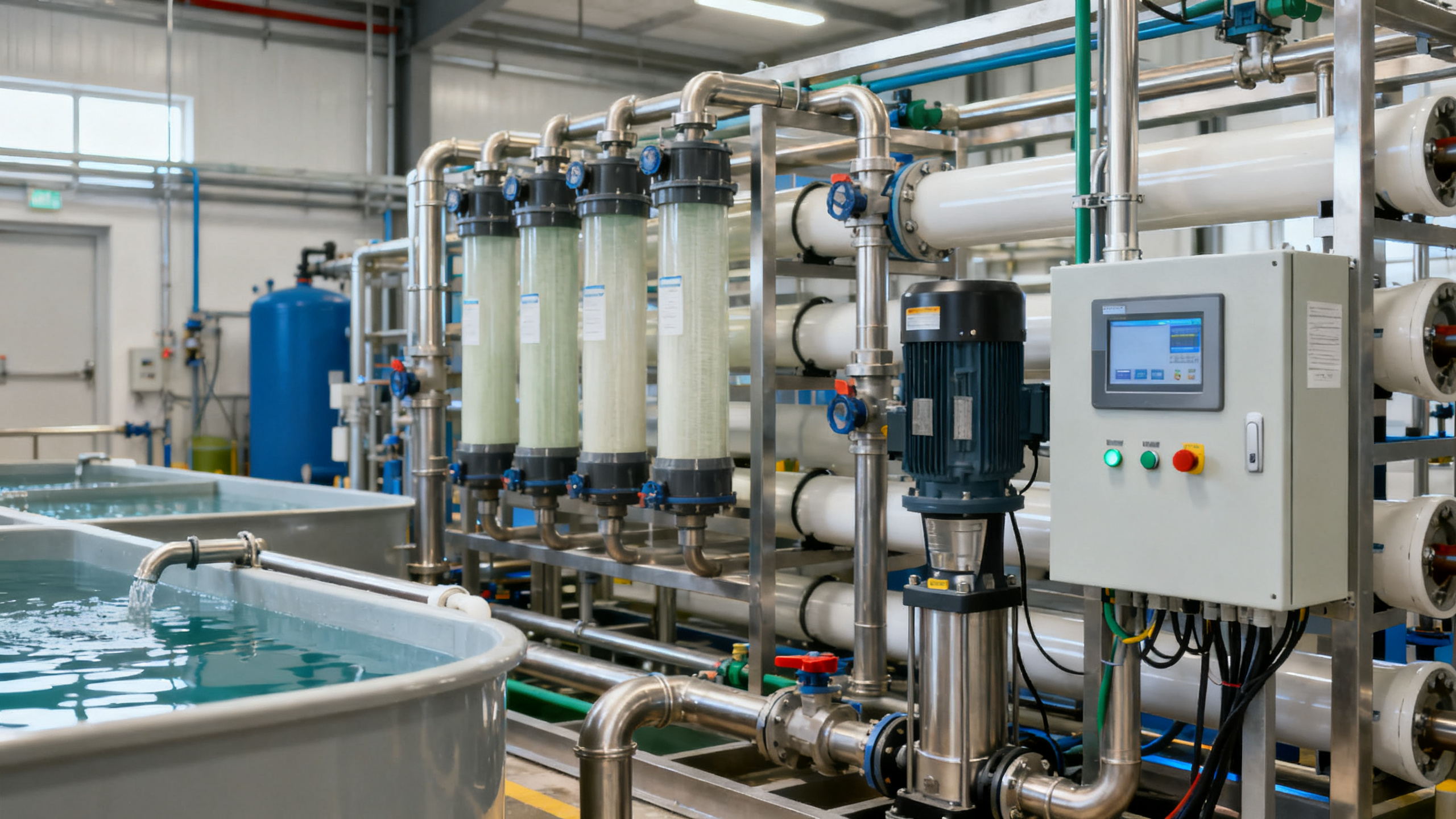
Choosing the right Environment & Ecology exporter is critical for distributors, agents, and channel partners serving industrial buyers with strict compliance and performance demands. Before making a decision, it is essential to assess technical certifications, supply stability, product scope, and after-sales support to ensure long-term market competitiveness. This guide outlines the key checkpoints that help you reduce sourcing risk and build stronger, more trusted partnerships.
Why does choosing an Environment & Ecology exporter require more than price comparison?
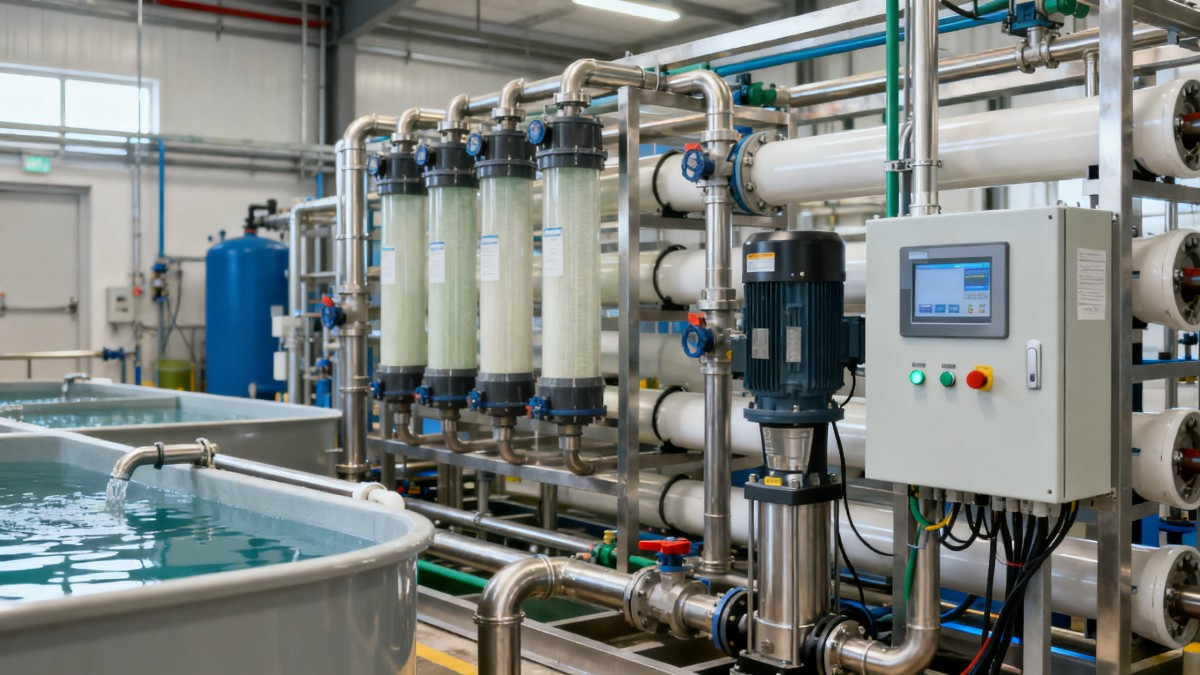
For distributors and agents in industrial markets, an Environment & Ecology exporter is not just a supplier of environmental equipment or related components. This exporter often becomes part of your own reputation chain. If delivered products fail certification checks, miss project schedules, or underperform in harsh operating conditions, the cost is rarely limited to a returned shipment. It can mean delayed commissioning, failed tenders, service disputes, and lost accounts.
That is why buyers in wastewater treatment, emission control, site remediation, industrial ventilation, monitoring systems, filtration, and ecological infrastructure rarely choose on unit price alone. They evaluate whether the exporter can support complex project documentation, multi-market compliance expectations, and stable volume supply over time.
Global Industrial Core (GIC) approaches this issue from a sourcing-intelligence perspective. In industrial procurement, the strongest exporter is usually the one that combines technical clarity, document discipline, predictable manufacturing coordination, and responsiveness when site conditions change. For channel partners, that combination matters more than a short-term discount.
- Industrial end users demand evidence, not claims. Product files, testing references, and traceable specifications are expected.
- Environmental and ecology applications often involve public infrastructure or regulated private facilities, so documentation gaps can block project approval.
- Distributors need an Environment & Ecology exporter that can protect margin through lower risk, fewer claims, and stronger bid support.
What should distributors check first in an Environment & Ecology exporter?
The first review should focus on whether the exporter is commercially easy to work with and technically safe to represent. Many channel partners make the mistake of starting with catalog breadth. Product range matters, but foundational checks should come first because they determine whether the partnership can scale without hidden friction.
Core pre-qualification checklist
- Verify the exporter’s product documentation structure, including datasheets, material details, operating limits, installation guidance, and packing lists.
- Check whether certifications and declarations are available for the target market instead of only the exporter’s domestic market.
- Review production coordination capability, especially for mixed orders that include filters, monitoring devices, valves, housings, or accessory parts.
- Assess communication speed and technical accuracy during the quotation stage. Slow or vague answers usually worsen after onboarding.
- Ask how the exporter handles deviations, spare parts, packaging damage, and field complaints.
A reliable Environment & Ecology exporter should also understand that different industrial verticals use different buying logic. EPC contractors may emphasize compliance packages and delivery milestones. Local distributors may focus on replacement cycles and inventory turnover. Facility managers may care more about maintenance simplicity and operating cost. An exporter that speaks only in generic sales language is usually not prepared for these distinctions.
The table below helps channel partners screen an Environment & Ecology exporter before moving into sample requests or price negotiation.
This framework is especially useful when several suppliers appear similar on paper. The difference usually emerges in process quality, not brochure design. If an exporter cannot present these fundamentals clearly, it is risky to move forward with large or regulated accounts.
Which certifications and compliance signals matter most?
An Environment & Ecology exporter serving industrial channels must be ready for compliance discussions early. Requirements vary by product category and destination market, but channel partners should always verify whether documentation matches the actual product configuration being quoted. A generic certificate file without product traceability is not enough for serious projects.
Common compliance checkpoints
- Product safety and market access markings where applicable, such as CE-related declarations for relevant equipment categories.
- Quality management discipline, often reflected through ISO-based manufacturing processes and documented inspection routines.
- Material and chemical compliance references where seals, coatings, membranes, plastics, or treatment media are involved.
- Calibration or performance verification records for monitoring and measurement components used in environmental systems.
- Packing, labeling, and traceability controls that support customs clearance and warehouse handling.
Many disputes arise because distributors assume the exporter understands destination regulations by default. In reality, some exporters are strong in manufacturing but weak in export documentation. Others may have solid paperwork for one market but limited readiness for another. The safest approach is to request document samples during supplier evaluation, not after receiving the deposit invoice.
The following table can help compare compliance readiness across candidate Environment & Ecology exporter partners.
For distributors with multiple regional markets, a document audit before contract signing can prevent months of avoidable rework. GIC’s sourcing-oriented perspective is especially valuable here because industrial buyers do not judge paperwork separately from product performance. They judge the supplier system as a whole.
How do product scope and application fit affect reseller success?
Not every Environment & Ecology exporter is suited for every channel strategy. Some are strong in one product family such as filtration housings or sensors. Others offer wider environmental system support, which is more useful for distributors serving bundled projects. The right choice depends on whether your business model is replacement-driven, project-driven, or solution-driven.
Typical application scenarios to map before onboarding an exporter
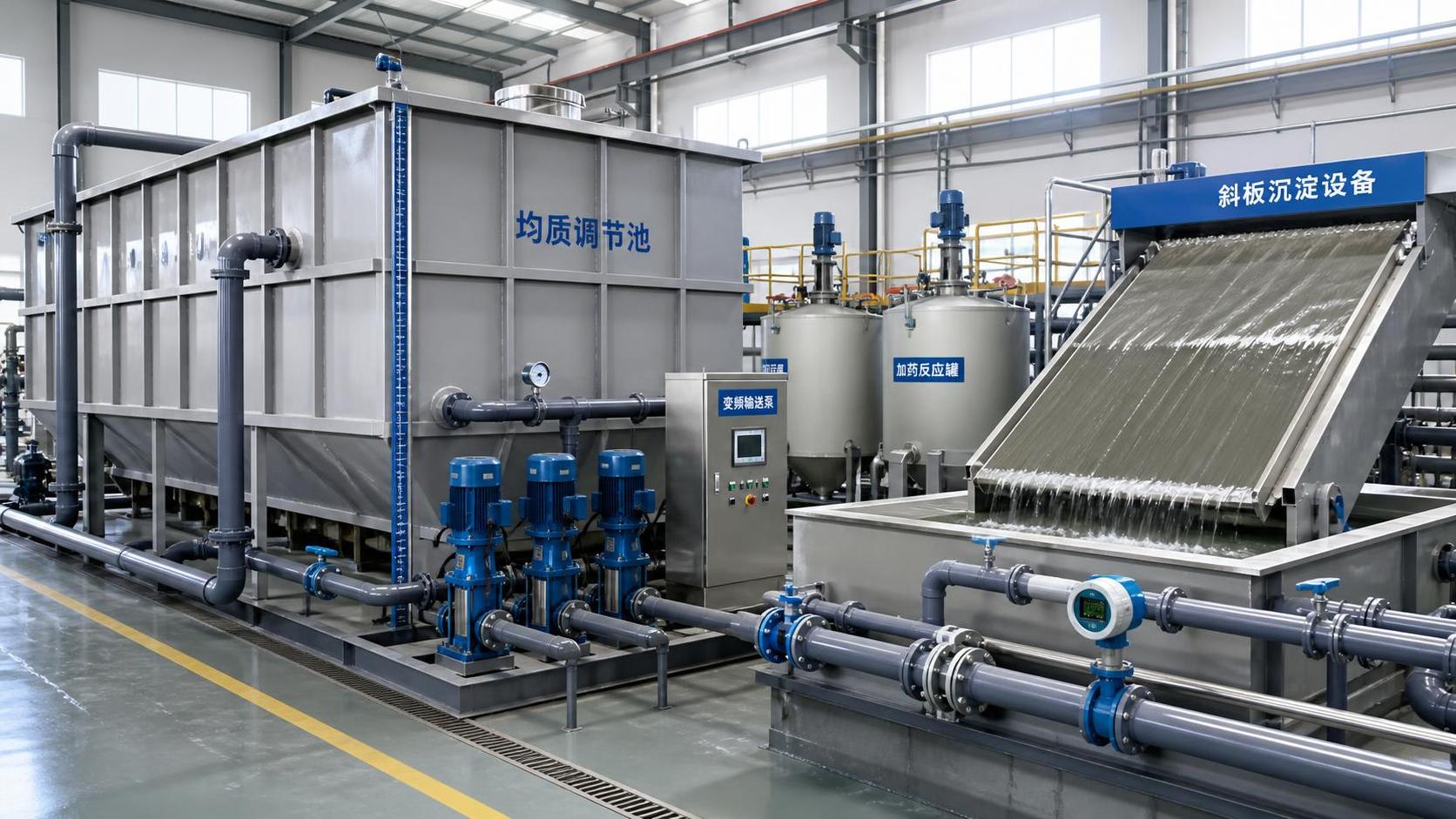
- Industrial water treatment projects requiring pumps, filters, housings, monitoring devices, and corrosion-resistant accessories.
- Air emission and dust-control systems where seals, housings, fans, sensors, or duct-linked components must perform in demanding environments.
- Waste sorting and recycling infrastructure needing durable mechanical assemblies and consistent spare parts availability.
- Ecological restoration and site remediation projects where material compatibility and environmental handling requirements are closely reviewed.
A capable Environment & Ecology exporter should be able to explain where its products are commonly deployed, what operating boundaries apply, and what companion items are often needed. This matters because distributors do not only sell items. They solve procurement packages. If the exporter cannot support adjacent needs, you may lose the order to a competitor with broader integration capability.
Questions to ask about application fit
- What industries does the exporter serve most often: municipal utilities, petrochemical, food processing, power generation, mining, or general manufacturing?
- Can it support accessories, consumables, and replacement parts over the product life cycle?
- Does it understand local installation practices and common adaptation needs?
- Can it maintain specification consistency if the same project is repeated at multiple sites?
For channel partners building long-term industrial portfolios, application fit often predicts revenue quality better than initial quotation strength. A slightly higher-cost exporter with stronger cross-application support may produce better repeat business and lower field-service burden.
How should you evaluate supply stability, lead time, and service response?
Supply stability is one of the most underestimated factors when selecting an Environment & Ecology exporter. In industrial distribution, late delivery can damage more than a single order. It can trigger site penalties, force emergency substitutions, or push end users toward another brand. What matters is not only the quoted lead time, but how controllable that lead time is across seasons, material changes, and mixed-SKU orders.
Signals of a stable exporter relationship
- The exporter can separate standard lead times from exception lead times and explain what causes variation.
- Order confirmation includes specification review, packing details, and milestone clarity rather than only a price line.
- There is a visible process for engineering change control if materials or subcomponents need substitution.
- Spare parts and after-sales support are treated as an operational commitment, not as a low-priority add-on.
Ask for realistic answers on sample lead time, pilot order lead time, repeat order lead time, and claim response timing. Some exporters look strong on large quotations but become slow once smaller but urgent replacement orders arrive. For distributors, responsiveness on these smaller operational orders is often the real test of partnership quality.
A practical review method for channel partners
Before signing exclusivity or volume commitments, run a staged validation process. Start with a technical inquiry, then a sample or low-risk order, then a mixed-order test if relevant. Monitor response accuracy, packaging condition, document completeness, and problem-solving behavior. This method exposes whether the Environment & Ecology exporter can handle the realities of channel distribution.
What cost traps and comparison mistakes should buyers avoid?
A low quotation from an Environment & Ecology exporter can look attractive, especially when budgets are tight. But in industrial channels, apparent savings often disappear through hidden costs. These include repeated document revisions, repacking, inconsistent batch quality, local modification work, urgent freight, or field replacement obligations. Total commercial cost matters more than first invoice value.
The comparison below shows why distributors should evaluate full procurement impact rather than price alone.
This does not mean the highest-priced exporter is the right one. It means you should compare landed value, operating stability, and serviceability. In many cases, a disciplined mid-priced Environment & Ecology exporter outperforms both the cheapest and the most expensive option because risk is managed more effectively.
Common mistakes distributors make when selecting an Environment & Ecology exporter
Mistake 1: Assuming broad catalogs equal strong delivery capability
A wide catalog may indicate sourcing reach, but it does not prove process control. Confirm what is actually standardized, what is assembled on demand, and what depends on third-party supply coordination.
Mistake 2: Reviewing certifications without checking product relevance
Documents should match the quoted product scope. A certificate tied to another model or another market may offer little protection during inspection or project review.
Mistake 3: Ignoring after-sales mechanics
Some exporters support sales aggressively but lack a disciplined complaint process. Ask who responds, what evidence is needed, and how spare parts or corrective shipments are handled.
Mistake 4: Evaluating only current demand
An Environment & Ecology exporter should be able to support your next stage of growth, whether that means new countries, additional product families, or stricter industrial customers.
FAQ: practical questions before appointing an Environment & Ecology exporter
How do I know if an Environment & Ecology exporter is suitable for regulated industrial buyers?
Check whether the exporter can provide structured technical files, market-relevant compliance documents, traceable product identification, and consistent answers to application questions. If responses are generic or delayed during evaluation, expect similar issues during live projects.
What is more important: low MOQ or stable repeat supply?
For most distributors, stable repeat supply is more important after initial market testing. Low MOQ helps with entry, but repeatability drives long-term profit. If a supplier cannot maintain specification and lead time consistency, any MOQ advantage will fade quickly.
Should I prioritize exporters with wider product range?
Only if the range is manageable and relevant to your customer base. A broader range is valuable when it simplifies project bundling, accessory sourcing, or repeat purchases. It is less valuable if technical control is weak across the portfolio.
How long should the evaluation process take?
That depends on product complexity and market risk, but a proper review should include document screening, commercial discussion, and at least one practical order or sample stage. Rushing this process often leads to larger downstream losses.
Why work with a sourcing intelligence partner before final supplier selection?
When the buying environment includes engineering constraints, compliance pressure, and cross-border delivery risk, independent sourcing intelligence becomes a commercial advantage. Global Industrial Core supports this decision process by focusing on the industrial fundamentals that affect project resilience: documentation quality, standard alignment, technical applicability, and supply-chain reliability.
For distributors, agents, and channel partners assessing an Environment & Ecology exporter, that means more than simple supplier discovery. It means clarifying which technical parameters require confirmation, which product categories may need substitution planning, how certification expectations should be reviewed, and where after-sales exposure may appear before you commit to volume.
Why choose us
If you are screening an Environment & Ecology exporter for industrial distribution, GIC can help you shorten the risk-learning cycle. You can consult on product selection logic, target-market certification expectations, lead-time feasibility, accessory matching, packaging and shipping considerations, and sample evaluation priorities. We also help channel partners frame the right technical questions before quotation comparison turns into procurement commitment.
Contact us to discuss specification review, exporter comparison, documentation checkpoints, delivery-cycle planning, sample support strategy, and quotation alignment for your target application. This is especially useful if you are preparing to serve EPC contractors, industrial facility operators, or regulated infrastructure buyers that expect clear technical answers from day one.
Technical Specifications
- How to Select an Emissions Monitoring System Analyzer for Compliance ReportingAuthor :Precision Metrology Expert
- How to Select an Access Control Management System for Multi-Site FacilitiesAuthor :Safety Compliance Lead
- Portable Gas Monitor Calibration: How Often Is It Needed for Safe Confined-Space Work?Author :Precision Metrology Expert
Expert Insights

Chief Security Architect
Dr. Thorne specializes in the intersection of structural engineering and digital resilience. He has advised three G7 governments on industrial infrastructure security.
Related Analysis
- Sep 21, 2026How to Select an Emissions Monitoring System Analyzer for Compliance ReportingAuthor :Precision Metrology Expert
- Sep 20, 2026How to Select an Access Control Management System for Multi-Site FacilitiesAuthor :Safety Compliance Lead
- Sep 19, 2026Portable Gas Monitor Calibration: How Often Is It Needed for Safe Confined-Space Work?Author :Precision Metrology Expert
Core Sector // 01
Security & Safety
- How to Size a Wafer Butterfly Valve for HVAC Chilled-Water and Heating LoopsAuthor :Environmental Engineering Director

- How Pressure Class and Joint Design Affect Long-Term Performance of Ductile Iron Pipes in Drainage InfrastructureAuthor :Environmental Engineering Director

- How Ductile Iron Pipe Joints Affect Installation Reliability and Leak ControlAuthor :Environmental Engineering Director

- How to Size Effluent Treatment Equipment for Variable Industrial Wastewater LoadsAuthor :Environmental Engineering Director

- US Battery Push Raises New Entry Rules for SuppliersAuthor :Environmental Engineering Director

- EU EMC Rule Tightens for Water Treatment ExportsAuthor :Environmental Engineering Director

- EU REACH Restriction Targets PFAS Water Treatment ImportsAuthor :Environmental Engineering Director

- EU Mandates EN 14113:2026 for Water Treatment ExportsAuthor :Environmental Engineering Director