What drives Environment & Ecology cost in plant upgrades?
Author
Date Published
Reading Time
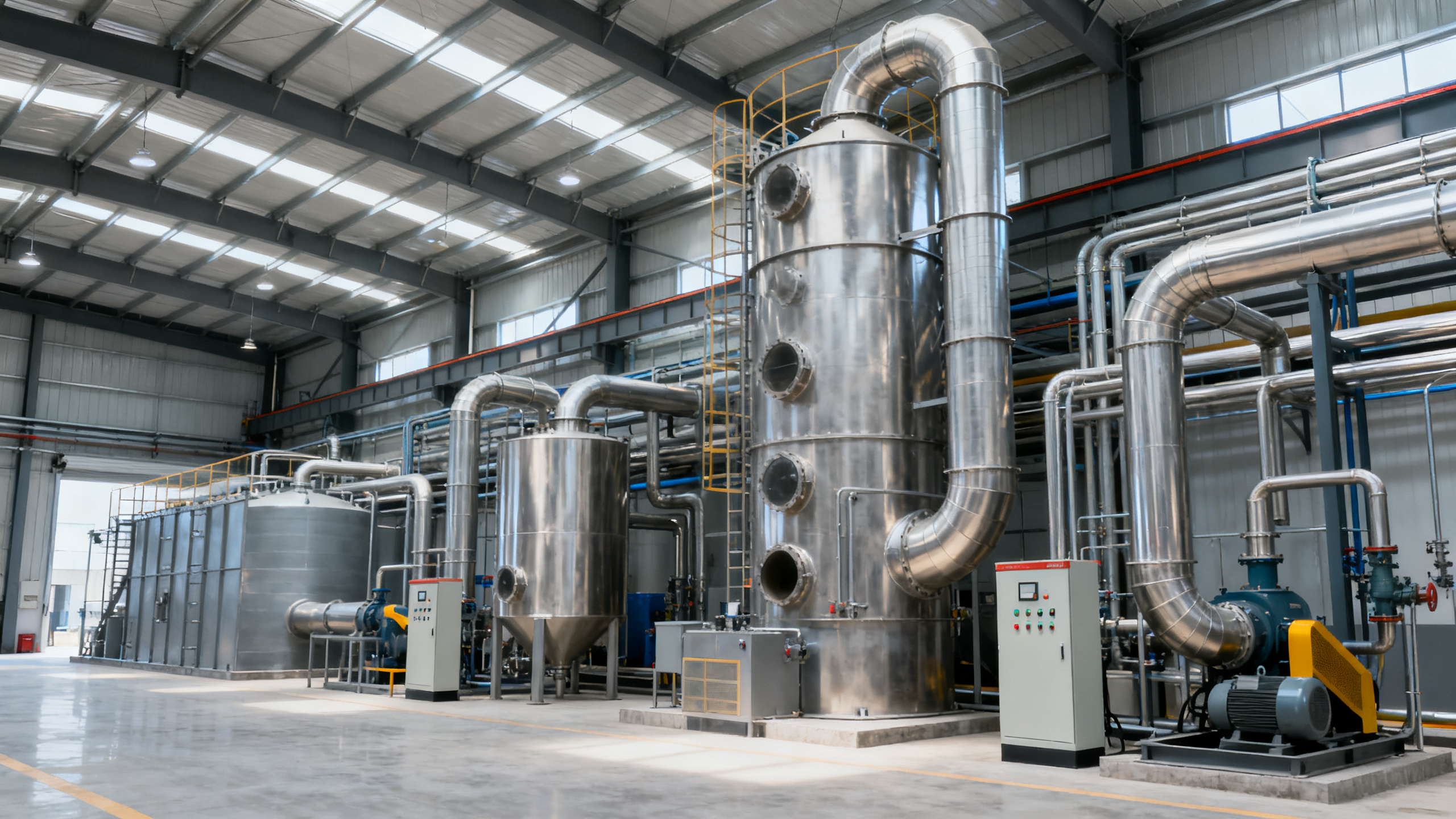
Environment & Ecology cost in plant upgrades is rarely driven by equipment price alone. For financial approvers, the real variables include compliance risk, retrofit complexity, operating efficiency, waste control, and long-term maintenance exposure. Understanding what truly shapes these costs helps decision-makers allocate capital more accurately, avoid hidden overruns, and approve upgrades that strengthen both environmental performance and investment returns.
In industrial plants, environmental spending often sits at the intersection of engineering, regulation, production continuity, and asset life-cycle management. A low bid on a scrubber, wastewater skid, dust collector, or emissions monitor may look favorable in a capital request, yet the total Environment & Ecology cost can increase by 20%–60% once shutdown windows, civil modifications, duct rerouting, utility loads, operator training, and compliance testing are included.
For finance leaders, plant controllers, and approval committees, the key question is not simply “How much does the equipment cost?” It is “What cost drivers will affect cash flow, risk exposure, and payback over the next 3–10 years?” That shift in perspective leads to stronger budget discipline and fewer surprises after project approval.
The real cost structure behind plant environmental upgrades
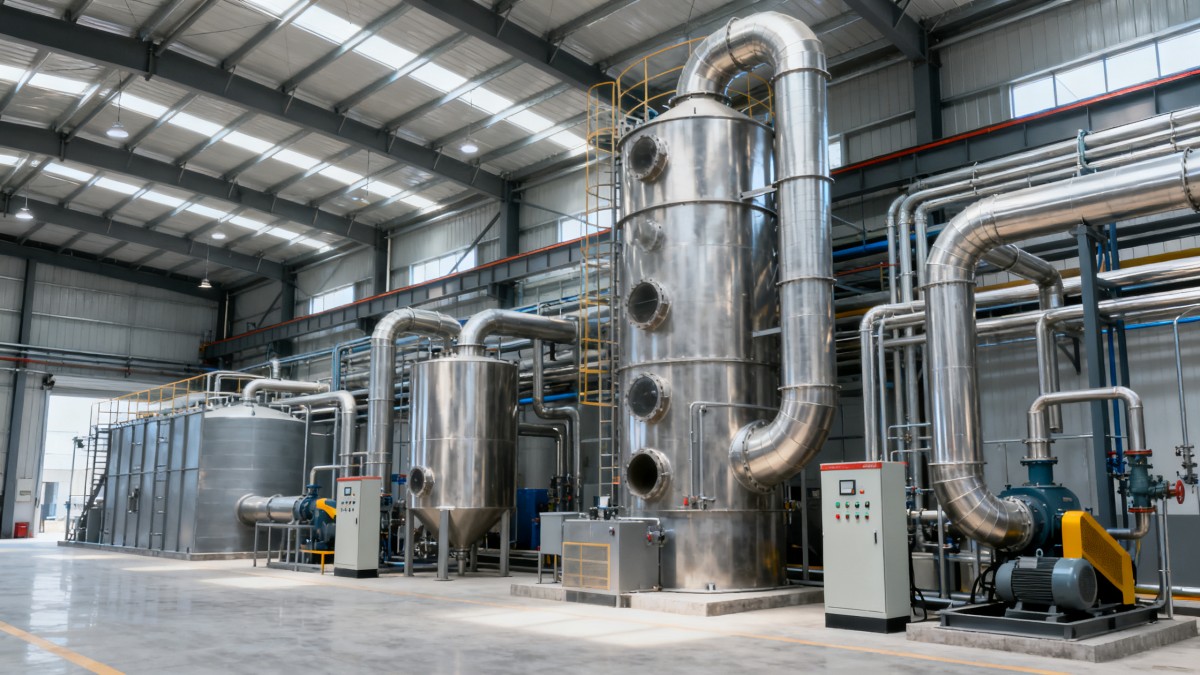
A practical review of Environment & Ecology cost starts by separating direct purchase price from full implementation cost. In many plant upgrades, hardware accounts for only 35%–55% of total project value. The remaining share is usually tied to engineering hours, installation labor, tie-ins, temporary bypass arrangements, permitting, testing, and post-startup optimization.
1. Compliance scope sets the baseline
The first major driver is the compliance target. A plant upgrading for internal sustainability goals will often face a different budget profile than a facility upgrading to meet mandatory air, water, or waste thresholds. If the project must satisfy multiple frameworks such as ISO-aligned internal controls, local emission permits, and customer audit requirements, the Environment & Ecology cost can rise sharply because documentation, validation, and monitoring become more extensive.
For example, moving from a basic particulate reduction approach to a system that also records continuous operating data may add 10%–25% to capex, but it can reduce penalty exposure and improve audit readiness. Financial approvers should ask whether the proposed scope meets only current thresholds or also builds capacity for regulations expected within the next 24–36 months.
2. Retrofit complexity changes project economics
Retrofit work is frequently underestimated. An environmental system installed in a greenfield plant can be laid out around process flow, utility routing, and maintenance access. In an operating facility, the same system may require demolition, structural reinforcement, crane access restrictions, or rerouting across congested pipe racks. These factors affect labor hours far more than catalog pricing.
A plant with limited floor space, ceiling clearance below 6 meters, or only one maintenance shutdown per quarter typically faces a higher Environment & Ecology cost than a site with flexible access and a staged installation plan. If the upgrade touches three existing systems instead of one, project coordination time can double.
Common retrofit cost triggers
- Unplanned civil or structural work for heavy skids, stacks, or tanks
- Shutdown losses when installation must occur in a 12–48 hour production window
- Electrical upgrades for added motors, pumps, blowers, or control panels
- Instrumentation integration with DCS, SCADA, or plant historians
- Hazardous-area requirements that change material, cable, or enclosure selection
The table below helps finance teams distinguish visible and hidden components in Environment & Ecology cost during plant modernization.
The main takeaway is simple: when approval is based only on quoted hardware, the capital request is incomplete. A more reliable review separates equipment, integration, installation, and compliance into distinct lines so that overruns can be traced before funding is released.
3. Utility demand and operating burden matter more than many budgets assume
A lower-priced system can create a higher long-run Environment & Ecology cost if it consumes excessive power, water, compressed air, chemical dosing media, or filter replacements. In plants running 6,000–8,000 operating hours per year, modest differences in blower efficiency or pump head can materially change annual operating expenditure.
Financial approvers should review at least 4 operating variables: kWh demand, consumable replacement frequency, labor hours per week, and waste disposal cost per ton or cubic meter. These recurring charges often determine whether the investment pays back in 2 years or drifts beyond 5 years.
What financial approvers should evaluate before signing off
Approving an environmental retrofit requires more than comparing 2 or 3 supplier quotations. The stronger approach is to evaluate the project through a risk-weighted investment lens. That means understanding how each design choice affects compliance resilience, operational continuity, maintenance effort, and life-cycle cost.
Build the budget around total cost of ownership
A useful financial screen is a 5-part total cost of ownership model covering capex, utility consumption, consumables, maintenance labor, and downtime exposure. Even if two systems are within a 7% purchase-price range, their 5-year cost can diverge by 15%–30% depending on component wear life and process stability.
This is especially important in dust control, wastewater treatment, fume extraction, odor control, and emissions monitoring. Equipment that appears “economical” at procurement stage may need monthly media replacement, quarterly calibration, or specialized service support with 2–4 week lead times for spare parts.
A practical approval checklist
- Define the compliance target and the acceptable risk threshold.
- Verify installation limits: footprint, utilities, outage window, structural load.
- Model 3-year and 5-year operating costs, not only first-year capex.
- Check maintainability: parts access, technician skill needs, service intervals.
- Confirm documentation needed for audits, handover, and operator training.
The following comparison framework can help financial approvers score suppliers and technical options with less bias toward the lowest initial number.
This type of matrix is useful because it forces a line-by-line review of Environment & Ecology cost rather than a one-line purchase decision. In most heavy-industry settings, that discipline reduces approval-stage blind spots and improves post-project accountability.
Watch the hidden cost of waste handling and residual streams
Environmental upgrades often remove one visible issue while creating a new residual stream. A wet scrubber may reduce stack emissions but generate liquid waste that must be neutralized, dewatered, stored, and hauled. A filtration system may capture particulates effectively but require frequent bag or cartridge changeout. These downstream consequences must be included in Environment & Ecology cost from the start.
Finance teams should ask three direct questions: What new waste stream is created? How often will it be removed or treated? What internal labor and contractor cost will support that step? If disposal volumes rise from 2 loads per month to 6 loads per month, the economics of the chosen solution can change materially.
Do not ignore maintenance capability at plant level
A technically sound system can still be a poor investment if it exceeds the plant’s maintenance maturity. Systems that need specialist calibration every 30 days, high-purity reagents, or imported spare parts with 6–8 week lead times may perform well on paper but poorly in a decentralized industrial network.
When reviewing proposals, compare maintenance demands against actual site capability. A simpler design with slightly higher capex may produce lower 5-year Environment & Ecology cost if it can be serviced by in-house teams during normal preventive maintenance cycles.
How to reduce Environment & Ecology cost without weakening environmental performance
Cost control does not require under-specifying the system. In many cases, the best savings come from better project sequencing, better data, and better alignment between process conditions and environmental technology. Financial approvers can improve project quality by challenging scope ambiguity early, before engineering changes become expensive.
Use phased implementation when shutdown time is limited
A phased plan can lower installation risk and reduce production disruption. For example, stage 1 may cover monitoring and baseline measurement, stage 2 utility and civil preparation, and stage 3 final tie-in during a scheduled outage. This 3-step approach often provides better cash control than compressing the full upgrade into a single shutdown event.
Plants with one major turnaround every 12 months often benefit from front-loading engineering and off-site fabrication. Prefabricated skids or modular assemblies may increase manufacturing cost slightly, but they can reduce field labor hours by 15%–25% and improve startup predictability.
Improve baseline measurement before final equipment selection
Many overruns occur because the original process data was incomplete. If actual flow, temperature, contaminant load, pH range, particle size, or humidity profile differs from design assumptions, the selected system may be oversized, undersized, or forced into costly modification. A 2–6 week measurement campaign is often less expensive than correcting a poor specification after procurement.
For financial approvers, this means supporting modest pre-project diagnostic work when uncertainty is high. Spending on sampling, monitoring, or pilot verification can protect the much larger capital allocation that follows.
Common cost-reduction levers that preserve performance
- Match the system to actual load range rather than peak assumptions only
- Standardize motors, valves, instruments, and filters with plant inventory where possible
- Bundle operator training, startup support, and spare parts into the original procurement package
- Require clear utility consumption data at 50%, 75%, and 100% operating load
- Reserve contingency, often 8%–15%, for retrofit uncertainty rather than hiding it in base cost
Align environmental investment with asset life and business case
Not every plant should buy the same level of solution. A facility with 15 years of strategic operating life may justify a higher-efficiency, lower-maintenance package. A plant with a shorter planning horizon may prioritize compliance stability and moderate capex. The right Environment & Ecology cost depends on remaining asset life, production criticality, and the cost of downtime relative to emissions or waste exposure.
This is where coordination between operations, engineering, EHS, and finance becomes essential. Approval quality improves when each function contributes one quantified input: process condition, compliance target, outage limit, and budget threshold.
Decision mistakes that increase approval risk
Several recurring mistakes push Environment & Ecology cost above plan. The first is treating supplier quotations as directly comparable when scope boundaries are different. One proposal may include instrumentation, FAT support, commissioning, and training, while another excludes all four. Without scope normalization, the lower quote may not be the lower project cost.
The second mistake is approving around best-case assumptions. If labor rates, shutdown access, waste hauling frequency, or utility upgrades are uncertain, the project should carry a defined contingency. The third mistake is ignoring ownership after handover. Plants do not operate on capex alone; they operate on routines, spares, and response time.
Questions finance teams should ask before approval
- What is included in the quoted scope, and what is explicitly excluded?
- What happens to cost if shutdown duration changes by 24 hours?
- What are the top 3 consumables, and what are their replacement intervals?
- Can plant staff maintain the system with current skill levels and tools?
- What are the likely cost impacts over a 3-year and 5-year operating window?
When these questions are answered early, the approval process becomes more defensible, and the organization is less likely to approve a technically valid but commercially weak upgrade.
For financial approvers, the best way to manage Environment & Ecology cost is to view every plant upgrade as a full operating-system decision rather than a simple equipment purchase. Compliance scope, retrofit difficulty, utility demand, waste handling, maintenance capability, and shutdown risk all shape the real investment outcome. A disciplined review of these drivers helps capital flow toward projects that protect operations while improving environmental performance with fewer hidden costs.
Global Industrial Core supports EPC contractors, facility managers, and procurement leaders with decision-grade industrial insight across environment, power, measurement, safety, and mechanical systems. If you are evaluating an environmental retrofit and need a clearer framework for cost comparison, risk screening, or supplier assessment, contact us today to discuss your application, request a tailored evaluation approach, or explore more upgrade solutions.
Technical Specifications
- How to Select an Emissions Monitoring System Analyzer for Compliance ReportingAuthor :Precision Metrology Expert
- How to Select an Access Control Management System for Multi-Site FacilitiesAuthor :Safety Compliance Lead
- Portable Gas Monitor Calibration: How Often Is It Needed for Safe Confined-Space Work?Author :Precision Metrology Expert
Expert Insights

Chief Security Architect
Dr. Thorne specializes in the intersection of structural engineering and digital resilience. He has advised three G7 governments on industrial infrastructure security.
Related Analysis
- Sep 21, 2026How to Select an Emissions Monitoring System Analyzer for Compliance ReportingAuthor :Precision Metrology Expert
- Sep 20, 2026How to Select an Access Control Management System for Multi-Site FacilitiesAuthor :Safety Compliance Lead
- Sep 19, 2026Portable Gas Monitor Calibration: How Often Is It Needed for Safe Confined-Space Work?Author :Precision Metrology Expert
Core Sector // 01
Security & Safety
- How to Size a Wafer Butterfly Valve for HVAC Chilled-Water and Heating LoopsAuthor :Environmental Engineering Director

- How Pressure Class and Joint Design Affect Long-Term Performance of Ductile Iron Pipes in Drainage InfrastructureAuthor :Environmental Engineering Director

- How Ductile Iron Pipe Joints Affect Installation Reliability and Leak ControlAuthor :Environmental Engineering Director

- How to Size Effluent Treatment Equipment for Variable Industrial Wastewater LoadsAuthor :Environmental Engineering Director

- US Battery Push Raises New Entry Rules for SuppliersAuthor :Environmental Engineering Director

- EU EMC Rule Tightens for Water Treatment ExportsAuthor :Environmental Engineering Director

- EU REACH Restriction Targets PFAS Water Treatment ImportsAuthor :Environmental Engineering Director

- EU Mandates EN 14113:2026 for Water Treatment ExportsAuthor :Environmental Engineering Director