Why Environment & Ecology impact assessment delays happen
Author
Date Published
Reading Time
Environment & Ecology impact assessment delays rarely come from one obvious mistake. In most industrial projects, they happen because critical inputs arrive too late, baseline studies start too late, design assumptions change, local approval requirements are underestimated, and environmental work is treated as a reporting task instead of a schedule-critical project stream.
For project managers and engineering leads, that distinction matters. A delayed assessment can hold up permits, financing, land access, procurement packages, contractor mobilization, and even stakeholder confidence. In large infrastructure and industrial developments, environmental delay is often not a side issue. It becomes a delivery issue.
The practical question is not simply “Why was the Environment & Ecology impact assessment delayed?” It is “Which delay mechanisms are most likely to affect our project, how early can we detect them, and what can we do before they push the critical path?” This article answers that question from a project execution perspective.
Why Environment & Ecology impact assessment delays are usually a project integration problem
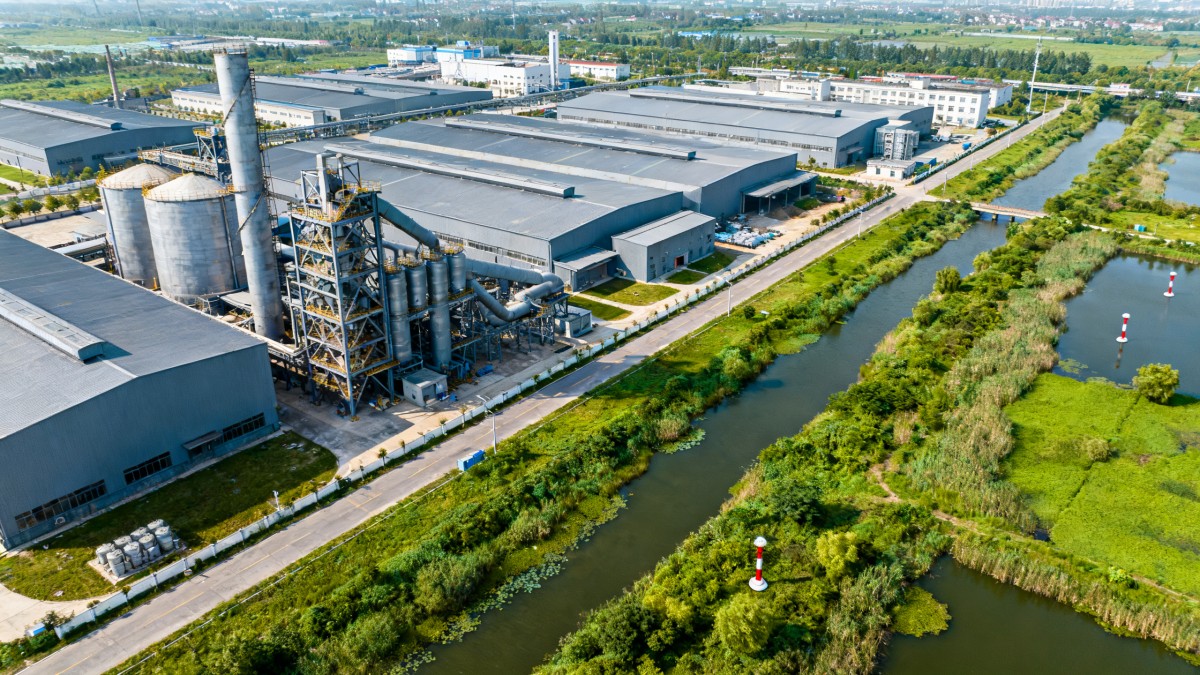
Many teams assume environmental studies are delayed because regulations are slow or authorities are demanding. Those factors do matter, but they are rarely the whole story. In practice, the Environment & Ecology impact assessment process is delayed when technical, regulatory, and stakeholder workstreams are not integrated early enough with engineering, land, procurement, and construction planning.
That is why two projects with similar scope, location, and regulatory requirements can experience very different outcomes. One moves through review with manageable comments, while the other loses months because environmental assumptions were disconnected from real project decisions. The assessment then becomes reactive, with consultants rewriting chapters after each design revision.
For project managers, the key insight is this: environmental delay usually starts long before the formal submission date. It starts when the project underestimates data needs, sequencing dependencies, approval logic, or stakeholder sensitivity. By the time the schedule shows “EIA delayed,” the root causes have often been active for months.
What project managers are really up against: the most common delay drivers
The first and most frequent issue is incomplete or low-quality baseline data. Ecology, air, noise, water, hydrology, soil, traffic, and social interface studies all depend on field conditions and usable datasets. If surveys begin late, miss seasonal windows, or use inconsistent methodologies, the final assessment becomes vulnerable to challenge from both regulators and stakeholders.
Seasonality is one of the biggest hidden risks. Biodiversity and habitat work often requires observations during specific periods for flora, fauna, breeding, migration, or wet-season conditions. Miss that window, and the project may have to wait months for valid data. This is especially damaging when the wider project assumes environmental work can simply be accelerated by adding more consultants later.
The second major driver is design immaturity. An Environment & Ecology impact assessment needs stable inputs: site layout, drainage concept, access routes, utility corridors, emissions profile, waste streams, construction methods, and sometimes logistics assumptions. If engineering packages remain fluid, environmental specialists cannot produce a defensible impact narrative.
Frequent redesign does more than create extra writing work. It can invalidate noise models, stormwater calculations, habitat disturbance zones, resettlement assumptions, spoil disposal plans, and mitigation commitments. That means the document is not just revised; core impact conclusions may need to be rebuilt.
The third common cause is poor stakeholder timing. Communities, landowners, local authorities, NGOs, and technical agencies do not react well when engagement begins after major project choices appear fixed. Late consultation often leads to objections that could have been avoided through earlier scoping, expectation setting, and disclosure of realistic constraints.
Stakeholder delays are especially serious because they do not always show up as formal rejection. Instead, they create repeated requests for clarification, public meeting extensions, political escalation, or demands for supplementary studies. These can add substantial time without ever appearing as one cleanly identifiable event.
The fourth delay driver is misunderstanding the approval pathway itself. Teams sometimes focus on the assessment document but fail to map the full regulatory chain around it. Depending on jurisdiction, the project may need screening decisions, scoping approval, heritage input, water permits, forestry clearances, biodiversity offset plans, public consultation records, and technical sign-offs from multiple agencies.
If these dependencies are discovered late, the project can complete the main report and still be unable to move forward. From a schedule standpoint, that is one of the costliest forms of delay because it creates false confidence until the final stages.
Why baseline studies fail even on well-funded projects
Well-funded projects are not automatically protected from delay. In fact, larger industrial programs often struggle because teams assume resources can solve timing problems that are actually sequencing problems. Once field windows are missed or site access is constrained, budget alone cannot fully recover lost time.
Baseline studies often fail for five practical reasons. First, mobilization starts after the project has already committed to aggressive milestones. Second, survey scopes are developed from generic templates instead of site-specific risk screening. Third, consultants work in silos and do not share assumptions. Fourth, access, security, or land permissions are not resolved early. Fifth, project teams do not verify whether the baseline package is legally and technically sufficient for the target approval route.
Another recurring problem is overreliance on secondary data. Desktop studies are useful, but they are not a substitute for field validation when the site has ecological sensitivity, surface water complexity, nearby communities, or cumulative impacts from surrounding industrial activity. Regulators often detect when an assessment is built on weak or overly generalized baseline information.
For project leaders, the real lesson is that baseline work is not an early administrative task. It is a technical foundation for claims the project will later make about significance, mitigation, and residual risk. If that foundation is weak, every later stage becomes slower and more expensive.
How late design changes create cascading environmental delays
Environmental assessments are deeply sensitive to design evolution. A small engineering change can trigger wide environmental consequences. Moving a substation, revising a drainage channel, adding a laydown area, changing a cooling system, or rerouting a haul road may seem manageable from a design standpoint, but each change can affect habitats, emissions, noise contours, runoff, construction footprint, or community interface.
When project governance does not require environmental review of design changes, teams often discover impacts too late. The environmental consultant then becomes the last party informed, even though the assessment depends on exactly those decisions. This creates rework, contradicts earlier stakeholder statements, and increases the chance that regulators view the submission as inconsistent.
Procurement can also introduce delays. Equipment substitutions may alter energy demand, stack parameters, chemical storage needs, waste generation, or maintenance access. Temporary works plans, sourcing routes, and construction packaging decisions can reshape traffic, dust, and water management impacts. If procurement and environmental teams are not aligned, the project may unintentionally undermine its own assessment commitments.
A useful control is to treat environmental assumptions as configuration-managed project data. If an assumption affects impact significance or permit conditions, it should be tracked with the same discipline as safety-critical or cost-critical parameters. That approach reduces the risk of “silent changes” that later become approval problems.
Regulatory uncertainty is real, but teams often make it worse
It is true that regulatory expectations can shift. Guidance may be interpreted differently by local offices, specialist agencies may request additional detail, and review capacity may vary. However, projects frequently amplify this uncertainty by entering the process without a jurisdiction-specific approval map and without early authority engagement where permitted.
One major mistake is assuming international standards or previous project experience will automatically transfer. A company may have strong internal environmental systems and still fail locally if it overlooks country-specific consultation rules, offset requirements, cumulative assessment expectations, or formatting and disclosure requirements for submission.
Another mistake is treating regulator comments as a final-stage problem. In better-performing projects, likely authority concerns are anticipated during scoping, draft review, and technical interface meetings. That does not guarantee a smooth approval, but it reduces surprise and shortens revision cycles.
For engineering and project controls teams, regulatory uncertainty should be modeled as a managed risk, not as a vague external excuse. That means identifying probable information requests, assigning owners, planning contingency, and deciding which technical questions need pre-submission clarification rather than post-submission defense.
Why stakeholder issues often delay more than technical issues
Technical gaps can often be fixed with additional analysis. Stakeholder trust is harder to recover. When communities or local institutions believe a project has minimized impacts, concealed trade-offs, or engaged too late, delay becomes social as much as procedural.
This matters in Environment & Ecology impact assessment because many concerns sit at the boundary between measurable impact and perceived fairness. Noise levels, water use, biodiversity loss, truck traffic, visual intrusion, land use compatibility, and livelihood disruption are not only technical matters. They are also issues of credibility and transparency.
Projects run into trouble when stakeholder engagement is reduced to a compliance checkbox. Public meetings held too late, disclosures written in inaccessible language, and responses that fail to address local concerns can all trigger longer review periods. Even if the assessment is technically sound, resistance can cause decision-makers to proceed more cautiously.
For project managers, early engagement does not mean promising outcomes the project cannot deliver. It means surfacing issues early enough to shape alternatives, mitigation, logistics planning, and communication strategy before positions harden. That is a schedule protection measure, not just a public relations exercise.
How to identify delay risk before the assessment slips the critical path
The most effective teams monitor leading indicators, not just milestones. If field survey scopes are still unsettled, if engineering inputs are changing without environmental review, if consultation plans are generic, or if permitting dependencies are not mapped, the project is already carrying delay risk even if the submission date still looks intact.
Several warning signs deserve immediate attention. Repeated requests from consultants for missing data. Unclear ownership of cumulative impact inputs. No confirmed plan for seasonal surveys. Design freeze dates that occur after environmental drafting has begun. Stakeholder lists that omit local influence groups. Permit trackers that show only the main submission and not supporting approvals.
Another warning sign is excessive optimism in recovery planning. If the team assumes all review comments can be closed in a short turnaround, it may be ignoring the reality that some comments require new fieldwork, design modification, or further consultation. Fast document editing is not the same as fast issue resolution.
A practical management move is to run a dedicated pre-submission readiness review. This should test baseline adequacy, design maturity, stakeholder status, legal pathway completeness, data traceability, and alignment between mitigation commitments and actual execution capability. Done properly, this review reveals whether the assessment is truly submission-ready or merely document-ready.
What actually reduces delays: practical controls for industrial projects
First, start environmental planning at concept stage, not after core design decisions are underway. Early risk screening helps determine which surveys, permits, and stakeholder interfaces are likely to drive schedule. It also allows site selection and layout choices to avoid predictable environmental conflicts before they become sunk-cost decisions.
Second, build a single integrated data structure for the project. Environmental teams need direct access to current engineering, procurement, land, and schedule information. If information moves through informal emails and disconnected spreadsheets, rework becomes inevitable. Controlled data flow is one of the simplest and most valuable delay prevention measures.
Third, define environmental decision gates tied to design maturity. Some project decisions should not advance without confirming environmental implications. That includes footprint changes, access roads, water sourcing, waste handling concepts, major equipment substitutions, and temporary construction areas. These gates prevent downstream surprises.
Fourth, treat stakeholder engagement as a managed workstream with owners, timelines, and issue logs. Engagement should feed design and mitigation decisions, not sit alongside them. If concerns are documented but not linked to project action, the process creates records without reducing risk.
Fifth, map the full approval ecosystem. The Environment & Ecology impact assessment is often only one part of the consent architecture. Knowing which supporting permits, specialist opinions, and agency interfaces affect the path to notice-to-proceed allows realistic scheduling and smarter contingency planning.
Finally, align mitigation commitments with execution reality. Projects sometimes promise extensive controls in the assessment that procurement, construction, or operations teams are not prepared to implement. That creates credibility issues during review and larger problems after approval. Commitments should be technically sound, commercially understood, and operationally deliverable.
The management takeaway: environmental delay is usually predictable
For project managers and engineering leads, the main lesson is not that Environment & Ecology impact assessment is inherently slow. It is that most serious delays are foreseeable when viewed through the lens of project integration, design discipline, stakeholder timing, and regulatory pathway management.
When assessments start with weak baseline planning, unstable project inputs, late consultation, or incomplete approval mapping, delay is not bad luck. It is a structural outcome. Conversely, when environmental work is embedded early into project controls, data governance, and decision-making, the process becomes far more predictable.
In industrial development, environmental approval is not separate from execution readiness. It is one of the clearest tests of whether a project truly understands its site, its impacts, its stakeholders, and its own delivery logic. Teams that recognize that early are far better positioned to protect schedule, preserve credibility, and move into procurement and construction with fewer surprises.
If your project is asking why the assessment is delayed, the more useful question may be this: which dependency did we fail to manage early enough? In most cases, that is where the real answer lies.
Technical Specifications
- How to Select an Emissions Monitoring System Analyzer for Compliance ReportingAuthor :Precision Metrology Expert
- How to Select an Access Control Management System for Multi-Site FacilitiesAuthor :Safety Compliance Lead
- Portable Gas Monitor Calibration: How Often Is It Needed for Safe Confined-Space Work?Author :Precision Metrology Expert
Expert Insights

Chief Security Architect
Dr. Thorne specializes in the intersection of structural engineering and digital resilience. He has advised three G7 governments on industrial infrastructure security.
Related Analysis
- Sep 21, 2026How to Select an Emissions Monitoring System Analyzer for Compliance ReportingAuthor :Precision Metrology Expert
- Sep 20, 2026How to Select an Access Control Management System for Multi-Site FacilitiesAuthor :Safety Compliance Lead
- Sep 19, 2026Portable Gas Monitor Calibration: How Often Is It Needed for Safe Confined-Space Work?Author :Precision Metrology Expert
Core Sector // 01
Security & Safety
- How to Size a Wafer Butterfly Valve for HVAC Chilled-Water and Heating LoopsAuthor :Environmental Engineering Director

- How Pressure Class and Joint Design Affect Long-Term Performance of Ductile Iron Pipes in Drainage InfrastructureAuthor :Environmental Engineering Director

- How Ductile Iron Pipe Joints Affect Installation Reliability and Leak ControlAuthor :Environmental Engineering Director

- How to Size Effluent Treatment Equipment for Variable Industrial Wastewater LoadsAuthor :Environmental Engineering Director

- US Battery Push Raises New Entry Rules for SuppliersAuthor :Environmental Engineering Director

- EU EMC Rule Tightens for Water Treatment ExportsAuthor :Environmental Engineering Director

- EU REACH Restriction Targets PFAS Water Treatment ImportsAuthor :Environmental Engineering Director

- EU Mandates EN 14113:2026 for Water Treatment ExportsAuthor :Environmental Engineering Director