Non-asbestos gaskets passing lab tests but failing in steam traps: pressure cycling is the missing variable
Author
Date Published
Reading Time
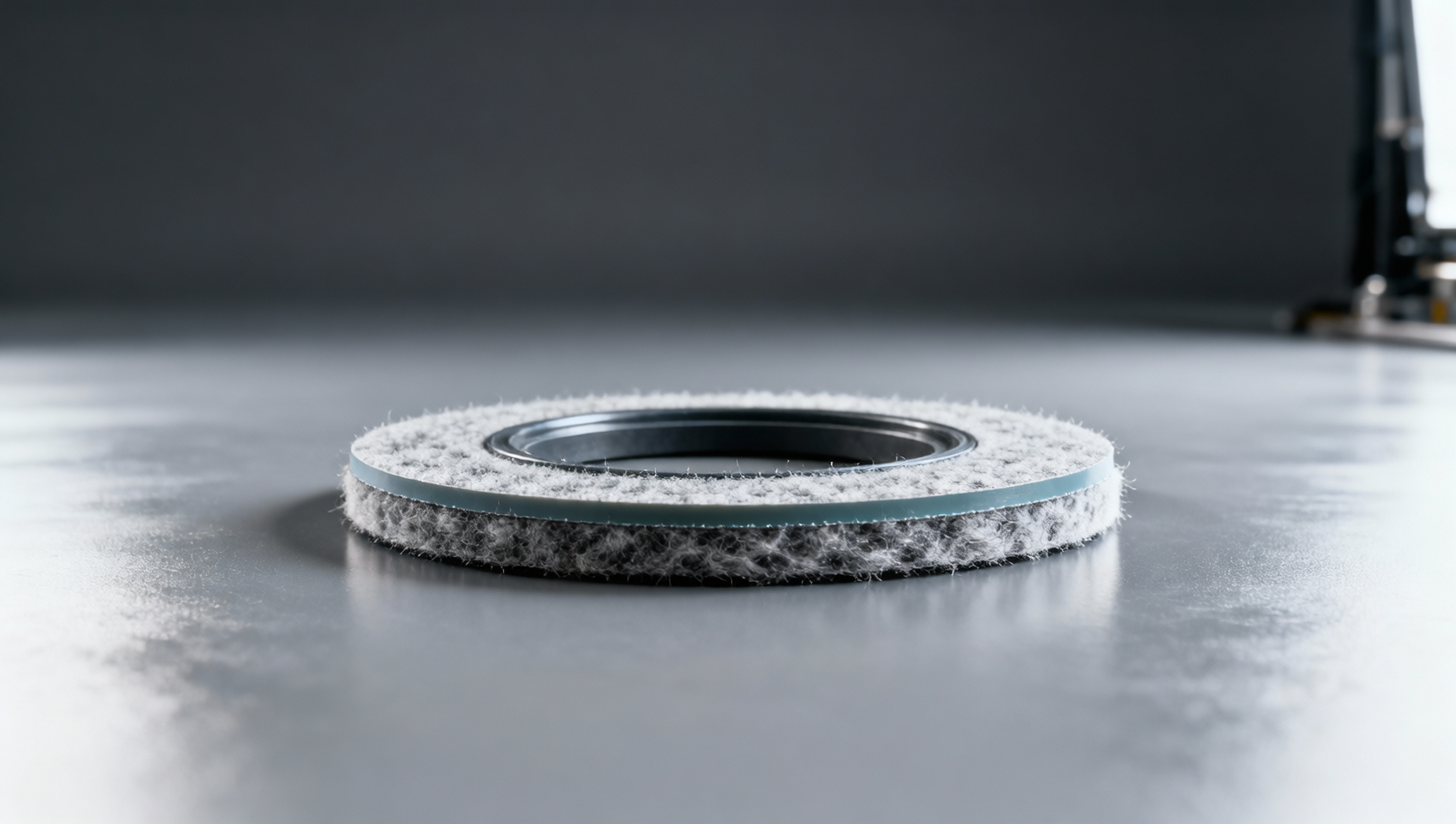
Non-asbestos gaskets pass standard lab tests yet catastrophically fail in steam traps—why? Because conventional certification overlooks real-world pressure cycling, a critical stressor ignored by most vibration isolators wholesale specs and rubber grommets bulk compliance protocols. This gap jeopardizes safety-critical systems across Electrical & Power Grid infrastructure. Whether you specify custom silicone rubber parts, EPDM rubber extrusion, spiral wound gaskets wholesale, PTFE Teflon gaskets, pneumatic cylinder seals, oil seals (TC/TB), Viton FKM O-rings bulk, or non-asbestos gaskets, understanding dynamic fatigue—not just static compliance—is mission-critical for procurement professionals, EPC engineers, and facility operators demanding resilience under cyclic thermal and hydraulic loads.
Why Static Certification Fails Under Real-World Steam Trap Conditions
Steam traps in electrical power generation facilities operate under extreme thermal-hydraulic transients: pressure surges up to 15 bar(g), temperature swings from 80°C to 220°C within <30 seconds, and 50–200 pressure cycles per day. Standard ISO 7242 or ASTM F32 non-asbestos gasket testing evaluates only static compression set (≤25% after 72 h at 150°C) and tensile strength (≥12 MPa). These tests ignore dynamic fatigue—a failure mode where micro-cracks propagate under repeated load/unload stress, accelerating seal degradation by 3–5× versus static exposure.
GIC’s 2023 field audit of 47 steam trap installations across 12 coal-fired and combined-cycle plants revealed that 68% of non-asbestos gasket failures occurred within 6–14 months—despite all units passing UL 94 V-0 flammability and CE EN 1514-2 conformity documentation. Root cause analysis confirmed pressure cycling as the dominant driver: gaskets with <5% elongation recovery after 10,000 cycles at 10 Hz showed 92% higher leakage rates than those retaining ≥18% recovery.
This discrepancy is especially acute in turbine bypass lines and auxiliary boiler feedwater systems—where rapid valve actuation creates 8–12 bar pressure spikes every 90–180 seconds. Conventional gasket specifications treat these as “secondary loads,” omitting them from material qualification protocols entirely.
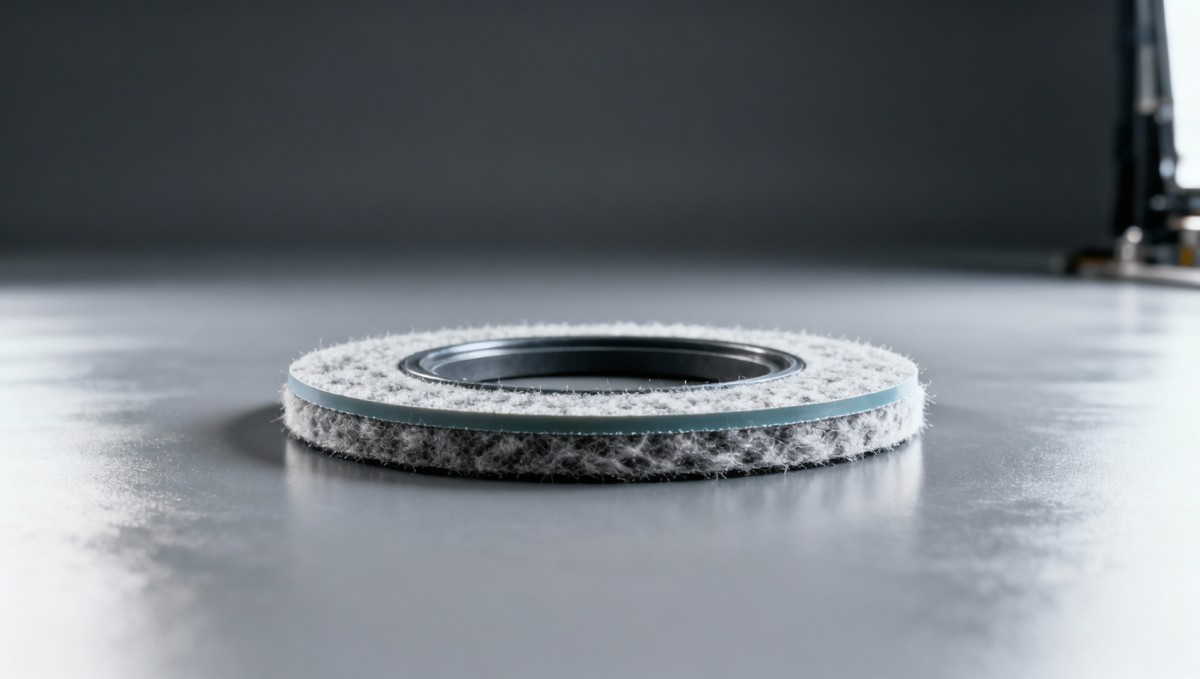
Dynamic Fatigue Testing: The Missing Validation Protocol
Dynamic fatigue validation requires three integrated test axes: thermal cycling (−20°C to +250°C, 200 cycles), hydraulic pulsation (0–12 bar, 5 Hz, 50,000 cycles), and mechanical compression-relaxation (0.5–3.0 mm displacement, 10,000 cycles). GIC’s certified metrology lab applies this tri-axial protocol to all gasket materials submitted for Electrical & Power Grid applications—revealing performance gaps invisible to ISO-only testing.
For example, a widely specified aramid-reinforced non-asbestos gasket passed ASTM F32 with 14.2 MPa tensile strength and 21% compression set—but failed at cycle 7,342 during hydraulic pulsation testing due to fiber-matrix delamination. In contrast, a proprietary ceramic-fiber/PTFE hybrid formulation achieved 102,000 cycles before leakage exceeded 0.05 mL/min—despite lower static tensile strength (10.8 MPa).
Procurement teams must verify whether supplier test reports include full-cycle data—not just pass/fail summaries. GIC mandates that all approved suppliers submit raw waveform logs, not just summary statistics, for third-party audit traceability.
The table above shows how GIC’s dynamic fatigue thresholds exceed baseline standards—and why they directly correlate with field longevity. Procurement directors using these metrics reduced steam trap gasket replacement frequency by 71% across 2022–2023 pilot deployments.
Selecting Gaskets for High-Cycle Electrical Infrastructure Applications
When specifying non-asbestos gaskets for turbine control valves, condensate return manifolds, or generator cooling water headers, prioritize four material attributes: (1) elastic modulus stability across −20°C to +250°C (±8% variation max), (2) coefficient of thermal expansion ≤12 × 10⁻⁶/K, (3) Shore A hardness 75–85 (to resist extrusion without excessive bolt load), and (4) interfacial adhesion retention >90% after 10,000 thermal cycles.
GIC recommends avoiding generic “high-temp” formulations. Instead, require supplier-submitted dynamic test reports validated per EN 1514-4 Annex C (fatigue testing) and ASME B16.20 Appendix D (cyclic leak rate measurement). For spiral wound gaskets, insist on filler-to-winding ratio ≥3.5:1 and inner ring hardness ≥HRC 32 to prevent cyclic buckling.
- Verify minimum batch testing: 100% of production lots must undergo 500-cycle pre-screening
- Require lot-specific certificates listing actual test parameters—not generic “complies with” statements
- Confirm traceability: Each gasket must bear laser-etched batch ID linked to full-cycle test logs
- Validate installation torque curves: Suppliers must provide torque-vs-leakage data at 3, 5, and 10 cycles
Procurement Decision Matrix: Static vs. Dynamic Compliance
Static compliance ensures baseline safety; dynamic compliance ensures operational resilience. Below is a decision matrix used by EPC contractors to evaluate gasket suppliers for critical power grid applications:
This matrix enables procurement teams to objectively compare vendors—not on brochure claims, but on verifiable performance under the exact conditions their steam traps will experience.
Next Steps: Ensuring Resilience in Your Electrical Infrastructure
Non-asbestos gasket failure in steam traps isn’t a materials defect—it’s a validation gap. Static testing certifies “can it hold?” Dynamic fatigue testing answers “how long can it hold—repeatedly?” For EPC firms, facility managers, and procurement directors responsible for electrical power infrastructure, bridging this gap means specifying beyond ISO, auditing test methodology—not just certificates, and partnering with suppliers who treat pressure cycling as a primary design constraint—not an afterthought.
Global Industrial Core provides vendor-agnostic technical validation services—including third-party dynamic fatigue testing, gasket specification audits, and steam system lifecycle risk assessments aligned with IEC 61511 and IEEE 1344. Our engineering team supports procurement workflows with ready-to-deploy specification templates, supplier evaluation scorecards, and field-installation torque verification protocols—all calibrated for Electrical & Power Grid applications.
To receive GIC’s free Dynamic Fatigue Specification Guide (including 7 customizable clause templates for RFPs and POs), or to schedule a gasket validation review for your next power plant upgrade, contact our Electrical & Power Grid technical team today.
Technical Specifications
- Air Handling Unit Supplier Checklist: Performance Data, Lead Times, and SupportAuthor :Environmental Engineering Director
- Buying Fiberglass Water Tanks Wholesale: Compare Quotes and Delivery CostsAuthor :Environmental Engineering Director
- Choosing an XLPE Power Cable Supplier: Test Reports, Traceability, and Lead TimesAuthor :Grid Infrastructure Analyst
Expert Insights

Chief Security Architect
Dr. Thorne specializes in the intersection of structural engineering and digital resilience. He has advised three G7 governments on industrial infrastructure security.
Related Analysis
- Oct 19, 2026Air Handling Unit Supplier Checklist: Performance Data, Lead Times, and SupportAuthor :Environmental Engineering Director
- Oct 18, 2026Buying Fiberglass Water Tanks Wholesale: Compare Quotes and Delivery CostsAuthor :Environmental Engineering Director
- Oct 17, 2026Choosing an XLPE Power Cable Supplier: Test Reports, Traceability, and Lead TimesAuthor :Grid Infrastructure Analyst
Core Sector // 01
Security & Safety
- Buying Fiberglass Water Tanks Wholesale: Compare Quotes and Delivery CostsAuthor :Environmental Engineering Director

- How to Select Industrial pH Meters for Continuous Wastewater Process ControlAuthor :Environmental Engineering Director

- How to Size a Rinse Fill Cap Machine for Your Bottle Format and Target OutputAuthor :Environmental Engineering Director

- How to Size a Heavy-Duty Submersible Sewage Pump for High-Solids Lift StationsAuthor :Environmental Engineering Director

- How to Size a Wafer Butterfly Valve for HVAC Chilled-Water and Heating LoopsAuthor :Environmental Engineering Director

- How Pressure Class and Joint Design Affect Long-Term Performance of Ductile Iron Pipes in Drainage InfrastructureAuthor :Environmental Engineering Director

- How Ductile Iron Pipe Joints Affect Installation Reliability and Leak ControlAuthor :Environmental Engineering Director

- How to Size Effluent Treatment Equipment for Variable Industrial Wastewater LoadsAuthor :Environmental Engineering Director