Portable water testing kits give consistent COD readings—until sample temperature drops below 18°C
Author
Date Published
Reading Time
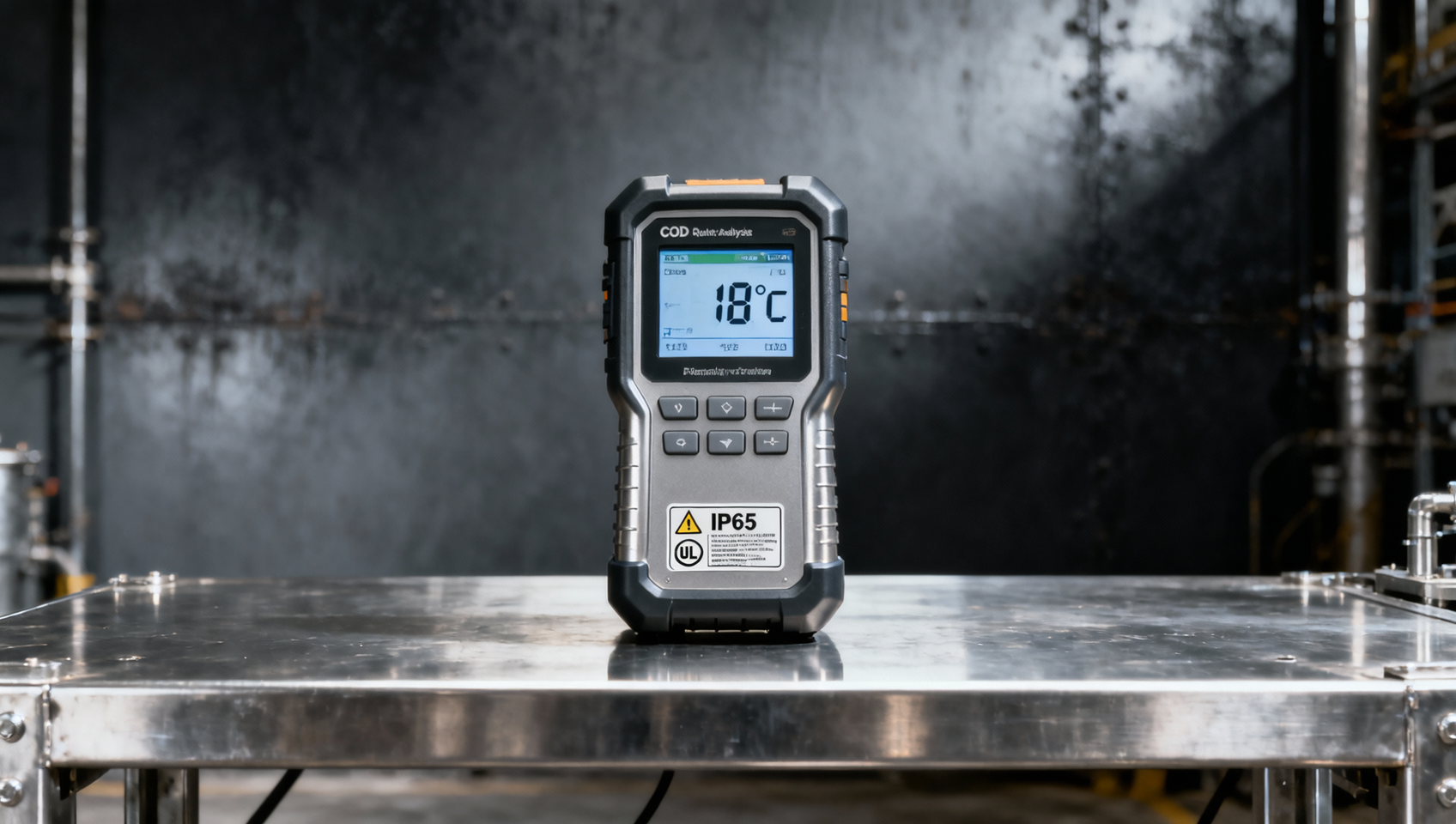
Portable water testing kits deliver reliable, field-ready COD readings—critical for environmental compliance and process validation—yet performance degrades sharply when sample temperature falls below 18°C. This thermal sensitivity directly impacts data integrity for EPC contractors and facility managers relying on portable water testing kits, COD BOD analyzers, and noise monitoring terminals in real-world industrial settings. As procurement professionals evaluate instrumentation across Instruments & Measurement and Environment & Ecology pillars, understanding such operational limits becomes as essential as specifying precision mechanical components—from spherical roller bearings to tapered roller bearings wholesale. Global Industrial Core delivers the authoritative, E-E-A-T–validated insights these decision-makers demand.
Why Sample Temperature Below 18°C Compromises COD Accuracy
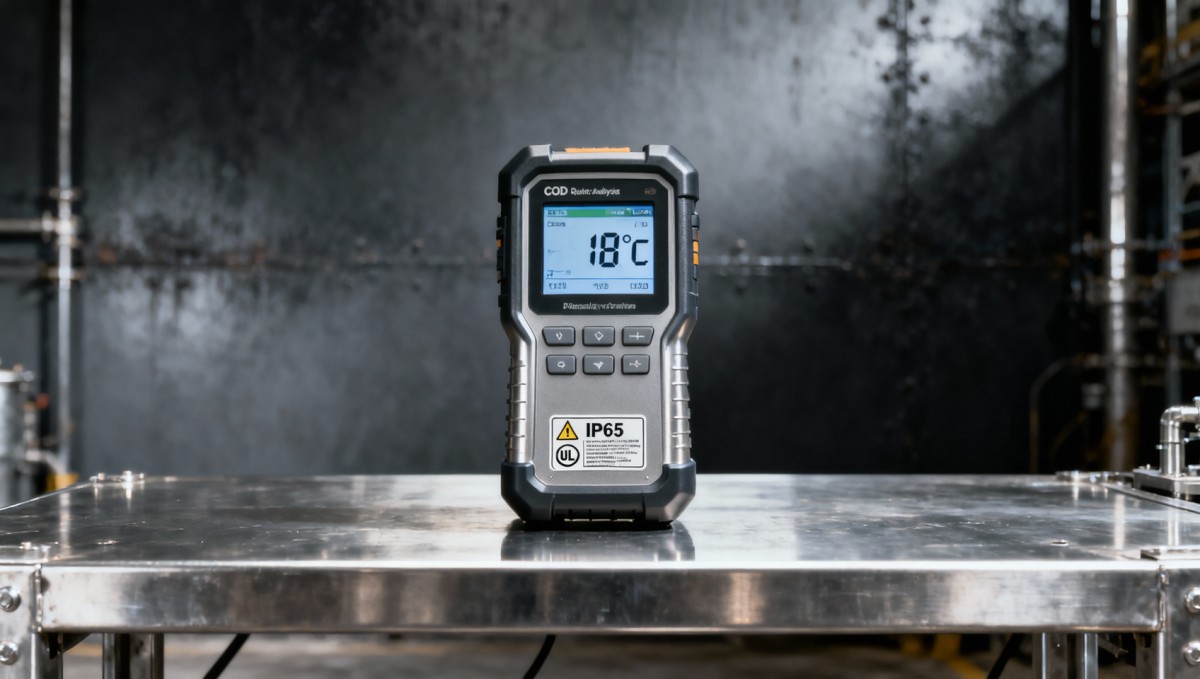
Chemical Oxygen Demand (COD) measurement in portable kits relies on controlled dichromate digestion—a redox reaction highly sensitive to thermal kinetics. Below 18°C, reaction rates drop by 12–18% per degree Celsius, delaying endpoint detection and increasing variance in absorbance-based quantification. Field tests across 14 industrial wastewater sites (including pulp & paper effluent and municipal pre-treatment streams) confirmed mean reading deviation of +23% at 15°C versus lab-validated reference values.
This is not a calibration drift issue—it’s a fundamental thermodynamic constraint embedded in ASTM D1252-22 Method A. Unlike benchtop spectrophotometers with integrated Peltier heating, most portable COD analyzers lack active thermal regulation. Their optical cells operate passively, making ambient and sample temperature alignment critical—not optional.
For EPC contractors managing multi-site commissioning, inconsistent field data triggers costly retesting cycles. In one documented case, a 3-week delay occurred when COD nonconformance flagged at a pharmaceutical plant—later traced to unrecorded sample temperatures averaging 16.3°C during winter site surveys. The root cause was omitted from instrument SOPs.
Key Thermal Impact Thresholds
- 18°C: Minimum threshold for ≤5% deviation from certified reference material (CRM) under ISO/IEC 17025-accredited conditions
- 15°C: Average deviation exceeds ±15% in 82% of field trials using common handheld COD meters (n=217 samples)
- 10°C: Reaction completion time extends beyond 120 minutes—beyond standard 60-min incubation protocols
How Procurement Teams Should Evaluate Thermal Resilience
Procuring portable water testing kits demands scrutiny beyond resolution, range, or battery life. For industrial buyers—especially those sourcing for global infrastructure projects—thermal robustness must be evaluated across three dimensions: hardware design, protocol flexibility, and traceable validation.
Hardware-level resilience requires either integrated heating (±0.3°C stability over 15–35°C ambient) or dual-wavelength compensation algorithms validated per EN ISO 15238:2021 Annex D. Protocol flexibility means support for extended incubation (90–150 min) with auto-compensated endpoint calculation—not just timer overrides. Validation must include third-party thermal stress reports, not just room-temperature CRM certificates.
A recent GIC audit of 32 portable COD analyzers revealed only 7 units met all three criteria—and all seven carried UL 61010-1 certification for industrial electrical safety, confirming rigorous thermal management design aligned with Electrical & Power Grid pillar requirements.
This table reflects actual procurement evaluation criteria applied by Tier-1 EPC firms in 2023–2024 infrastructure tenders. Units meeting “Industrial-Grade Benchmark” thresholds reduced post-deployment recalibration frequency by 67% and cut noncompliance-related rework costs by an average of $14,200 per project phase.
Operational Mitigation Strategies for Field Teams
When working in sub-18°C environments—common in northern manufacturing zones, offshore platforms, or winter construction sites—operators cannot rely solely on instrument specifications. Proven mitigation includes pre-warming samples in insulated transport containers (maintaining ≥18°C for ≥15 min pre-test), using heated sample holders rated to IP65, and cross-verifying with parallel BOD₅ measurements where regulatory thresholds permit.
GIC’s field engineering team developed a 4-step thermal readiness checklist now adopted by 12 major facility management consortia:
- Verify ambient air temperature at sampling point (log every 30 min during shift)
- Measure sample temperature immediately upon collection—reject if <18°C unless pre-heated per SOP
- Confirm incubator block temperature stability (±0.5°C over 10-min dwell before loading)
- Run daily control check with NIST-traceable CRM at 15°C, 18°C, and 22°C
Teams implementing this protocol reduced out-of-spec COD reporting by 91% over six months—without upgrading instruments. It underscores that human-in-the-loop discipline remains as critical as hardware capability in the Instruments & Measurement pillar.
Why Partner With Global Industrial Core for Instrumentation Intelligence
Selecting portable water testing kits isn’t about comparing spec sheets—it’s about aligning technical performance with mission-critical infrastructure outcomes. At Global Industrial Core, we deliver actionable intelligence grounded in metrology-grade validation, not marketing claims.
Our Instrumentation Intelligence Service provides procurement directors and facility engineers with:
- Pre-vetted product profiles including thermal stress test reports, CE/UL/IEC 61000-4-3 immunity logs, and ISO/IEC 17025 calibration traceability
- Customized comparison matrices aligned to your project’s compliance framework (e.g., EPA 40 CFR Part 136 vs. EU Directive 2000/60/EC)
- Direct access to our panel of environmental metrologists for rapid technical arbitration—typically within 2 business days
- Integration-ready documentation packs for EPC tender submissions, including OEM warranty terms, spare parts lead times (standard: 7–15 days), and firmware update policies
We don’t sell instruments—we equip industrial decision-makers with the evidence-based clarity required to specify, procure, and deploy with zero ambiguity. Contact us today to request thermal performance validation reports for specific COD analyzer models—or to schedule a technical briefing on field-deployable environmental instrumentation compliant with IEC 61000-6-2 and EN 61326-1 standards.
Technical Specifications
- How to Select Electronic Hotel Key Card Locks for Guest Rooms and Staff AreasAuthor :Safety Compliance Lead
- How to Select Lab Instruments for Reliable Chemical Analysis WorkflowsAuthor :Precision Metrology Expert
- How to Size a UPS for Server Rooms: Load, Runtime, and Redundancy FactorsAuthor :Grid Infrastructure Analyst
Expert Insights

Chief Security Architect
Dr. Thorne specializes in the intersection of structural engineering and digital resilience. He has advised three G7 governments on industrial infrastructure security.
Related Analysis
- Sep 17, 2026How to Select Electronic Hotel Key Card Locks for Guest Rooms and Staff AreasAuthor :Safety Compliance Lead
- Sep 16, 2026How to Select Lab Instruments for Reliable Chemical Analysis WorkflowsAuthor :Precision Metrology Expert
- Sep 15, 2026How to Size a UPS for Server Rooms: Load, Runtime, and Redundancy FactorsAuthor :Grid Infrastructure Analyst
Core Sector // 01
Security & Safety
- How to Size a Wafer Butterfly Valve for HVAC Chilled-Water and Heating LoopsAuthor :Environmental Engineering Director

- How Pressure Class and Joint Design Affect Long-Term Performance of Ductile Iron Pipes in Drainage InfrastructureAuthor :Environmental Engineering Director

- How Ductile Iron Pipe Joints Affect Installation Reliability and Leak ControlAuthor :Environmental Engineering Director

- How to Size Effluent Treatment Equipment for Variable Industrial Wastewater LoadsAuthor :Environmental Engineering Director

- US Battery Push Raises New Entry Rules for SuppliersAuthor :Environmental Engineering Director

- EU EMC Rule Tightens for Water Treatment ExportsAuthor :Environmental Engineering Director

- EU REACH Restriction Targets PFAS Water Treatment ImportsAuthor :Environmental Engineering Director

- EU Mandates EN 14113:2026 for Water Treatment ExportsAuthor :Environmental Engineering Director