How to vet an Environment & Ecology exporter before import
Author
Date Published
Reading Time
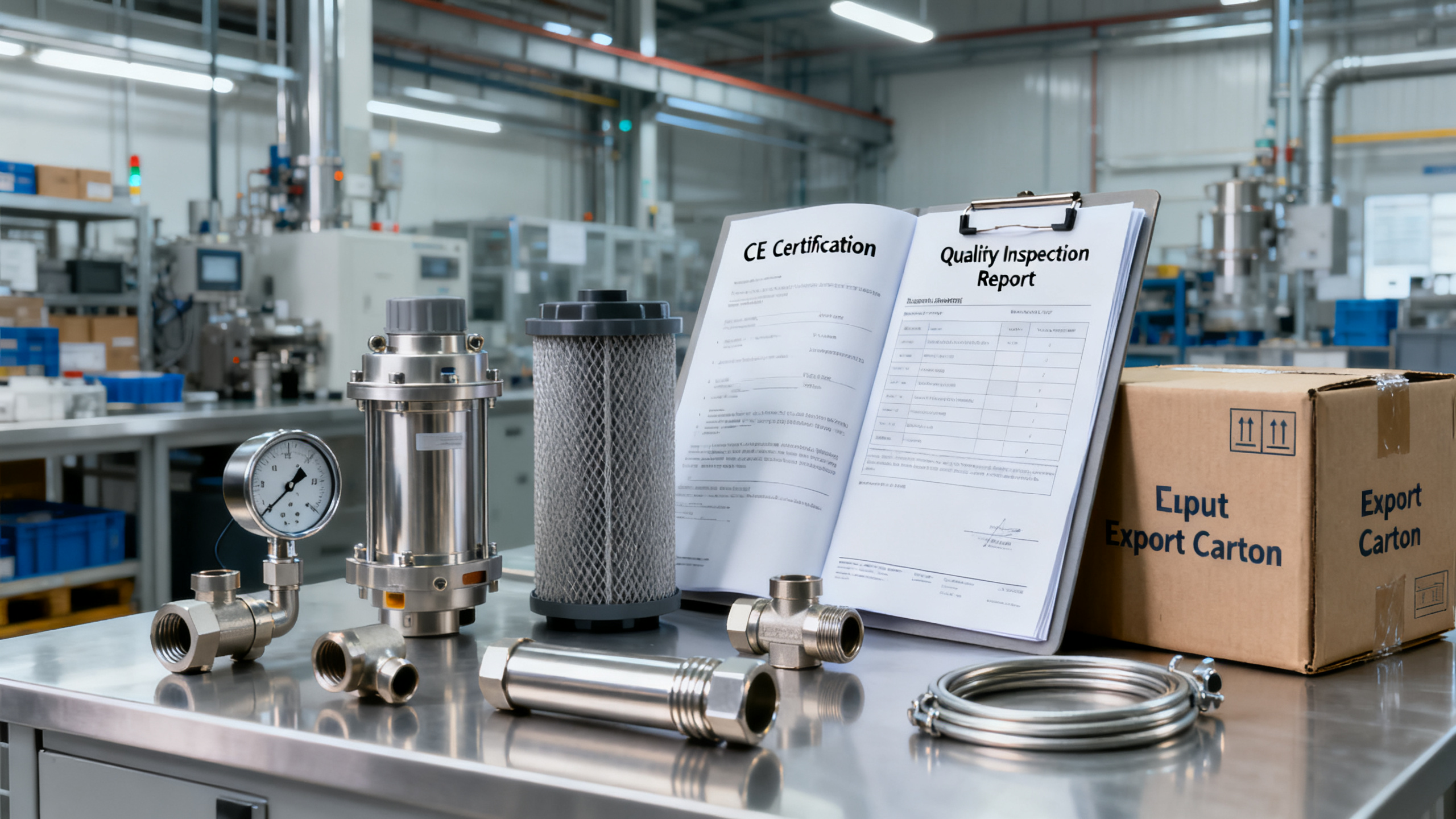
Choosing the right Environment & Ecology exporter can determine whether your import project meets compliance, performance, and long-term reliability goals. For procurement professionals, proper vetting goes beyond price checks—it requires verifying certifications, production capability, quality control, and export experience. This guide outlines the key criteria to help you reduce sourcing risk and select a dependable industrial partner.
Why vetting an Environment & Ecology exporter matters in industrial procurement
In heavy industry and infrastructure projects, Environment & Ecology products often support emissions control, wastewater treatment, dust collection, monitoring, filtration, containment, and compliance management. A weak supplier can create more than delivery delays. It can expose the buyer to regulatory penalties, shutdown risk, retrofit cost, and operational underperformance.
For procurement teams, the challenge is practical. Many exporters present polished catalogs, broad product ranges, and attractive prices. Yet not all of them can prove stable process control, traceable materials, export documentation accuracy, or familiarity with destination-country standards. That gap is where sourcing errors usually begin.
Global Industrial Core (GIC) focuses on this exact procurement reality. In foundational industries, buying decisions must align with technical duty, compliance obligations, and long-term asset reliability. A structured review of an Environment & Ecology exporter helps buyers move from supplier claims to verifiable evidence.
- You reduce the risk of importing products that fail on-site acceptance, commissioning, or third-party inspection.
- You improve clarity on lead time, spare parts continuity, packaging, and transport suitability.
- You gain leverage in commercial negotiation because the supplier’s real capability becomes visible.
What should procurement teams verify first?
Before comparing unit prices, confirm whether the Environment & Ecology exporter is commercially and technically fit for your application. The first screening should eliminate suppliers that cannot meet baseline requirements in product scope, documents, compliance, or manufacturing discipline.
The table below gives a practical first-pass assessment matrix procurement personnel can use during supplier prequalification. It is designed for industrial imports where technical failure carries operating and compliance consequences.
This first screen helps buyers avoid spending time on exporters that look competitive on paper but cannot support project-grade procurement. It also creates a consistent basis for comparing different suppliers across technical and commercial dimensions.
A simple prequalification checklist
- Request a recent company profile that matches the legal name used in quotations, contracts, and shipping documents.
- Ask for typical export destinations and recent industries served, such as wastewater plants, mining, power facilities, or manufacturing sites.
- Review product datasheets for operating limits rather than marketing descriptions.
- Check whether the exporter can provide inspection records, packaging standards, and spare parts lists.
How to evaluate technical capability beyond the catalog
A reliable Environment & Ecology exporter should understand application duty, not just product dimensions. Procurement teams should test whether the supplier can discuss flow conditions, chemical exposure, particulate loading, temperature range, service life expectations, maintenance access, and site restrictions.
This matters across the broad Environment & Ecology category. The evaluation logic for a filtration housing, an emissions monitoring component, a wastewater treatment accessory, or a dust control assembly may differ. Still, the exporter should consistently connect product recommendations to actual operating conditions.
Questions that reveal real engineering depth
- Can the exporter explain why one material grade is preferred over another under corrosive, abrasive, or high-humidity duty?
- Do they ask for installation orientation, pressure class, sealing arrangement, or instrument interface details before quoting?
- Can they identify likely failure modes such as clogging, media breakthrough, vibration damage, or chemical incompatibility?
- Will they propose optional testing, sample approval, or drawing confirmation when the duty is not standard?
If the discussion stays limited to price, packaging, and delivery without technical clarification, the buyer should treat that as a warning. In industrial imports, under-specified environmental equipment often causes the largest hidden cost after installation.
Which certifications and compliance documents should an Environment & Ecology exporter provide?
Compliance review should match the destination market, product category, and project specification. Procurement teams should avoid asking for generic “all certificates” and instead define the exact document set needed for customs clearance, site approval, and technical acceptance.
The following table helps buyers map common document categories to their procurement purpose. Not every document applies to every product, but the exporter should clearly state what is available, what is not, and what can be supported by third-party testing.
A document is only useful when it matches the shipped item and project specification. Procurement teams should check issue dates, product references, document issuer, and consistency across quotation, packing list, and final inspection paperwork.
Compliance red flags buyers should not ignore
- Certificates that do not identify the product family or manufacturer clearly.
- Test reports with missing dates, missing standards reference, or no traceable sample description.
- A sales team that cannot explain whether the document applies to the exact quoted configuration.
- Inconsistency between factory name, exporter name, and document issuer without explanation.
How to compare exporters on quality, lead time, and service
In practice, procurement decisions usually involve trade-offs. One Environment & Ecology exporter may offer lower pricing but longer lead time. Another may have stronger engineering support but narrower product scope. Buyers need a comparison method tied to project risk rather than headline cost.
The comparison table below is useful when ranking shortlisted exporters for industrial import programs, framework supply, or project-based purchasing.
This type of comparison protects buyers from selecting the cheapest exporter for a technically sensitive scope. In many cases, a higher quote with stronger documentation, production control, and service continuity creates lower total procurement cost.
Think in total landed risk, not only purchase price
For Environment & Ecology imports, total landed risk includes rework, customs delay, commissioning support, replacement freight, and downtime exposure. Procurement teams that score exporters only on unit price often miss these cost drivers until the project is already under pressure.
What export experience should a dependable supplier demonstrate?
Export capability is more than shipping goods overseas. A dependable Environment & Ecology exporter should understand export packing, moisture protection, crate labeling, document accuracy, and coordination across inspection, customs, and freight milestones. This is especially important for industrial goods exposed to corrosion, breakage, contamination, or calibration drift.
Signs of strong export readiness
- The exporter can explain packaging by product sensitivity, such as sealed wrapping for filters, shock protection for instruments, or anti-corrosion treatment for metal assemblies.
- They issue commercial invoice, packing list, and shipping marks with consistent item descriptions and quantities.
- They understand whether pre-shipment inspection, sample retention, or destination-market labeling is required.
- They can discuss spare parts strategy for wear items and critical replacements.
For buyers managing EPC schedules or plant maintenance windows, this operational maturity is often as important as the product itself. A compliant item delivered late or with incorrect documents can still disrupt the project.
Common mistakes when vetting an Environment & Ecology exporter
Many sourcing problems come from avoidable review gaps rather than complex technical disputes. Procurement teams can improve outcomes quickly by watching for a few repeated mistakes.
- Approving a supplier based on a good sample while ignoring whether mass production controls are documented.
- Accepting generic certificates without checking whether they apply to the quoted item and factory.
- Comparing prices from different technical scopes because the RFQ was not detailed enough.
- Ignoring maintenance parts, consumables, and replacement cycle when evaluating cost.
- Assuming all exporters understand destination-country import requirements and site documentation needs.
A structured sourcing review solves most of these issues early. That is where GIC adds value for industrial buyers: translating technical, compliance, and supplier-performance signals into practical procurement decisions.
FAQ: buyer questions about choosing an Environment & Ecology exporter
How do I know if an Environment & Ecology exporter is a trader or a real manufacturer?
Ask for factory process photos, production flow descriptions, quality checkpoints, equipment lists, and traceability examples tied to the quoted product. A trader is not automatically unsuitable, but the buyer should know who controls production, inspection, and corrective action.
What is more important: certificate availability or application fit?
Both matter, but application fit comes first. A compliant product that does not suit the duty condition will still fail in service. Once fit is confirmed, procurement should verify the exact document package needed for import, project approval, and operational acceptance.
Should I request samples before placing a bulk order?
For standardized or high-volume components, samples can help confirm dimensions, finish, interface, and packaging. For more engineered products, drawing approval, performance review, and inspection planning may be more meaningful than a simple sample alone.
How much weight should I give to lead time promises?
Treat very short lead times carefully unless the exporter explains stock position, production capacity, and inspection sequence. A realistic schedule with milestone visibility is more valuable than an aggressive promise that later slips.
Why work with us when screening an Environment & Ecology exporter?
Global Industrial Core supports procurement teams that cannot afford sourcing ambiguity in critical industrial categories. Our focus on Environment & Ecology, alongside safety, measurement, power, and mechanical systems, allows buyers to evaluate suppliers in the context that actually matters: compliance, operating conditions, documentation quality, and supply continuity.
If you are comparing an Environment & Ecology exporter for a new project, plant upgrade, or cross-border sourcing program, you can consult us on practical issues such as parameter confirmation, product selection, lead time review, documentation gaps, certification alignment, sample planning, and quotation comparison.
You can also use GIC to strengthen supplier screening before contract award. That includes reviewing RFQ clarity, identifying technical blind spots, organizing exporter comparison criteria, and reducing the risk of importing a product that passes purchase review but fails operational reality.
For procurement professionals under cost pressure, schedule pressure, and compliance pressure at the same time, that kind of sourcing discipline is not optional. It is the difference between a smooth import and a preventable problem. Contact us to discuss your specification, target delivery window, document requirements, sample support needs, or quotation evaluation framework.
Technical Specifications
- How to Select Electronic Hotel Key Card Locks for Guest Rooms and Staff AreasAuthor :Safety Compliance Lead
- How to Select Lab Instruments for Reliable Chemical Analysis WorkflowsAuthor :Precision Metrology Expert
- How to Size a UPS for Server Rooms: Load, Runtime, and Redundancy FactorsAuthor :Grid Infrastructure Analyst
Expert Insights

Chief Security Architect
Dr. Thorne specializes in the intersection of structural engineering and digital resilience. He has advised three G7 governments on industrial infrastructure security.
Related Analysis
- Sep 17, 2026How to Select Electronic Hotel Key Card Locks for Guest Rooms and Staff AreasAuthor :Safety Compliance Lead
- Sep 16, 2026How to Select Lab Instruments for Reliable Chemical Analysis WorkflowsAuthor :Precision Metrology Expert
- Sep 15, 2026How to Size a UPS for Server Rooms: Load, Runtime, and Redundancy FactorsAuthor :Grid Infrastructure Analyst
Core Sector // 01
Security & Safety
- How to Size a Wafer Butterfly Valve for HVAC Chilled-Water and Heating LoopsAuthor :Environmental Engineering Director

- How Pressure Class and Joint Design Affect Long-Term Performance of Ductile Iron Pipes in Drainage InfrastructureAuthor :Environmental Engineering Director

- How Ductile Iron Pipe Joints Affect Installation Reliability and Leak ControlAuthor :Environmental Engineering Director

- How to Size Effluent Treatment Equipment for Variable Industrial Wastewater LoadsAuthor :Environmental Engineering Director

- US Battery Push Raises New Entry Rules for SuppliersAuthor :Environmental Engineering Director

- EU EMC Rule Tightens for Water Treatment ExportsAuthor :Environmental Engineering Director

- EU REACH Restriction Targets PFAS Water Treatment ImportsAuthor :Environmental Engineering Director

- EU Mandates EN 14113:2026 for Water Treatment ExportsAuthor :Environmental Engineering Director