Choosing Neutralization Equipment for Industrial Wastewater Treatment
Author
Date Published
Reading Time
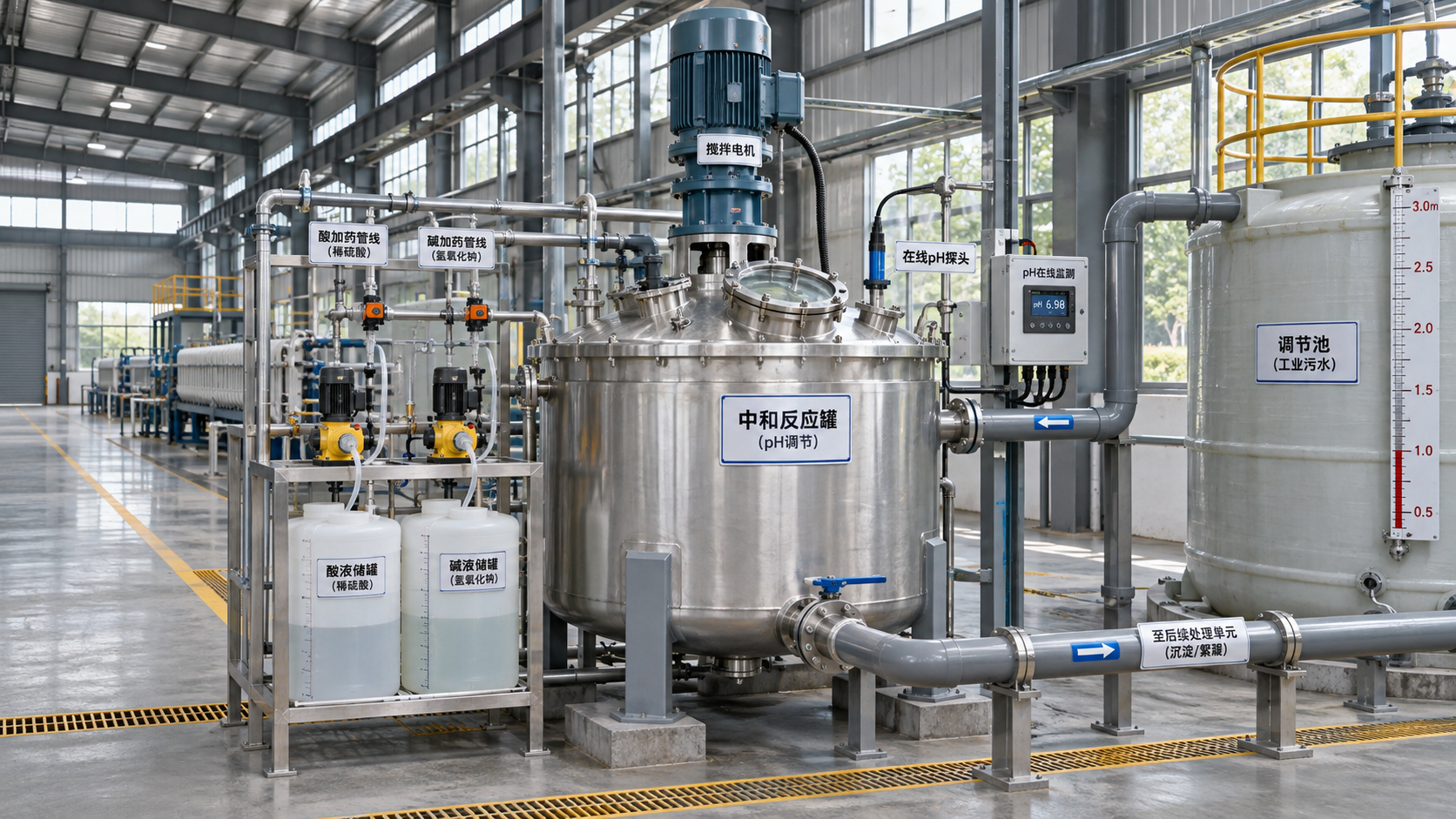
Selecting the right neutralization equipment for industrial wastewater treatment requires more than matching a system to a target pH. Flow variability, influent chemistry, buffering capacity, reaction time, and discharge limits all affect system performance and operating costs.
For technical evaluators, understanding how these factors influence equipment sizing, chemical dosing, mixing, and process control is essential to reducing compliance risks and avoiding costly design errors. This guide outlines the key criteria for assessing neutralization solutions against the demands of your facility.
The strongest selection starts with representative wastewater data and a demonstrated control strategy. Equipment size, reagent choice, and capital cost matter only after the proposed system can reliably handle credible operating extremes.
What Wastewater Data Do You Need Before Comparing Systems?
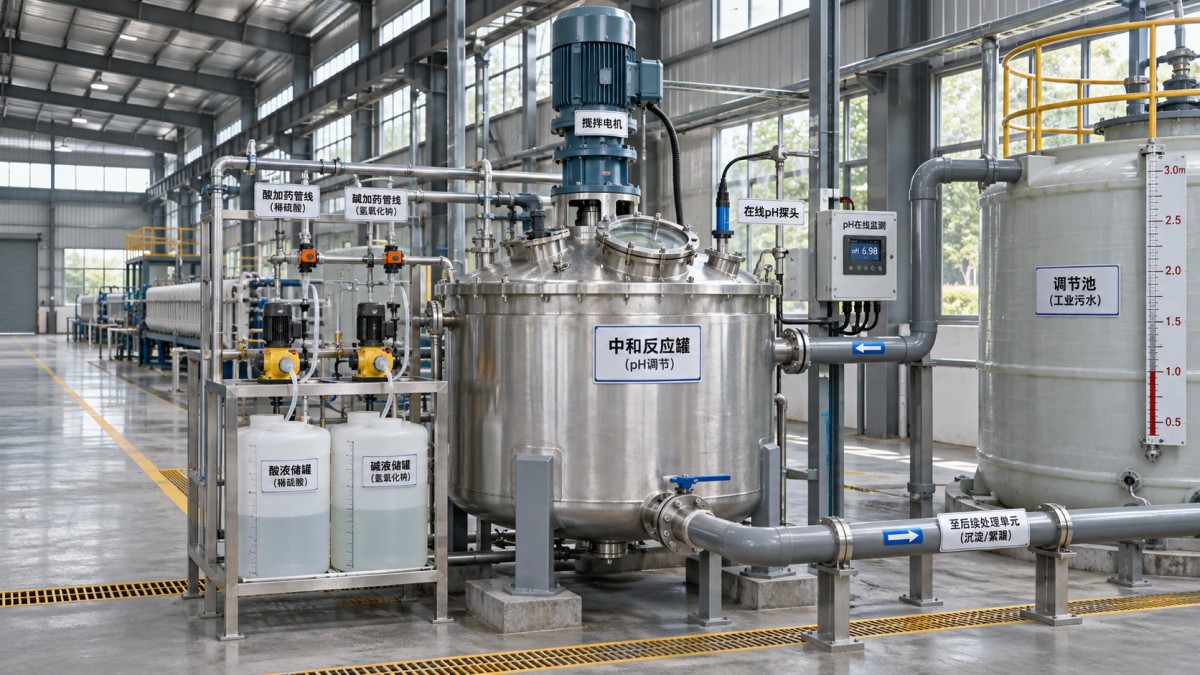
Collect flow and chemistry data across production shifts, cleaning cycles, maintenance events, and seasonal changes. An average composite sample alone can conceal short, concentrated releases that overwhelm a dosing system.
Record average and peak flow, batch volumes, temperature, suspended solids, conductivity, and the timing of acidic and alkaline discharges. Identify conditions that occur simultaneously, not just each parameter’s separate maximum.
Measure pH, but do not use it as a substitute for acidity or alkalinity. Two streams with the same initial pH can require substantially different reagent quantities because their buffering capacities differ.
Ask a qualified laboratory or process engineer to conduct titration tests on representative samples. Titration curves show how much acid or alkali is needed across the intended operating range.
Sample during unusual but credible events, including startup, shutdown, and tank cleaning. Document the duration and frequency of each event so vendors can distinguish routine design loads from exceptional scenarios.
Check for dissolved metals, oils, sulfides, cyanides, ammonia, and other constituents that may change the treatment sequence. Adjusting pH can trigger precipitation or release hazardous gases under certain chemical conditions.
Provide vendors with sampling methods, dates, production context, and analytical uncertainty. If the data set is incomplete, request a proposal that identifies assumptions and states how performance will be verified.
How Should You Size Neutralization Equipment for Variable Flow?
Start with a flow and contaminant load balance, then determine whether upstream equalization can reduce the range reaching the reactor. Equalization may lower peak dosing demand but adds tankage and mixing requirements.
Calculate preliminary hydraulic residence time by dividing effective liquid volume by flow rate. Use the actual working volume and credible peak flow, rather than assuming the entire tank provides effective mixing.
For example, a reactor with 10 cubic meters of effective volume processing 20 cubic meters per hour has a nominal residence time of 30 minutes. This figure is a starting point, not proof of complete reaction.
Short-circuiting, dead zones, mixing intensity, reaction kinetics, and sensor location can all make effective performance differ from the nominal calculation. Tracer studies or pilot testing can help validate critical designs.
Size chemical pumps for the required mass dosing rate under peak chemical demand, accounting for reagent concentration, pump accuracy, and turndown. A high flow rate does not necessarily coincide with maximum acidity.
Check both maximum and minimum operating conditions. An oversized pump may struggle to deliver stable small doses, while an undersized pump can fall behind during a concentrated discharge.
Establish how long the system can tolerate off-specification influent or equipment downtime. Provide suitable storage or diversion capacity where the discharge permit and facility risk assessment require it.
Should You Choose Batch, Continuous, or Multistage Treatment?
Batch treatment suits intermittent flows or streams requiring verification before release. Operators can mix, dose, allow reactions to proceed, and test each batch before transferring compliant water downstream.
Its limitations include larger holding capacity, cycle time, and potential operator involvement. Evaluate whether the proposed batch volume and turnaround time can accommodate production without creating an upstream bottleneck.
Continuous systems suit more consistent flows and applications where treatment must keep pace with production. They require reliable mixing, appropriately placed sensors, and controls that respond to changing loads.
A single continuous reactor can be adequate for stable wastewater, but abrupt chemical changes may cause overshoot. A second stage can provide finer correction after the first stage handles most demand.
Multistage systems are also useful when treatment objectives require different pH ranges. For example, metal precipitation may need a separate reaction and solids removal step before final discharge adjustment.
Do not assume that combining acidic and alkaline streams will eliminate chemical consumption. Their timing, compatibility, buffering, and contaminants must be assessed before blending is included in the design.
Compare configurations against actual production schedules and upset scenarios. Ask each supplier to explain the operating sequence, required tank volumes, and response when influent exceeds the stated design envelope.
Which Neutralizing Chemical Fits the Wastewater and Site?
Common alkaline reagents include sodium hydroxide, lime, and magnesium hydroxide; common acidic reagents include sulfuric acid, hydrochloric acid, and carbon dioxide. Selection depends on reaction behavior, availability, safety, and downstream effects.
Sodium hydroxide is soluble and readily metered, making it suitable for responsive control. Its concentrated solutions are highly corrosive, so storage, containment, compatible materials, and safe handling need attention.
Lime can be economical for high acid loads and may support some precipitation processes. However, slurry preparation, scaling, solids handling, maintenance, and sludge disposal can materially affect total cost.
Magnesium hydroxide can offer a different dosing and handling profile, but slurry stability and reaction kinetics require evaluation. Confirm that the proposed system can suspend and deliver the product consistently.
Sulfuric and hydrochloric acids are effective for lowering pH, but they introduce sulfate or chloride respectively. Check whether those ions affect discharge limits, corrosion, downstream reuse, or biological treatment.
Carbon dioxide can be useful for some alkaline streams, particularly where gradual pH reduction is desirable. Its effectiveness depends on mass transfer, alkalinity, pressure, temperature, and the required final pH.
Estimate delivered reagent consumption using titration data and actual product strength. Include storage, transfer, ventilation where required, maintenance, residual solids, and disposal rather than comparing purchase prices alone.
How Can Mixing and pH Control Prevent Overshoot?
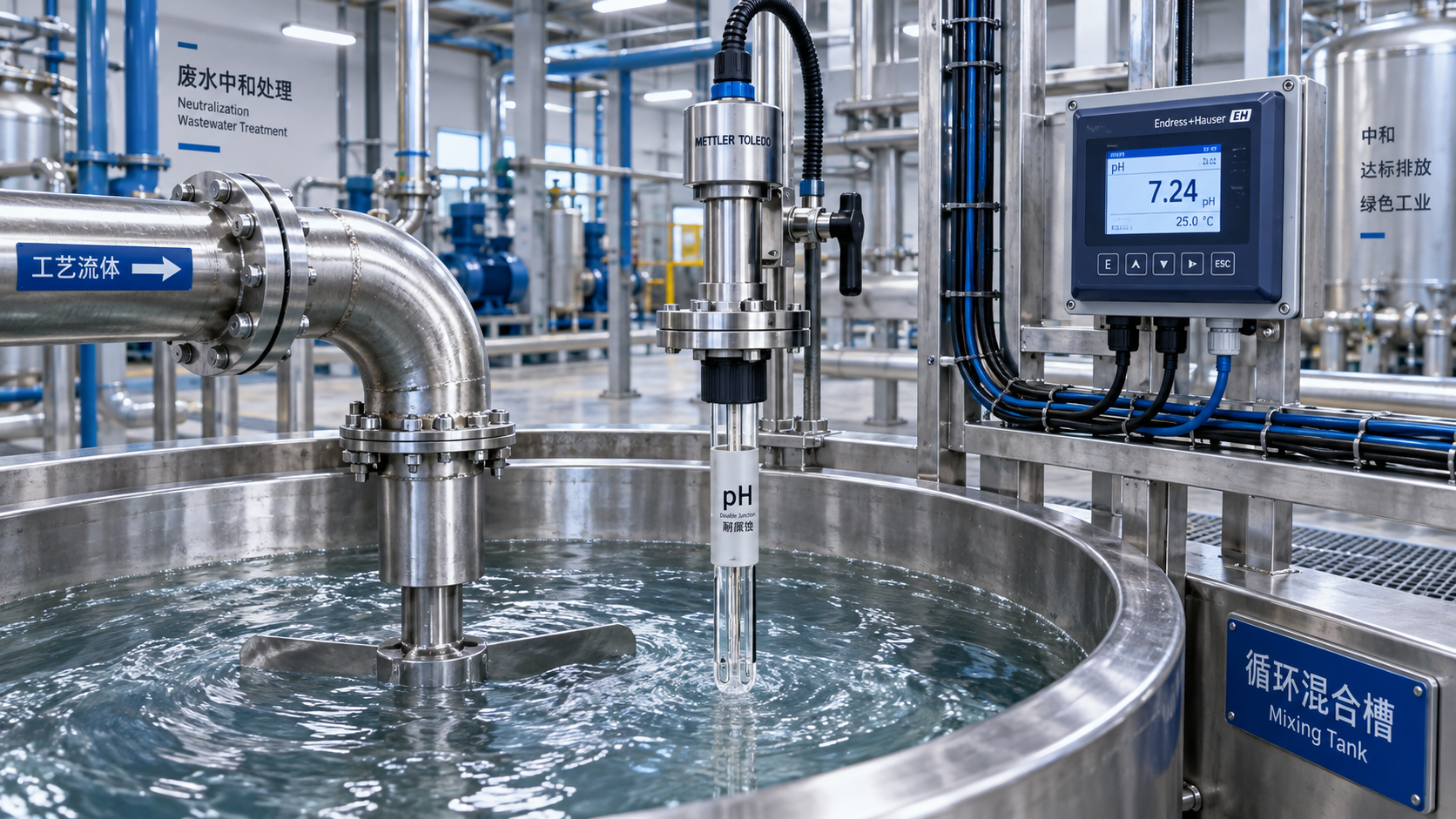
A pH control loop must work with the process, not just the instrument. Reagent should disperse quickly, and the measurement point should reflect mixed water before the controller makes further corrections.
The pH scale is nonlinear, and the shape of the titration curve can make control especially sensitive near the target. Small dosing changes may cause large pH shifts in some wastewater.
Use a properly engineered feedback controller, often with proportional, integral, and derivative functions as appropriate. Controller tuning should reflect actual response time, mixing delay, reagent strength, and process variability.
Where load changes are predictable and measurable, feedforward control can adjust dosing in advance using flow or other suitable measurements. Feedback pH control remains necessary to correct for changing chemistry.
Consider staged dosing, separate coarse and fine pumps, or dilution when accurate low-dose control is difficult. Confirm that dilution water and injection arrangements are compatible with the selected reagent.
Specify sensor locations that avoid direct reagent plumes, stagnant zones, and excessive lag. A final verification measurement downstream of adequate mixing can support diversion or release decisions.
pH probes require cleaning, calibration, and replacement. Evaluate fouling, abrasion, temperature, accessibility, and whether redundant sensors are justified by the consequences of an unreliable reading.
Ask vendors to demonstrate the response to both acid and alkaline upsets, loss of signal, pump failure, and power interruption. Define alarm behavior and fail-safe positions before approving the control philosophy.
What Materials, Solids Handling, and Safety Features Matter?
Specify wetted materials for the actual chemicals, concentrations, temperatures, and cleaning conditions. Compatibility must cover tanks, seals, valves, pumps, piping, injection fittings, and instrumentation, not just the reactor shell.
Assess precipitation potential throughout the process. Scaling or settled solids can block lines, foul probes, reduce useful tank volume, and change mixing performance even when the design meets hydraulic requirements.
If treatment produces sludge, determine how it will be thickened, dewatered, characterized, stored, and disposed of. Solids management can dominate operating costs and may require separate equipment and permits.
Provide access for inspection, probe removal, pump maintenance, and safe chemical deliveries. Secondary containment, emergency equipment, ventilation, and isolation should follow site assessments and applicable local requirements.
Review hazardous reactions before combining streams or adding acid. Sulfide-bearing or cyanide-bearing wastewater can generate toxic gases under acidic conditions; qualified process and safety specialists should establish appropriate treatment controls.
Confirm that equipment electrical classifications, pressure ratings, and material certifications suit the installation. CE marking, UL certification, or other conformity requirements apply only where relevant to the product and jurisdiction.
How Should You Compare Vendor Proposals and Operating Costs?
Issue a common design basis so suppliers quote against the same flow profiles, titration data, water quality targets, site conditions, and utility assumptions. Require explicit exclusions and stated design margins.
Request a process flow diagram, equipment list, control narrative, chemical consumption estimate, and tank sizing basis. Each proposal should identify the samples and conditions used to support its predictions.
Compare lifecycle costs across an agreed evaluation period. Include capital installation, chemicals, power, water, calibration supplies, labor, spare parts, sludge disposal, and expected maintenance or replacement of wear components.
Test sensitivity to the variables most likely to change, such as reagent price, production volume, influent strength, and disposal charges. A low initial price can be offset by recurring chemical or solids costs.
Define performance acceptance around measurable conditions: influent envelope, flow rate, discharge pH range, sampling location, test duration, and response to upsets. Identify who supplies test wastewater, chemicals, and independent analysis.
Check whether the guarantee covers continuous compliance, equipment capability under specified conditions, or another narrower outcome. Permit compliance remains a site responsibility and depends on operation, monitoring, and wastewater characteristics.
For uncertain chemistry or high-consequence installations, request bench testing or a pilot using representative wastewater. Scale-up assumptions, seasonal variation, and the pilot’s operating limits should be documented before purchase.
Make the Final Selection Against Real Operating Conditions
Choose neutralization equipment by matching a verified process design to the facility’s actual flow, chemical loads, discharge requirements, and maintenance capabilities. A vendor’s nominal capacity alone cannot establish suitability.
Before approval, confirm the design basis, reagent strategy, control response, materials, solids pathway, and acceptance test. Address missing data through sampling or trials rather than leaving critical assumptions unresolved.
The best system is the one that consistently meets its defined treatment objective across credible operating conditions while keeping chemical use, maintenance, and residual handling manageable over its service life.
Expert Insights

Chief Security Architect
Dr. Thorne specializes in the intersection of structural engineering and digital resilience. He has advised three G7 governments on industrial infrastructure security.
Related Analysis
- Nov 22, 2026McKinsey: India Needs Up to $400 Billion to Meet Steel Capacity Growth GoalAuthor :
- Nov 22, 2026Choosing Geotextile Fabric for Landfill Drainage and Liner ProtectionAuthor :Environmental Engineering Director
- Nov 21, 2026Japan's Steel Exports Could Fall to Lowest Level Since 1999 in 2026Author :
Core Sector // 01
Security & Safety
- Choosing Neutralization Equipment for Industrial Wastewater TreatmentAuthor :Environmental Engineering Director

- Choosing a Modular Desalination Plant: Capacity, Feedwater and Site NeedsAuthor :Environmental Engineering Director

- Ductile Iron Pipe Bedding: What to Check Before Lowering PipeAuthor :Environmental Engineering Director

- Buying Fiberglass Water Tanks Wholesale: Compare Quotes and Delivery CostsAuthor :Environmental Engineering Director

- How to Select Industrial pH Meters for Continuous Wastewater Process ControlAuthor :Environmental Engineering Director

- How to Size a Rinse Fill Cap Machine for Your Bottle Format and Target OutputAuthor :Environmental Engineering Director

- How to Size a Heavy-Duty Submersible Sewage Pump for High-Solids Lift StationsAuthor :Environmental Engineering Director

- How to Size a Wafer Butterfly Valve for HVAC Chilled-Water and Heating LoopsAuthor :Environmental Engineering Director