How to Choose Sludge Dewatering Equipment for Municipal and Industrial Wastewater
Author
Date Published
Reading Time
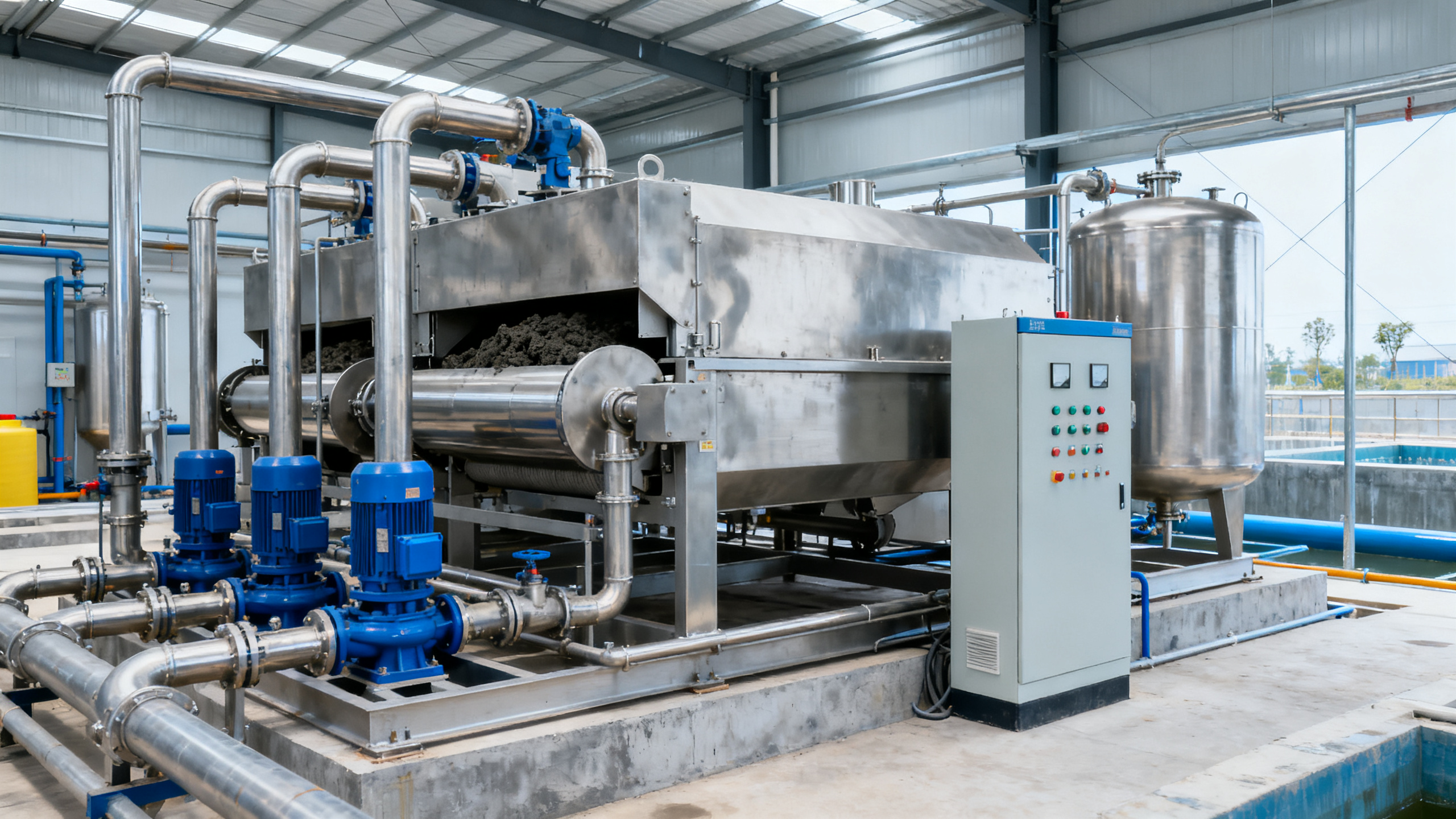
Choosing sludge dewatering equipment for municipal and industrial wastewater is rarely a simple capacity exercise. The right decision affects discharge compliance, hauling cost, operator workload, energy use, and how reliably a plant performs under variable sludge conditions.
That is why equipment selection now sits closer to risk management than routine procurement. In both public infrastructure and heavy industry, poor dewatering performance can disrupt downstream handling, inflate lifecycle cost, and weaken environmental control.
From the perspective of Global Industrial Core, this topic matters because wastewater systems belong to the same critical foundation as power, safety, measurement, and mechanical reliability. Decisions must be technical, data-based, and aligned with long-term operating realities.
What sludge dewatering equipment is expected to do
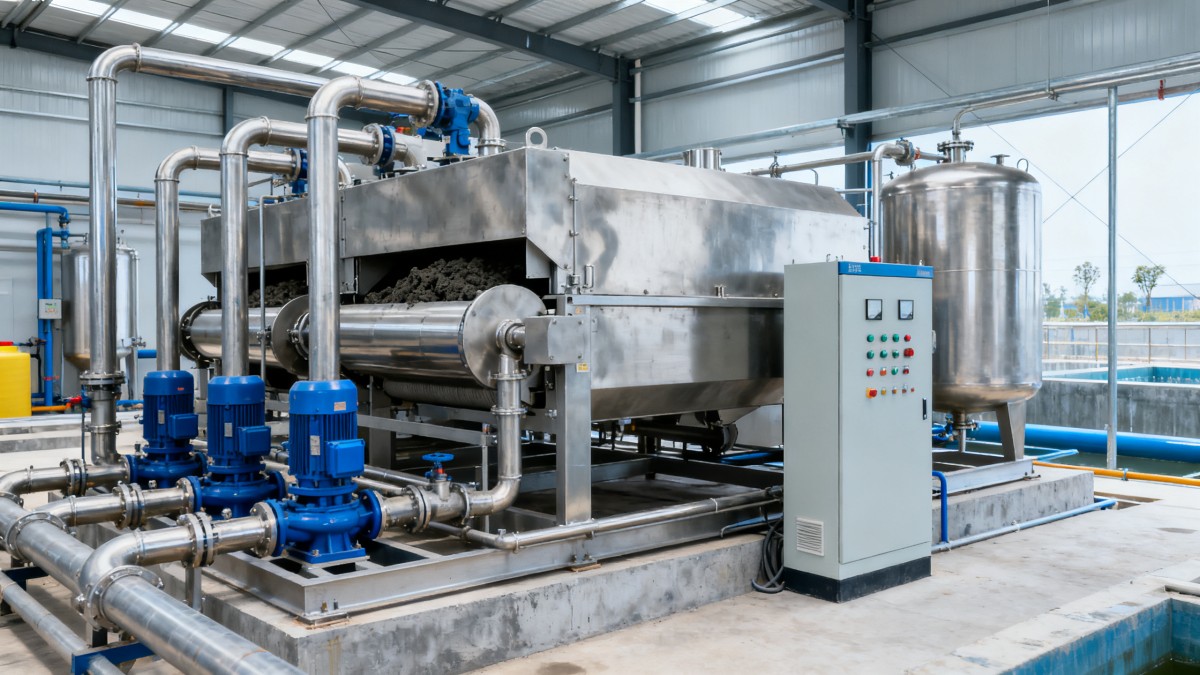
At its core, sludge dewatering equipment separates water from solids so sludge becomes easier and less expensive to store, transport, treat, or dispose of. The target is not just dryness. The target is stable, repeatable performance.
Municipal plants usually deal with biological sludge, mixed primary sludge, or digested sludge. Industrial sites may handle oily solids, chemical precipitates, metal-bearing sludge, food residues, fiber-rich streams, or high-variation process waste.
Because these materials behave differently, the same sludge dewatering equipment can perform very well in one plant and poorly in another. Cake solids, filtrate quality, polymer demand, wear rate, and cleaning frequency all depend on the actual sludge profile.
Common technologies include belt filter presses, centrifuges, screw presses, plate and frame filter presses, and rotary presses. Each has a different balance of dryness, automation, footprint, sensitivity, and maintenance intensity.
Why selection standards are getting stricter
Wastewater projects now face tighter discharge expectations, higher disposal costs, and greater pressure to reduce energy and water consumption. A dewatering train that looked acceptable a decade ago may no longer meet economic or compliance expectations.
In municipal settings, aging infrastructure often has to process larger flows without expanding the building envelope. In industrial plants, production changes can alter sludge composition faster than equipment specifications are updated.
More attention is also going to safety and documentation. Buyers increasingly examine CE, UL, and ISO alignment, control system integrity, guarding design, materials compatibility, and service traceability before approving sludge dewatering equipment.
This is consistent with GIC’s broader editorial position: foundational equipment should be judged by resilience, not brochure claims alone. The best sourcing decisions connect process data, mechanical design, compliance evidence, and field maintainability.
Start with sludge behavior, not machine preference
A frequent mistake is choosing sludge dewatering equipment by familiarity. A technology may be popular in one sector yet unsuitable for another. The more reliable approach starts with sampling, testing, and operating variability.
Several sludge characteristics deserve close attention before comparing vendors.
- Solids concentration at feed, including daily and seasonal fluctuation.
- Particle size distribution and whether the sludge is fibrous, greasy, abrasive, or sticky.
- Organic versus inorganic content, which affects compressibility and achievable cake solids.
- Conditioning response, especially polymer type, dosage window, and shear sensitivity.
- Presence of corrosive chemicals, grit, or temperature extremes that influence material selection.
Bench testing and pilot trials often reveal more than nameplate data. In practice, they show whether a machine can keep filtrate clean, control odor, maintain throughput, and deliver a realistic cake percentage under normal disturbances.
Matching equipment type to the application
The best technology depends on what the site values most. Sometimes that is maximum dryness. Sometimes it is low operator attention, low washwater demand, or smoother operation during fluctuating shifts.
Simple comparisons can be misleading. A centrifuge may win on footprint but lose on wear parts. A filter press may maximize dryness but add labor and batch complexity. The right sludge dewatering equipment fits the process, not the trend.
The operating factors that shape total cost
Purchase price matters, but lifecycle cost usually decides whether a project performs well financially. Dewatering economics are strongly influenced by consumables, utilities, maintenance, and the cost of moving wet cake off site.
A practical review should include more than one operating scenario. Normal load, peak sludge generation, upset conditions, and reduced staffing periods often produce very different cost outcomes.
Key evaluation points
- Energy consumption per dry solids ton, not just installed motor size.
- Polymer demand and the impact of poor conditioning tolerance.
- Washwater requirement, especially in water-stressed facilities.
- Wear parts life, replacement lead times, and local service capability.
- Achievable cake dryness and resulting transport or disposal savings.
- Downtime risk during cleaning, blockage, vibration, or control failure.
This is where many evaluations become more disciplined. A machine that looks economical on day one may become expensive if polymer use is unstable or if service support is weak in the target region.
Automation, reliability, and maintainability matter as much as performance
High cake solids do not guarantee a sound decision. Sludge dewatering equipment must also be easy to integrate, monitor, clean, and repair. In unattended or partially staffed sites, control quality can determine real-world success.
Useful questions include whether the unit supports remote diagnostics, how alarms are prioritized, and whether process variables can be trended against sludge quality changes. Better data shortens troubleshooting time.
Mechanical details deserve equal attention. Seal arrangement, bearing protection, anti-corrosion materials, guarding, lubrication access, and isolation points often separate robust equipment from units that are difficult to keep online.
For industrial wastewater, chemical compatibility is especially important. Chlorides, solvents, acids, and abrasive solids can shorten equipment life quickly if metallurgy and elastomer choices are not validated early.
Where municipal and industrial priorities often differ
Municipal applications often prioritize stable long-run operation, low staffing burden, odor control, and predictable solids handling. Sludge quality may change seasonally, but the process envelope is usually more defined.
Industrial facilities often face sharper variability. Batch discharges, process cleaning cycles, production changes, and contaminant spikes can all challenge sludge dewatering equipment and expose weak process assumptions.
That difference affects how trials should be designed. Municipal evaluations may focus on long-duration stability. Industrial evaluations often need stress testing across several sludge conditions rather than one representative sample.
In both cases, the strongest decisions usually come from linking process testing with procurement criteria. GIC consistently treats that connection as essential because technical evidence reduces sourcing risk more effectively than generic vendor comparison.
A practical framework for the next decision
A useful way forward is to build a short evaluation matrix before requesting final quotations. That matrix should rank sludge behavior, dryness target, filtrate quality, energy use, automation, service support, compliance evidence, and maintenance burden.
Then compare each sludge dewatering equipment option against actual site constraints: available footprint, washwater supply, disposal route, operator availability, spare parts strategy, and future load expansion.
If the process is critical, pilot data should carry more weight than brochure performance. If compliance exposure is high, documentation quality and materials traceability should move higher on the list.
The most reliable next step is not rushing to a preferred machine. It is clarifying sludge characteristics, defining measurable acceptance criteria, and testing whether the proposed solution remains stable under real operating conditions.
That approach leads to a better decision today and a more resilient wastewater system over the full service life of the asset.
Technical Specifications
- Wholesale Borosilicate Lab Glassware: How Buyers Verify Quality, Specs, and Supply ReliabilityAuthor :Precision Metrology Expert
- How to Select Electronic Hotel Key Card Locks for Guest Rooms and Staff AreasAuthor :Safety Compliance Lead
- How to Select Lab Instruments for Reliable Chemical Analysis WorkflowsAuthor :Precision Metrology Expert
Expert Insights

Chief Security Architect
Dr. Thorne specializes in the intersection of structural engineering and digital resilience. He has advised three G7 governments on industrial infrastructure security.
Related Analysis
- Sep 18, 2026Wholesale Borosilicate Lab Glassware: How Buyers Verify Quality, Specs, and Supply ReliabilityAuthor :Precision Metrology Expert
- Sep 17, 2026How to Select Electronic Hotel Key Card Locks for Guest Rooms and Staff AreasAuthor :Safety Compliance Lead
- Sep 16, 2026How to Select Lab Instruments for Reliable Chemical Analysis WorkflowsAuthor :Precision Metrology Expert
Core Sector // 01
Security & Safety
- How to Size a Wafer Butterfly Valve for HVAC Chilled-Water and Heating LoopsAuthor :Environmental Engineering Director

- How Pressure Class and Joint Design Affect Long-Term Performance of Ductile Iron Pipes in Drainage InfrastructureAuthor :Environmental Engineering Director

- How Ductile Iron Pipe Joints Affect Installation Reliability and Leak ControlAuthor :Environmental Engineering Director

- How to Size Effluent Treatment Equipment for Variable Industrial Wastewater LoadsAuthor :Environmental Engineering Director

- US Battery Push Raises New Entry Rules for SuppliersAuthor :Environmental Engineering Director

- EU EMC Rule Tightens for Water Treatment ExportsAuthor :Environmental Engineering Director

- EU REACH Restriction Targets PFAS Water Treatment ImportsAuthor :Environmental Engineering Director

- EU Mandates EN 14113:2026 for Water Treatment ExportsAuthor :Environmental Engineering Director