EU Rule Tightens EN 1822-2 for Industrial Air Purifiers
Author
Date Published
Reading Time
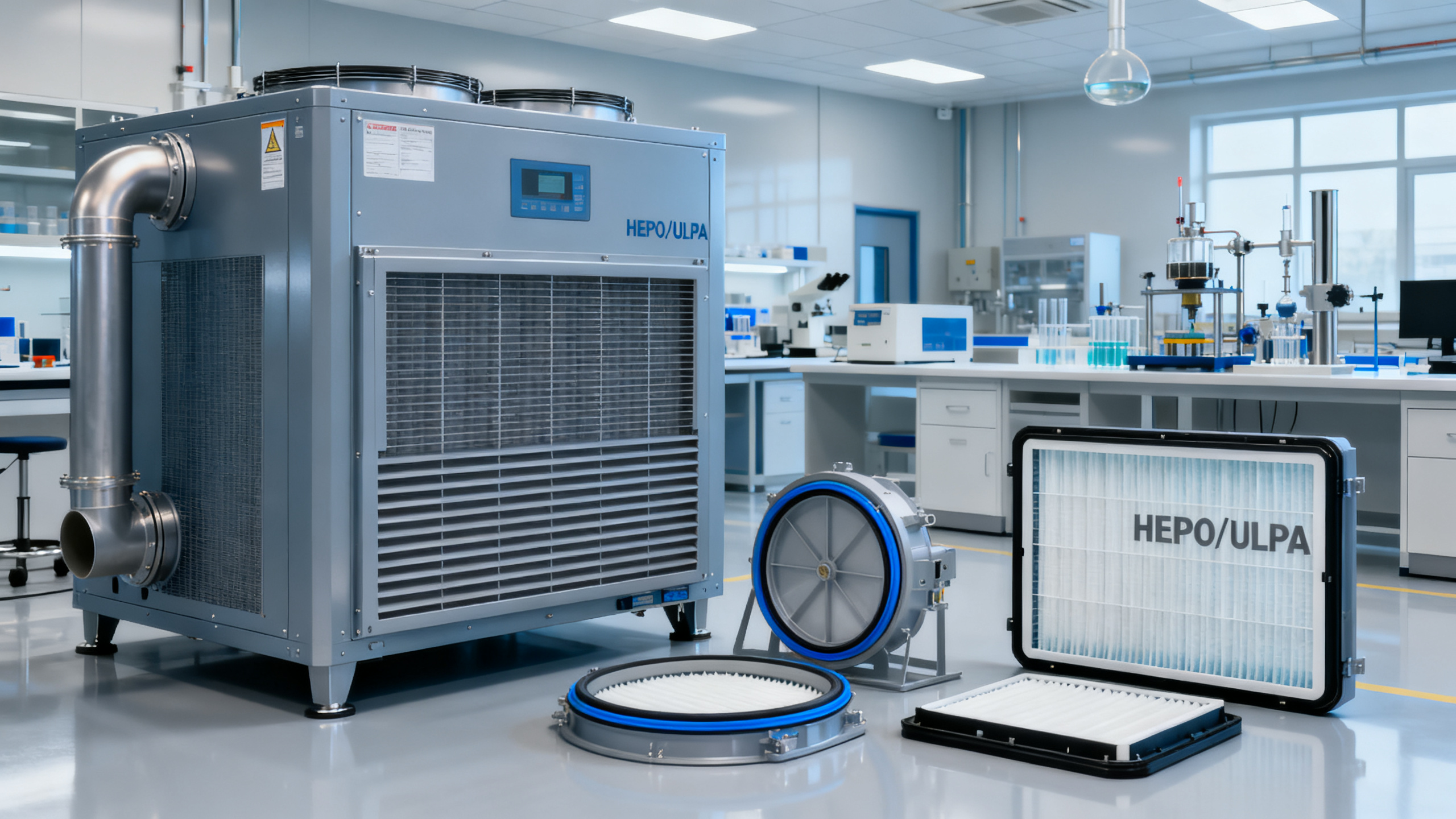
On August 3, 2026, the Official Journal of the European Union (OJEU) published the revised EN 1822-2:2026 standard, setting a mandatory compliance date of November 1, 2026 for industrial air purifiers entering the EU market. For manufacturers, exporters, testing bodies, and buyers dealing with HEPA or ULPA filtration modules, this matters because the update raises the bar on particle filtration performance, leakage control, and durability verification, with direct consequences for product design decisions, certification timing, and market access planning.
What the New Standard Requires
According to the information provided, EN 1822-2:2026 will become mandatory from November 1, 2026 for all industrial air purifiers sold into the EU market, including products equipped with HEPA or ULPA filter modules. The revised standard requires products to pass the updated classification efficiency and leakage testing process.
The confirmed changes include stricter verification requirements for 0.3μm particle filtration efficiency, with a threshold of at least 99.995%, as well as higher expectations for airtightness and durability validation. The published update is expected to affect product certification and compliance preparation tied to EU market entry.
Where the Pressure Will Be Felt First
Export-oriented manufacturers face design and validation pressure
From an industry perspective, exporters shipping industrial air purification equipment to the EU are likely to feel the impact first. The reason is straightforward: once the revised standard becomes mandatory, compliance is no longer only a documentation issue but also a product performance issue. The main pressure points are likely to appear in filter module design, sealing performance, and durability verification before shipment.
Third-party testing and certification workflows may become more critical
Analysis shows that testing and certification service providers will become a more central part of the compliance path. Because the update specifically refers to revised efficiency grading and leakage tests, affected companies will need to pay closer attention to which testing route they follow, how quickly testing can be completed, and whether existing technical files remain aligned with the new certification basis.
EU buyers and procurement teams may tighten supplier review
For buyers, importers, and procurement teams sourcing industrial air purifiers for EU use, the rule change may shift attention toward supplier qualification and proof of conformity. The business impact is likely to show up in pre-purchase technical review, documentation checks, and delivery scheduling, especially where projects depend on compliant HEPA or ULPA filtration performance.
Supply chain coordination may become more time-sensitive
Observably, supply chain service providers and cross-border trading teams may need to adjust planning around certification lead time and document readiness. Even where the product itself is technically close to the new threshold, the practical risk may emerge in coordination between manufacturers, test laboratories, compliance teams, and customers waiting for updated CE-related documentation cycles.
Practical Points Companies Should Track Now
Check whether current product specifications still match the new test basis
What deserves closer attention is whether existing industrial air purifier models, especially those using HEPA or ULPA modules, can still meet the revised efficiency and leakage requirements without redesign. For many companies, the first task is not market expansion but product-by-product confirmation of compliance readiness.
Review testing routes and timing before the mandatory date
Analysis shows that the choice of third-party testing path may become a practical bottleneck. Companies should focus on the time needed for updated grading efficiency tests, leakage validation, and supporting records required for EU market entry. This is especially relevant for businesses already shipping to the EU on fixed delivery schedules.
Prepare for document and CE marking update cycles
The provided information indicates that CE marking update cycles will be directly affected. In practice, this means compliance teams and export managers should closely review technical documents, declarations, and customer-facing compliance materials to identify where updates may be required once the new standard is in force.
Align supplier communication with customer communication
From an operational perspective, companies should also distinguish between a published regulatory signal and completed business readiness. Supplier-side technical confirmation, laboratory scheduling, and customer-side delivery commitments may not move at the same speed. Clear communication around certification status and transition timing is likely to matter in contract execution and order planning.
Why This Looks Like More Than a Routine Update
Analysis shows that this development is better understood as an immediate compliance change with longer-term implications, rather than as a distant policy signal. The mandatory date is already defined, and the revised requirements directly touch measurable product performance and testing methods. At the same time, it is still appropriate to treat some business effects, such as timing pressure on certification workflows and customer procurement behavior, as areas that require continued observation rather than fixed outcomes.
Observably, the most important signal here is that EU market access for industrial air purifiers is becoming more tightly linked to verifiable filter performance and product integrity under the revised EN 1822-2 framework. For exporters, especially those serving the EU from China, the issue is not only whether demand continues, but whether compliance preparation keeps pace with the implementation deadline.
How to Read This Development at This Stage
At this stage, it is more appropriate to understand the revised EN 1822-2:2026 requirement as a concrete near-term compliance shift and a broader quality-control signal for the industrial air purification supply chain. The confirmed facts already point to higher thresholds for filtration efficiency, leakage testing, and durability validation. The wider commercial effects will depend on how quickly affected companies adjust product design, testing arrangements, and documentation workflows before November 1, 2026.
Basis of This Article
This article is based on the user-provided news title, event date, and event summary concerning the OJEU publication of the revised EN 1822-2:2026 standard on August 3, 2026 and its mandatory implementation date of November 1, 2026. For this type of industry update, commonly relevant source categories include official notices, company disclosures, industry association materials, authoritative media coverage, and standard-setting documents. A specific official source link was not provided in the input, so the exact reference document should be continuously verified. Follow-up attention should remain on later official wording, testing implementation details, and how certification and CE-related update cycles are applied in practice.
Technical Specifications
- Wholesale Borosilicate Lab Glassware: How Buyers Verify Quality, Specs, and Supply ReliabilityAuthor :Precision Metrology Expert
- How to Select Electronic Hotel Key Card Locks for Guest Rooms and Staff AreasAuthor :Safety Compliance Lead
- How to Select Lab Instruments for Reliable Chemical Analysis WorkflowsAuthor :Precision Metrology Expert
Expert Insights

Chief Security Architect
Dr. Thorne specializes in the intersection of structural engineering and digital resilience. He has advised three G7 governments on industrial infrastructure security.
Related Analysis
- Sep 18, 2026Wholesale Borosilicate Lab Glassware: How Buyers Verify Quality, Specs, and Supply ReliabilityAuthor :Precision Metrology Expert
- Sep 17, 2026How to Select Electronic Hotel Key Card Locks for Guest Rooms and Staff AreasAuthor :Safety Compliance Lead
- Sep 16, 2026How to Select Lab Instruments for Reliable Chemical Analysis WorkflowsAuthor :Precision Metrology Expert
Core Sector // 01
Security & Safety
- Environmental Technologies for Heavy Industry: Choosing Cleaner Production SolutionsAuthor :Environmental Engineering Director

- Selecting Air Compliance Equipment for Dust, Fumes, and VOC ControlAuthor :Environmental Engineering Director

- EU Rule Tightens EN 1822-2 for Industrial Air PurifiersAuthor :Environmental Engineering Director

- EU Eco-Design Rules Tighten for Air PurifiersAuthor :Environmental Engineering Director

- Low-Maintenance Dust and Fume Control Systems: Best Options for Welding ShopsAuthor :Environmental Engineering Director

- EPA Sets VOC Labeling Rule for Air PurifiersAuthor :Environmental Engineering Director

- Saudi SASO Rule Adds Real-Time Logging for Air SystemsAuthor :Environmental Engineering Director

- Saudi SASO Rules Tighten for Air PurifiersAuthor :Environmental Engineering Director