Dosing Agitators Wholesale: How to Compare Tank Size, Viscosity, and Mixing Duty
Author
Date Published
Reading Time
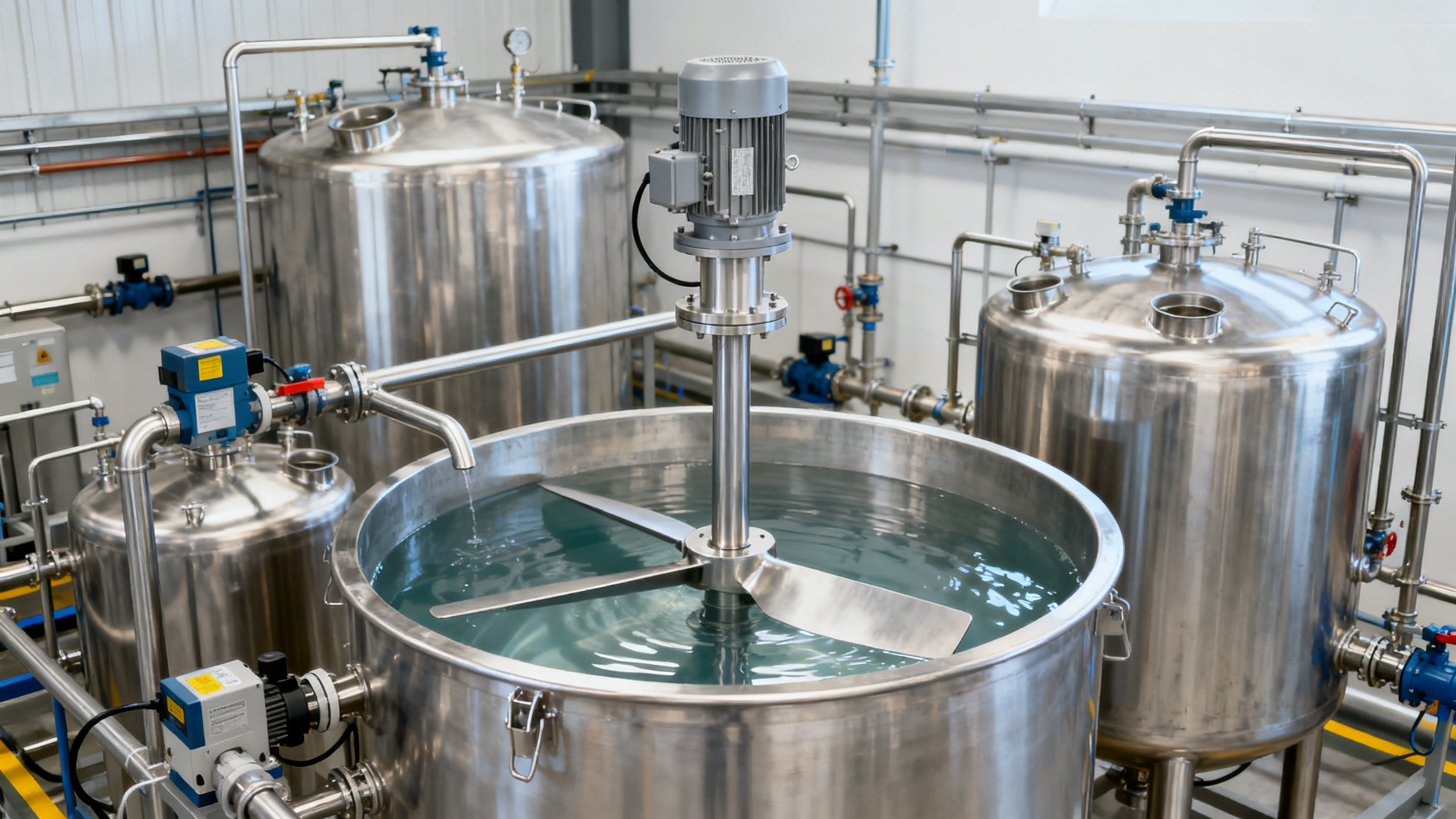
Dosing agitators wholesale decisions rarely fail because of one obvious mismatch. More often, performance issues appear when tank size, viscosity, and mixing duty are reviewed separately instead of as one operating system.
That matters across chemical dosing, water treatment, coatings, minerals, food auxiliaries, and process utilities. A small error in agitator selection can disturb concentration control, raise power draw, and shorten seal or gearbox life.
From the perspective of industrial infrastructure, the choice also affects compliance, uptime, and maintenance planning. This is why dosing agitators wholesale sourcing now demands more than catalog comparison.
Why the comparison starts with process fit
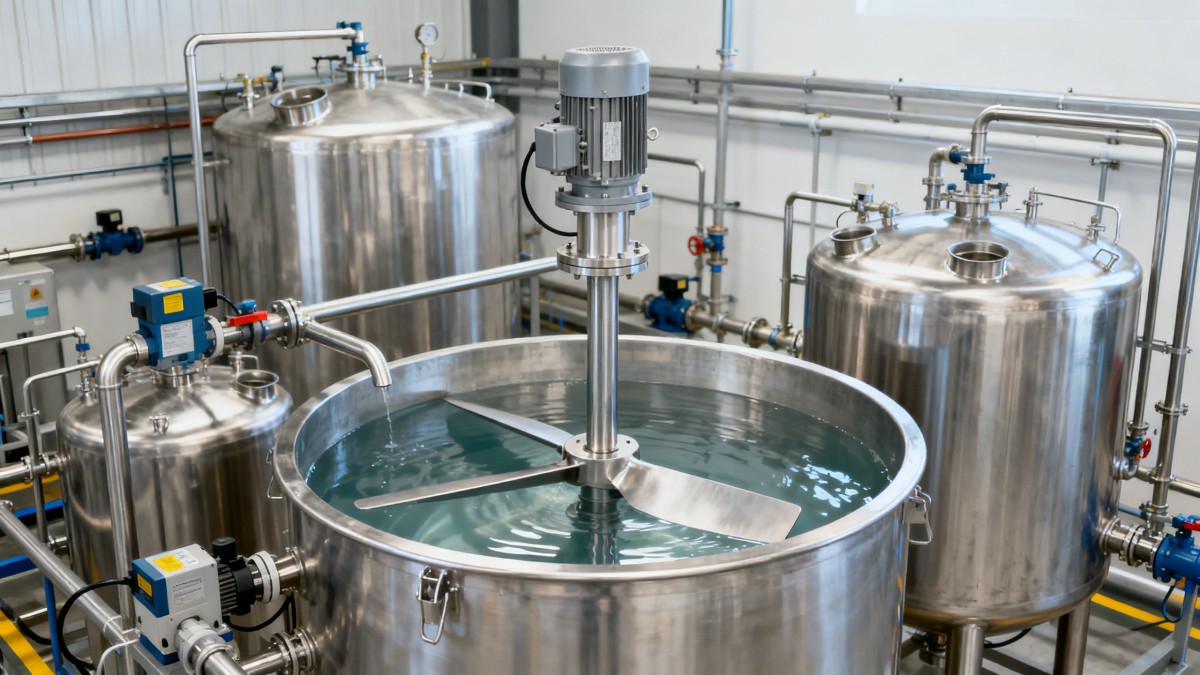
A dosing agitator is built to keep a medium uniform while supporting controlled addition, dilution, suspension, or reaction stability. In practice, the agitator is part of the metering and containment logic, not an isolated mechanical accessory.
This is especially relevant for EPC projects and industrial retrofits, where equipment must align with CE, ISO, material compatibility, and site-specific operating envelopes. Global Industrial Core often frames these decisions around system resilience rather than lowest purchase price.
When reviewing dosing agitators wholesale offers, the useful question is not only whether an agitator can rotate. The better question is whether it can maintain the target fluid condition during the full duty cycle.
Tank size changes more than capacity
Tank volume is often the first specification on a quotation sheet, but volume alone says very little. Geometry, fill level variation, liquid height, and bottom profile can change mixing behavior even when nominal capacity is identical.
A tall, narrow tank usually demands different flow patterns than a wide, shallow tank. The same motor power may create strong top circulation in one vessel and a dead zone near the bottom in another.
For dosing service, dead zones are expensive. Solids settle, concentration drifts, and feed pumps begin pulling inconsistent fluid properties. In extreme cases, operators start adjusting chemical rates to compensate for a mixing problem.
What to verify on the vessel side
- Working volume versus maximum volume, especially where level swings are frequent.
- Tank diameter-to-height ratio, which influences axial or radial flow preference.
- Presence of baffles, coils, internals, or sensors that disrupt circulation.
- Mounting position, because top-entry, side-entry, and offset installation behave differently.
In dosing agitators wholesale evaluation, tank size should therefore be translated into hydraulic behavior, not treated as a simple liter figure.
Viscosity is the parameter that changes everything
Viscosity determines how easily momentum moves through a fluid. Once viscosity rises, the agitator may need a different impeller style, lower speed, higher torque, or stronger drive train.
Water-like solutions behave very differently from polymer blends, slurries, lime milk, or additive concentrates. A unit that works well for a low-viscosity buffer can fail quickly in a thick suspension.
Another common issue is that viscosity is not always constant. Temperature shifts, solids loading, and batch sequence can make the fluid heavier during operation. That dynamic range should appear in the specification review.
Low and high viscosity call for different priorities
For this reason, credible dosing agitators wholesale suppliers usually ask for viscosity at actual operating temperature, not just a generic fluid name.
Mixing duty defines the real job
Two systems can share the same tank and viscosity, yet require different agitators because the mixing duty is different. This is where many shortlist exercises become too mechanical.
Mixing duty may involve simple blending, maintaining suspension, preventing stratification, dissolving powders, dispersing additives, or supporting reaction uniformity. Each duty changes the power and impeller strategy.
Continuous operation also differs from intermittent operation. A mixer that survives short batches may not be suitable for 24/7 duty in corrosive media with strict concentration tolerance.
Questions that sharpen duty evaluation
- Is the goal homogeneity, suspension, dissolution, or reaction support?
- Does the process need gentle turnover or aggressive dispersion?
- How quickly must the tank recover after each dosing event?
- Will solids settle during shutdown or low-speed periods?
- Are there shear-sensitive chemicals, flocculants, or emulsions involved?
In practical terms, dosing agitators wholesale comparison becomes more accurate when the duty is described as a process result, not just as “mixing required.”
Where industrial buyers usually misread quotations
A quotation may show motor power, speed, shaft length, and material grade, yet still hide important differences. Similar headline numbers can produce very different field outcomes.
One frequent mistake is comparing only kilowatts. Power matters, but so do torque delivery, impeller diameter, gearbox service factor, and the way energy is transferred into the fluid.
Another mistake is underestimating materials and sealing. In chloride service, acidic dosing, or abrasive slurries, corrosion resistance and seal selection often drive lifecycle cost more than the original agitator price.
This is where GIC’s editorial emphasis on compliance and operating reliability becomes useful. For critical infrastructure, component traceability, test data, and standard alignment are part of technical suitability.
A better comparison matrix
Typical operating scenarios for dosing agitators wholesale
The market for dosing agitators wholesale spans several industrial contexts, but the selection logic remains consistent. The details change with media behavior and process tolerance.
In water and wastewater treatment, the focus is often on keeping chemicals uniform and ready for injection without sedimentation. In chemical processing, the challenge may be viscosity shift, reactivity, or stricter material compatibility.
Mining and minerals applications usually add abrasive wear and solids settlement. Food-adjacent utilities or specialty additives may require cleaner finishes and tighter control over contamination risk.
Across these sectors, the best dosing agitators wholesale choices are the ones matched to the full operating profile, including upset conditions, shutdown recovery, and maintenance access.
How to move from shortlist to defensible decision
A reliable evaluation process starts by collecting operating data in usable form. That includes working volume, fluid temperature, viscosity range, solids content, dosing frequency, and required blend quality.
The next step is to compare supplier proposals against the same duty statement. Without a common basis, dosing agitators wholesale quotes can appear cheaper simply because they assume lighter conditions.
It also helps to ask for evidence beyond the datasheet. Similar installed references, material certificates, performance assumptions, and maintenance recommendations often reveal whether a proposal is engineered or merely assembled.
A practical review should end with a small set of decision filters:
- Can the agitator maintain consistency at minimum and maximum tank levels?
- Is the drive sized for worst-case viscosity, not average conditions?
- Does the duty description match the actual process objective?
- Are compliance, traceability, and serviceability documented clearly?
That framework creates a stronger basis for comparing dosing agitators wholesale offers across regions, brands, and project scales. It also reduces the risk of solving a mixing problem later with operational workarounds.
Where uncertainty remains, the most useful next move is to refine the duty profile before refining the price list. Clearer inputs usually lead to better agitation choices, better supplier discussions, and more stable long-term performance.
Technical Specifications
- How to Select Electronic Hotel Key Card Locks for Guest Rooms and Staff AreasAuthor :Safety Compliance Lead
- How to Select Lab Instruments for Reliable Chemical Analysis WorkflowsAuthor :Precision Metrology Expert
- How to Size a UPS for Server Rooms: Load, Runtime, and Redundancy FactorsAuthor :Grid Infrastructure Analyst
Expert Insights

Chief Security Architect
Dr. Thorne specializes in the intersection of structural engineering and digital resilience. He has advised three G7 governments on industrial infrastructure security.
Related Analysis
- Sep 17, 2026How to Select Electronic Hotel Key Card Locks for Guest Rooms and Staff AreasAuthor :Safety Compliance Lead
- Sep 16, 2026How to Select Lab Instruments for Reliable Chemical Analysis WorkflowsAuthor :Precision Metrology Expert
- Sep 15, 2026How to Size a UPS for Server Rooms: Load, Runtime, and Redundancy FactorsAuthor :Grid Infrastructure Analyst
Core Sector // 01
Security & Safety
- How to Size a Wafer Butterfly Valve for HVAC Chilled-Water and Heating LoopsAuthor :Environmental Engineering Director

- How Pressure Class and Joint Design Affect Long-Term Performance of Ductile Iron Pipes in Drainage InfrastructureAuthor :Environmental Engineering Director

- How Ductile Iron Pipe Joints Affect Installation Reliability and Leak ControlAuthor :Environmental Engineering Director

- How to Size Effluent Treatment Equipment for Variable Industrial Wastewater LoadsAuthor :Environmental Engineering Director

- US Battery Push Raises New Entry Rules for SuppliersAuthor :Environmental Engineering Director

- EU EMC Rule Tightens for Water Treatment ExportsAuthor :Environmental Engineering Director

- EU REACH Restriction Targets PFAS Water Treatment ImportsAuthor :Environmental Engineering Director

- EU Mandates EN 14113:2026 for Water Treatment ExportsAuthor :Environmental Engineering Director