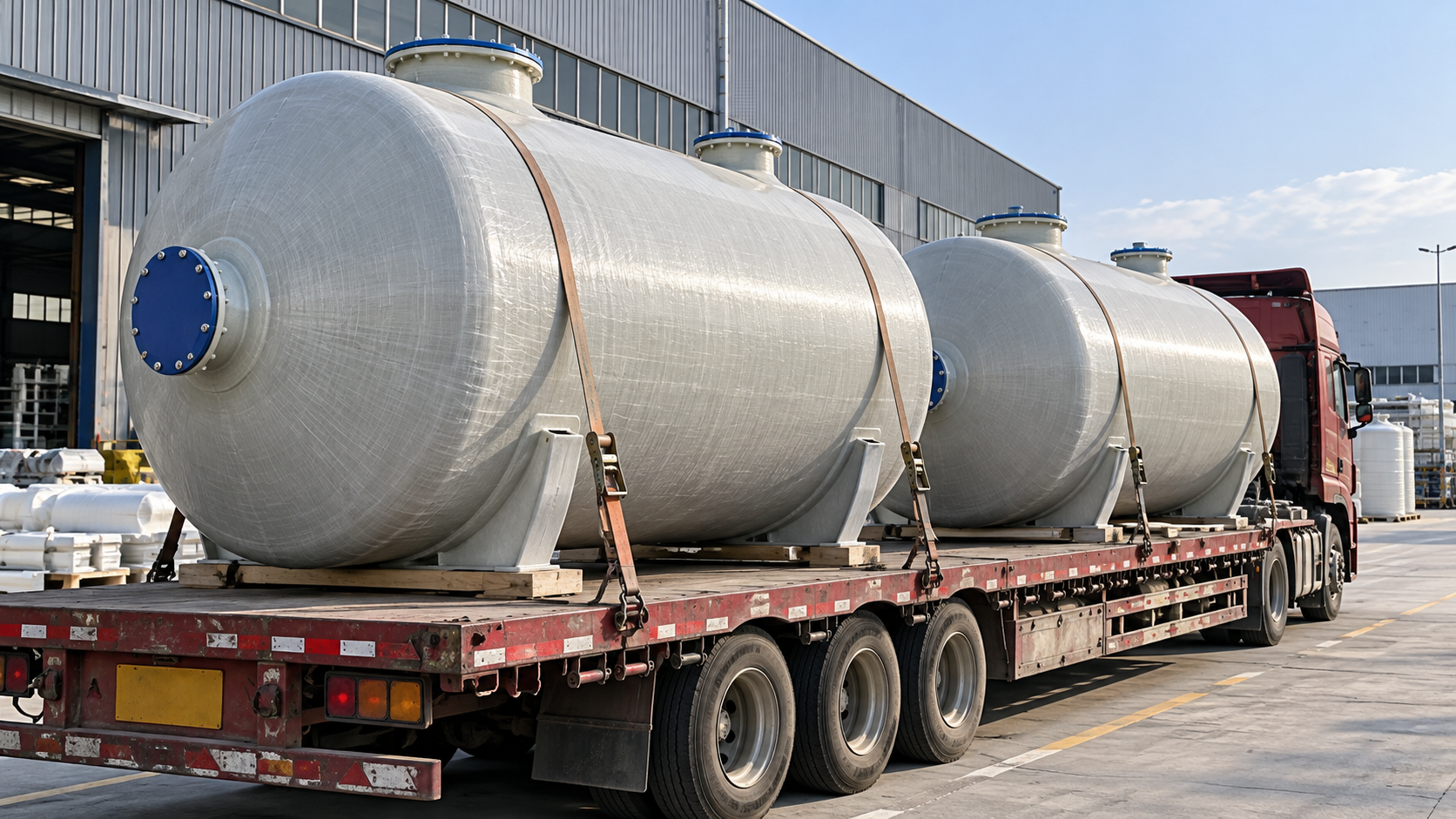
How to Choose FRP Tanks for Water Treatment: Capacity, Resin Type, and Pressure Ratings
Author
Date Published
Reading Time
How to Choose FRP Tanks for Water Treatment: Capacity, Resin Type, and Pressure Ratings
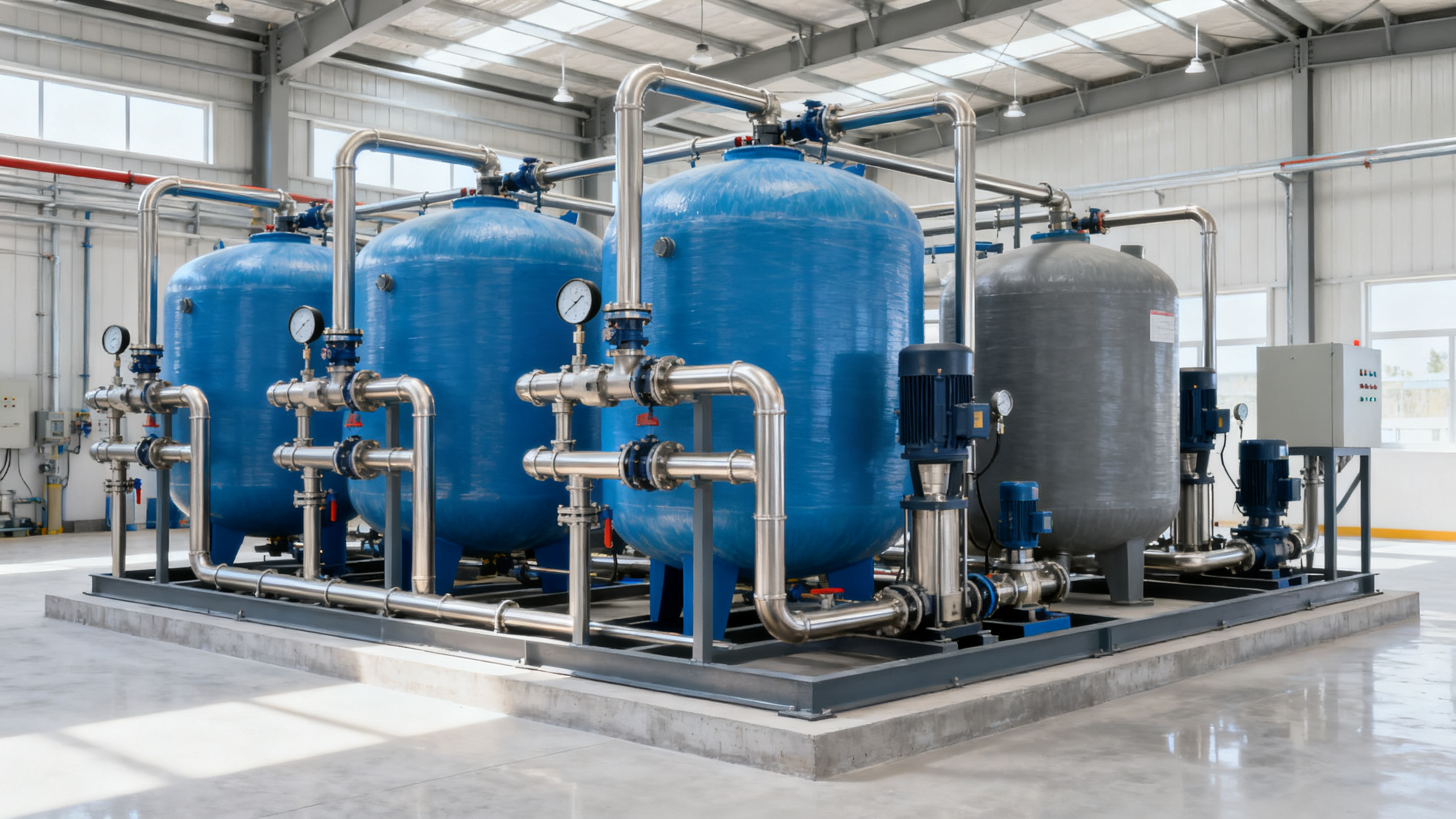
Selecting the right FRP tanks for water treatment is critical to system reliability, operating efficiency, and long-term compliance.
For industrial projects, the decision involves more than vessel size. Resin chemistry, pressure limits, media loading, and installation conditions all matter.
A good selection process reduces downtime, avoids premature failure, and keeps the treatment line aligned with process demands and safety expectations.
Start with Process Duty, Not Tank Catalog Size
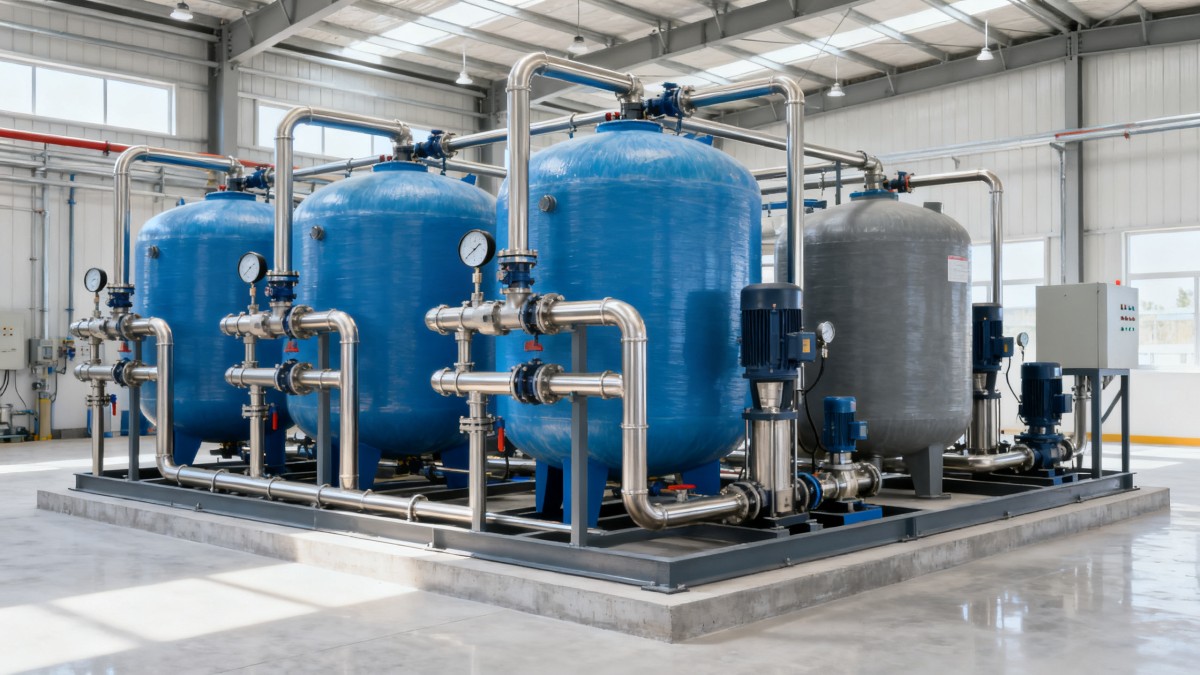
The most common mistake is sizing FRP tanks for water treatment from a product sheet before confirming the process duty.
Start with flow rate, service cycle, media type, regeneration method, and expected water quality variation.
In real projects, peak demand often drives selection more than average demand. That changes both vessel count and vessel diameter.
If the system handles softening, demineralization, filtration, or carbon adsorption, each process creates different bed depth and contact time targets.
This is why FRP tanks for water treatment should always be evaluated as part of the full hydraulic design.
- Confirm design flow, peak flow, and future expansion margin.
- Define required empty bed contact time or exchange capacity.
- Check backwash rate, bed expansion, and drain limitations.
- Review available footprint, height clearance, and access paths.
How to Size Capacity for Stable Performance
Capacity is not just total volume. For FRP tanks for water treatment, useful capacity depends on media volume, freeboard, and operating cycle.
A tank that looks large enough on paper may still underperform if bed depth is shallow or backwash space is insufficient.
For media-based systems, diameter affects service velocity. Height affects contact time and bed support arrangement.
That means tank geometry matters as much as nominal gallons or liters.
A practical approach is to treat capacity selection as a balance between process efficiency and maintenance flexibility.
- Set target throughput per cycle.
- Calculate media volume from treatment objective.
- Reserve enough freeboard for backwash expansion.
- Check whether one large vessel or multiple smaller vessels improves uptime.
Parallel vessel arrangements often help when service continuity is important. One unit can stay online during maintenance or media replacement.
This can be more valuable than choosing the largest possible FRP tanks for water treatment in a single-train layout.
Choose Resin Type Based on Water Chemistry
Resin selection is one of the most important steps in choosing FRP tanks for water treatment, especially in aggressive environments.
The tank shell must resist the chemicals, temperatures, and cleaning agents used during operation.
Polyester resin is often cost-effective for standard applications. Vinyl ester resin usually offers better corrosion resistance and chemical durability.
Epoxy-based options may be considered when higher mechanical performance or specialized compatibility is required.
The right choice depends on feedwater composition and the cleaning regime over the tank’s expected service life.
Chemical compatibility charts help, but they should not be the only basis for approval.
Ask for documented operating limits, test data, and references from similar water treatment installations.
Pressure Ratings Are a Risk Control Decision
Pressure rating is often treated as a simple specification line. In practice, it is a core risk control issue.
FRP tanks for water treatment must handle normal operating pressure, start-stop events, and pressure spikes during valve transitions.
If a skid has frequent cycling, water hammer risk, or upstream pump fluctuation, the working margin should be reviewed carefully.
Many failures happen because the nominal rating looked adequate, but the real operating profile was more severe.
It also helps to separate vessel pressure rating from system pressure class. They are related, but not always identical.
- Verify maximum operating pressure and surge pressure.
- Check temperature derating where applicable.
- Review nozzle, valve, and manifold pressure compatibility.
- Confirm whether certification supports the intended industrial duty.
When comparing FRP tanks for water treatment, a slightly higher-rated vessel can reduce lifecycle risk more than it increases purchase cost.
Installation Conditions Can Change the Right Choice
Site conditions regularly reshape the best tank selection. This is especially true in retrofit projects and compact utility rooms.
FRP tanks for water treatment may need to pass through narrow access doors, low roof beams, or congested pipe corridors.
Outdoor placement adds UV exposure, wind loading concerns, and seasonal temperature swings.
In coastal or chemical plant environments, external corrosion exposure on attached hardware should be checked closely.
Foundation flatness matters too. Uneven support can create stress concentration and shorten service life.
This is one reason experienced buyers review tank selection together with layout, lifting method, and commissioning sequence.
Evaluate Compliance, Documentation, and Supplier Support
For industrial procurement, product quality is only part of the decision. Documentation quality matters just as much.
FRP tanks for water treatment should come with clear data on pressure rating, material construction, operating limits, and inspection guidance.
Relevant certifications, test reports, and traceable manufacturing records help reduce approval delays during project execution.
This becomes more important when the project serves regulated sectors, export markets, or high-availability facilities.
Strong supplier support also affects schedule certainty. Clarification speed can determine whether procurement stays on track.
- Ask for GA drawings and connection details.
- Request material specifications and resin system data.
- Review installation instructions and warranty terms.
- Confirm lead time, spare parts, and after-sales response.
A Practical Comparison Framework for FRP Tank Selection
When several options look similar, a structured comparison keeps the decision grounded.
For FRP tanks for water treatment, compare total fit, not isolated specifications.
A lower purchase price may lose value if the vessel needs tighter operating control or has weaker chemical tolerance.
- Score process fit: flow, cycle, media depth, and hydraulic behavior.
- Score material fit: resin compatibility, corrosion resistance, and temperature range.
- Score mechanical fit: pressure rating, nozzle design, and handling limits.
- Score project fit: delivery time, documentation, certification, and technical support.
- Score lifecycle fit: maintenance access, replacement ease, and operating risk.
This simple framework makes it easier to justify the final choice across engineering, procurement, and operations teams.
Final Takeaway
Choosing FRP tanks for water treatment should start with the process, then move through capacity, resin type, pressure rating, and site realities.
The strongest decisions usually come from matching vessel design to actual operating conditions, not from choosing the biggest or cheapest option.
Where water chemistry is variable, pressure cycles are frequent, or compliance is strict, a more detailed technical review pays back quickly.
Before issuing a purchase order, validate calculations, verify compatibility, and confirm documentation completeness.
That approach keeps FRP tanks for water treatment aligned with reliability goals, operating cost targets, and long-term asset performance.
Technical Specifications
- Air Handling Unit Supplier Checklist: Performance Data, Lead Times, and SupportAuthor :Environmental Engineering Director
- Buying Fiberglass Water Tanks Wholesale: Compare Quotes and Delivery CostsAuthor :Environmental Engineering Director
- Choosing an XLPE Power Cable Supplier: Test Reports, Traceability, and Lead TimesAuthor :Grid Infrastructure Analyst
Expert Insights

Chief Security Architect
Dr. Thorne specializes in the intersection of structural engineering and digital resilience. He has advised three G7 governments on industrial infrastructure security.
Related Analysis
- Oct 19, 2026Air Handling Unit Supplier Checklist: Performance Data, Lead Times, and SupportAuthor :Environmental Engineering Director
- Oct 18, 2026Buying Fiberglass Water Tanks Wholesale: Compare Quotes and Delivery CostsAuthor :Environmental Engineering Director
- Oct 17, 2026Choosing an XLPE Power Cable Supplier: Test Reports, Traceability, and Lead TimesAuthor :Grid Infrastructure Analyst
Core Sector // 01
Security & Safety
- Buying Fiberglass Water Tanks Wholesale: Compare Quotes and Delivery CostsAuthor :Environmental Engineering Director

- How to Select Industrial pH Meters for Continuous Wastewater Process ControlAuthor :Environmental Engineering Director

- How to Size a Rinse Fill Cap Machine for Your Bottle Format and Target OutputAuthor :Environmental Engineering Director

- How to Size a Heavy-Duty Submersible Sewage Pump for High-Solids Lift StationsAuthor :Environmental Engineering Director

- How to Size a Wafer Butterfly Valve for HVAC Chilled-Water and Heating LoopsAuthor :Environmental Engineering Director

- How Pressure Class and Joint Design Affect Long-Term Performance of Ductile Iron Pipes in Drainage InfrastructureAuthor :Environmental Engineering Director

- How Ductile Iron Pipe Joints Affect Installation Reliability and Leak ControlAuthor :Environmental Engineering Director

- How to Size Effluent Treatment Equipment for Variable Industrial Wastewater LoadsAuthor :Environmental Engineering Director