China GACC Opens 48-Hour Green Channel
Author
Date Published
Reading Time
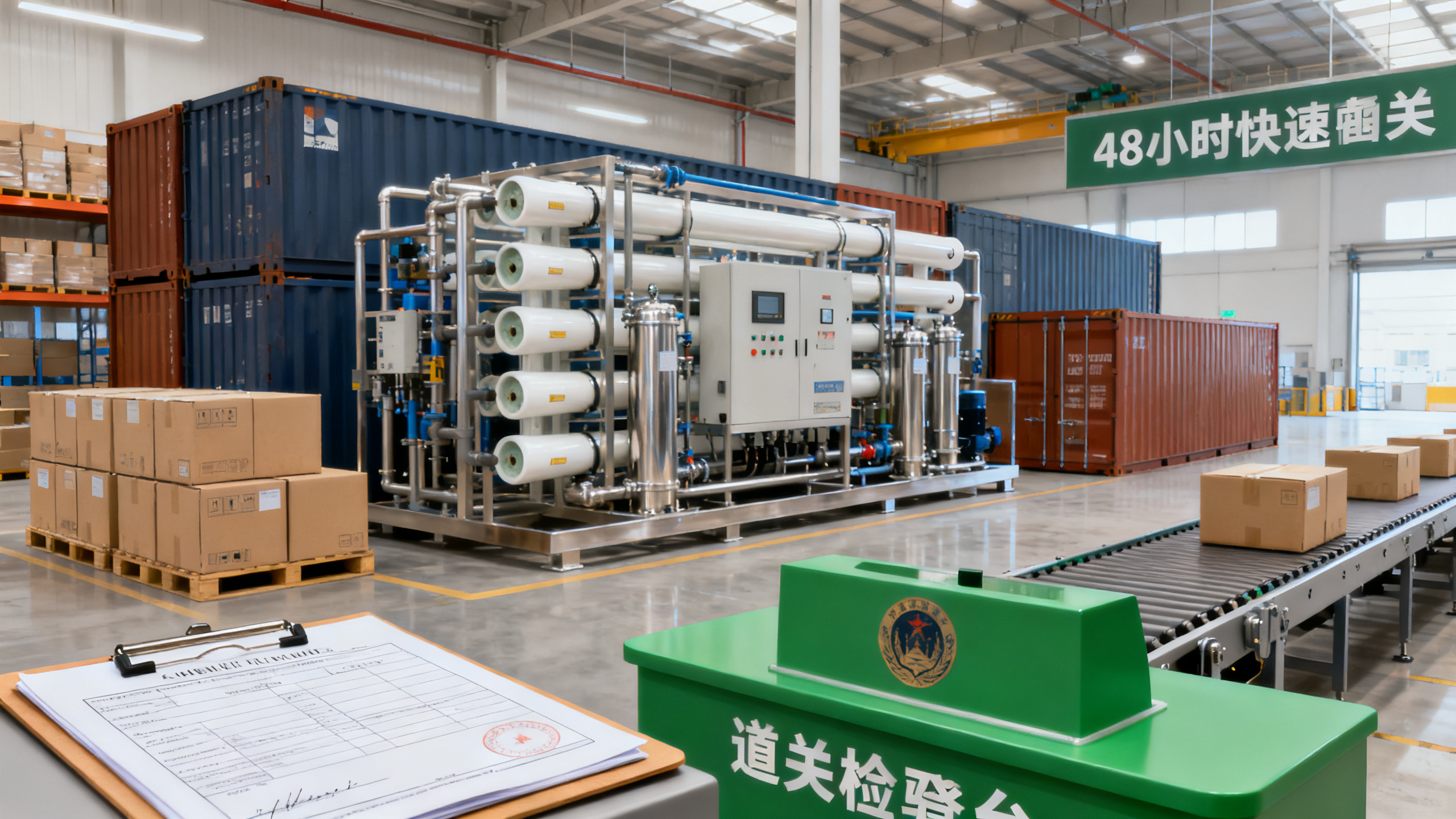
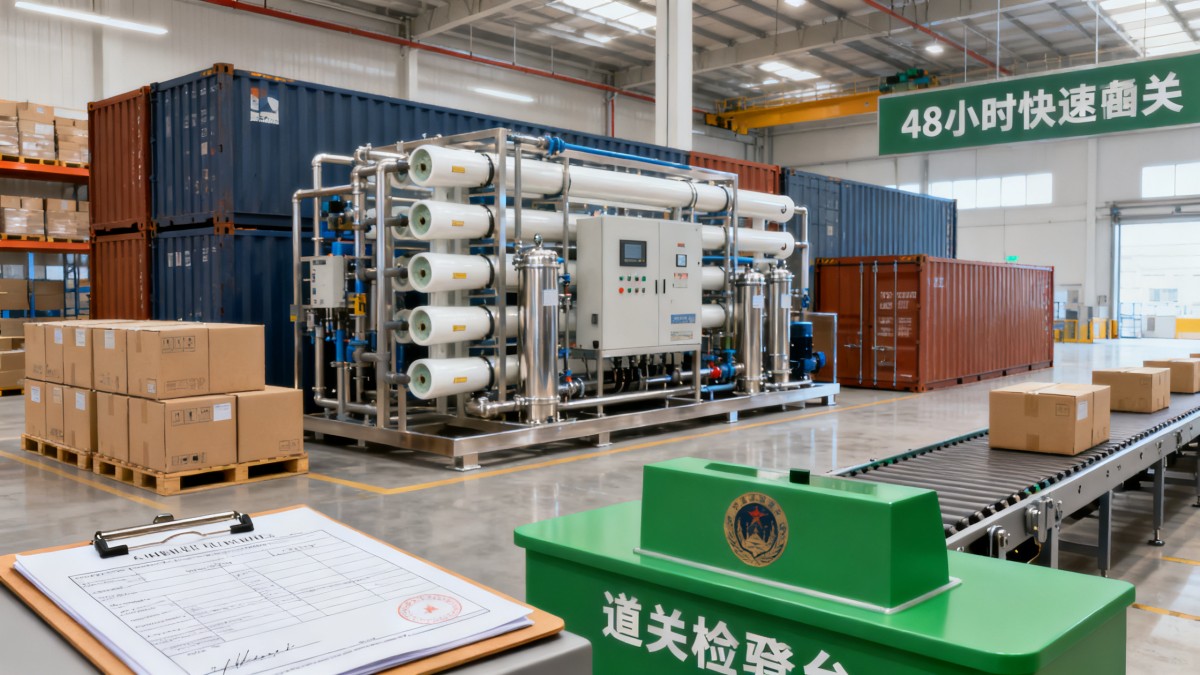
On 2026-07-01, China’s General Administration of Customs put into effect a faster customs clearance arrangement for exports of industrial water treatment equipment, creating a clear linkage between customs facilitation, certification status, and prior platform registration. The change matters because it does not only affect shipment timing at the border; it also reshapes how exporters, project buyers, and supply chain partners need to prepare certification files, registration status, and delivery schedules for orders tied to municipal, mining, and petrochemical demand in Africa, the Middle East, and Southeast Asia.
What the new clearance arrangement confirms
The confirmed facts are limited but commercially meaningful. Effective 2026-07-01, GACC announced an expedited customs clearance mechanism with a clearance commitment of no more than 48 hours for industrial water treatment equipment that meets two conditions: it carries valid ISO 14001 and IECQ QC 080000 certifications, and it has been pre-registered on the national green export platform.
The arrangement is aimed at exporters serving municipal, mining, and petrochemical sectors in Africa, the Middle East, and Southeast Asia. The stated effect is to reduce lead times for overseas EPC contractors and project-based buyers.
Where the operational impact is likely to appear first
Export readiness moves upstream
From an industry perspective, exporters are likely to feel the impact before cargo reaches customs. Because access to the faster channel is tied to valid ISO 14001 and IECQ QC 080000 certifications plus pre-registration, shipment planning may now depend more directly on document readiness and qualification status. For export teams, the practical focus is likely to shift toward checking whether certifications remain valid at the time of shipment and whether platform registration has been completed in advance.
Project procurement may place more weight on qualification timing
For EPC contractors and project-based buyers, the relevance is not only shorter border processing. Analysis shows that when a customs facilitation measure is linked to named certifications and pre-registration, procurement teams may pay closer attention to whether a supplier can align bid schedules and delivery commitments with those prerequisites. In project-driven purchasing, this can affect supplier screening, promised lead times, and the treatment of technical and compliance documents in tender or order review.
Certification and compliance service work becomes more delivery-linked
Certification-related service providers and internal compliance teams may also see a more immediate operational role. What deserves closer attention is that ISO 14001 and IECQ QC 080000 are not presented here as general credentials alone; in this arrangement, they function as part of the access condition for expedited export clearance. That means document validity, consistency of supporting records, and coordination with export filing steps may become more sensitive in time-critical shipments.
Logistics coordination may need tighter document sequencing
Supply chain service providers, including parties coordinating export schedules and handover timing, may need to adapt their workflow to the new sequence implied by the rule. Observably, the benefit of a 48-hour clearance promise is most useful when the cargo, registration status, and certification documents are aligned before shipment reaches the customs stage. The operational issue is therefore not only transport speed, but also whether the compliance package is prepared in a way that supports use of the green channel.
What companies should watch in current execution
Check whether certifications are usable at shipment stage
Companies exporting industrial water treatment equipment should review whether their ISO 14001 and IECQ QC 080000 certifications are valid and usable for the relevant export transactions. Based on the announced conditions, this is a practical prerequisite rather than a secondary formality.
Confirm platform registration status early
The national green export platform pre-registration requirement deserves immediate attention. Analysis shows that companies should treat registration timing as part of export preparation, especially for project cargo where customs timing affects downstream installation or commissioning schedules. The current announcement does not provide detailed operating procedures, so businesses should avoid assuming that late-stage filing can be substituted for advance registration.
Review tender files and delivery promises
For suppliers serving municipal, mining, and petrochemical buyers in the named overseas regions, commercial documents may need closer review. What deserves closer attention is whether tender responses, technical submissions, and delivery commitments should explicitly reflect the availability of the expedited clearance route only when the stated certification and registration conditions are satisfied.
Keep records aligned for traceability and post-shipment review
Although the summary does not set out detailed audit or verification steps, exporters should still pay attention to consistency across product records, certification files, export documents, and customer-facing delivery commitments. This is not a confirmed new obligation in the provided information, but a reasonable compliance observation given that access to faster clearance is conditioned on identified qualifications.
Why this looks like an execution signal, not just a headline
Analysis shows that this update is more appropriately understood as an execution-oriented trade facilitation signal than as a broad policy statement about the whole water treatment industry. The reason is straightforward: the measure ties a concrete customs benefit to specific certifications and prior registration, and it is directed at a defined export category and set of downstream sectors.
At the same time, it would be premature to treat the announcement as a fully mapped operating framework based on the information currently available. Observably, the input does not include detailed procedural guidance, verification standards, or case-level implementation outcomes. For that reason, the market still needs to watch how the measure is reflected in actual export handling, compliance interpretation, and buyer-side documentation requirements.
How the market may best read this change for now
The immediate significance of the announcement is that customs efficiency for industrial water treatment equipment exports is being linked more directly to certification status and pre-registration readiness. For exporters and project supply chains, the near-term takeaway is less about headline speed and more about whether internal compliance, bid support, and shipping preparation can consistently meet the stated conditions.
It is more appropriate to understand this as a real implemented change with practical value, while also recognizing that the fuller market effect will depend on how execution details, documentation practice, and customer procurement behavior develop after the effective date.
Basis of this article and points still requiring verification
This article is based on the user-provided news title, event date, and event summary. For events of this type, relevant source categories usually include official announcements, publications by customs or trade authorities, industry association updates, standard or certification body materials, and reporting by authoritative trade or industrial media.
No specific official source link was provided in the input, so the underlying official publication path still needs to be verified on an ongoing basis. Further observation is also needed on implementation details, certification interpretation, platform registration practice, changes in tender documentation, industry feedback, and how exporting companies execute the arrangement in practice.
Technical Specifications
- Air Handling Unit Supplier Checklist: Performance Data, Lead Times, and SupportAuthor :Environmental Engineering Director
- Buying Fiberglass Water Tanks Wholesale: Compare Quotes and Delivery CostsAuthor :Environmental Engineering Director
- Choosing an XLPE Power Cable Supplier: Test Reports, Traceability, and Lead TimesAuthor :Grid Infrastructure Analyst
Expert Insights

Chief Security Architect
Dr. Thorne specializes in the intersection of structural engineering and digital resilience. He has advised three G7 governments on industrial infrastructure security.
Related Analysis
- Oct 19, 2026Air Handling Unit Supplier Checklist: Performance Data, Lead Times, and SupportAuthor :Environmental Engineering Director
- Oct 18, 2026Buying Fiberglass Water Tanks Wholesale: Compare Quotes and Delivery CostsAuthor :Environmental Engineering Director
- Oct 17, 2026Choosing an XLPE Power Cable Supplier: Test Reports, Traceability, and Lead TimesAuthor :Grid Infrastructure Analyst
Core Sector // 01
Security & Safety
- Buying Fiberglass Water Tanks Wholesale: Compare Quotes and Delivery CostsAuthor :Environmental Engineering Director

- How to Select Industrial pH Meters for Continuous Wastewater Process ControlAuthor :Environmental Engineering Director

- How to Size a Rinse Fill Cap Machine for Your Bottle Format and Target OutputAuthor :Environmental Engineering Director

- How to Size a Heavy-Duty Submersible Sewage Pump for High-Solids Lift StationsAuthor :Environmental Engineering Director

- How to Size a Wafer Butterfly Valve for HVAC Chilled-Water and Heating LoopsAuthor :Environmental Engineering Director

- How Pressure Class and Joint Design Affect Long-Term Performance of Ductile Iron Pipes in Drainage InfrastructureAuthor :Environmental Engineering Director

- How Ductile Iron Pipe Joints Affect Installation Reliability and Leak ControlAuthor :Environmental Engineering Director

- How to Size Effluent Treatment Equipment for Variable Industrial Wastewater LoadsAuthor :Environmental Engineering Director