Flattened Expanded Metal Mesh vs Standard Mesh: Which Is Better for Guards, Walkways, and Screens?
Author
Date Published
Reading Time
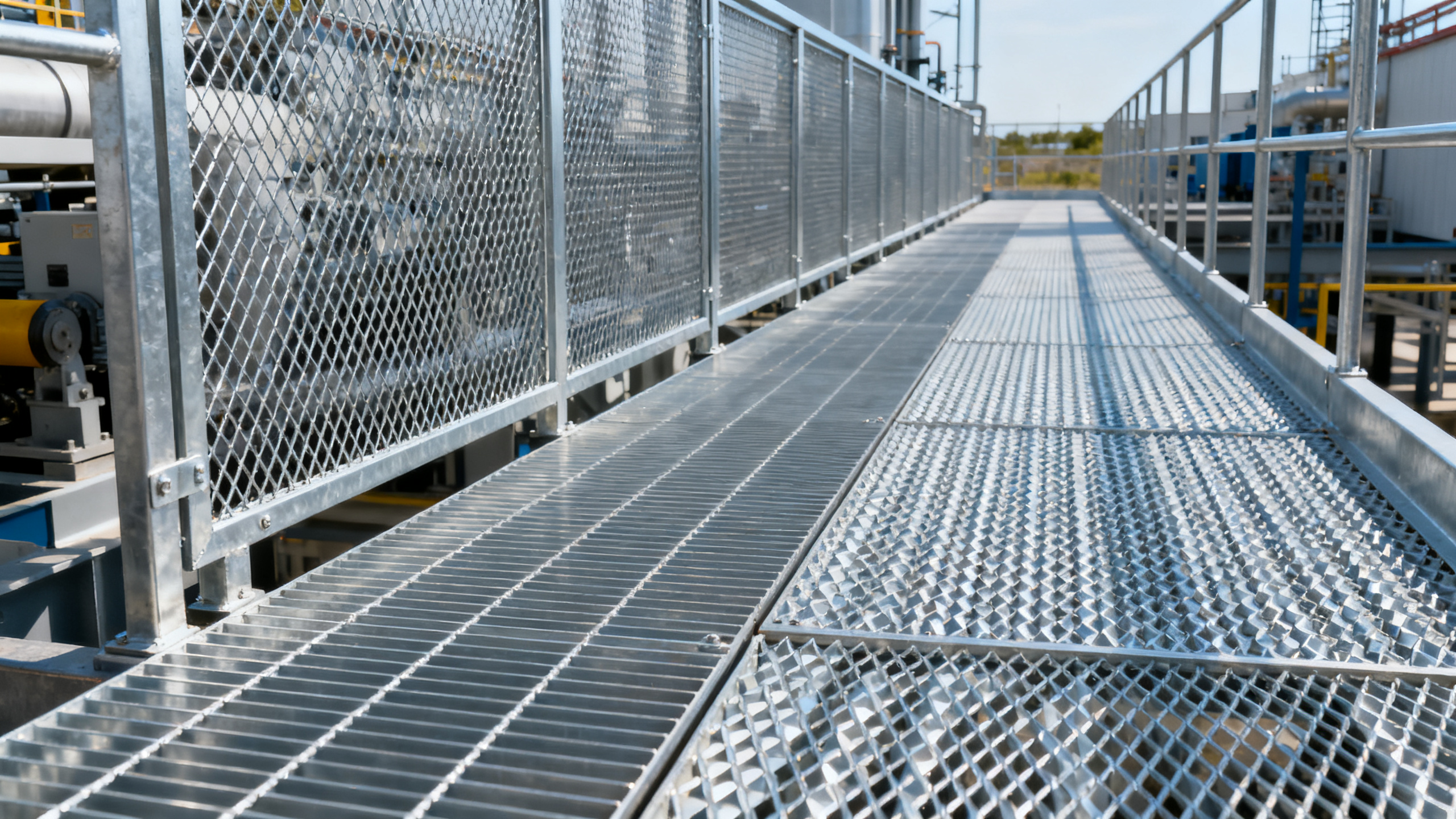
Why the choice changes once the application becomes specific
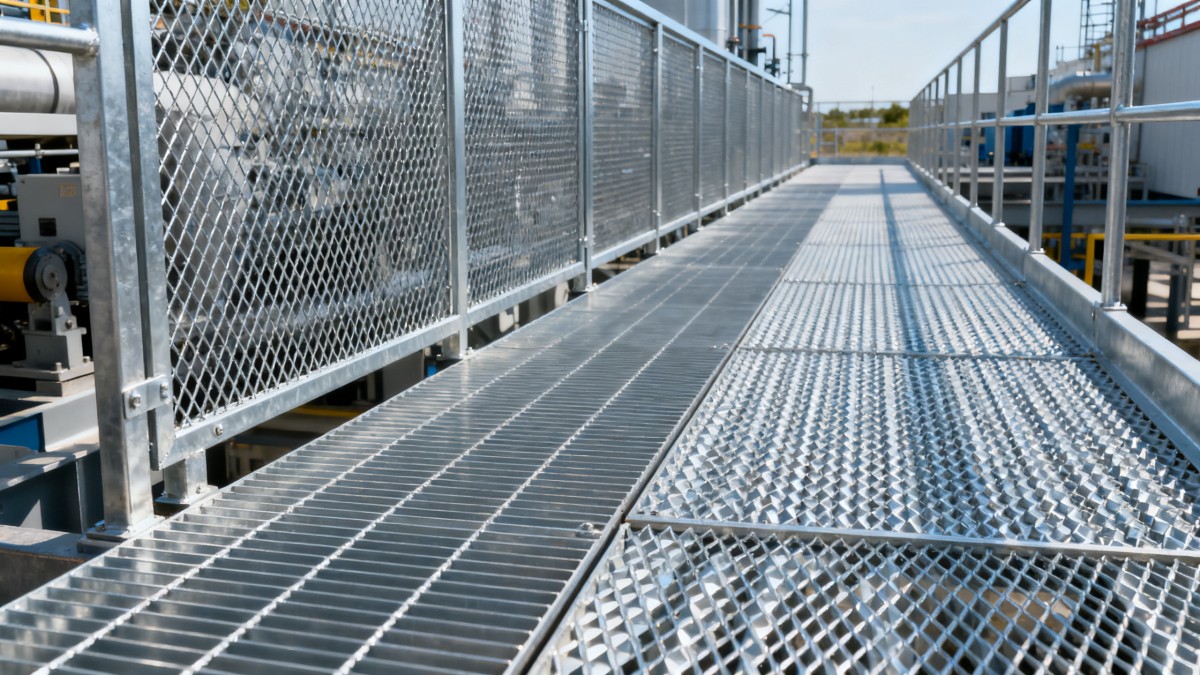
Choosing between flattened expanded metal mesh and standard mesh is rarely a cosmetic decision. In industrial settings, it affects protection levels, footing stability, airflow, inspection visibility, and replacement intervals.
That becomes more important when one material is expected to serve very different functions. A machine guard, an elevated walkway, and a ventilation screen may all use expanded metal, but they do not fail in the same way.
In practice, flattened expanded metal mesh is often chosen when a smoother surface, tighter profile, or more controlled opening is needed. Standard mesh usually stays closer to its raised form, which changes rigidity, traction, and thickness.
For heavy industry, that distinction matters beyond material cost. Global Industrial Core focuses on these decisions because safety compliance, environmental exposure, and maintenance access often shape the correct specification more than price alone.
Actual use conditions usually matter more than the catalog label
Both products begin as slit and expanded metal, yet their finished geometry creates different behavior. Flattening compresses the raised strands, producing a more even surface and reducing overall thickness variation.
Standard expanded mesh keeps the original raised pattern. That often improves slip resistance and structural depth, but it can also create snag points, more aggressive edges, and less uniform contact surfaces.
The common mistake is to compare only opening size and sheet thickness. Real selection depends on foot traffic, hand contact, enclosure requirements, corrosion exposure, cleaning frequency, and relevant CE, ISO, or plant-specific standards.
A flatter sheet can be better for screens and guards where clean lines, lower projection, and easier framing are useful. A raised sheet can be better where drainage, grip, and load response under service conditions matter more.
For machine guards, visibility and hand safety usually lead the decision
Guarding applications tend to prioritize hazard separation without blocking supervision. Operators need to see the process, but openings still have to align with guarding distances and contact prevention requirements.
In these cases, flattened expanded metal mesh often performs well because it presents a more controlled surface. It is easier to integrate into framed panels, doors, and modular enclosures without excessive protrusion.
This matters around automated lines, robotic cells, conveyors, and packaging systems. A flatter profile can reduce incidental abrasion during cleaning or maintenance, especially in tight service corridors.
Standard mesh still has a place in guarding, especially where impact resistance and stiffness are more valuable than surface smoothness. Outdoor equipment compounds and utility barriers often accept the raised profile more easily.
The better judgment is to review opening dimensions together with reach risk, sightline needs, and frame design. Guards fail in specification when teams focus on visibility alone and overlook access geometry or edge finishing.
Walkways change the conversation because footing, drainage, and load become central
Once the material is used for walking surfaces, the preferred characteristics often shift. Slip resistance, deflection control, self-cleaning behavior, and support spacing become more important than a neat appearance.
Standard expanded mesh is frequently favored for walkways because the raised surface can improve grip. In refineries, utility platforms, and process plants, that extra texture helps when water, oil mist, or dust are present.
Flattened expanded metal mesh can still work on secondary access routes or service platforms, but it usually needs closer review. A smoother surface may be easier to clean, yet it may offer less traction in contaminated conditions.
This is where many projects oversimplify the choice. They select flattened expanded metal mesh for uniformity across the site, then discover that the maintenance deck and the inspection catwalk do not face the same exposure.
Walkway decisions should also account for load class, span, heel safety, and drainage behavior. A sheet that works well indoors above dry equipment may be a poor fit above chemical washdown zones or cooling towers.
Screens and enclosures usually reward a flatter, more controlled profile
For air intake screens, partition infill, equipment covers, and filtration supports, the balance shifts again. These installations often need airflow, modest protection, dimensional consistency, and easier panel fabrication.
Flattened expanded metal mesh is commonly the better fit here. The sheet sits more predictably in channels and frames, which helps when tolerances are tight or panels must align across repeated bays.
It also tends to create a cleaner visual plane. That matters in architectural-industrial projects, plant perimeter screening, acoustic housings, and equipment rooms where function still needs to look orderly.
Standard mesh can still be useful for screens exposed to impact or debris. Even then, the raised form should be reviewed for snagging, accumulation, and cleaning difficulty, especially in dusty or fibrous environments.
Different applications do not ask the same questions
A direct comparison helps when similar-looking installations hide different service demands. The table below reflects the kind of field-based judgment used in infrastructure and plant upgrades.
Where selection errors usually happen
One frequent error is treating flattened expanded metal mesh and standard mesh as interchangeable once the alloy is fixed. Material grade matters, but geometry often determines whether the installation performs safely over time.
Another issue is comparing purchase price without considering secondary fabrication. Flattened expanded metal mesh may reduce finishing work in framed guards and screens, while standard mesh may reduce slip-related risk on walkways.
Corrosion assumptions also cause problems. The same mesh pattern behaves differently after galvanizing, coating, or stainless fabrication, especially when washdown, marine air, or chemical residue is involved.
There is also the maintenance question. Raised profiles can trap debris in some environments, while flatter sheets may show deformation sooner if support distances were too optimistic during design review.
- Do not rely on nominal thickness alone.
- Check support span, fastening pattern, and edge treatment together.
- Review cleaning method, not only operating condition.
- Match opening size to both safety intent and service function.
A practical way to decide before release or tender
A reliable decision starts by separating the site into functional zones. Access platforms, guarded machinery, façade screens, and equipment enclosures should not inherit the same mesh choice by default.
Then compare five points for each zone: contact risk, load condition, visibility need, environmental exposure, and maintenance method. This usually clarifies whether flattened expanded metal mesh is being chosen for performance or only for visual consistency.
Where uncertainty remains, prototype one panel or one bay. Field checks often reveal more than a drawing review, especially when glare, dirt loading, footwear, or cleaning tools influence actual use.
That is the more durable approach for industrial projects shaped by compliance, uptime, and lifecycle pressure. The right answer is rarely which mesh is universally better. It is which mesh fits the exact duty with fewer hidden compromises.
Before final specification, document the application conditions, verify the critical dimensions, and compare maintenance impact alongside installed cost. That creates a clearer basis for choosing flattened expanded metal mesh, standard mesh, or a mixed approach across the same facility.
Technical Specifications
- Air Handling Unit Supplier Checklist: Performance Data, Lead Times, and SupportAuthor :Environmental Engineering Director
- Buying Fiberglass Water Tanks Wholesale: Compare Quotes and Delivery CostsAuthor :Environmental Engineering Director
- Choosing an XLPE Power Cable Supplier: Test Reports, Traceability, and Lead TimesAuthor :Grid Infrastructure Analyst
Expert Insights

Chief Security Architect
Dr. Thorne specializes in the intersection of structural engineering and digital resilience. He has advised three G7 governments on industrial infrastructure security.
Related Analysis
- Oct 19, 2026Air Handling Unit Supplier Checklist: Performance Data, Lead Times, and SupportAuthor :Environmental Engineering Director
- Oct 18, 2026Buying Fiberglass Water Tanks Wholesale: Compare Quotes and Delivery CostsAuthor :Environmental Engineering Director
- Oct 17, 2026Choosing an XLPE Power Cable Supplier: Test Reports, Traceability, and Lead TimesAuthor :Grid Infrastructure Analyst
Core Sector // 01
Security & Safety
- How to Specify Steel Heavy-Duty Corner Guards for Loading Bays and High-Traffic AreasAuthor :Heavy Industry Strategist

- Selecting Non-Ferrous Metal Plates for Corrosion, Weight, and Formability RequirementsAuthor :Heavy Industry Strategist

- Stainless Steel Welded Tube Applications: Matching Tube Supply to Fabrication NeedsAuthor :Heavy Industry Strategist

- What Maintenance Do Furnace Components Need After 18 Months?Author :Heavy Industry Strategist

- How to Assess Metal Materials for Thermal Cycling in Power BoilersAuthor :Heavy Industry Strategist

- How to Evaluate Aluminum Extrusion Suppliers for Tight-Tolerance Components?Author :Heavy Industry Strategist

- How to Evaluate a Weld Neck Flange Manufacturer for High-Pressure Pipe ProjectsAuthor :Heavy Industry Strategist

- EU REACH Ban Hits Cr(VI)-Coated Steel ImportsAuthor :Heavy Industry Strategist
-Coated Steel Imports")