Uzbekistan Ends Coal Price Controls as Boiler and Air Filtration Demand Rises
Author
Date Published
Reading Time
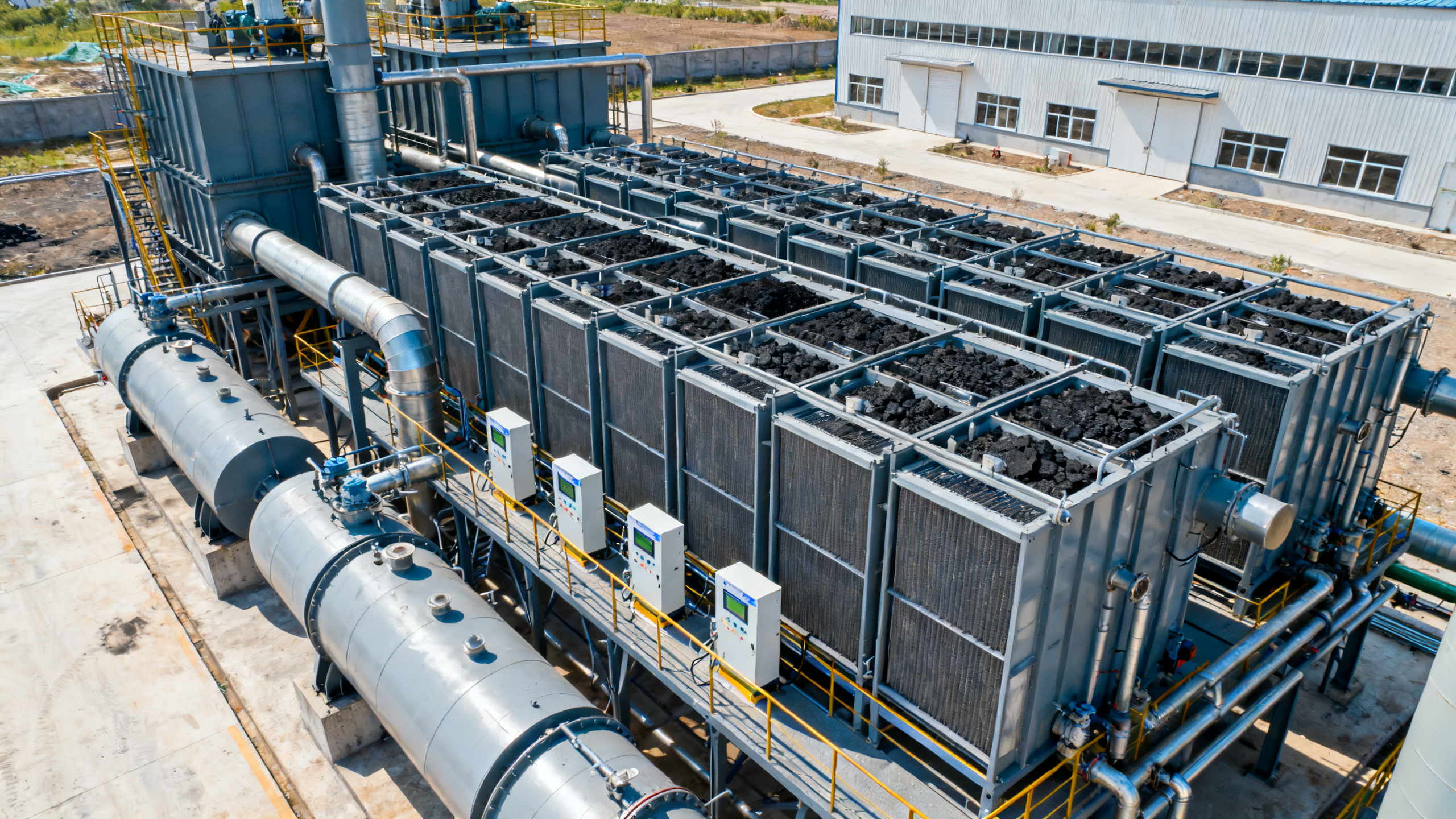
On June 1, 2026, Uzbekistan announced the full removal of domestic coal price controls and a shift to market-based pricing. The immediate significance for industry is not only the policy change itself, but the faster pace of energy-efficiency upgrades in industrial boilers and flue-gas treatment retrofits that followed, with import demand for industrial air filters, electrostatic precipitator modules, and Continuous Emissions Monitoring Systems (CEMS) rising 37% month on month. For manufacturers, importers, buyers, and technical service providers, this is a development worth tracking because it links fuel pricing reform directly to equipment demand in combustion, emissions control, and gas analysis.
What Has Been Confirmed Since the Pricing Shift
According to the information provided, the Uzbek government declared on June 1, 2026 that domestic coal price controls would be fully removed and coal would be priced by the market. Following that move, local industrial boiler efficiency upgrades and flue-gas purification retrofits accelerated.
The same information states that import demand for industrial-grade air filters, electrostatic precipitator modules, and online flue-gas analyzers, including CEMS, increased by 37% compared with the previous month. In addition, Tashkent customs data shows that in May, imports of China-origin Lab & Analytics gas analysis equipment rose 124% year on year.
Which Parts of the Supply Chain May Feel the Impact First
Equipment importers and distributors face a more active order mix
From an industry perspective, companies handling imported filtration, dust-removal, and gas-analysis equipment may be affected first because the reported increase in demand is concentrated in product categories tied directly to boiler upgrades and emissions treatment. The business impact is likely to appear in quotation activity, product mix decisions, and prioritization of delivery schedules for air filtration, electrostatic precipitation, and CEMS-related lines.
Industrial users may need to reassess retrofit timing
For end users operating industrial boilers, the reported acceleration in efficiency upgrades and flue-gas purification projects suggests that purchasing decisions may increasingly connect fuel cost changes with equipment performance and compliance-related monitoring needs. What deserves closer attention is whether procurement is centered on immediate replacement demand, staged retrofits, or bundled purchases that combine combustion, dust collection, and monitoring functions.
Technical service providers may see demand shift toward integration work
Service providers involved in installation, commissioning, and analyzer-related support may also be affected because rising imports of CEMS and Lab & Analytics gas analysis equipment usually point to a need for system integration and operational readiness. Analysis shows that the impact is not only about hardware movement, but also about how quickly imported equipment can be put into practical industrial use.
What Companies Should Watch in the Near Term
Separate the policy signal from actual purchasing behavior
Companies should pay close attention to the distinction between a pricing reform announcement and sustained equipment demand. The current information confirms a demand increase and stronger imports in certain categories, but businesses still need to track whether this momentum remains concentrated in boiler efficiency and flue-gas treatment applications.
Focus on the categories already showing measurable movement
The clearest categories identified so far are industrial air filters, electrostatic precipitator modules, CEMS, and Lab & Analytics gas analysis equipment. For suppliers and traders, this makes category-level monitoring more useful than broad market assumptions, especially when prioritizing stock, quotations, and customer communication.
Prepare for documentation and delivery questions
Because the reported changes concern imported industrial equipment, procurement teams and supply-chain participants should closely watch product documentation, technical specifications, and delivery timing. Observably, when demand rises quickly in a narrow set of categories, execution risks can shift from market opportunity to fulfillment detail.
Continue checking for follow-up wording or implementation signals
What deserves closer attention is whether subsequent official wording, market responses, or customs patterns reinforce the initial surge in demand. For companies already active in the market, the practical issue is not just whether interest has increased, but whether that interest translates into repeatable order flow and stable project execution.
Why This Looks More Like a Market Signal Than a Finished Outcome
Analysis shows that this development is best read as an early but meaningful industry signal. The confirmed facts point to a direct connection between coal pricing reform and stronger demand for equipment linked to efficiency improvement and emissions control. At the same time, the available information does not yet prove how broad-based or long-lasting the shift will be across all industrial users.
It is more appropriate to understand this as a developing trend that has already produced measurable procurement effects, rather than as a fully settled long-term market result. That is why the customs data and category-specific import changes matter: they show concrete movement, while still leaving room for further verification on durability and scope.
How the Market May Best Interpret This Stage
The main industry meaning of this update lies in the way a fuel-pricing decision appears to be translating into equipment demand in boilers, air filtration, electrostatic dust removal, and gas analysis. For market participants, the practical takeaway is to treat the development as a targeted signal from the industrial retrofit and environmental control chain, not as a blanket conclusion about every segment of the market.
At this stage, a neutral reading is most appropriate: the change is significant enough to justify close monitoring, especially for import-linked equipment categories, but it still requires continued observation before being treated as a stable long-term demand pattern.
Basis of This Report and What Still Needs Verification
This article is based on the user-provided news title, event date, and event summary. The confirmed information used here is limited to the June 1, 2026 policy announcement, the reported acceleration of industrial boiler efficiency upgrades and flue-gas purification retrofits, the 37% month-on-month rise in import demand for specified equipment categories, and the 124% year-on-year increase in May imports of China-origin Lab & Analytics gas analysis equipment reported by Tashkent customs.
For this type of industry update, source categories commonly relevant include official announcements, customs data, company disclosures, industry association information, authoritative media coverage, and technical or standards-related documents. A specific official source link was not provided in the input, so further verification remains necessary. Follow-up attention should remain on subsequent official wording, category-level import changes, and whether the current demand movement continues in actual project and procurement activity.
Technical Specifications
- How to Select Electronic Hotel Key Card Locks for Guest Rooms and Staff AreasAuthor :Safety Compliance Lead
- How to Select Lab Instruments for Reliable Chemical Analysis WorkflowsAuthor :Precision Metrology Expert
- How to Size a UPS for Server Rooms: Load, Runtime, and Redundancy FactorsAuthor :Grid Infrastructure Analyst
Expert Insights

Chief Security Architect
Dr. Thorne specializes in the intersection of structural engineering and digital resilience. He has advised three G7 governments on industrial infrastructure security.
Related Analysis
- Sep 17, 2026How to Select Electronic Hotel Key Card Locks for Guest Rooms and Staff AreasAuthor :Safety Compliance Lead
- Sep 16, 2026How to Select Lab Instruments for Reliable Chemical Analysis WorkflowsAuthor :Precision Metrology Expert
- Sep 15, 2026How to Size a UPS for Server Rooms: Load, Runtime, and Redundancy FactorsAuthor :Grid Infrastructure Analyst
Core Sector // 01
Security & Safety
- Environmental Technologies for Heavy Industry: Choosing Cleaner Production SolutionsAuthor :Environmental Engineering Director

- Selecting Air Compliance Equipment for Dust, Fumes, and VOC ControlAuthor :Environmental Engineering Director

- EU Rule Tightens EN 1822-2 for Industrial Air PurifiersAuthor :Environmental Engineering Director

- EU Eco-Design Rules Tighten for Air PurifiersAuthor :Environmental Engineering Director

- Low-Maintenance Dust and Fume Control Systems: Best Options for Welding ShopsAuthor :Environmental Engineering Director

- EPA Sets VOC Labeling Rule for Air PurifiersAuthor :Environmental Engineering Director

- Saudi SASO Rule Adds Real-Time Logging for Air SystemsAuthor :Environmental Engineering Director

- Saudi SASO Rules Tighten for Air PurifiersAuthor :Environmental Engineering Director