Low-Maintenance Dust and Fume Control Systems: Best Options for Welding Shops
Author
Date Published
Reading Time
Why Low-Maintenance Dust and Fume Control Matters in Real Welding Operations
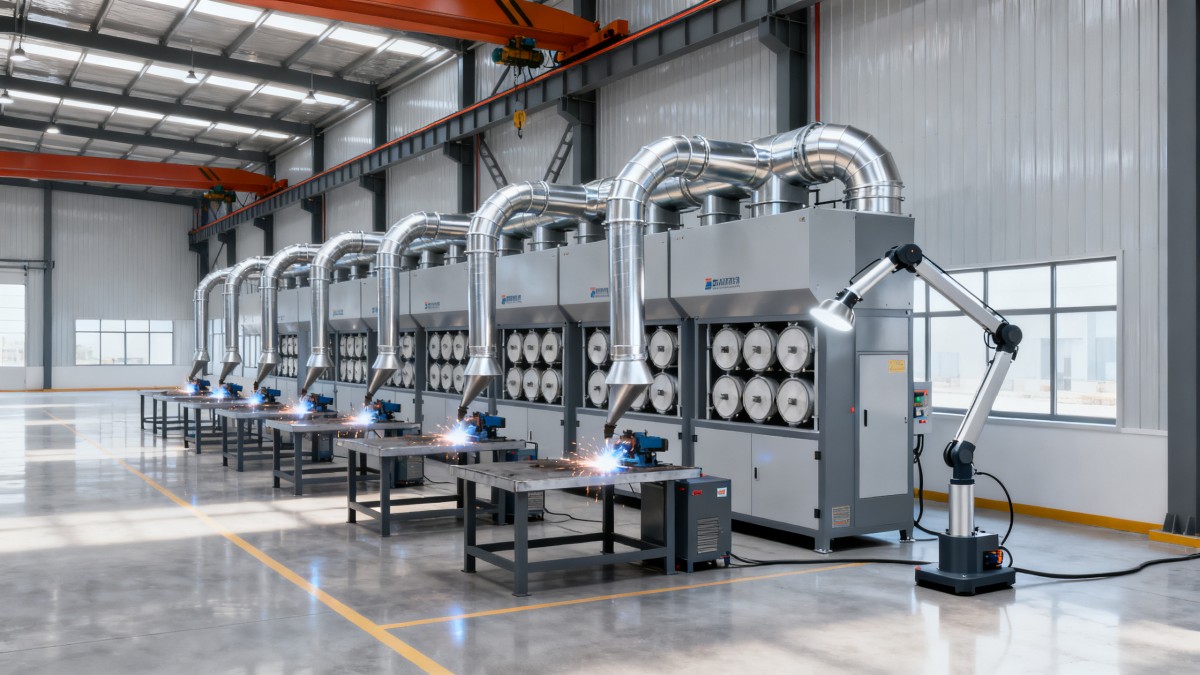
In welding shops, air control decisions affect uptime as much as safety. A system that captures fumes well but needs frequent shutdowns often creates a different operational problem.
That is why dust and fume control systems low maintenance enough for daily production deserve closer evaluation. The best option is rarely the one with the highest airflow on paper.
Actual performance depends on welding volume, metal mix, layout, shift length, filter loading, and cleaning access. Those conditions change how often service is needed and how stable capture stays over time.
Across industrial environments, the stronger approach is to judge air control as part of a broader reliability framework. That aligns with the way Global Industrial Core examines safety, compliance, and engineered resilience together.
A low-maintenance system should reduce manual intervention, keep static pressure predictable, and support compliance without constant troubleshooting. In practice, that usually means balancing capture efficiency with service simplicity.
Different Shop Conditions Change What “Low Maintenance” Really Means
Not every welding shop creates the same burden on extraction equipment. A fabrication line running mild steel all day behaves differently from a repair bay handling mixed metals and short, irregular jobs.
The first setting usually values continuous operation and automated cleaning. The second often needs flexible capture points, easier repositioning, and simpler inspection routines.
Consumables also matter. Flux-cored welding can load filters faster than lighter-duty TIG work. Fine particulate, oily residue, and occasional grinding dust can change maintenance intervals significantly.
Another variable is floor design. High-bay shops with fixed stations can justify centralized extraction. Crowded spaces with moving assemblies may get better long-term results from modular systems with shorter duct paths.
The useful question is not only which dust and fume control systems low maintenance in theory, but which ones remain low maintenance under the exact loading pattern of the site.
High-Volume Welding Cells Usually Benefit from Centralized Collection
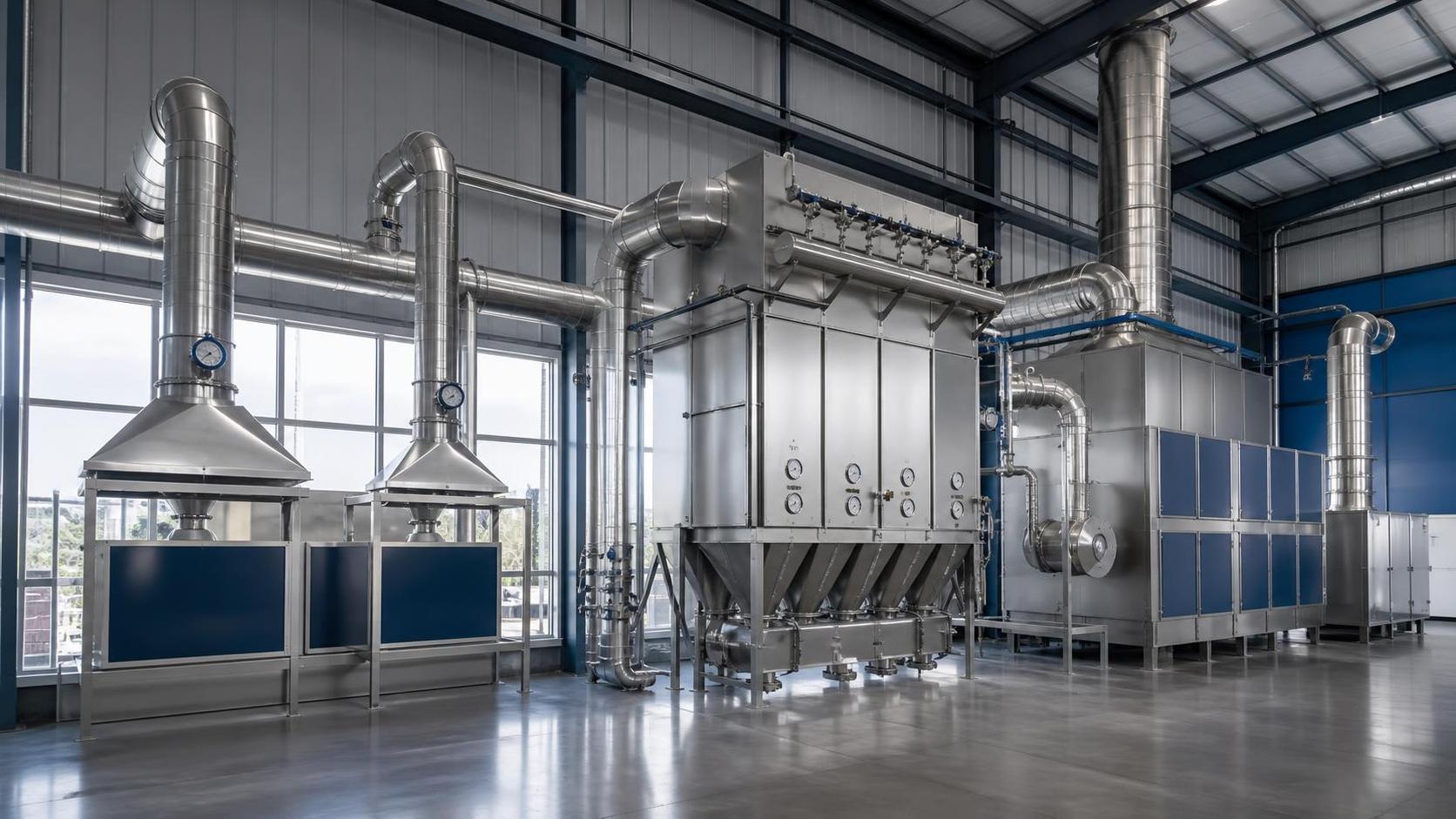
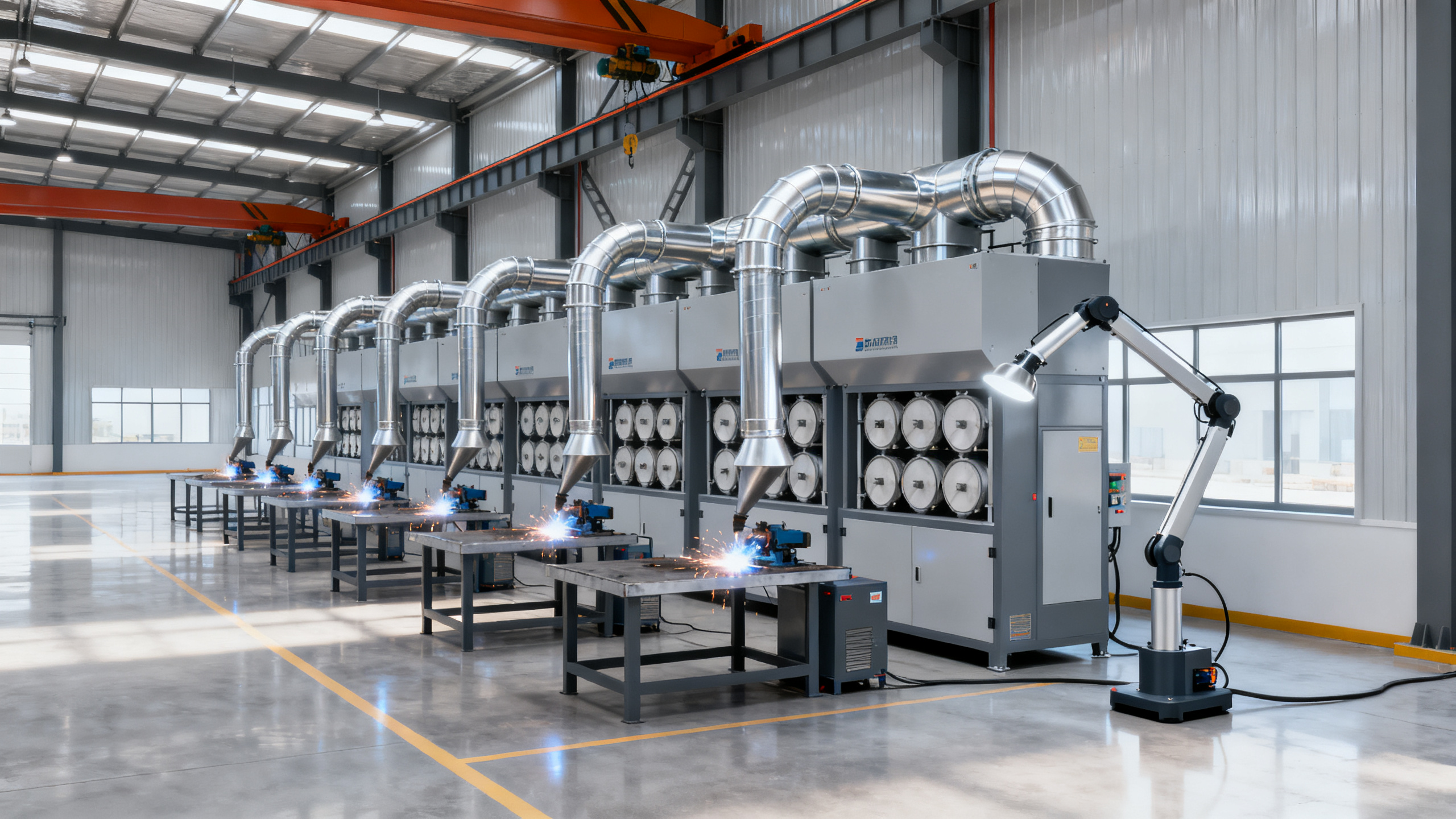
In repetitive production cells, centralized cartridge collectors often become the most practical choice. They support multiple drops, stable airflow management, and easier monitoring from one service point.
These systems are often considered dust and fume control systems low maintenance when they include automatic pulse cleaning, accessible filter doors, and differential pressure monitoring.
The main advantage is consistency. Maintenance can be scheduled around production windows instead of reacting to airflow decline at individual stations.
Still, centralized systems are not maintenance-free. Long ducts collect residue, leaks can develop at joints, and poor hood design can waste fan capacity. Capture performance starts at the source, not at the collector.
Where production is steady, the better design usually includes spark protection, isolation where required, and filters selected for the actual particle profile rather than generic workshop dust.
Flexible Repair Bays Often Need Portable or Mobile Extraction
Repair and maintenance zones create a different reality. Welding points shift, workpieces vary in size, and operators may move between benches, vehicles, and field-returned components.
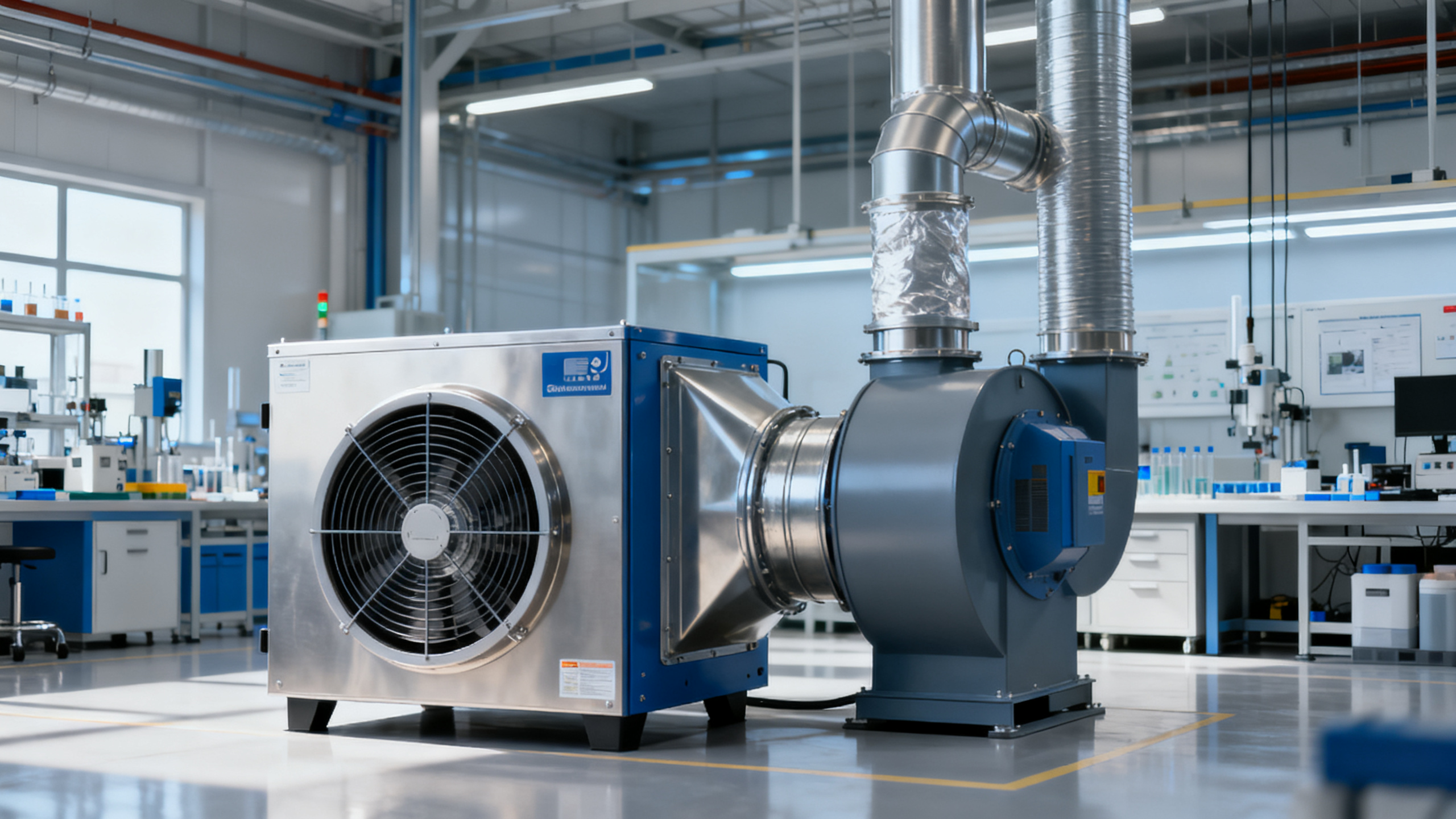
In these cases, portable collectors or mobile extraction arms can be the more realistic low-maintenance answer. They avoid complex ductwork and reduce installation constraints in older buildings.
The maintenance advantage appears when units have tool-free filter access, durable casters, and simple arm positioning that stays in place during work. If the hood drifts, capture drops, and the maintenance burden shifts into daily correction.
Portable units work best when usage is disciplined and the source is close to the capture point. They struggle when large plumes spread before extraction or when multiple stations need simultaneous control.
For mixed-use shops, this category often performs well as a targeted supplement rather than a complete plant-wide strategy.
Robotic and Enclosed Stations Change the Selection Priorities
Robotic welding cells usually generate predictable fume patterns, but they introduce another challenge: maintenance access cannot interrupt tightly planned cycle times more than necessary.
That shifts the focus toward systems with remote monitoring, long filter life, and stable extraction through enclosure design. In enclosed cells, good containment reduces total airflow demand and helps keep maintenance intervals longer.
Here, dust and fume control systems low maintenance often depend on integration quality. Poorly designed enclosure gaps, overloaded pre-filters, or awkward service clearances can turn a technically advanced system into a frequent service issue.
Where robotic throughput is high, it is worth checking whether the collector can maintain performance under continuous thermal loading and fine particulate concentration, not just nominal cubic flow.
A Simple Comparison Helps Separate Similar-Looking Options
Many systems look comparable in brochures. The real difference usually appears in servicing frequency, capture behavior, and installation fit.
This kind of comparison is more useful than ranking equipment by headline airflow alone. It keeps the evaluation tied to operating reality.
Where Maintenance Burden Usually Hides
A common mistake is to judge only purchase price and stated extraction capacity. Service burden often comes from details that appear small during specification.
- Filter replacement that needs long stoppages or special lifting access.
- Poor hood placement that forces higher airflow to compensate.
- No pre-separation where sparks or coarse dust are present.
- Ignoring local compliance needs for recirculation, fire protection, or emission discharge.
- Using one design assumption for both short repair work and full-shift production welding.
Another frequent misjudgment is treating similar welding methods as identical from a maintenance standpoint. Fine stainless fumes, coated materials, and intermittent grinding contamination can change loading behavior sharply.
In actual industrial reviews, long-term service effort should be measured in labor hours, filter change frequency, spare parts availability, and disruption risk, not only in kilowatts or airflow ratings.
How to Choose Dust and Fume Control Systems Low Maintenance Enough for the Site
A practical selection process starts with the plume source, then moves outward. Capture distance, station count, welding duty cycle, and contaminant type should define the system architecture.
When comparing dust and fume control systems low maintenance, focus on these decision points:
- How often will filters realistically load under current production mix?
- Can routine inspection happen without shutting down several stations?
- Will the layout still work if throughput expands or workpieces get larger?
- Does the design support CE, UL, ISO, and local safety expectations where relevant?
- Are replacement parts and technical support available over the full equipment life?
For heavier industrial environments, the stronger choice is usually the one that keeps performance measurable. Pressure monitoring, maintenance alerts, and documented service intervals help prevent hidden decline.
That is also where a data-driven sourcing view becomes valuable. It keeps air quality control connected to reliability, compliance, and lifecycle cost instead of treating it as an isolated utility purchase.
The Next Step Is to Match Conditions Before Comparing Brands
The best low-maintenance result usually comes from clarifying the site profile first. Fixed stations, mixed repair work, robotic cells, and combined grinding areas should not be evaluated with the same assumptions.
A useful next step is to document welding methods, operating hours, floor constraints, compliance needs, and acceptable service windows. That short list will narrow the field faster than broad product claims.
From there, compare dust and fume control systems low maintenance by real maintenance exposure, not just by brochure output. The more accurately the site conditions are defined, the easier it becomes to choose an option that protects air quality without adding avoidable downtime.
Technical Specifications
- How to Select Electronic Hotel Key Card Locks for Guest Rooms and Staff AreasAuthor :Safety Compliance Lead
- How to Select Lab Instruments for Reliable Chemical Analysis WorkflowsAuthor :Precision Metrology Expert
- How to Size a UPS for Server Rooms: Load, Runtime, and Redundancy FactorsAuthor :Grid Infrastructure Analyst
Expert Insights

Chief Security Architect
Dr. Thorne specializes in the intersection of structural engineering and digital resilience. He has advised three G7 governments on industrial infrastructure security.
Related Analysis
- Sep 17, 2026How to Select Electronic Hotel Key Card Locks for Guest Rooms and Staff AreasAuthor :Safety Compliance Lead
- Sep 16, 2026How to Select Lab Instruments for Reliable Chemical Analysis WorkflowsAuthor :Precision Metrology Expert
- Sep 15, 2026How to Size a UPS for Server Rooms: Load, Runtime, and Redundancy FactorsAuthor :Grid Infrastructure Analyst
Core Sector // 01
Security & Safety
- Environmental Technologies for Heavy Industry: Choosing Cleaner Production SolutionsAuthor :Environmental Engineering Director

- Selecting Air Compliance Equipment for Dust, Fumes, and VOC ControlAuthor :Environmental Engineering Director

- EU Rule Tightens EN 1822-2 for Industrial Air PurifiersAuthor :Environmental Engineering Director

- EU Eco-Design Rules Tighten for Air PurifiersAuthor :Environmental Engineering Director

- Low-Maintenance Dust and Fume Control Systems: Best Options for Welding ShopsAuthor :Environmental Engineering Director

- EPA Sets VOC Labeling Rule for Air PurifiersAuthor :Environmental Engineering Director

- Saudi SASO Rule Adds Real-Time Logging for Air SystemsAuthor :Environmental Engineering Director

- Saudi SASO Rules Tighten for Air PurifiersAuthor :Environmental Engineering Director