Selecting Air Compliance Equipment for Dust, Fumes, and VOC Control
Author
Date Published
Reading Time
When an industrial facility begins evaluating air compliance equipment, the conversation often starts with airflow: how much air must move, where the hoods will sit, and how much floor space is available. Those questions matter, but they are not the decision. A system that moves the right volume of air can still underperform if it is built around the wrong capture method, filter media, exhaust pathway, or monitoring strategy.
For technical evaluators, the stakes are practical. Dust accumulation can create housekeeping, health, and combustible-dust concerns. Welding, cutting, coating, and chemical processes may release fumes that challenge worker exposure controls. VOC emissions can trigger permit obligations, odor complaints, or process restrictions. The selected equipment has to work not only during a clean acceptance test, but through changing production rates, maintenance intervals, seasonal conditions, and operator behavior.
This guide provides a structured way to compare air compliance equipment for dust, fumes, and VOC control. The objective is not to name a universal “best” technology. It is to define the evidence a purchaser should request before approving a dust collector, fume extraction system, mist collector, scrubber, carbon adsorption unit, thermal oxidizer, or integrated control train.
Start with the emission, not the equipment category
“Dust,” “fume,” and “VOC” are useful labels, yet they are too broad to support a final equipment decision. The contaminant must be described in terms that affect capture, transport, separation, destruction, and safe disposal.
For particulate emissions, determine the particle size distribution, bulk density, shape, moisture behavior, stickiness, abrasiveness, and loading rate. Fine, dry metal dust behaves very differently from fibrous textile lint, tacky food-process powder, or heavy shot-blasting debris. A cartridge collector that is well suited to one source may blind rapidly or suffer excessive wear in another.
For fumes, identify the generating process and its duty cycle. Welding fume, soldering emissions, laser-cutting by-products, and thermal processing exhaust can contain ultrafine particles as well as gases. Capture distance becomes especially important because thermal plumes disperse quickly once they leave the work zone. A high-efficiency filter placed too far from the source cannot compensate for weak local exhaust capture.
VOC evaluation needs still more detail. List the compounds, expected concentration range, molecular weight, boiling point, polarity, moisture content, and whether contaminants may compete for adsorption capacity. Some processes release intermittent high-concentration peaks rather than a stable exhaust stream. That distinction can change whether activated carbon, condensation, biofiltration, catalytic oxidation, thermal oxidation, or a hybrid design is technically appropriate.
A useful pre-bid package includes process flow diagrams, safety data sheets, production schedules, existing stack or workplace sampling results, hood layouts, utility data, and a record of upset conditions. If sampling is incomplete, acknowledge the uncertainty instead of forcing false precision into the specification. Vendors can design around known variables; hidden variability is where compliance risk often begins.
Separate the three jobs: capture, conveyance, and control
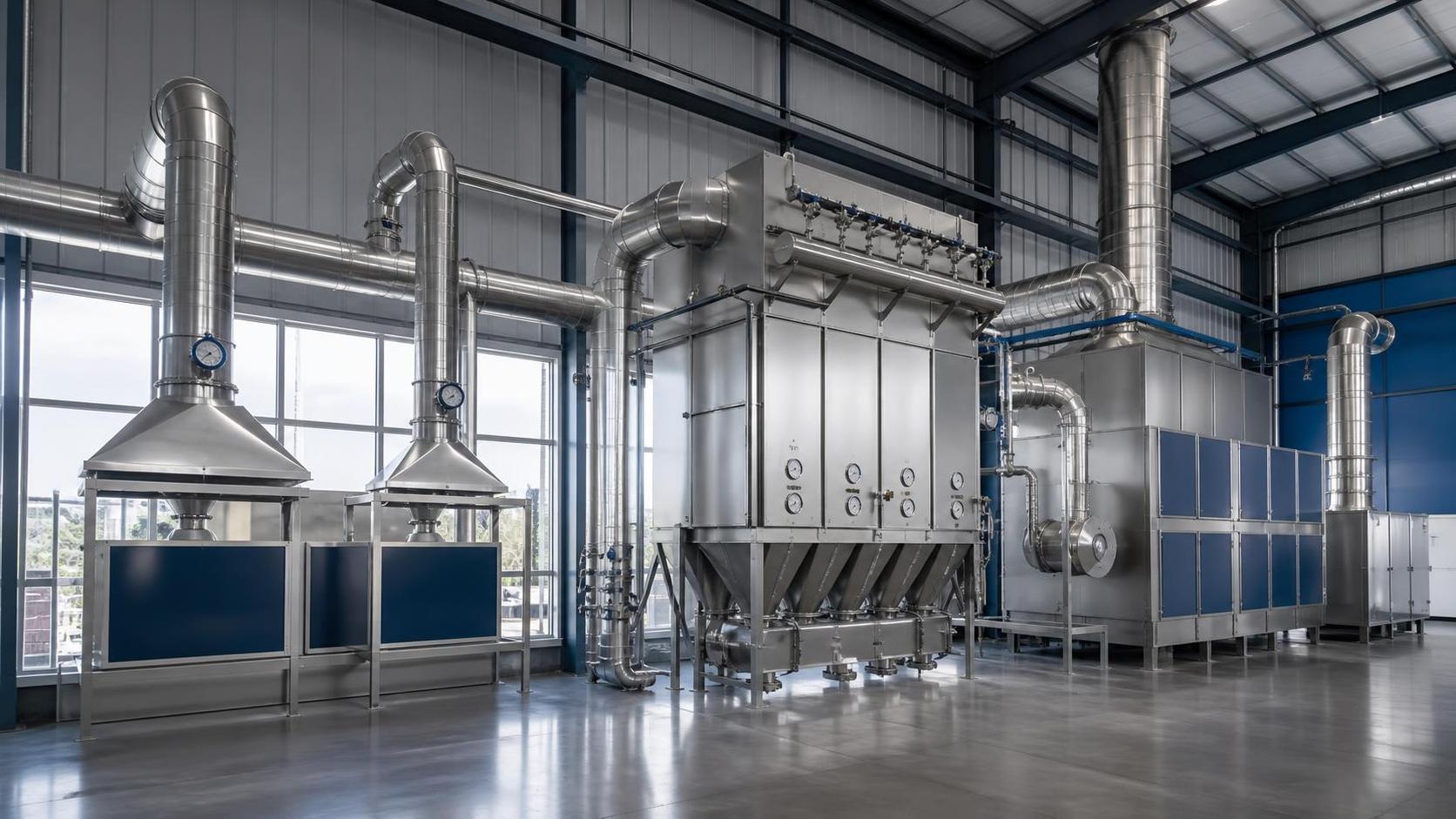
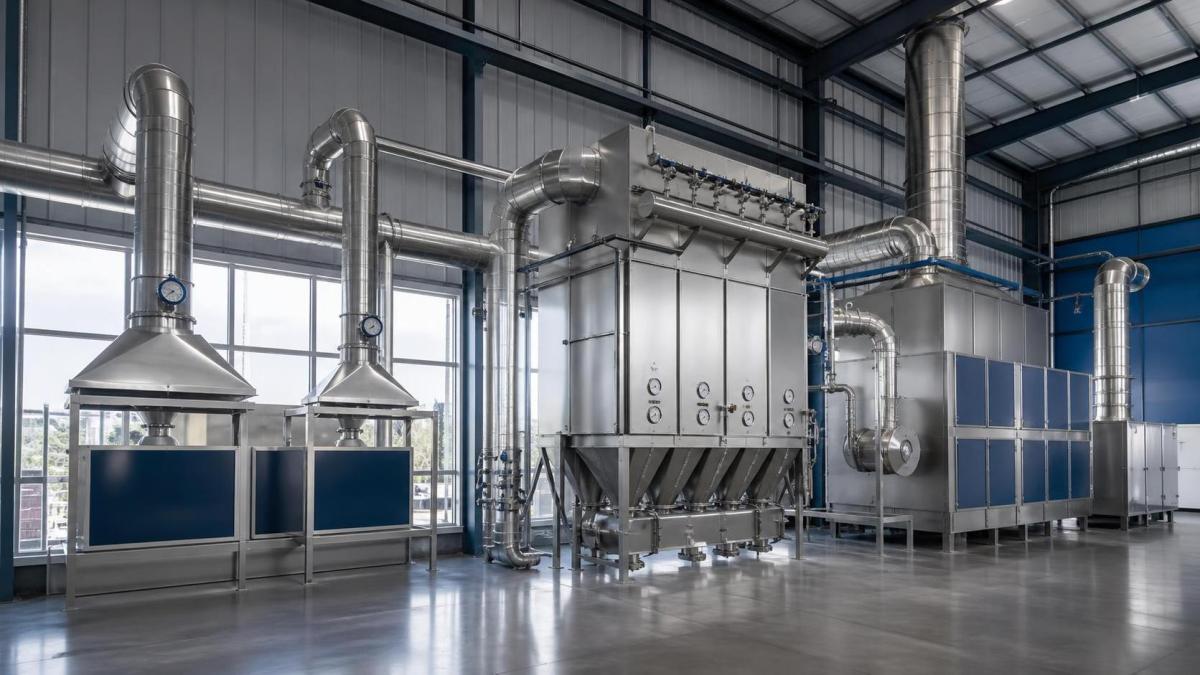
Many weak proposals focus heavily on the collector or treatment device while treating the rest of the system as secondary. In reality, compliance depends on a chain of performance. The contaminant must be captured at the source, transported without settling or leakage, and then removed or destroyed by the selected control technology.
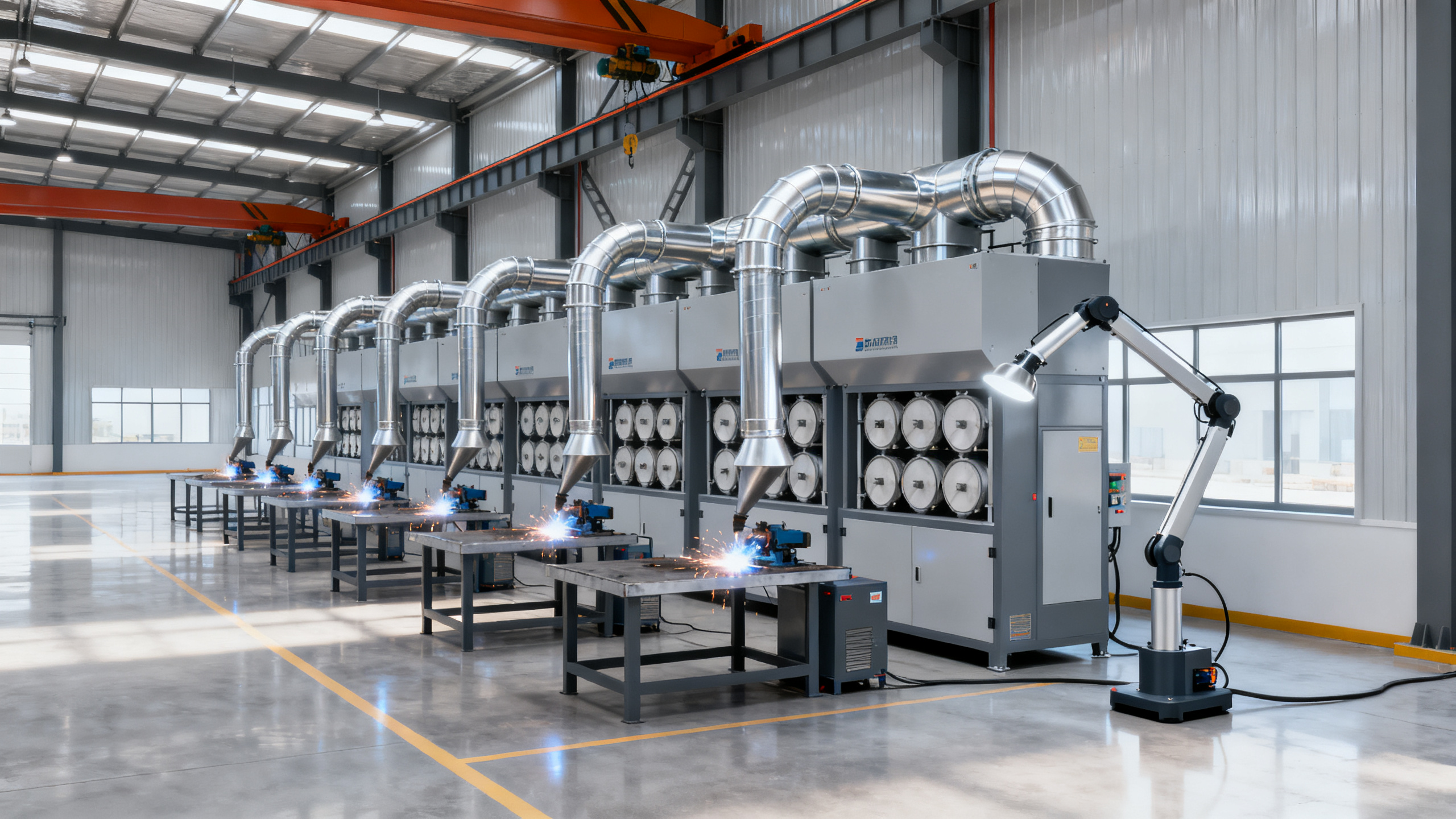
Capture is governed by hood type, enclosure design, slot velocity, cross-drafts, source geometry, and worker access. Partial enclosures may offer better control than an open hood where the process allows them. For mobile welding or maintenance work, articulated extraction arms may be necessary, but their effectiveness depends on positioning discipline. For larger production lines, a canopy hood can be convenient and still be a poor choice if rising thermal currents and surrounding air movement carry the plume past the capture zone.
Conveyance concerns duct sizing, transport velocity, pressure losses, balancing, fan selection, access doors, and the potential for internal deposition. Ductwork is not simply a connection between the hood and collector. In combustible dust applications, its configuration may influence isolation, explosion protection, inspection access, and safe cleaning practices. Long runs, unnecessary elbows, and unbalanced branches can quietly consume the static pressure margin assumed in an initial design.
Control includes filtration, adsorption, absorption, oxidation, or another treatment mechanism. Evaluators should ask where the stated efficiency is measured: at the media, at the unit outlet, or at the stack after all system losses and bypass risks are considered. The answer affects whether a proposal can support the actual permit, occupational hygiene, or environmental objective.
Match technology to the primary control problem
Technology selection becomes clearer when the control objective is defined. Is the priority worker breathing-zone protection, stack emission compliance, odor reduction, recovery of valuable material, prevention of dust migration, or all of these at once? One device rarely resolves every issue without careful system integration.
For dry dust, the filtration media and cleaning regime deserve close attention. Pulse-jet cleaning may suit many continuous-duty applications, but the compressed-air demand, filter stress, and dust-release behavior should be understood. Nanofiber, membrane, antistatic, conductive, PTFE-based, and high-temperature media may each be relevant depending on particle characteristics and safety requirements. “High efficiency” is not enough information without a defined particle challenge and operating condition.
VOC control deserves an equally disciplined comparison. Carbon systems may provide a compact solution, but carbon does not eliminate the need for monitoring. Breakthrough can occur before a noticeable odor change, and an odor threshold is not a reliable compliance alarm. Oxidation systems may deliver destruction performance for suitable streams, yet their viability depends on inlet concentration, supplemental fuel demand, contaminants that create corrosive by-products, and the ability to manage startup and shutdown emissions.
Combustible dust changes the procurement conversation
Where dust may be combustible, selection cannot be reduced to filter area and fan horsepower. The evaluation should involve qualified safety personnel and examine the dust hazard analysis, test information where available, building arrangement, collector location, ignition sources, and applicable local requirements.
Potential safeguards can include explosion venting, flameless venting, suppression, deflagration isolation, spark detection, abort gates, grounding and bonding, or outdoor collector placement. None should be treated as a generic add-on. Their suitability depends on the hazard, the equipment configuration, the proximity of occupied areas, and the installation environment.
A common mistake is assuming that a collector advertised for “combustible dust” is automatically appropriate for every powder or metal particulate. The purchaser should request clarity on the design basis and on the interfaces between the collector, ductwork, discharge device, and downstream handling equipment. A protected collector connected to an unprotected dust conveyance path may leave a critical gap.
Read performance claims through the lens of operating conditions
Technical submittals often contain impressive efficiency figures, but evaluators should ask what happens outside nominal conditions. Does the system maintain control when production increases, when filters age, when ambient humidity rises, or when multiple branches operate simultaneously? What is the permissible inlet temperature? How will variable static pressure be managed? Can the fan tolerate the expected operating curve without unstable performance?
Pressure drop is particularly important because it links energy use, airflow stability, and maintenance. A low initial pressure drop does not necessarily produce the lowest lifecycle cost if loading causes rapid escalation or frequent media replacement. Conversely, a system designed for a stable higher pressure drop may be more predictable if its cleaning and monitoring strategy are appropriate.
For VOC equipment, concentration monitoring and alarm philosophy should be reviewed early. Certain streams may require lower explosive limit monitoring, temperature sensing, bypass logic, or automatic shutdown integration. For particulate systems, differential pressure monitoring is common, but it should be tied to a meaningful maintenance response rather than treated as a dashboard metric with no action threshold.
Compliance is a system of documentation, not a nameplate
Air compliance equipment is often purchased under pressure: a permit deadline, an expansion project, an audit finding, or a recurring worker complaint. That urgency can lead teams to accept broad statements such as “compliant design” without defining the compliance target. A stronger approach is to build a requirements matrix before issuing the request for quotation.
The matrix should distinguish among environmental emission limits, workplace exposure goals, fire and explosion protection expectations, electrical area classifications, noise restrictions, local building requirements, and corporate engineering standards. International marks and management-system certifications may be relevant to the procurement route, but they do not replace project-specific verification. Depending on the jurisdiction and application, CE, UL, ISO-related documentation, material traceability, and electrical certifications may all need review alongside environmental obligations.
Ask suppliers to identify assumptions, exclusions, guaranteed parameters, test procedures, and the party responsible for field balancing and commissioning. If a supplier provides only the central equipment while another contractor designs hoods and ductwork, responsibility for final capture performance can become blurred. Clear interface definitions are as valuable as a detailed bill of materials.
Evaluate maintenance as part of control reliability
The best control technology is of limited value if technicians cannot safely inspect it, replace media, remove collected material, or access instruments. During a site review, look beyond the footprint. Consider door swing, overhead clearance, bag or cartridge change-out paths, hopper access, platform design, drainage, isolation valves, and lockout points. A cramped installation can turn routine preventive maintenance into a deferred task.
Consumables also deserve a realistic forecast. Filters, carbon media, scrubber chemicals, oxidation fuel, compressed air, wastewater treatment, and disposal costs can materially change the ownership profile. The right comparison is not simply capital cost versus quoted airflow; it is the expected cost and operational risk over the system’s service life.
Reliability planning should include critical spares, sensor calibration, remote alerts where justified, preventive maintenance intervals, and a response plan for abnormal pressure drop, fan vibration, temperature excursions, or emission-monitoring alarms. Facilities with continuous production may also need redundancy, bypass restrictions, or temporary-control procedures during maintenance windows.
A practical decision path for technical evaluators
Before selecting air compliance equipment, reduce the decision to a sequence of evidence-based gates:
- Characterize the emission source, including normal, peak, and upset conditions.
- Define the controlling obligation: occupational exposure, stack limit, odor, housekeeping, combustible-dust risk, or a combined requirement.
- Assess source capture before comparing downstream treatment devices.
- Screen technologies against contaminant chemistry, physical properties, airflow, temperature, moisture, and safety constraints.
- Compare proposals on delivered system performance, not collector capacity alone.
- Review monitoring, maintenance access, utilities, waste streams, and lifecycle implications.
- Document commissioning tests and acceptance criteria before purchase order release.
The strongest procurement decisions are rarely driven by the lowest initial quote or the most elaborate brochure. They come from a defensible match between the emission source, the control method, the site’s operating reality, and the evidence required to demonstrate ongoing performance. For EPC teams, facility managers, and industrial procurement leaders, that discipline turns air control from a late-stage compliance expense into a resilient part of the operating environment.
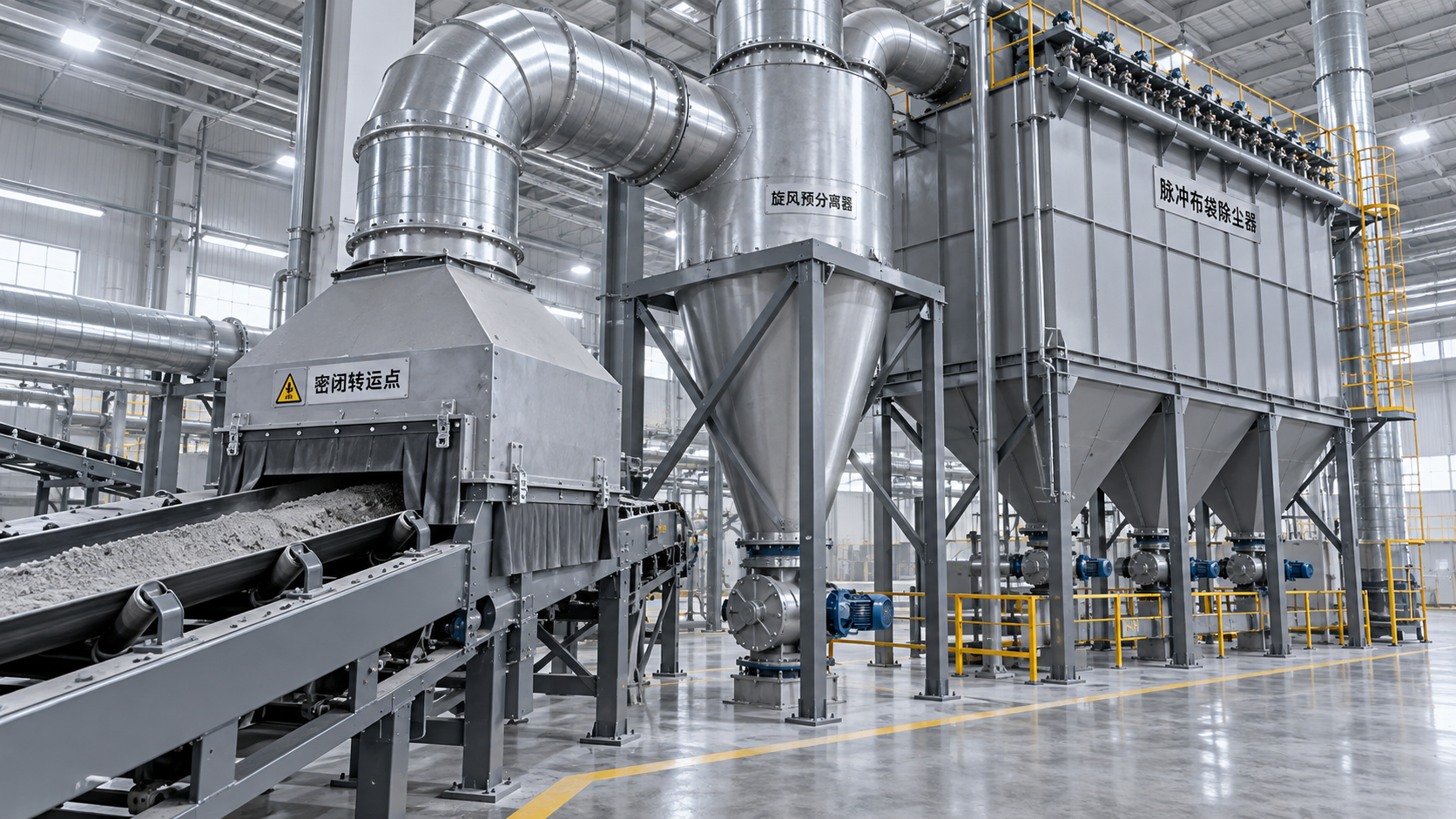
Global Industrial Core approaches these decisions as foundational engineering questions: identify the hazard, verify the performance basis, and make responsibility visible across the system. That perspective helps technical teams evaluate air compliance equipment with greater confidence—whether the challenge is fine dust at a transfer point, fume at a fabrication cell, or VOC emissions from a changing production process.
Technical Specifications
- Air Handling Unit Supplier Checklist: Performance Data, Lead Times, and SupportAuthor :Environmental Engineering Director
- Buying Fiberglass Water Tanks Wholesale: Compare Quotes and Delivery CostsAuthor :Environmental Engineering Director
- Choosing an XLPE Power Cable Supplier: Test Reports, Traceability, and Lead TimesAuthor :Grid Infrastructure Analyst
Expert Insights

Chief Security Architect
Dr. Thorne specializes in the intersection of structural engineering and digital resilience. He has advised three G7 governments on industrial infrastructure security.
Related Analysis
- Oct 19, 2026Air Handling Unit Supplier Checklist: Performance Data, Lead Times, and SupportAuthor :Environmental Engineering Director
- Oct 18, 2026Buying Fiberglass Water Tanks Wholesale: Compare Quotes and Delivery CostsAuthor :Environmental Engineering Director
- Oct 17, 2026Choosing an XLPE Power Cable Supplier: Test Reports, Traceability, and Lead TimesAuthor :Grid Infrastructure Analyst
Core Sector // 01
Security & Safety
- Air Handling Unit Supplier Checklist: Performance Data, Lead Times, and SupportAuthor :Environmental Engineering Director

- How to Select Industrial Emission Control Systems for High-Dust Manufacturing LinesAuthor :Environmental Engineering Director

- Environmental Technologies for Heavy Industry: Choosing Cleaner Production SolutionsAuthor :Environmental Engineering Director

- Selecting Air Compliance Equipment for Dust, Fumes, and VOC ControlAuthor :Environmental Engineering Director

- EU Rule Tightens EN 1822-2 for Industrial Air PurifiersAuthor :Environmental Engineering Director

- EU Eco-Design Rules Tighten for Air PurifiersAuthor :Environmental Engineering Director

- Low-Maintenance Dust and Fume Control Systems: Best Options for Welding ShopsAuthor :Environmental Engineering Director

- EPA Sets VOC Labeling Rule for Air PurifiersAuthor :Environmental Engineering Director