Environmental Technologies for Heavy Industry: Choosing Cleaner Production Solutions
Author
Date Published
Reading Time
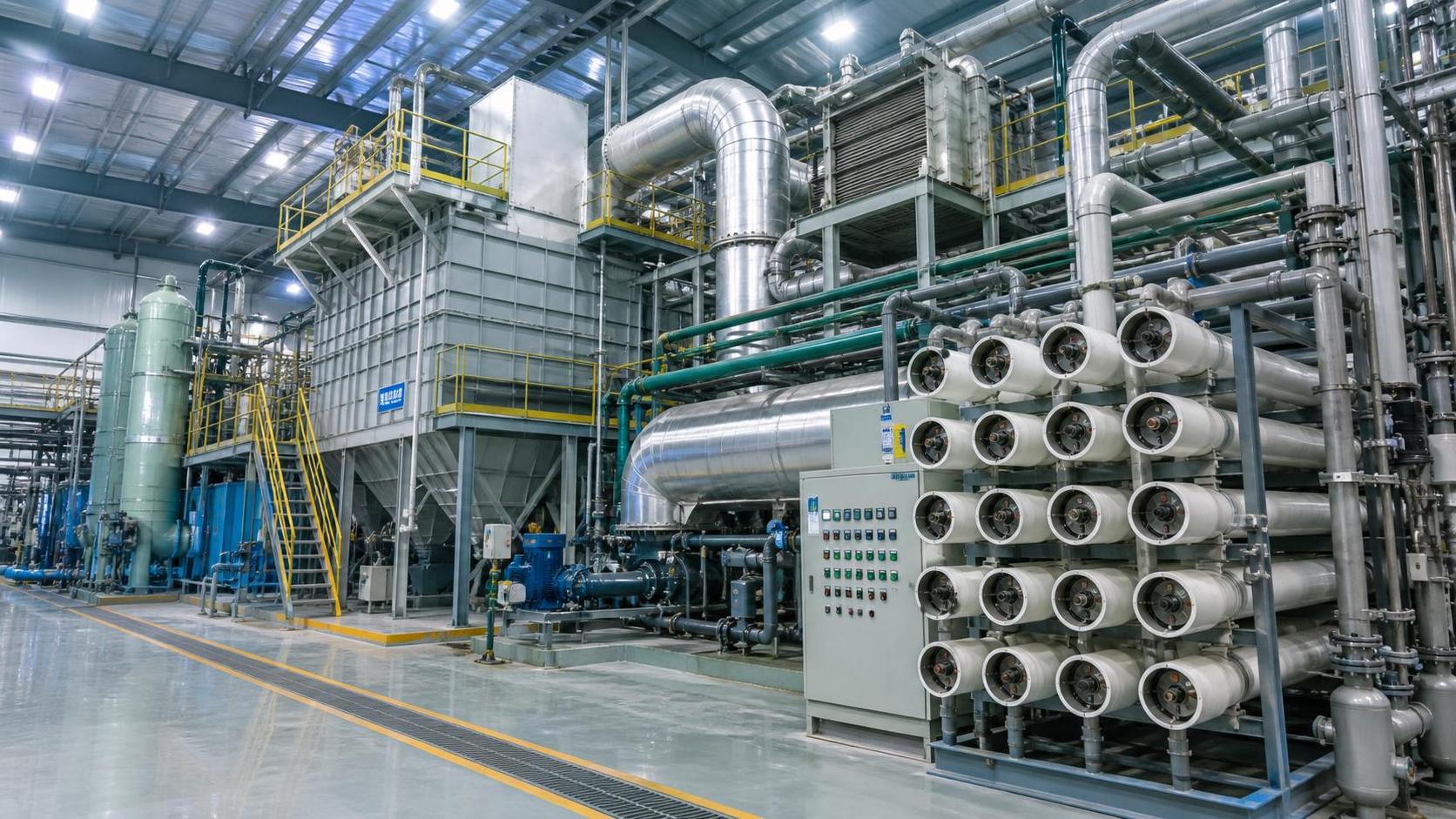
Cleaner production in heavy industry is not achieved by adding a treatment unit at the end of a process line. The more durable approach is to identify where material losses, uncontrolled releases, heat rejection, water contamination, and unstable operating conditions originate—and then select technologies that work with the plant’s actual feedstock, duty cycle, utilities, layout, and maintenance capability.
For major upgrades, the central decision is rarely whether an emissions-control, water-treatment, or energy-recovery technology is technically available. It is whether the chosen system can maintain compliance and predictable operating performance through startups, load changes, raw-material variability, shutdowns, and future production changes. Environmental and ecological technologies for heavy industry should therefore be evaluated as part of the production system, not as isolated compliance equipment.
Start with the environmental problem, not the equipment category
Terms such as “air pollution control,” “industrial wastewater treatment,” or “waste heat recovery” are useful procurement categories, but they are too broad to define a project. A baghouse, electrostatic precipitator, wet scrubber, selective catalytic reduction system, membrane plant, evaporator, anaerobic reactor, or organic Rankine cycle can all be appropriate in specific circumstances. None is inherently the cleaner-production choice without a clear process basis.
The project definition should distinguish between four different conditions that are often incorrectly grouped together:
- Routine emissions or discharges: predictable streams generated under normal operating conditions.
- Process upsets: short-duration but high-impact releases caused by unstable combustion, batch changes, equipment failures, or abnormal loading.
- Legacy contamination: contaminated soil, groundwater, dust deposits, drainage networks, or storage areas requiring remediation or containment.
- Resource inefficiency: avoidable energy, water, raw material, or by-product losses that may not breach a permit but weaken operating economics and asset resilience.
Each condition calls for a different solution architecture. A continuous stack-emission issue may require upstream combustion control combined with particulate and acid-gas treatment. A wastewater problem caused by intermittent high-strength discharges may depend more on equalization, segregation, and controlled release than on a larger biological reactor. A high energy bill may not justify heat recovery if the recovered heat has no stable on-site user.
Defining the problem at this level prevents a frequent failure mode: selecting proven equipment for the wrong duty. The relevant design inputs include flow range, composition range, temperature, pressure, solids loading, corrosivity, contaminants of concern, expected peaks, operating hours, available utilities, and the required outlet condition. Average values are useful for sizing studies, but maximum credible loads and transient conditions often determine whether an environmental system remains functional when it matters most.
Air-emissions control must account for gas chemistry and operating variability
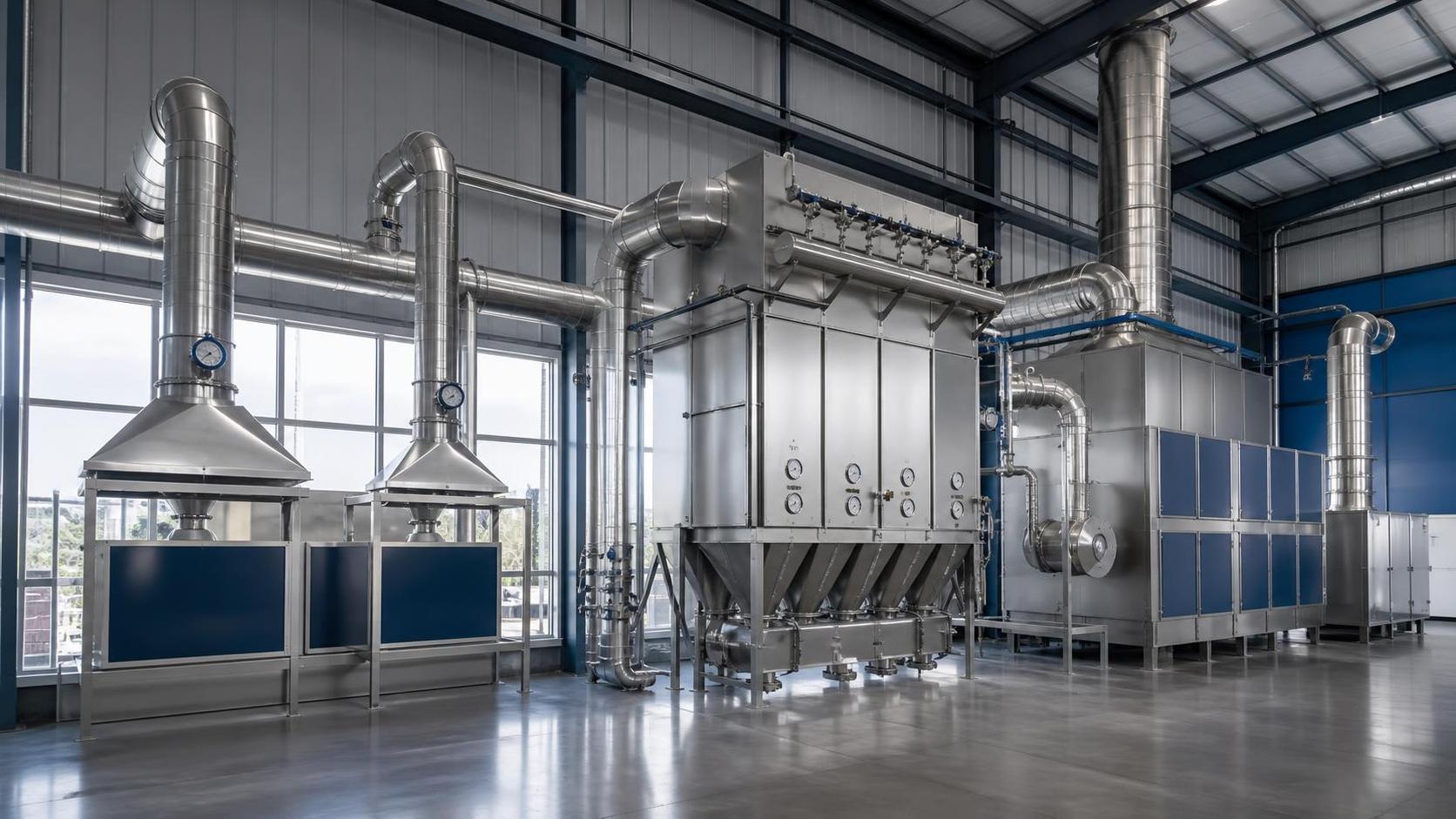
Heavy industrial air streams rarely contain a single pollutant. Cement, metals, power generation, mineral processing, chemical production, refining, pulp production, and thermal treatment processes may produce combinations of particulate matter, sulfur compounds, nitrogen oxides, acid gases, volatile organic compounds, carbon monoxide, trace metals, fumes, and odor-causing compounds. The treatment train must be compatible with the full gas profile rather than optimized for one headline parameter.
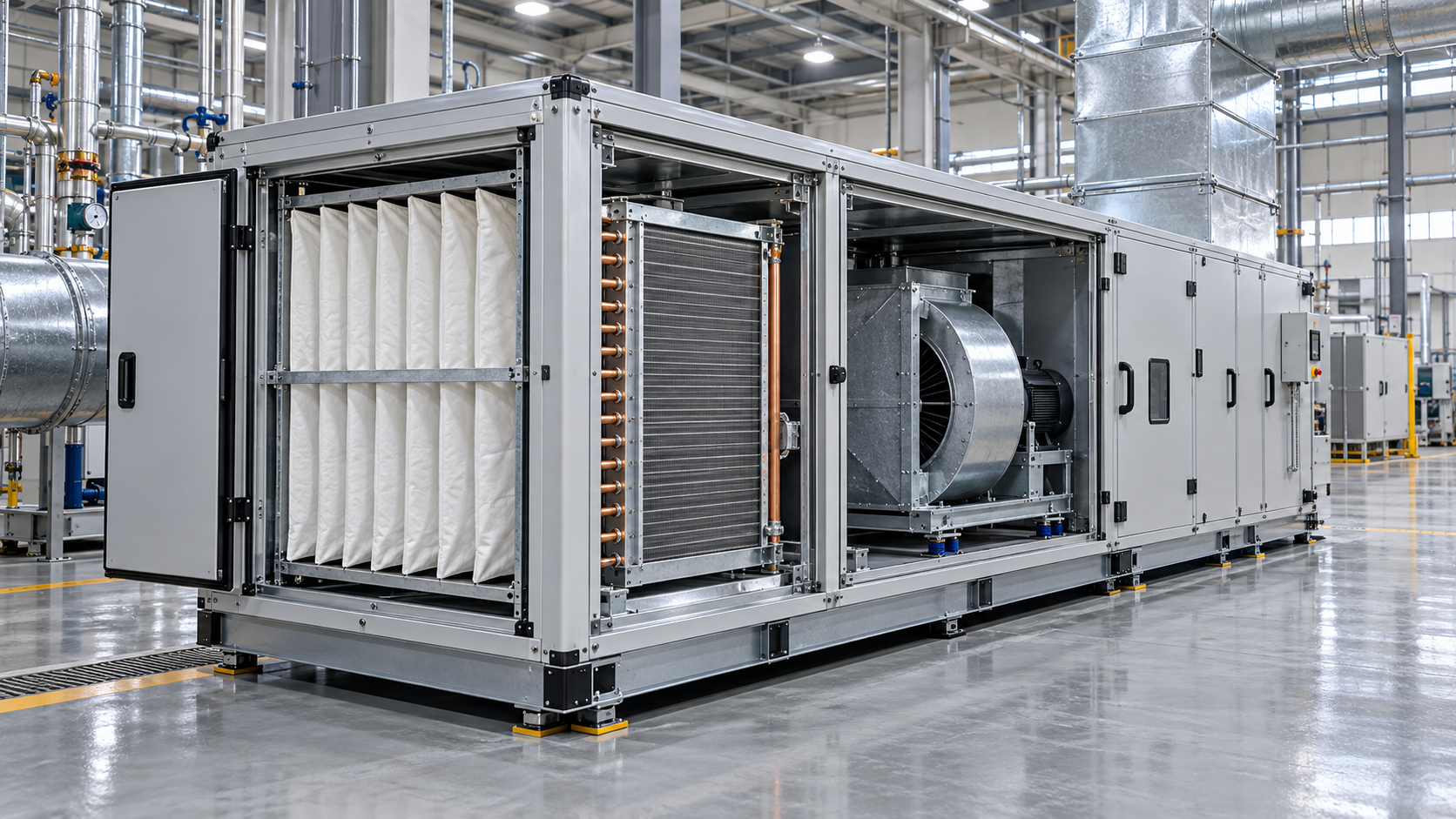
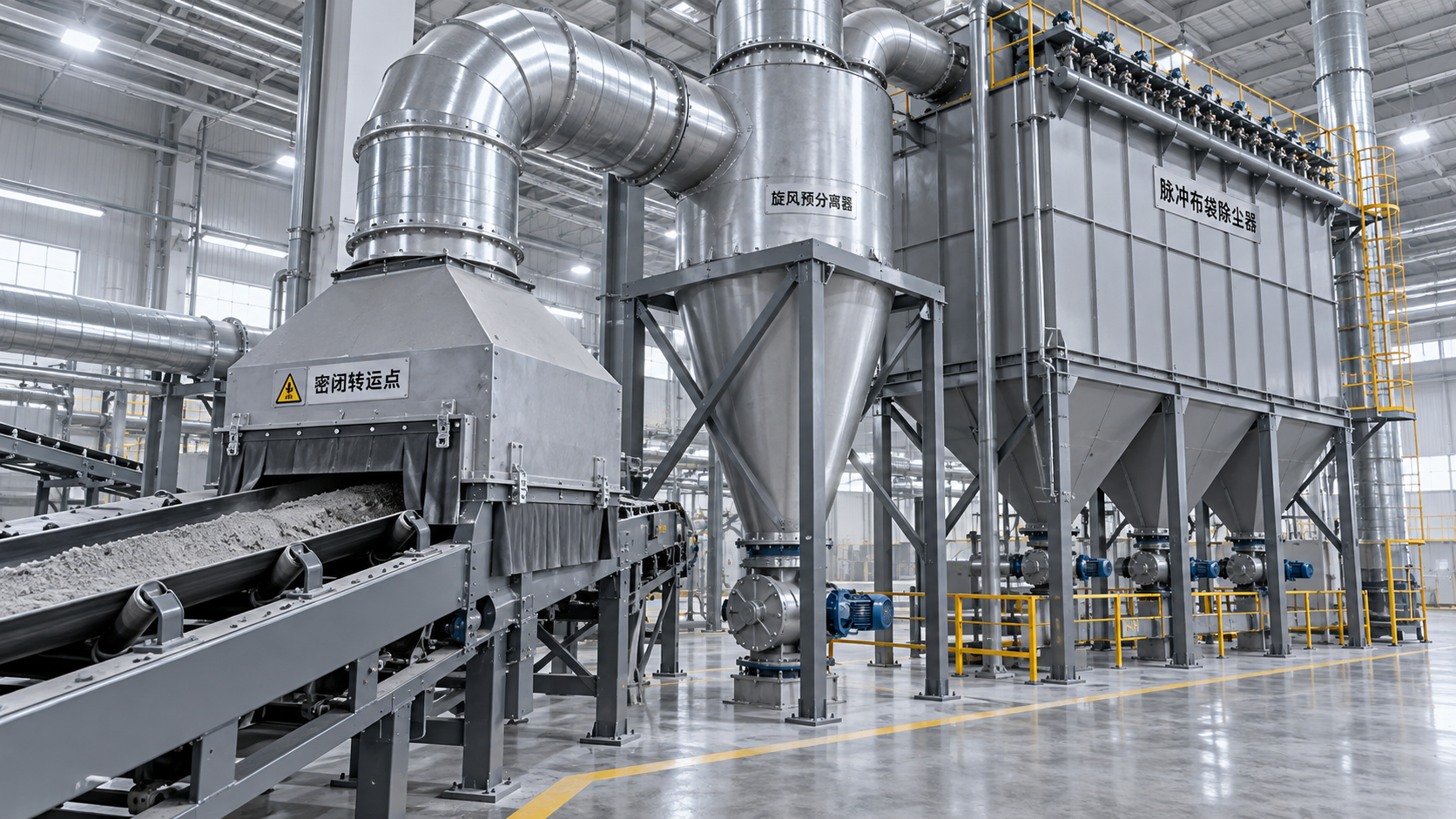
Particulate control illustrates the point. Fabric filters can provide high collection efficiency for suitable dust characteristics, but their reliability depends on filter media selection, temperature control, moisture conditions, gas velocity, dust abrasiveness, and cleaning regime. Electrostatic precipitators can handle certain large-volume gas streams effectively, yet their performance is influenced by particle resistivity, gas temperature, electrical conditions, and dust properties. Wet scrubbers can capture particles and soluble gases, but they transfer pollutants into a liquid stream that must then be treated, recycled, or disposed of appropriately.
For combustion-related emissions, upstream measures can be as important as downstream treatment. Burner design, fuel quality, air distribution, combustion temperature, oxygen control, furnace leakage, and residence time affect both pollutant formation and the burden placed on control equipment. Installing a nitrogen-oxide reduction unit without resolving unstable combustion can create a system that is difficult to tune, vulnerable to reagent inefficiency, and costly to operate.
A sound technical evaluation should test the proposed technology against low-load and high-load operation, startup and shutdown periods, expected fuel or feedstock changes, and emergency bypass philosophy. It should also establish where measurements are taken, how readings will be validated, and whether the monitoring arrangement corresponds to permit conditions and site reporting obligations. Continuous monitoring has limited value if sample conditioning, analyzer availability, calibration practice, data handling, and alarm response are not included in the operating model.
Water projects fail when streams are mixed before they are understood
Industrial wastewater is often treated as one combined flow because that simplifies pipework on a process diagram. It can make treatment substantially more difficult. Clean cooling water, saline blowdown, oily drainage, metal-bearing rinse water, high-COD process wastewater, acidic wash water, stormwater, and sanitary flows differ in both treatment need and reuse potential. Combining them can increase hydraulic volume, dilute recoverable materials, disrupt biological treatment, and expand the size and cost of downstream equipment.
Stream segregation is therefore an early design decision, not a late-stage optimization. The objective is to keep relatively clean water clean, isolate high-strength or hazardous streams, and apply treatment where it produces a clear discharge, reuse, recovery, or risk-control benefit.
Physical and chemical systems may be appropriate where suspended solids, oils, emulsions, metals, acidity, alkalinity, or inorganic contaminants dominate. Typical treatment elements include screening, equalization, oil-water separation, dissolved air flotation, clarification, precipitation, filtration, ion exchange, adsorption, and membrane separation. Biological treatment is more relevant where biodegradable organic load is sufficiently consistent and inhibitory compounds can be controlled. High salinity, toxic metals, biocides, solvents, sharp pH variation, or batch discharges can impair biological processes unless they are removed, neutralized, equalized, or separately managed.
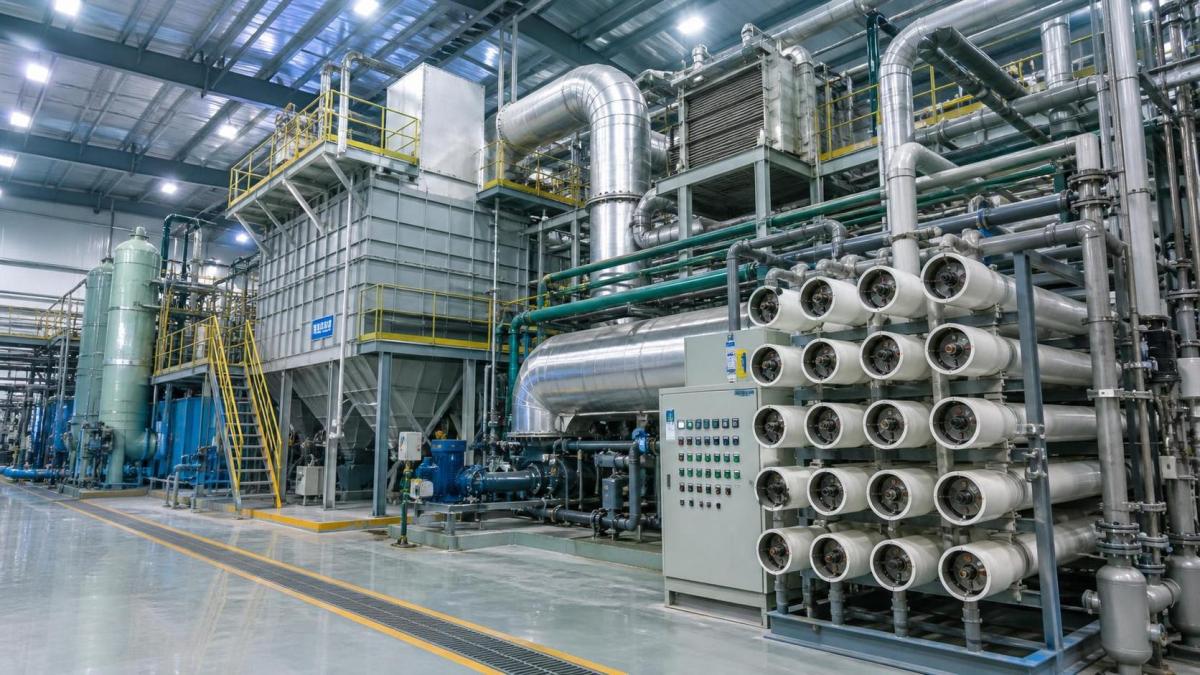
Water reuse deserves the same discipline as discharge treatment. Reuse quality must be specified by the receiving application: cooling-tower makeup, boiler feed preparation, washing, dust suppression, process use, or irrigation where permitted all have different constraints. A water stream that meets one reuse purpose may cause scaling, corrosion, fouling, microbial growth, or product-quality problems in another. Membrane systems can produce high-quality permeate, but their design must address pretreatment, concentrate management, cleaning chemicals, membrane replacement, and variations in feed quality. A reuse target without a credible destination and balance across seasons is not a complete project case.
Energy recovery is valuable only when heat and power can be used reliably
Waste heat is visible in many heavy-industrial facilities, but not every hot stream is recoverable at an attractive lifecycle cost. Temperature, flow stability, contamination, distance to the heat user, outage alignment, pressure drop, corrosion risk, and the value of displaced energy all affect feasibility.
High-temperature exhaust streams may support steam generation, combustion-air preheating, feedwater heating, drying, or power generation. Medium- and lower-temperature streams may be better suited to hot-water networks, process heating, heat pumps, or selected drying duties. The most effective arrangement is often direct heat integration, where a recovered stream displaces a known thermal demand without unnecessary conversion steps. Generating electricity from waste heat can be technically possible while still being less compelling than direct thermal use if the site has a stable heat sink.
Integration risk is often underestimated. A heat-recovery exchanger can create fouling exposure, introduce pressure losses, alter draft balance, constrain maintenance access, or tie a critical production line to a secondary utility system. Design reviews should establish what occurs when the heat user is unavailable, whether bypass capacity is required, how the recovery unit is isolated, and whether process safety protections remain adequate during abnormal conditions. The avoided-energy calculation should include auxiliary loads, cleaning requirements, downtime, degradation, and the operating cost of supporting systems—not only the theoretical heat recovered.
Environmental monitoring is a control layer, not a reporting accessory
Monitoring technologies are increasingly central to cleaner production because they turn delayed environmental information into operating decisions. Flow meters, pH and conductivity sensors, turbidity instruments, dissolved oxygen probes, stack analyzers, dust monitors, leak-detection systems, acoustic monitoring, vibration sensors, and energy meters can reveal deviations before they become permit breaches, equipment damage, or lost production.
The useful question is not how many instruments can be installed, but which measurements can change an operational response. A conductivity increase in a reuse-water loop may indicate contamination ingress. A rising pressure drop across a filter may identify fouling or blinding. A change in oxygen concentration in flue gas may point to combustion imbalance or air leakage. A sudden increase in wastewater flow can expose a valve failure, a washdown event, or a process leak.
Instrumentation should be specified with the same attention applied to process-critical devices. Sensor range, wetted materials, installation location, sample conditioning, cleaning frequency, calibration, redundant measurement, communication protocols, data ownership, cybersecurity boundaries, and maintenance access all influence whether information remains reliable. A dashboard cannot compensate for poor field data. Equally, a technically accurate analyzer does little if the site lacks defined alarm thresholds, escalation responsibilities, and authority to intervene in the process.
Choose between end-of-pipe treatment and source reduction with a lifecycle view
End-of-pipe technologies remain necessary in many projects. They can provide the final barrier between an industrial process and the environment, particularly where residual emissions cannot be eliminated through process changes alone. Their limitation is that they often consume energy, water, reagents, spare parts, and labor while generating secondary residues such as sludge, spent media, contaminated filter dust, concentrate, or scrubber blowdown.
Source reduction can lower that burden by preventing pollution from being generated in the first place. Relevant measures may include raw-material substitution, closed transfer systems, improved furnace sealing, dry processing instead of wet processing where suitable, optimized chemical dosing, better housekeeping, water cascade design, regenerative materials, and recovery of process by-products. These measures are not automatically cheaper or simpler: they can require changes to core production equipment, product specifications, quality assurance, and supplier qualification.
The appropriate comparison is therefore not capital expenditure against capital expenditure. It is the total project and operating consequence of each pathway. That includes utility demand, consumables, waste handling, labor, replacement parts, production disruption, expected uptime, permitting implications, residual environmental liability, and the cost of an underperforming system. Where a source-reduction option removes a pollutant load permanently, it may reduce the size and complexity of downstream treatment. Where source modification threatens product consistency or cannot be implemented during the available outage window, a robust treatment system may be the practical first phase.
Implementation conditions determine whether a technically sound solution becomes a dependable asset
Environmental upgrades are frequently installed in constrained brownfield sites. Space is limited, underground services may be uncertain, tie-in windows are short, existing structures impose load restrictions, and active production lines cannot tolerate extended interruptions. These constraints should shape technology selection before equipment is specified.
A design that fits on a vendor drawing may still be unbuildable when access routes, lifting plans, maintenance clearances, chemical storage, drainage containment, electrical rooms, foundations, cable routing, and operator access are considered. Modular or skid-mounted systems can reduce site work in some cases, but they do not eliminate the need for utility connections, control integration, commissioning planning, and safe transport through the facility.
Commissioning requirements should be explicit. Treatment plants need defined influent conditions, reagent preparation, control-loop tuning, sampling protocols, performance verification criteria, operator training, and a period of stabilized operation. Environmental equipment is especially vulnerable when handed over with incomplete documentation or without a practical maintenance strategy. Critical spares, consumable lead times, inspection intervals, cleaning procedures, waste-disposal routes, and vendor support responsibilities should be resolved before final acceptance.
Compliance should be translated into design requirements rather than treated as a document review at project closeout. Applicable permits, discharge limits, air-emission limits, waste classifications, monitoring obligations, construction approvals, and local safety requirements must be confirmed for the specific jurisdiction and facility. International references such as ISO management standards or equipment certifications can support governance and procurement consistency, but they do not replace site-specific legal obligations or operating permits.
A cleaner-production decision should remain workable after handover
The strongest environmental solution is the one that continues to perform under real operating conditions, not merely during a guaranteed test run. That requires a defined operating envelope, realistic feed assumptions, measurable acceptance criteria, maintainable equipment, trained personnel, and a management process that links environmental data to production decisions.
For heavy-industry projects, the most reliable path is usually a layered one: reduce pollution at the source where feasible, segregate and recover resources where practical, apply treatment to residual streams, and monitor the system closely enough to detect deterioration early. This approach avoids the false choice between environmental performance and operational continuity. Properly selected environmental and ecological technologies for heavy industry can strengthen both—provided the solution is engineered around the site’s process reality rather than around a generic equipment specification.
Technical Specifications
- Air Handling Unit Supplier Checklist: Performance Data, Lead Times, and SupportAuthor :Environmental Engineering Director
- Buying Fiberglass Water Tanks Wholesale: Compare Quotes and Delivery CostsAuthor :Environmental Engineering Director
- Choosing an XLPE Power Cable Supplier: Test Reports, Traceability, and Lead TimesAuthor :Grid Infrastructure Analyst
Expert Insights

Chief Security Architect
Dr. Thorne specializes in the intersection of structural engineering and digital resilience. He has advised three G7 governments on industrial infrastructure security.
Related Analysis
- Oct 19, 2026Air Handling Unit Supplier Checklist: Performance Data, Lead Times, and SupportAuthor :Environmental Engineering Director
- Oct 18, 2026Buying Fiberglass Water Tanks Wholesale: Compare Quotes and Delivery CostsAuthor :Environmental Engineering Director
- Oct 17, 2026Choosing an XLPE Power Cable Supplier: Test Reports, Traceability, and Lead TimesAuthor :Grid Infrastructure Analyst
Core Sector // 01
Security & Safety
- Air Handling Unit Supplier Checklist: Performance Data, Lead Times, and SupportAuthor :Environmental Engineering Director

- How to Select Industrial Emission Control Systems for High-Dust Manufacturing LinesAuthor :Environmental Engineering Director

- Environmental Technologies for Heavy Industry: Choosing Cleaner Production SolutionsAuthor :Environmental Engineering Director

- Selecting Air Compliance Equipment for Dust, Fumes, and VOC ControlAuthor :Environmental Engineering Director

- EU Rule Tightens EN 1822-2 for Industrial Air PurifiersAuthor :Environmental Engineering Director

- EU Eco-Design Rules Tighten for Air PurifiersAuthor :Environmental Engineering Director

- Low-Maintenance Dust and Fume Control Systems: Best Options for Welding ShopsAuthor :Environmental Engineering Director

- EPA Sets VOC Labeling Rule for Air PurifiersAuthor :Environmental Engineering Director