Why more buyers compare every Electrical & Power manufacturer
Author
Date Published
Reading Time
For enterprise decision-makers, choosing the right Electrical & Power manufacturer is no longer a simple price comparison. As compliance demands, grid reliability, and long-term operational resilience become more critical, buyers are evaluating every supplier with greater scrutiny. This article explores why more procurement teams compare capabilities, certifications, and performance before making high-stakes infrastructure decisions.
Why the Electrical & Power manufacturer review process is becoming more rigorous
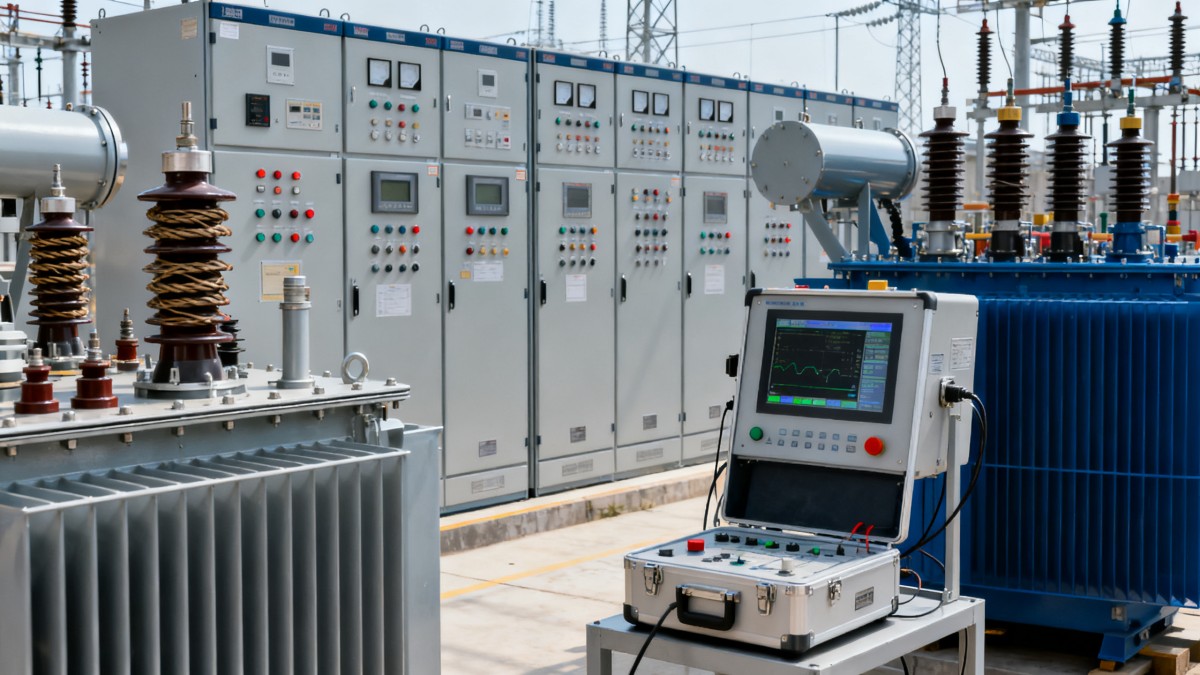
Industrial infrastructure now faces tighter uptime targets, stricter codes, and more volatile operating conditions. That shift has changed how every Electrical & Power manufacturer is assessed.
A supplier once judged by catalog range alone is now reviewed through a broader risk lens. Buyers compare engineering depth, test evidence, lifecycle support, and documented compliance.
This trend is visible across utilities, industrial plants, transport hubs, data centers, and public infrastructure. Failure in power systems creates safety exposure, downtime, and financial loss.
As a result, the modern Electrical & Power manufacturer must prove far more than delivery capability. Trust is increasingly built through traceability, certification, and field performance.
Market signals show buyers compare every Electrical & Power manufacturer more closely
Several market signals explain the change. First, global projects now combine higher technical complexity with lower tolerance for installation errors.
Second, electrification is expanding into sectors once driven mainly by mechanical systems. This increases demand for reliable switchgear, transformers, control assemblies, and protection devices.
Third, buyers have better access to digital documentation. Technical data sheets, audit records, and third-party test reports can be compared faster than before.
Fourth, supply chain disruptions exposed the cost of choosing a weak partner. Delayed components can hold back commissioning and create expensive contract consequences.
These signals have pushed the Electrical & Power manufacturer evaluation process from transactional sourcing toward strategic qualification.
The strongest drivers behind deeper comparison
What separates a trusted Electrical & Power manufacturer from a basic supplier
Not every supplier can support mission-critical environments. The distinction often appears in the evidence behind product claims.
A credible Electrical & Power manufacturer usually demonstrates consistent process control, clear design validation, and reliable after-sales technical response.
It also shows an ability to align with application demands. Marine conditions, mining exposure, clean rooms, and grid substations require different engineering priorities.
Comparison now extends beyond product specs. Buyers want proof that a manufacturer can perform under heat, dust, vibration, moisture, and load variation.
Key proof points that receive attention
- Third-party certification validity and scope
- Factory audit transparency and quality consistency
- Short-circuit, thermal, and insulation test records
- Material traceability and component origin control
- Engineering responsiveness during design changes
- Spare parts continuity and service network reach
- Documented performance in comparable operating sites
How this trend affects project risk, budgeting, and operational continuity
The broader comparison of each Electrical & Power manufacturer has direct impact on project planning. It changes lead time assumptions, approval steps, and acceptance standards.
More review work at the front end can actually reduce downstream disruption. Better supplier screening lowers the chance of nonconformity, rework, and delayed energization.
It also improves budget realism. Teams can identify hidden costs linked to weak documentation, nonstandard parts, and limited field support.
For operating facilities, the choice of Electrical & Power manufacturer affects maintenance intervals, fault response speed, and long-term system resilience.
Areas where the impact is most visible
- Capital projects with strict commissioning deadlines
- Retrofit work in aging industrial plants
- Facilities with safety-critical shutdown systems
- Energy-intensive sites facing uptime penalties
- Cross-border builds with mixed regulatory requirements
The most important evaluation priorities are shifting from price to resilience
Price still matters, but it no longer dominates the decision. The more strategic question is whether an Electrical & Power manufacturer supports stable performance over years of operation.
That means comparing lifecycle value instead of invoice value. A lower-priced unit may increase outage risk, maintenance burden, or compatibility problems.
Resilience has become a buying criterion because infrastructure assets are expected to operate across uncertain environmental and market conditions.
Priority checks that deserve closer attention
- Verify certification relevance, not just certificate presence.
- Check whether tested configurations match supplied configurations.
- Review failure handling procedures and warranty response times.
- Assess engineering change control during complex project execution.
- Confirm parts availability for the full service horizon.
- Examine reference projects under similar load and environment.
A practical framework for comparing every Electrical & Power manufacturer
A structured comparison model helps turn technical complexity into a clearer decision. It reduces subjectivity and highlights hidden risk.
This framework helps compare each Electrical & Power manufacturer on facts, not assumptions. It is especially useful when multiple regions, standards, or application risks are involved.
What should be monitored next as the Electrical & Power manufacturer landscape evolves
The next stage of comparison will become even more data-driven. Buyers will increasingly favor suppliers that provide transparent digital records and stronger quality visibility.
Environmental performance will also gain weight. Material efficiency, equipment longevity, and energy loss reduction are becoming part of supplier evaluation.
Another watchpoint is interoperability. As automation and monitoring systems expand, an Electrical & Power manufacturer must support integration, diagnostics, and future upgrades.
The most reliable decisions will come from continuous comparison, not one-time qualification. Market conditions, standards, and technology readiness can change quickly.
Next-step actions worth taking now
- Build a weighted scorecard for every Electrical & Power manufacturer under review.
- Request application-specific test evidence, not only generic brochures.
- Validate certifications through issuing bodies when risk exposure is high.
- Compare lifecycle support terms before final commercial negotiation.
- Track performance feedback from installed projects over time.
In a market where failure carries high consequences, comparing every Electrical & Power manufacturer is no longer excessive. It is a practical response to rising technical, compliance, and continuity demands.
For stronger infrastructure outcomes, use evidence-based evaluation, prioritize resilience, and review suppliers through the full lifecycle lens. That is how better sourcing decisions are now made.
Technical Specifications
- How to Select Electronic Hotel Key Card Locks for Guest Rooms and Staff AreasAuthor :Safety Compliance Lead
- How to Select Lab Instruments for Reliable Chemical Analysis WorkflowsAuthor :Precision Metrology Expert
- How to Size a UPS for Server Rooms: Load, Runtime, and Redundancy FactorsAuthor :Grid Infrastructure Analyst
Expert Insights

Chief Security Architect
Dr. Thorne specializes in the intersection of structural engineering and digital resilience. He has advised three G7 governments on industrial infrastructure security.
Related Analysis
- Sep 17, 2026How to Select Electronic Hotel Key Card Locks for Guest Rooms and Staff AreasAuthor :Safety Compliance Lead
- Sep 16, 2026How to Select Lab Instruments for Reliable Chemical Analysis WorkflowsAuthor :Precision Metrology Expert
- Sep 15, 2026How to Size a UPS for Server Rooms: Load, Runtime, and Redundancy FactorsAuthor :Grid Infrastructure Analyst
Core Sector // 01
Security & Safety
- How to Size a UPS for Server Rooms: Load, Runtime, and Redundancy FactorsAuthor :Grid Infrastructure Analyst

- How to Choose a Step-Down Transformer for a Control Panel: Key Sizing FactorsAuthor :Grid Infrastructure Analyst

- How Often Should Overseas Power Systems Undergo Safety Inspections?Author :Grid Infrastructure Analyst

- How to Choose Panels for Extreme-Cold Industrial Sites?Author :Grid Infrastructure Analyst

- What Should a Cross-Border EPC Equipment Procurement Reference Include?Author :Grid Infrastructure Analyst

- How to Compare Low-Voltage Equipment for Panel IntegrationAuthor :Grid Infrastructure Analyst

- IEC-Compliant Power Infrastructure: Key Design and Verification RequirementsAuthor :Grid Infrastructure Analyst

- Updated EN 61000-6-4:2026 Raises EMC Compliance Bar for EU-Bound Industrial EquipmentAuthor :Grid Infrastructure Analyst