How to Evaluate Electrical and Power Infrastructure for Utilities in New Grid Projects
Author
Date Published
Reading Time
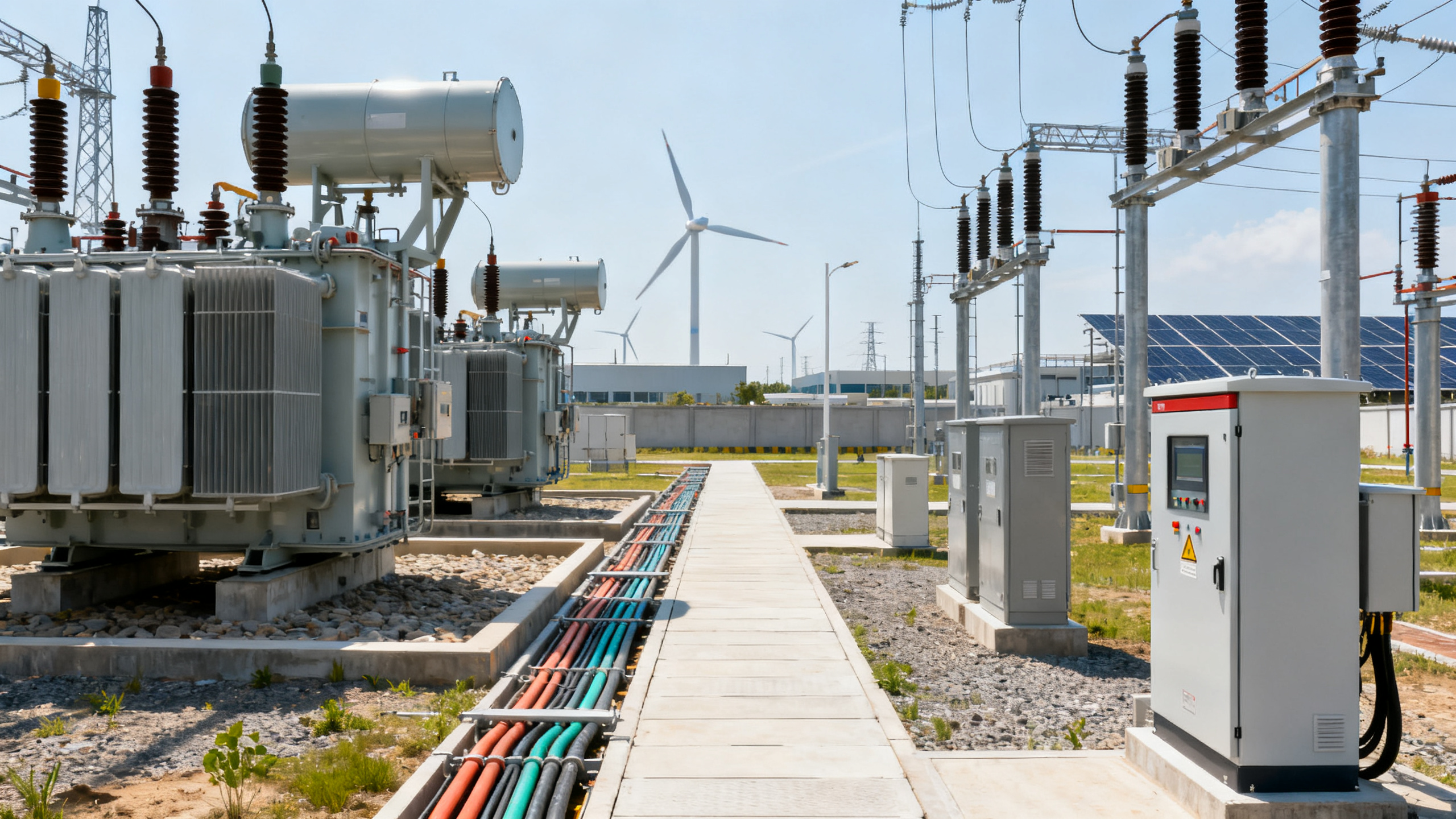
How to Evaluate Electrical and Power Infrastructure for Utilities in New Grid Projects
Evaluating electrical and power infrastructure for utilities is one of the most critical steps in any new grid project.
A weak early decision often turns into higher outage exposure, harder maintenance, and long-term capital waste.
A disciplined review helps teams balance compliance, performance, scalability, and commercial risk before procurement begins.
This guide breaks down how to assess electrical and power infrastructure for utilities in a way that supports practical project decisions.
Start with project demand, not equipment catalogs
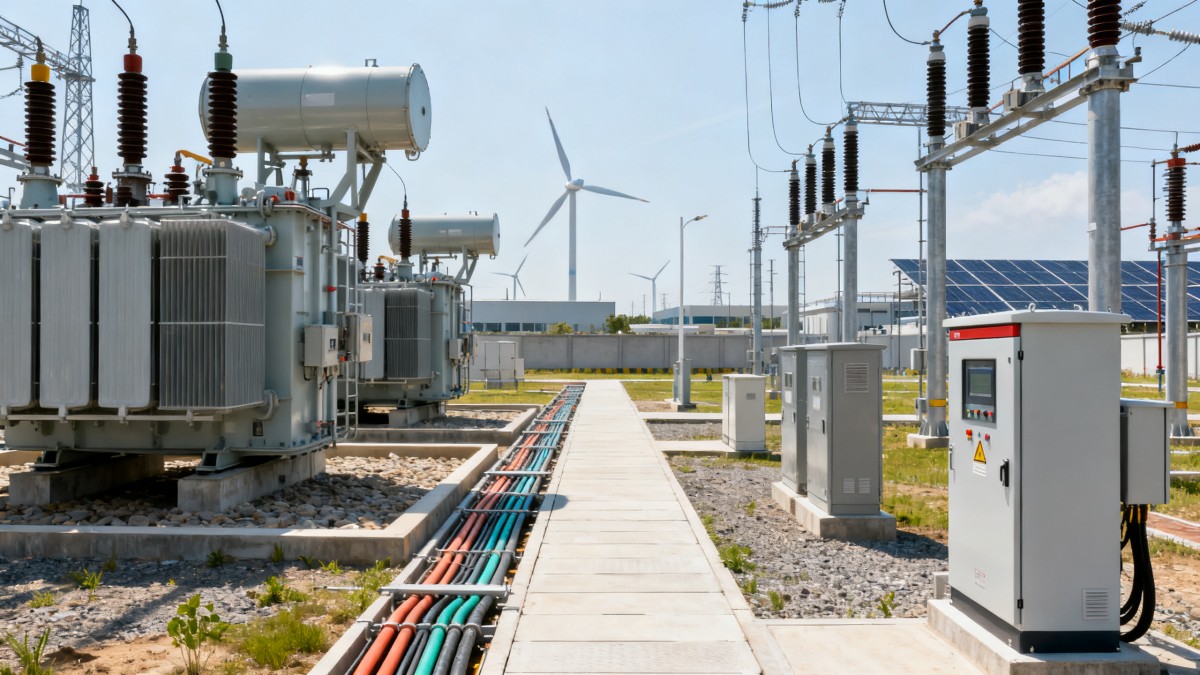
The first mistake in electrical and power infrastructure for utilities selection is starting with products instead of system demand.
Begin by defining the load profile across normal, peak, emergency, and future expansion conditions.
That includes feeder loading, expected demand growth, renewable integration, fault levels, and acceptable service interruption limits.
From there, the evaluation becomes more precise.
Teams can compare substations, transformers, switchgear, cables, protection systems, and control architecture against actual project requirements.
- Map present and five-to-ten-year demand scenarios.
- Identify critical loads that cannot tolerate voltage instability.
- Define redundancy needs for N+1 or higher resilience targets.
- Confirm interconnection requirements with local grid codes.
This early demand model anchors every later decision in the electrical and power infrastructure for utilities review process.
Check grid topology and system architecture fit
Not every architecture works equally well in every service territory.
Radial, loop, and meshed systems create different tradeoffs in reliability, protection complexity, and upgrade cost.
A sound electrical and power infrastructure for utilities assessment should test whether the proposed topology fits real operating conditions.
For example, a fast-growing urban project may need switching flexibility and sectionalizing capacity from day one.
A remote industrial zone may instead prioritize ruggedness, simplified maintenance, and rapid fault isolation.
Questions worth asking early
- Will distributed energy resources change power flow direction?
- Is future substation expansion physically possible on site?
- Can the protection scheme remain selective after capacity upgrades?
- What switching configuration reduces restoration time after faults?
This is where paper designs often look acceptable, but operating reality exposes weak flexibility.
Evaluate equipment performance beyond nameplate ratings
Nameplate data is necessary, but it is not enough for evaluating electrical and power infrastructure for utilities.
The real question is how equipment performs under site-specific stress.
That means reviewing thermal behavior, insulation life, short-circuit endurance, harmonics tolerance, and switching duty cycles.
Utilities operating near coastlines, deserts, or corrosive industrial areas need a stricter materials review.
Transformer cooling method, enclosure protection, busbar design, and cable insulation selection should match the environment.
A practical electrical and power infrastructure for utilities review always tests equipment against realistic duty, not ideal lab conditions.
Make compliance and safety non-negotiable filters
In new grid projects, compliance is not an administrative step that comes after engineering.
It should narrow the vendor list from the beginning.
Electrical and power infrastructure for utilities must align with applicable IEC, IEEE, UL, CE, ISO, and local utility requirements.
The more complex the project, the more important document traceability becomes.
Factory test reports, type test records, insulation coordination studies, and protection studies should be reviewed before contract award.
Minimum compliance checks
- Validate certifications against the exact product configuration.
- Confirm local code acceptance, not only international labeling.
- Review arc flash, grounding, and personnel safety provisions.
- Check whether documentation supports future audits and handover.
This step protects both technical performance and procurement credibility.
Assess digital control, monitoring, and cybersecurity readiness
Modern electrical and power infrastructure for utilities is no longer limited to wires, breakers, and transformers.
Digital visibility now plays a direct role in reliability and operating cost.
SCADA compatibility, remote diagnostics, intelligent electronic devices, and condition monitoring should be part of the base evaluation.
At the same time, every connectivity gain creates new cyber exposure.
That is why electrical and power infrastructure for utilities decisions should include protocol compatibility, patching support, access control, and segmentation strategy.
- Confirm interoperability with existing utility control platforms.
- Check data granularity for predictive maintenance use.
- Review vendor response plans for firmware vulnerabilities.
- Ensure critical functions can operate in degraded communication states.
This is becoming a stronger differentiator in utility infrastructure selection, especially where uptime targets are strict.
Compare lifecycle cost, not just capex
In practice, low upfront pricing can hide expensive operating consequences.
A better electrical and power infrastructure for utilities decision uses total lifecycle cost as the commercial baseline.
That includes energy losses, maintenance intervals, spare parts strategy, failure rates, labor intensity, and replacement lead times.
The financial gap between two technically acceptable options often appears after year three, not at purchase order stage.
Cost factors that matter most
- Transformer no-load and load losses over expected duty.
- Mean time between failures for critical switching assets.
- Inventory burden for proprietary versus standard components.
- Specialized technician requirements for maintenance and repair.
- Downtime cost linked to service disruption or curtailment.
When teams quantify these factors early, the electrical and power infrastructure for utilities choice becomes easier to defend internally.
Stress-test supply chain and vendor execution risk
Recent market shifts have made lead time risk impossible to ignore.
Even strong designs fail project schedules when critical equipment cannot arrive, pass testing, or secure service support.
That is why electrical and power infrastructure for utilities evaluation should include supplier resilience as a formal scoring category.
Look beyond brochures and ask for manufacturing footprint, quality escape history, reference projects, and regional after-sales capability.
This is especially important for protection systems, transformers, switchgear packages, and digital control equipment.
- Score vendors on delivery reliability, not only quoted lead time.
- Review spare parts availability across the asset life cycle.
- Verify commissioning and field service support in target regions.
- Check whether substitutions create hidden redesign risk.
For many grid projects, this is where the best paper option stops being the best real-world option.
Build a decision framework that procurement can actually use
A useful evaluation process turns engineering judgment into a repeatable commercial tool.
The most effective teams score electrical and power infrastructure for utilities across technical, operational, compliance, and supplier dimensions.
Weighted scoring helps align engineering, procurement, and project controls before negotiations start.
A practical evaluation structure
- Technical fit: capacity, reliability, protection, expandability.
- Compliance fit: certifications, testing, safety alignment.
- Operational fit: maintenance access, monitoring, serviceability.
- Commercial fit: lifecycle cost, lead time, warranty, support.
- Risk fit: cyber exposure, substitution risk, single-source dependence.
This framework keeps electrical and power infrastructure for utilities decisions grounded in evidence instead of preference.
It also creates cleaner vendor discussions and fewer surprises during detailed design.
The strongest project outcomes usually come from early alignment between load forecasting, architecture, compliance, digital readiness, and supply chain reality.
When electrical and power infrastructure for utilities is evaluated through that full lens, new grid projects start with a far more resilient foundation.
Technical Specifications
- Air Handling Unit Supplier Checklist: Performance Data, Lead Times, and SupportAuthor :Environmental Engineering Director
- Buying Fiberglass Water Tanks Wholesale: Compare Quotes and Delivery CostsAuthor :Environmental Engineering Director
- Choosing an XLPE Power Cable Supplier: Test Reports, Traceability, and Lead TimesAuthor :Grid Infrastructure Analyst
Expert Insights

Chief Security Architect
Dr. Thorne specializes in the intersection of structural engineering and digital resilience. He has advised three G7 governments on industrial infrastructure security.
Related Analysis
- Oct 19, 2026Air Handling Unit Supplier Checklist: Performance Data, Lead Times, and SupportAuthor :Environmental Engineering Director
- Oct 18, 2026Buying Fiberglass Water Tanks Wholesale: Compare Quotes and Delivery CostsAuthor :Environmental Engineering Director
- Oct 17, 2026Choosing an XLPE Power Cable Supplier: Test Reports, Traceability, and Lead TimesAuthor :Grid Infrastructure Analyst
Core Sector // 01
Security & Safety
- Choosing a Step-Down Transformer Supplier: Test Reports, Lead Times, and WarrantyAuthor :Grid Infrastructure Analyst

- Metallurgy Processes That Improve Conductivity and Reliability in Power Grid ComponentsAuthor :Grid Infrastructure Analyst

- How to Size a UPS for Server Rooms: Load, Runtime, and Redundancy FactorsAuthor :Grid Infrastructure Analyst

- How to Choose a Step-Down Transformer for a Control Panel: Key Sizing FactorsAuthor :Grid Infrastructure Analyst

- How Often Should Overseas Power Systems Undergo Safety Inspections?Author :Grid Infrastructure Analyst

- How to Choose Panels for Extreme-Cold Industrial Sites?Author :Grid Infrastructure Analyst

- What Should a Cross-Border EPC Equipment Procurement Reference Include?Author :Grid Infrastructure Analyst

- How to Compare Low-Voltage Equipment for Panel IntegrationAuthor :Grid Infrastructure Analyst