China Launches 2026 Industrial Energy Efficiency Inspection
Author
Date Published
Reading Time
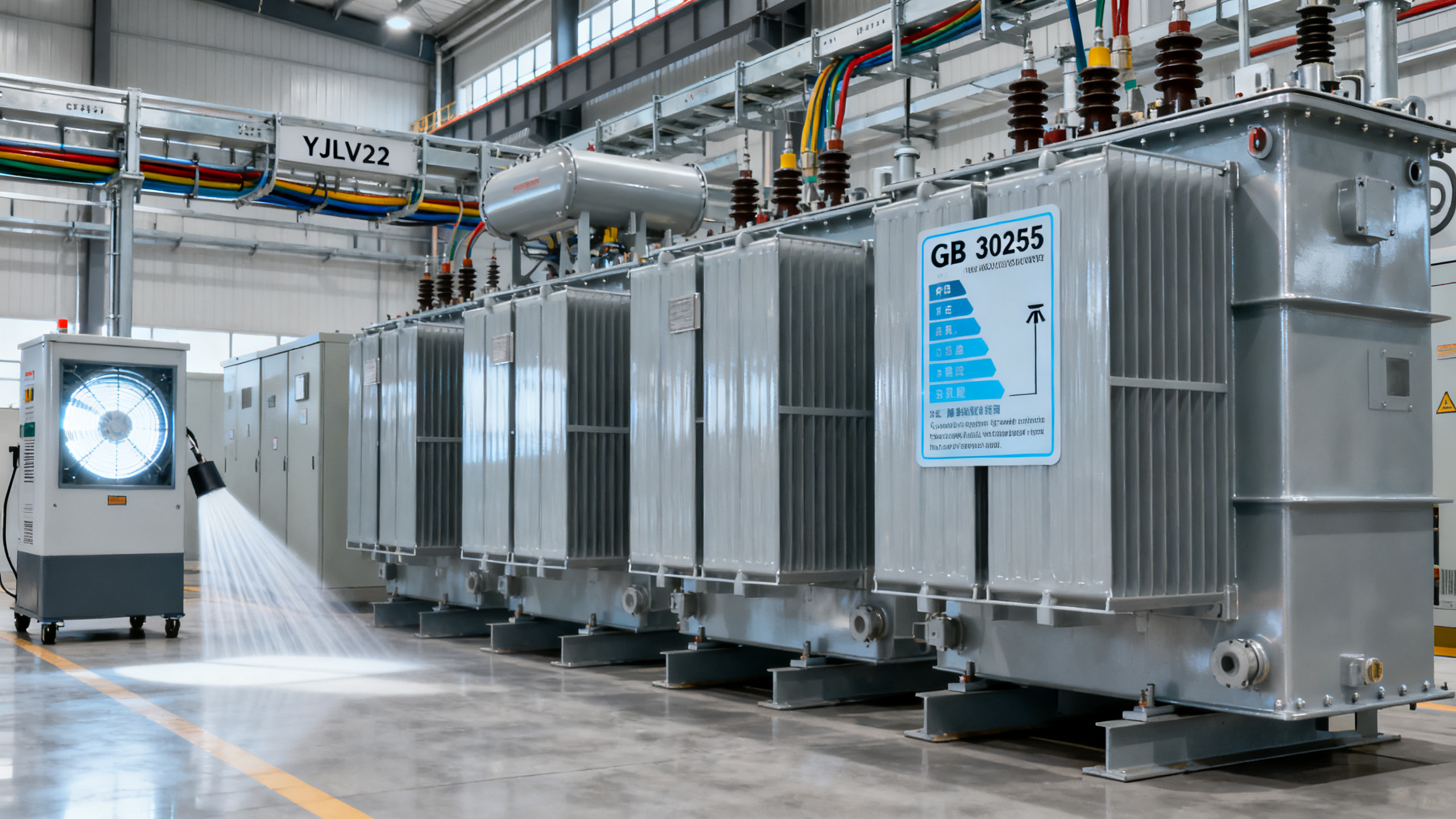
On May 13, 2026, the Ministry of Industry and Information Technology (MIIT) initiated the 2026 National Industrial Energy Efficiency Inspection campaign, with mandatory focus on energy labeling compliance for power transformers & switchgears, cables & wiring, and industrial air purifiers & dust collectors. This move directly affects manufacturers, exporters, and domestic distributors operating in or supplying to China’s industrial equipment market — particularly those engaged in cross-border trade where energy label alignment influences mutual recognition in Southeast Asia and Africa.
Event Overview
On May 13, 2026, MIIT issued an official notice launching the 2026 annual industrial energy efficiency inspection. The inspection targets three product categories: (1) Transformers & Switchgears subject to GB 30255 energy efficiency grade requirements; (2) Cables & Wiring, specifically YJLV22-series products governed by maximum power loss limits; and (3) Air Purifiers & Dust Collectors required to achieve a PM2.5 purification energy efficiency ratio (APF) of at least 4.2. The notice states that the inspection begins immediately and applies to products sold domestically in China.
Industries Affected
Manufacturers of Industrial Power Equipment
Manufacturers producing transformers, switchgears, or industrial dust collection systems must verify that their current production models meet the latest GB 30255 and APF ≥ 4.2 requirements. Non-compliant units sold in China without valid energy labels may trigger enforcement actions, including suspension of sales registration and removal from government procurement eligibility lists.
Cable & Wire Producers
Producers of YJLV22-series armored aluminum-core PVC-insulated cables are required to validate conformance with the updated power loss limits under relevant national standards. As this series is widely used in industrial infrastructure projects, non-compliance could delay project approvals and disqualify bids in state-funded construction tenders.
Export-Oriented OEMs and Brand Holders
Companies exporting identical models to Southeast Asia and Africa face indirect regulatory impact: MIIT explicitly notes that domestic energy label compliance is a prerequisite for mutual recognition of energy performance data in those regions. Absence of a valid Chinese energy label may hinder or invalidate parallel energy efficiency registration in partner markets.
Distributors and Channel Operators
Distributors handling inventory of transformers, cables, or industrial air cleaners must audit stock for proper labeling prior to resale. Unlabeled or mislabeled units risk being withheld at provincial market supervision checkpoints, causing delivery delays and potential penalties under the Energy Conservation Law.
What Enterprises Should Monitor and Do Now
Track Official Interpretive Guidance and Provincial Implementation Plans
While MIIT issued the national notice on May 13, 2026, provincial departments are expected to release localized inspection timetables and verification protocols within Q2 2026. Enterprises should subscribe to announcements from provincial Departments of Industry and Information Technology and local Market Supervision Bureaus.
Verify Labeling Status for High-Risk Product Lines
Focus immediate internal review on three product lines: (a) transformer models certified under pre-2024 versions of GB 30255; (b) YJLV22 cables tested against older IEC-based loss benchmarks; and (c) industrial dust collectors previously labeled using legacy PM2.5 efficiency metrics not aligned with APF ≥ 4.2. Retesting or re-labeling may be necessary before June 2026.
Distinguish Between Policy Signal and Operational Enforcement
The May 13 notice signals intent and sets scope, but does not specify penalty thresholds, sampling frequency, or third-party certification mandates. Enterprises should treat this as a preparatory phase — not assume automatic disqualification — while aligning documentation, test reports, and label artwork with the stated technical criteria.
Update Internal Compliance Workflows Ahead of Provincial Inspections
Prepare evidence packages including: (i) valid third-party energy efficiency test reports referencing GB 30255–2023, GB/T 12706.1–2020 (for YJLV22), and GB/T 34012–2017 (for APF); (ii) digital and physical label samples matching MIIT’s format requirements; and (iii) records linking model numbers across domestic and export versions to support mutual recognition claims.
Editorial Perspective / Industry Observation
Observably, this inspection cycle reflects a tightening linkage between domestic regulatory compliance and international market access — especially for energy-intensive industrial equipment. Analysis shows the emphasis on label traceability and inter-regional data reciprocity suggests MIIT is treating China’s energy labeling regime not only as a domestic tool but also as a de facto benchmark for regional harmonization. It is currently more of a procedural signal than an enforcement outcome: no fines, recalls, or import bans have been announced, and no testing deadlines beyond ‘immediate implementation’ are specified. From an industry perspective, sustained attention is warranted because mutual recognition frameworks — once established — tend to become entrenched prerequisites for future trade facilitation initiatives.
Conclusion: This initiative marks a calibrated step toward integrating China’s domestic energy efficiency governance with broader export market requirements. It does not introduce new technical standards but reinforces enforcement of existing ones — with particular consequence for supply chain visibility and labeling consistency across markets. Current interpretation should prioritize readiness over reaction: enterprises are better served by verifying label alignment and documenting conformity now, rather than waiting for provincial inspectors to initiate contact.
Source: Ministry of Industry and Information Technology (MIIT), Notice on Launching the 2026 Annual Industrial Energy Efficiency Inspection (Issued May 13, 2026).
Note: Provincial implementation details, inspection sampling methods, and penalty procedures remain pending and require ongoing monitoring.
Technical Specifications
- How to Select Electronic Hotel Key Card Locks for Guest Rooms and Staff AreasAuthor :Safety Compliance Lead
- How to Select Lab Instruments for Reliable Chemical Analysis WorkflowsAuthor :Precision Metrology Expert
- How to Size a UPS for Server Rooms: Load, Runtime, and Redundancy FactorsAuthor :Grid Infrastructure Analyst
Expert Insights

Chief Security Architect
Dr. Thorne specializes in the intersection of structural engineering and digital resilience. He has advised three G7 governments on industrial infrastructure security.
Related Analysis
- Sep 17, 2026How to Select Electronic Hotel Key Card Locks for Guest Rooms and Staff AreasAuthor :Safety Compliance Lead
- Sep 16, 2026How to Select Lab Instruments for Reliable Chemical Analysis WorkflowsAuthor :Precision Metrology Expert
- Sep 15, 2026How to Size a UPS for Server Rooms: Load, Runtime, and Redundancy FactorsAuthor :Grid Infrastructure Analyst
Core Sector // 01
Security & Safety
- How to Size a UPS for Server Rooms: Load, Runtime, and Redundancy FactorsAuthor :Grid Infrastructure Analyst

- How to Choose a Step-Down Transformer for a Control Panel: Key Sizing FactorsAuthor :Grid Infrastructure Analyst

- How Often Should Overseas Power Systems Undergo Safety Inspections?Author :Grid Infrastructure Analyst

- How to Choose Panels for Extreme-Cold Industrial Sites?Author :Grid Infrastructure Analyst

- What Should a Cross-Border EPC Equipment Procurement Reference Include?Author :Grid Infrastructure Analyst

- How to Compare Low-Voltage Equipment for Panel IntegrationAuthor :Grid Infrastructure Analyst

- IEC-Compliant Power Infrastructure: Key Design and Verification RequirementsAuthor :Grid Infrastructure Analyst

- Updated EN 61000-6-4:2026 Raises EMC Compliance Bar for EU-Bound Industrial EquipmentAuthor :Grid Infrastructure Analyst