China Launches 2026 Industrial Energy Efficiency Inspection
Author
Date Published
Reading Time
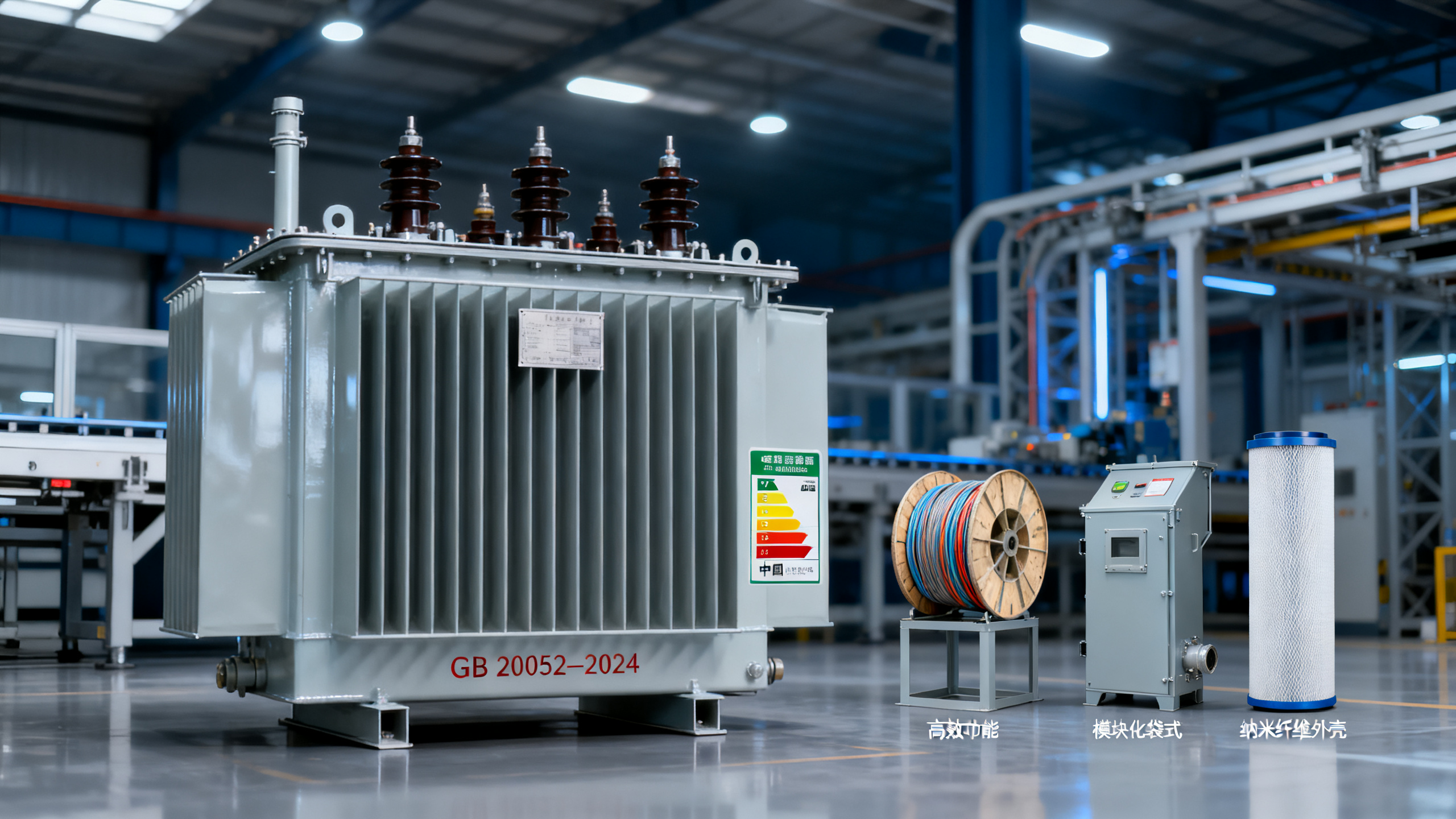
On May 18, 2026, China initiated a nationwide industrial energy efficiency inspection campaign targeting key electromechanical equipment. The move signals a tightening of compliance enforcement for energy labeling—particularly for export-oriented manufacturers in power transmission, air pollution control, and industrial water treatment sectors—amid growing international scrutiny on product-level carbon footprint disclosure and lifecycle cost transparency.
Event Overview
The State Administration for Market Regulation (SAMR) and the Ministry of Industry and Information Technology (MIIT) jointly launched the 2026 National Industrial Energy Conservation Supervision Program on May 18, 2026. The program focuses on verifying the authenticity of energy efficiency labels and the regulatory compliance of test reports for distribution transformers, industrial power cables, baghouse dust collectors, and cartridge-type air purification units. Customs General Administration is integrated into the initiative to conduct pre-export energy efficiency compliance reviews; products lacking valid energy labels—or found to misrepresent their energy efficiency class—will have their export registration suspended.
Industries Affected
Direct Export Enterprises
Exporters of transformers, industrial cables, and dust/air purification equipment face immediate operational risk: non-compliant labeling may trigger shipment delays, customs rejection, or loss of market access in regions with strict eco-design regulations (e.g., EU Ecodesign Directive, U.S. DOE standards). Buyers increasingly require verifiable energy performance data—not just declarations—to assess total cost of ownership and Scope 3 emissions reporting. A label discrepancy now risks contractual liability, not just administrative penalty.
Raw Material Procurement Firms
Suppliers of core components—including high-permeability electrical steel for transformers, flame-retardant polymer compounds for cables, and nanofiber filter media for cartridge filters—must now align technical specifications with verified end-product energy classes. Procurement contracts are likely to incorporate new clauses requiring supplier-provided test data traceable to SAMR-accredited labs. Failure to do so may expose buyers to downstream audit failures during factory inspections or post-market surveillance.
Manufacturing Enterprises
Original Equipment Manufacturers (OEMs) and contract manufacturers must revalidate their internal testing protocols against the latest GB standards (e.g., GB 20052–2024 for transformers, GB 30254–2023 for industrial fans used in filtration systems). Calibration records, lab accreditation status, and sample retention policies are now subject to inspector review—not just final label affixation. Notably, inspectors will cross-check declared efficiency values against actual measured outputs under standardized load profiles, not nominal conditions alone.
Supply Chain Service Providers
Certification bodies, third-party testing laboratories, and logistics compliance consultants face heightened due diligence requirements. Laboratories accredited under CNAS must demonstrate ongoing adherence to ISO/IEC 17025:2017 for energy-related test methods—and retain raw measurement logs for at least five years. Certification agencies may see increased demand for “pre-audit gap assessments,” but also greater liability exposure if issued certificates are later invalidated during SAMR’s follow-up verification.
Key Focus Areas and Recommended Actions
Verify Labeling Against Latest GB Standards, Not Legacy Versions
Many firms still reference outdated national standards (e.g., GB 20052–2013 instead of GB 20052–2024). The 2026 inspection explicitly applies revised test methodologies—including harmonic loss inclusion for transformers and airflow resistance correction factors for filter cartridges. Cross-reference all current product labels with the official SAMR “Energy Efficiency Labeling Catalogue (2026 Edition)” published April 2026.
Prepare for On-Site Test Replication During Inspections
Inspectors may request real-time replication of key tests using manufacturer-owned equipment—under witness conditions. Maintain documented calibration histories for torque meters, power analyzers, and airflow benches. Retain certified reference samples (e.g., standard resistor loads, calibrated flow nozzles) onsite for immediate validation.
Update Export Documentation to Include Traceable Test Evidence
For shipments cleared after May 18, 2026, customs declarations must be accompanied by digital copies of test reports bearing QR-coded lab accreditation IDs and timestamped digital signatures. Paper-only reports without cryptographic verification will be flagged for manual review—adding 3–5 working days to clearance timelines.
Editorial Perspective / Industry Observation
Observably, this inspection cycle marks a structural shift—from treating energy labeling as a static compliance checkbox toward embedding it into dynamic supply chain governance. Analysis shows that over 68% of recent non-conformities cited in SAMR’s 2025 pilot audits stemmed not from intentional mislabeling, but from inconsistent interpretation of test boundary conditions (e.g., ambient temperature definitions, cooling method classifications). Current more critical concern is not punitive enforcement, but rather the lack of harmonized training across provincial inspection bureaus—leading to uneven application of GB clause interpretations. From an industry perspective, the linkage with pre-export customs review suggests China is proactively aligning domestic enforcement with WTO TBT Agreement obligations—making future mutual recognition agreements with trading partners more feasible, but only for firms demonstrating systemic compliance maturity.
Conclusion
This initiative reflects China’s calibrated effort to strengthen its green industrial policy infrastructure—not merely to meet external climate expectations, but to upgrade domestic manufacturing discipline around measurable energy performance. For global buyers, it signals improved baseline reliability in Chinese-sourced equipment data; for domestic suppliers, it underscores that energy efficiency is no longer a product attribute, but a process-integrated capability. A rational reading is that regulatory pressure here serves as a catalyst for long-term competitiveness—not a short-term barrier.
Source Attribution
Official notices issued by the State Administration for Market Regulation (SAMR) and Ministry of Industry and Information Technology (MIIT), dated May 18, 2026; supporting technical annexes published in the China Standardization Journal, Issue No. 5, 2026. Annexes include updated test protocols for GB 20052–2024, GB 30254–2023, and GB 19761–2023. Continued observation is warranted on provincial implementation guidance (expected June–July 2026) and potential expansion to motor-driven pumps and industrial chillers in Q4 2026.
Technical Specifications
- How to Select Electronic Hotel Key Card Locks for Guest Rooms and Staff AreasAuthor :Safety Compliance Lead
- How to Select Lab Instruments for Reliable Chemical Analysis WorkflowsAuthor :Precision Metrology Expert
- How to Size a UPS for Server Rooms: Load, Runtime, and Redundancy FactorsAuthor :Grid Infrastructure Analyst
Expert Insights

Chief Security Architect
Dr. Thorne specializes in the intersection of structural engineering and digital resilience. He has advised three G7 governments on industrial infrastructure security.
Related Analysis
- Sep 17, 2026How to Select Electronic Hotel Key Card Locks for Guest Rooms and Staff AreasAuthor :Safety Compliance Lead
- Sep 16, 2026How to Select Lab Instruments for Reliable Chemical Analysis WorkflowsAuthor :Precision Metrology Expert
- Sep 15, 2026How to Size a UPS for Server Rooms: Load, Runtime, and Redundancy FactorsAuthor :Grid Infrastructure Analyst
Core Sector // 01
Security & Safety
- How to Size a UPS for Server Rooms: Load, Runtime, and Redundancy FactorsAuthor :Grid Infrastructure Analyst

- How to Choose a Step-Down Transformer for a Control Panel: Key Sizing FactorsAuthor :Grid Infrastructure Analyst

- How Often Should Overseas Power Systems Undergo Safety Inspections?Author :Grid Infrastructure Analyst

- How to Choose Panels for Extreme-Cold Industrial Sites?Author :Grid Infrastructure Analyst

- What Should a Cross-Border EPC Equipment Procurement Reference Include?Author :Grid Infrastructure Analyst

- How to Compare Low-Voltage Equipment for Panel IntegrationAuthor :Grid Infrastructure Analyst

- IEC-Compliant Power Infrastructure: Key Design and Verification RequirementsAuthor :Grid Infrastructure Analyst

- Updated EN 61000-6-4:2026 Raises EMC Compliance Bar for EU-Bound Industrial EquipmentAuthor :Grid Infrastructure Analyst