Why Electrical & Power Manufacturers Are Redesigning Switchgear
Author
Date Published
Reading Time
Why are leading Electrical & Power manufacturer brands rethinking switchgear now? The short answer is that traditional designs are struggling to keep pace with modern operating realities.
Utilities, industrial plants, data centers, and large commercial facilities now face higher load variability, stricter safety expectations, more digital monitoring requirements, and growing pressure to reduce lifecycle cost.
For enterprise decision-makers, switchgear redesign is no longer only an engineering topic. It is a business continuity, compliance, procurement, and long-term asset performance decision.
This article explains the market and technical forces behind switchgear redesign, where the real value lies, and how buyers should assess next-generation solutions before committing capital.
Why switchgear redesign has become a board-level infrastructure issue
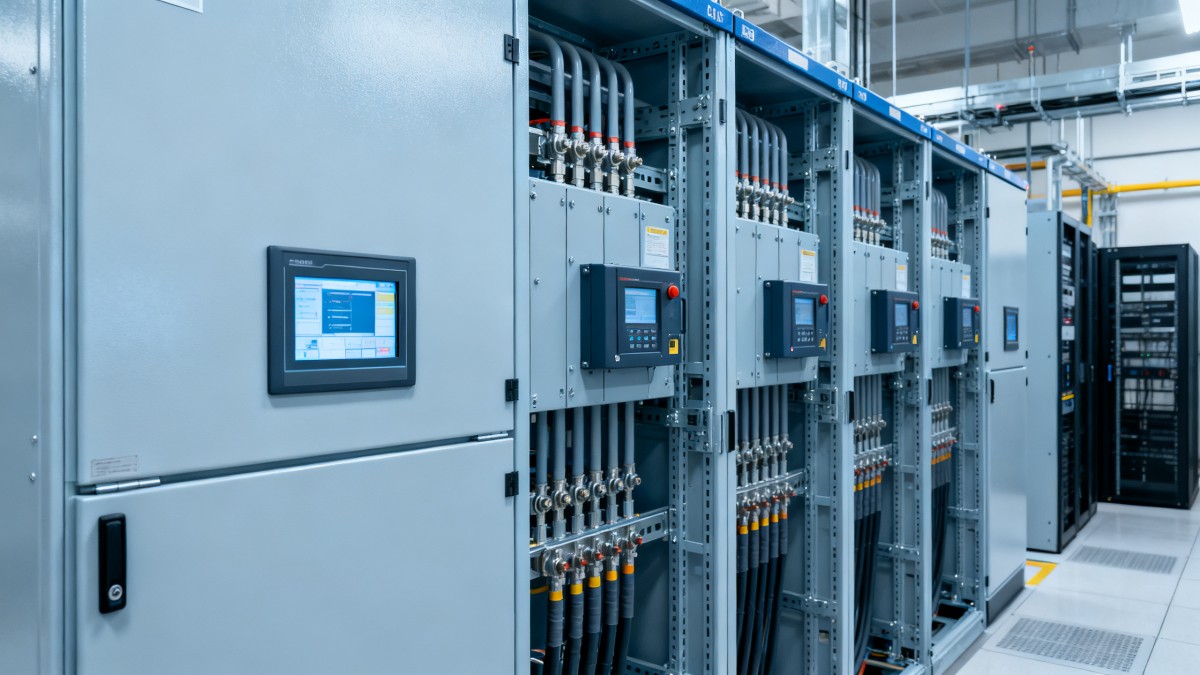
For many organizations, switchgear used to be seen as a mature product category with limited strategic change. That assumption is no longer safe in today’s operating environment.
The rise of distributed energy, electrification, automation, and digital operations has changed the role of switchgear from passive protection hardware into a critical control and resilience asset.
When switchgear underperforms, the consequences extend beyond electrical faults. Companies face downtime, personnel risk, insurance exposure, regulatory scrutiny, and expensive unplanned replacement cycles.
That is why leading manufacturers are redesigning switchgear around a broader value proposition: safety, uptime, maintainability, intelligence, sustainability, and adaptability across longer asset lifespans.
For executives, the central question is not whether switchgear is changing. It is whether current specifications are aligned with the risks and operating demands of the next ten to twenty years.
What is actually driving Electrical & Power manufacturers to redesign switchgear
Several forces are converging at once, and together they are reshaping product development priorities across the electrical and power sector.
First, power systems are becoming more dynamic. Renewable integration, battery storage, electric vehicle charging, and variable industrial loads create operating conditions that legacy switchgear was not always designed to manage efficiently.
Second, customers are demanding better visibility. Facility managers and EPC teams increasingly want condition monitoring, thermal analytics, predictive maintenance indicators, and remote diagnostics built into the equipment architecture.
Third, compliance expectations are rising. International buyers increasingly evaluate switchgear against stricter requirements for arc flash mitigation, internal fault containment, insulation performance, environmental impact, and certification traceability.
Fourth, lifecycle economics matter more than acquisition cost alone. Procurement leaders are under pressure to reduce outage risk, maintenance frequency, spare parts complexity, and total cost of ownership over the life of the system.
Fifth, physical constraints are changing. Urban infrastructure, modular plants, retrofit projects, and high-density facilities often require more compact, flexible, and easier-to-install switchgear footprints.
These pressures explain why redesign is not a cosmetic refresh. It is a response to changing power architecture, customer risk tolerance, and a more demanding global procurement environment.
Why legacy switchgear designs are becoming harder to justify
Many installed systems still perform adequately under stable conditions. The problem is that business-critical infrastructure rarely operates under stable conditions for its full service life anymore.
Older switchgear designs can present limitations in monitoring capability, upgrade flexibility, fault isolation speed, thermal performance, and digital integration with modern supervisory systems.
In retrofit environments, legacy equipment may also create sourcing and service issues. Obsolete components, long lead times, limited OEM support, and inconsistent documentation increase maintenance and operational risk.
There is also a workforce challenge. Skilled electrical maintenance teams are stretched thin in many regions, so equipment that depends heavily on manual inspection becomes less attractive over time.
From a decision-making standpoint, the key issue is exposure. A system that appears cheaper upfront may carry hidden costs through outages, emergency interventions, compliance upgrades, and shortened replacement intervals.
This is why more buyers are moving from “Will it meet today’s specification?” to “Will it remain safe, serviceable, and economically viable across future operating scenarios?”
Which redesign priorities matter most to enterprise buyers
Not every innovation creates equal value. For business leaders, the most important redesign priorities are the ones that reduce operational risk while improving lifecycle performance.
Safety engineering is usually first. Advanced arc flash resistance, compartmentalization, interlocking, remote operation capability, and internal fault management all matter because they directly affect personnel safety and liability exposure.
Reliability under variable load is another priority. Redesigned switchgear must handle modern switching demands, transient conditions, harmonics, and changing power quality environments without premature wear.
Digital diagnostics increasingly drive value. Embedded sensors, communication protocols, condition-based monitoring, and integration with SCADA or energy management systems help teams shift from reactive maintenance to predictive maintenance.
Maintainability is often underestimated. Equipment that allows safer access, faster part replacement, easier testing, and clearer diagnostics can reduce outage duration and labor dependence significantly.
Modularity and scalability also matter. Businesses want systems that can support phased expansion, future retrofits, and changing operational loads without full asset replacement.
Environmental performance is becoming a stronger selection factor. Buyers increasingly assess insulation media, material choices, energy efficiency, and sustainability alignment alongside technical specifications.
How smarter grids and electrification are changing switchgear requirements
Grid modernization is one of the strongest drivers behind switchgear redesign. Smarter grids require equipment that does more than interrupt faults and isolate circuits.
Modern switchgear increasingly acts as part of a connected electrical ecosystem. It must support data exchange, event recording, remote visibility, and faster coordination across distributed assets.
This is especially relevant where renewable generation and storage are present. Bidirectional power flow, intermittent generation, and more complex protection schemes place new demands on switching and protection equipment.
Electrification adds another layer. As transport, heating, and industrial processes shift toward electric power, facilities experience changing demand profiles and greater pressure on distribution infrastructure.
For manufacturers, redesign means creating switchgear that remains stable and intelligent in more variable electrical environments. For buyers, it means selecting equipment that fits the future grid, not just the current one.
What compliance and risk issues decision-makers should examine closely
Switchgear selection is increasingly tied to governance and risk management. A technical mismatch can quickly become a financial and legal problem.
Enterprise buyers should first verify alignment with relevant standards and certifications, including applicable IEC, ANSI, UL, CE, ISO, and project-specific safety requirements across target markets.
Second, they should evaluate arc flash strategy in practical terms. Marketing language is not enough. Ask how the design reduces incident energy, improves operator distance, and supports safer maintenance practices.
Third, review environmental compliance pathways. Regulations and customer expectations are evolving around insulating gases, hazardous substances, recyclability, and sustainability disclosures.
Fourth, assess documentation quality and traceability. In major projects, poor documentation can delay approvals, complicate inspections, and create disputes during commissioning or post-installation service.
Finally, look at serviceability risk. If a design depends on specialized parts, limited regional support, or proprietary tools, the organization may inherit avoidable operational vulnerability.
Where the business case for redesigned switchgear becomes strongest
Redesigned switchgear is easiest to justify where the cost of failure is high. That includes data centers, petrochemical plants, manufacturing campuses, hospitals, airports, utilities, and critical public infrastructure.
It also becomes compelling in facilities with aging electrical assets, capacity expansion plans, high maintenance burden, or compliance pressure from insurers, regulators, or multinational clients.
The strongest return often comes from avoided losses rather than direct energy savings. Reduced downtime, fewer emergency repairs, lower incident risk, and better maintenance planning can outweigh the initial premium.
In some cases, digital monitoring provides additional value by improving asset visibility across portfolios. Large enterprises can standardize reporting, prioritize interventions, and make better capital planning decisions.
For procurement and finance teams, the lesson is clear: the right comparison is not old switchgear versus new switchgear on purchase price alone. It is risk-adjusted lifecycle cost versus operational exposure.
How to evaluate a switchgear supplier beyond product brochures
Supplier evaluation is as important as equipment evaluation. A strong product on paper can still become a weak investment if support, engineering discipline, or compliance credibility is lacking.
Start with application fit. Ask whether the manufacturer has proven experience in similar operating conditions, fault levels, environmental extremes, and regulatory jurisdictions.
Then review engineering transparency. Leading suppliers should be able to explain design rationale, test evidence, monitoring architecture, service requirements, and failure-mode assumptions in practical terms.
Third, examine after-sales infrastructure. Global projects need dependable commissioning support, spare parts strategy, field service capability, and long-term product roadmap visibility.
Fourth, assess interoperability. Switchgear should integrate with the facility’s broader electrical, automation, and asset management environment without creating unnecessary complexity.
Finally, test the supplier’s risk posture. If they cannot clearly demonstrate quality control, certification management, and lifecycle support planning, redesign claims may not translate into real operational value.
Questions enterprise buyers should ask before investing
Decision-makers can improve outcomes significantly by asking a focused set of business and technical questions early in the process.
What operating changes do we expect over the next decade, and can this switchgear platform accommodate them without major redesign or replacement?
How does the proposed design reduce outage risk, improve maintenance efficiency, and support faster fault detection compared with our current installed base?
What is the expected lifecycle cost, including maintenance, training, spare parts, monitoring systems, and likely upgrade requirements?
Which standards, certifications, and test results are directly relevant to our application, region, and insurer or client expectations?
How dependent will we be on the original supplier for service, software, consumables, or specialized replacement components?
Can the switchgear support broader digitalization, resilience, and sustainability targets that the business has already committed to?
Conclusion: redesign is about resilience, not novelty
Leading electrical and power companies are redesigning switchgear because the operating context has changed faster than legacy assumptions. Smarter grids, volatile loads, tighter compliance, and greater uptime pressure have raised the bar.
For enterprise buyers, the opportunity is not simply to purchase newer equipment. It is to reduce operational risk, strengthen safety performance, improve maintainability, and future-proof critical power infrastructure.
The most effective procurement decisions will come from viewing switchgear as a lifecycle resilience asset rather than a static line item in an electrical bill of materials.
In that sense, switchgear redesign is not a trend. It is a practical response to how modern industry now generates, distributes, monitors, and depends on power.
Technical Specifications
- How to Select Electronic Hotel Key Card Locks for Guest Rooms and Staff AreasAuthor :Safety Compliance Lead
- How to Select Lab Instruments for Reliable Chemical Analysis WorkflowsAuthor :Precision Metrology Expert
- How to Size a UPS for Server Rooms: Load, Runtime, and Redundancy FactorsAuthor :Grid Infrastructure Analyst
Expert Insights

Chief Security Architect
Dr. Thorne specializes in the intersection of structural engineering and digital resilience. He has advised three G7 governments on industrial infrastructure security.
Related Analysis
- Sep 17, 2026How to Select Electronic Hotel Key Card Locks for Guest Rooms and Staff AreasAuthor :Safety Compliance Lead
- Sep 16, 2026How to Select Lab Instruments for Reliable Chemical Analysis WorkflowsAuthor :Precision Metrology Expert
- Sep 15, 2026How to Size a UPS for Server Rooms: Load, Runtime, and Redundancy FactorsAuthor :Grid Infrastructure Analyst
Core Sector // 01
Security & Safety
- How to Size a UPS for Server Rooms: Load, Runtime, and Redundancy FactorsAuthor :Grid Infrastructure Analyst

- How to Choose a Step-Down Transformer for a Control Panel: Key Sizing FactorsAuthor :Grid Infrastructure Analyst

- How Often Should Overseas Power Systems Undergo Safety Inspections?Author :Grid Infrastructure Analyst

- How to Choose Panels for Extreme-Cold Industrial Sites?Author :Grid Infrastructure Analyst

- What Should a Cross-Border EPC Equipment Procurement Reference Include?Author :Grid Infrastructure Analyst

- How to Compare Low-Voltage Equipment for Panel IntegrationAuthor :Grid Infrastructure Analyst

- IEC-Compliant Power Infrastructure: Key Design and Verification RequirementsAuthor :Grid Infrastructure Analyst

- Updated EN 61000-6-4:2026 Raises EMC Compliance Bar for EU-Bound Industrial EquipmentAuthor :Grid Infrastructure Analyst