Wholesale Electrical Switches: Key Differences in Ratings, Materials, and Use Cases
Author
Date Published
Reading Time
Wholesale Electrical Switches: Key Differences in Ratings, Materials, and Use Cases
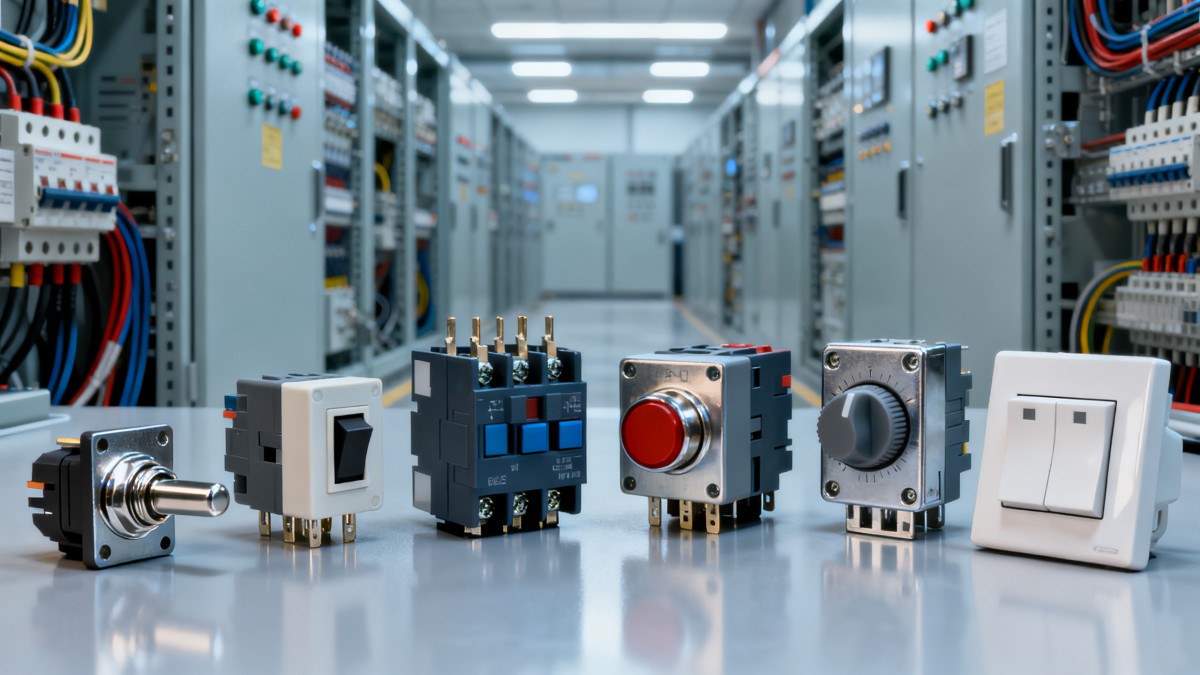
Choosing wholesale electrical switches is not only about unit cost. It is about fit, safety, stock strategy, and long-term customer satisfaction.
In real distribution work, the wrong switch creates returns, downtime, and compliance headaches. The right one improves trust and repeat orders.
That is why wholesale electrical switches should be evaluated through three practical lenses: ratings, materials, and use cases.
Once those three line up, product selection becomes easier. Margin protection also becomes much more predictable.
This guide explains how to compare industrial and commercial switch options without getting lost in catalog language.
Why ratings matter more than price tags
A low price can look attractive in a quote sheet. But switch ratings decide whether the product survives the actual load.
For wholesale electrical switches, the first checkpoint is voltage rating. A switch must handle the system voltage with room for safe operation.
The second checkpoint is current rating. This shows how much current the switch can carry without overheating or premature wear.
AC and DC ratings should never be treated as interchangeable. DC switching is usually harder on contacts because the arc is more persistent.
This is where many sourcing mistakes happen. A switch approved for AC lighting may fail early in DC control circuits.
Mechanical life and electrical life also deserve close attention. A switch may survive many operations mechanically but far fewer under load.
- Voltage rating defines insulation and safe switching range.
- Current rating reflects heat tolerance and conductor capacity.
- Inrush rating matters for motors, LED drivers, and transformers.
- Ingress protection matters in wet, dusty, or outdoor settings.
- UL, CE, and IEC markings support compliance-sensitive sales.
From a commercial standpoint, better-rated wholesale electrical switches reduce after-sales disputes. They also make it easier to serve contractors with stricter specifications.
Contact materials and housing materials shape real performance
Ratings tell part of the story. Material selection explains why two switches with similar specs can perform very differently in the field.
Contact materials are especially important in wholesale electrical switches because they affect conductivity, arc resistance, and service life.
Silver is common because it conducts well and supports stable switching. Silver alloys are often chosen for heavier loads and repeated operation.
Copper offers strong conductivity, but it is usually not the final contact surface for demanding switching duty. Surface treatment matters.
Gold-plated contacts are useful for low-current signal applications. They resist oxidation and help maintain reliable signal transfer.
Housing materials matter just as much. Thermoplastics support cost efficiency, while thermoset materials often offer stronger heat resistance.
Metal housings add durability in rough environments. They are often preferred in industrial panels and heavy equipment installations.
In practice, material quality is often the hidden separator between basic catalog stock and dependable wholesale electrical switches that support premium positioning.
Matching switch type to application use case
No switch category fits every project. Good selection starts with the load type, installation setting, and service expectations.
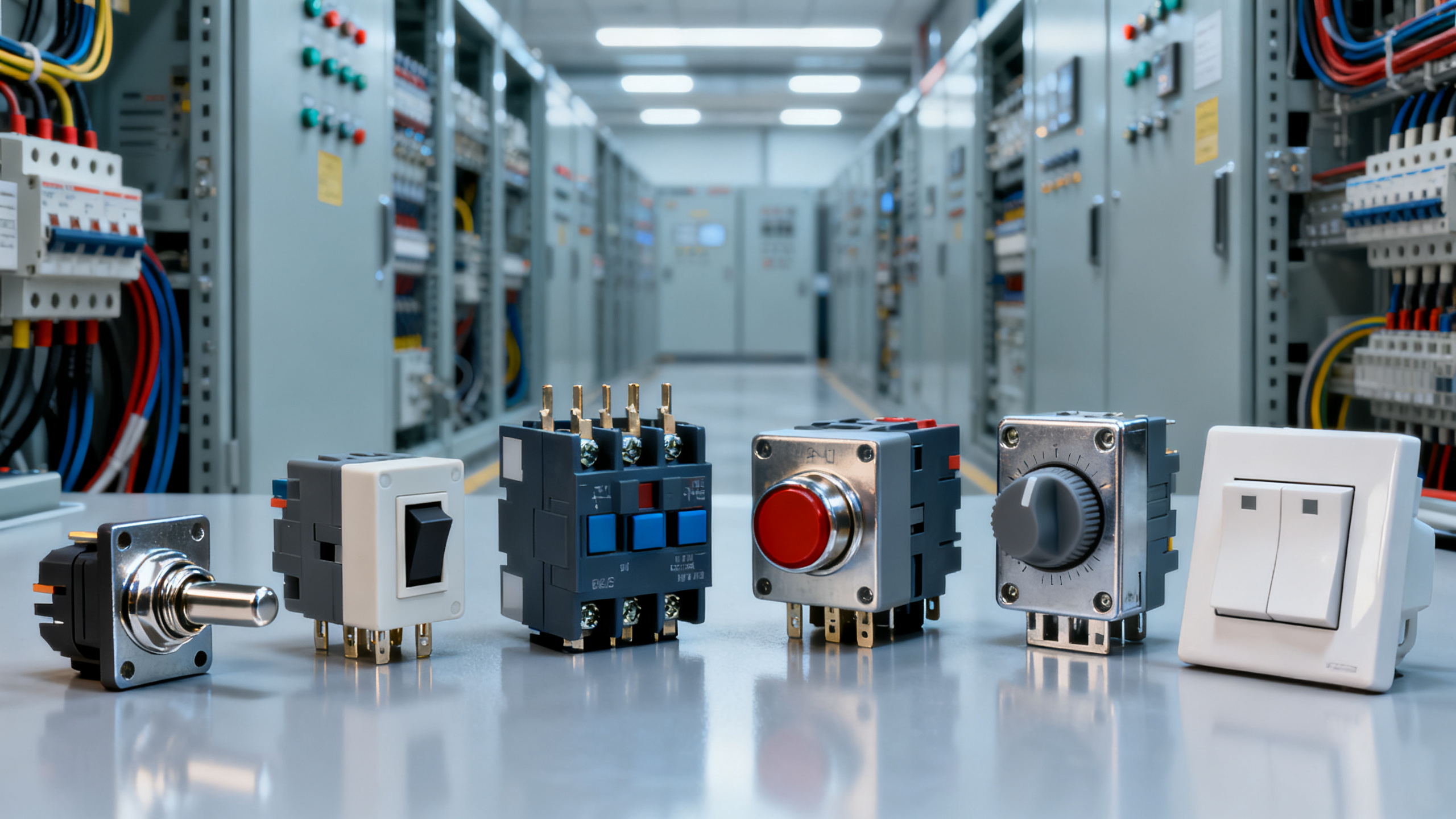
For commercial buildings, wall switches, rocker switches, and modular switches are common. Design consistency and certification are usually top priorities.
For industrial control, selector switches, push-button switches, rotary isolators, and limit switches are more common. Durability becomes far more important here.
Water treatment, food processing, and outdoor infrastructure often require sealed wholesale electrical switches with higher IP ratings.
In HVAC systems, repeated cycling and variable loads mean contact stability matters. A low-end switch may pass inspection but fail under routine operation.
Panel builders also care about mounting compatibility. Terminal type, cutout size, and wiring access can affect labor cost more than the switch itself.
- Lighting control: focus on appearance, certification, and switching feel.
- Motor control: focus on inrush handling and arc resistance.
- Control panels: focus on mounting standards and terminal reliability.
- Outdoor use: focus on sealing, corrosion resistance, and UV stability.
- Signal circuits: focus on low-current contact integrity.
This also means stocking strategy should reflect buyer segments. High-turn commercial lines and specialized industrial lines rarely move at the same pace.
What buyers usually compare before placing larger orders
When customers review wholesale electrical switches, they often compare more than the basic spec sheet. Their risk concerns usually shape the final decision.
Consistency across batches is a major factor. Procurement teams want the same feel, tolerance, and marking quality every time.
Traceability is another strong signal. Date codes, test records, and certification documents help support tender requirements and warranty claims.
Packaging quality matters more than it seems. Weak packaging increases damage risk and can make a good product look unreliable on arrival.
More buyers also ask about operating temperature range. This is especially relevant for export markets with hot plants or cold outdoor installations.
A practical evaluation checklist can simplify comparison and speed up quoting.
- Confirm AC or DC load profile.
- Verify voltage, current, and inrush demand.
- Check contact and housing materials.
- Review UL, CE, IEC, or local approvals.
- Assess IP rating and environment exposure.
- Match terminal style to installation method.
- Request lifecycle, batch, and testing evidence.
With wholesale electrical switches, faster decisions usually come from better filtering, not from reviewing more random options.
Common sourcing mistakes and how to avoid them
One common mistake is choosing by amp rating alone. That ignores duty cycle, load type, environment, and installation details.
Another mistake is mixing commercial-grade and industrial-grade wholesale electrical switches under one stock code. That creates confusion and claim risk.
Some buyers also overlook actuator quality. A weak toggle or loose rocker can damage perceived quality even if the internal contact is acceptable.
Documentation gaps are also costly. Missing certificates or incomplete datasheets can delay approval on time-sensitive projects.
A smarter approach is to build a smaller, cleaner portfolio. Each switch family should serve a clear use case and compliance level.
- Separate indoor commercial lines from harsh-duty industrial lines.
- Group products by load type, not just shape.
- Keep certification files ready for quick sharing.
- Test sample units under realistic switching conditions.
- Track return reasons by application segment.
In actual business, these steps reduce costly substitutions. They also make it easier to guide customers toward the right wholesale electrical switches the first time.
How to build a stronger switch selection strategy
A strong switch program balances availability, compliance, and application fit. It does not try to win only on the lowest landed price.
Start with the end market. Commercial fit-out, OEM supply, industrial maintenance, and infrastructure projects all need different wholesale electrical switches.
Then define three stock tiers. One for fast-moving basics, one for specification-driven projects, and one for harsh-environment or specialty demand.
This structure keeps inventory practical while still supporting higher-value opportunities. It also improves quote speed because the selection path is clearer.
The most reliable wholesale electrical switches are rarely the ones with the simplest label. They are the ones matched correctly to ratings, materials, and daily use.
If the goal is fewer returns, better compliance confidence, and stronger buyer trust, selection discipline matters more than broad catalog volume.
Use that as the decision framework. When wholesale electrical switches are chosen with technical clarity, the sales process becomes smoother and the customer relationship lasts longer.
Technical Specifications
- How to Select Electronic Hotel Key Card Locks for Guest Rooms and Staff AreasAuthor :Safety Compliance Lead
- How to Select Lab Instruments for Reliable Chemical Analysis WorkflowsAuthor :Precision Metrology Expert
- How to Size a UPS for Server Rooms: Load, Runtime, and Redundancy FactorsAuthor :Grid Infrastructure Analyst
Expert Insights

Chief Security Architect
Dr. Thorne specializes in the intersection of structural engineering and digital resilience. He has advised three G7 governments on industrial infrastructure security.
Related Analysis
- Sep 17, 2026How to Select Electronic Hotel Key Card Locks for Guest Rooms and Staff AreasAuthor :Safety Compliance Lead
- Sep 16, 2026How to Select Lab Instruments for Reliable Chemical Analysis WorkflowsAuthor :Precision Metrology Expert
- Sep 15, 2026How to Size a UPS for Server Rooms: Load, Runtime, and Redundancy FactorsAuthor :Grid Infrastructure Analyst
Core Sector // 01
Security & Safety
- How to Size a UPS for Server Rooms: Load, Runtime, and Redundancy FactorsAuthor :Grid Infrastructure Analyst

- How to Choose a Step-Down Transformer for a Control Panel: Key Sizing FactorsAuthor :Grid Infrastructure Analyst

- How Often Should Overseas Power Systems Undergo Safety Inspections?Author :Grid Infrastructure Analyst

- How to Choose Panels for Extreme-Cold Industrial Sites?Author :Grid Infrastructure Analyst

- What Should a Cross-Border EPC Equipment Procurement Reference Include?Author :Grid Infrastructure Analyst

- How to Compare Low-Voltage Equipment for Panel IntegrationAuthor :Grid Infrastructure Analyst

- IEC-Compliant Power Infrastructure: Key Design and Verification RequirementsAuthor :Grid Infrastructure Analyst

- Updated EN 61000-6-4:2026 Raises EMC Compliance Bar for EU-Bound Industrial EquipmentAuthor :Grid Infrastructure Analyst