WTO Cuts 2026 Trade Growth Outlook to 1.9%
Author
Date Published
Reading Time

The timing of the event is not specified in the provided information. Based on a WTO report issued in March 2026, the downgrade of global merchandise trade growth to 1.9%, together with shipping disruption around the Strait of Hormuz and carrier rerouting via the Cape of Good Hope, should be read not only as a market signal but also as a practical change in trade execution conditions. For exporters and buyers of industrial equipment, especially those handling transformers, circuit breakers and bearings, the more immediate concern is how longer transit times, higher war surcharges and delivery pressure may affect contracts, procurement schedules, shipping arrangements and compliance documentation tied to delivery.
What the reported change clearly shows
The confirmed information provided states that in its March 2026 report, the WTO sharply lowered its forecast for global goods trade growth in 2026 to 1.9%.
The reported reason is the Middle East conflict, which led traffic through the Strait of Hormuz to fall by 94%.
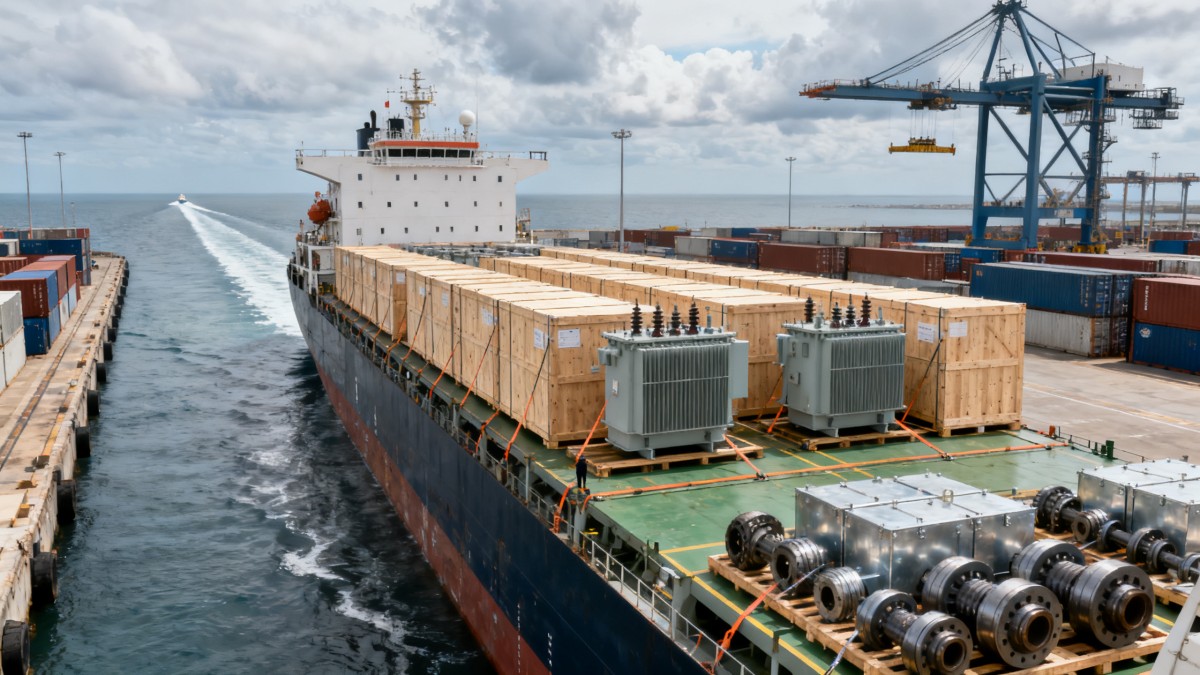
It is also stated that major shipping lines including Maersk and MSC rerouted vessels around the Cape of Good Hope. As a result, ocean shipping cycles for industrial equipment were extended by 10 to 14 days, and war surcharges reached USD 2,000 to 4,000 per TEU.
The provided summary further indicates that delivery pressure has risen significantly for large industrial equipment exports, including transformers, circuit breakers and bearings.
Where the pressure is likely to appear across the supply chain
Exporters facing stricter delivery execution risks
From an industry perspective, exporters of industrial equipment may be affected first because the reported change directly alters the physical shipping route and cost base. The main pressure points are shipment scheduling, contract delivery dates, freight quotations and communication with overseas buyers. What deserves closer attention is whether existing trade documents, delivery commitments and shipment windows still match the longer transit cycle and added surcharge burden.
Procurement teams dealing with timing and specification dependencies
Buyers and procurement teams may face increased pressure where equipment purchases are linked to project milestones or installation sequences. For products such as transformers, circuit breakers and bearings, any shipping delay can affect not only receipt of goods but also inspection timing, warehousing plans and downstream handover. Analysis shows that procurement functions should pay closer attention to order lead times, delivery clauses and document consistency where technical files or acceptance materials are tied to delivery stages.
Manufacturers balancing production readiness with shipping uncertainty
Manufacturing companies may not be affected only at the transport stage. Observably, when transit times extend by 10 to 14 days and surcharges rise sharply, production release, packing plans and export dispatch decisions become more sensitive. What deserves closer attention is whether internal production completion dates, shipment booking plans and customer delivery commitments remain aligned under the revised logistics conditions.
Logistics and supply chain service providers under document and routing pressure
Supply chain service providers are likely to face heavier coordination demands because rerouting changes expected sailing times, freight terms and cost calculations. In practical terms, this may affect booking confirmation, transport documentation, shipping notices and handover scheduling. Analysis shows that service providers should pay closer attention to how route changes and war-related surcharges are reflected in quotations, transport records and customer-facing delivery updates.
What companies should watch in current trade execution
Review whether delivery clauses still match actual transit conditions
Analysis shows that companies involved in industrial equipment exports should first check whether current contract timelines and delivery commitments can still be met after the reported 10 to 14 day extension in sea transit. This is especially relevant where delivery timing is linked to acceptance, commissioning or project progress. The provided information does not confirm any unified adjustment mechanism, so this remains a point for active review rather than an established rule outcome.
Recheck shipping documents and supporting files tied to handover
Where shipments involve technical documents, inspection records, packing files or bid-related delivery materials, companies should pay attention to whether delayed transit could create mismatches between document timing and actual arrival. Observably, this is less about a new certification rule being announced and more about whether existing compliance and delivery paperwork remains usable under changed shipping conditions.
Track surcharge pass-through and procurement budget exposure
The reported war surcharge range of USD 2,000 to 4,000 per TEU makes cost allocation an immediate issue for exporters, buyers and logistics coordinators. From an industry perspective, companies should closely monitor how these added charges are reflected in freight settlements, customer quotations and procurement budgets. The available information does not establish a standard market practice for absorbing or passing through these costs, so follow-up execution still requires case-by-case attention.
Pay special attention to large equipment and time-sensitive orders
For transformers, circuit breakers and bearings specifically mentioned in the provided summary, companies should focus on orders with tight delivery windows or project-linked installation schedules. Analysis shows that the main risk is not only higher freight cost but also delayed performance across delivery, after-sales preparation and quality traceability if shipment timing changes disrupt planned handover steps.
Why this matters beyond a freight delay
Observably, this development is more appropriately understood as an execution signal in global trade rather than a standalone shipping incident. The WTO downgrade provides a formal trade outlook adjustment, while the rerouting and surcharge changes show how geopolitical disruption can quickly reshape practical trade conditions for industrial goods.
Analysis shows that the industry should not overread this as a fully settled new rule framework. At the same time, it should not be treated as a temporary detail without compliance consequences. What deserves closer attention is how buyers, exporters, logistics providers and project-based equipment suppliers revise delivery language, supporting documentation and procurement timing in response to the changed route and cost environment.
How this update is best understood for now
At this stage, the reported change is best understood as a confirmed shift in trade operating conditions with direct implications for industrial equipment delivery. The facts provided support a clear conclusion that longer transit times and added war surcharges are already creating pressure on export fulfillment for certain equipment categories.
A neutral reading is that the commercial and compliance effects are real, but the full extent of downstream rule application still requires observation. Companies should therefore treat this as a practical warning to recheck delivery, procurement and shipping arrangements rather than as proof of a fully defined long-term trade regime change.
Basis of this article and points still requiring verification
This article is generated from the user-provided news title, event timing and summary. The specific official source link was not provided in the input and should therefore be further verified on an ongoing basis.
For developments of this kind, relevant source types typically include official announcements, releases by regulatory or trade authorities, customs or trade administration updates, industry association information, standard-setting documents and reporting by authoritative media. Further observation is still needed regarding any later official wording, execution interpretations, changes in tender documents, certification-related handling, industry feedback and how companies implement delivery and procurement adjustments in practice.
Technical Specifications
- How to Select Electronic Hotel Key Card Locks for Guest Rooms and Staff AreasAuthor :Safety Compliance Lead
- How to Select Lab Instruments for Reliable Chemical Analysis WorkflowsAuthor :Precision Metrology Expert
- How to Size a UPS for Server Rooms: Load, Runtime, and Redundancy FactorsAuthor :Grid Infrastructure Analyst
Expert Insights

Chief Security Architect
Dr. Thorne specializes in the intersection of structural engineering and digital resilience. He has advised three G7 governments on industrial infrastructure security.
Related Analysis
- Sep 17, 2026How to Select Electronic Hotel Key Card Locks for Guest Rooms and Staff AreasAuthor :Safety Compliance Lead
- Sep 16, 2026How to Select Lab Instruments for Reliable Chemical Analysis WorkflowsAuthor :Precision Metrology Expert
- Sep 15, 2026How to Size a UPS for Server Rooms: Load, Runtime, and Redundancy FactorsAuthor :Grid Infrastructure Analyst
Core Sector // 01
Security & Safety
- How to Size a UPS for Server Rooms: Load, Runtime, and Redundancy FactorsAuthor :Grid Infrastructure Analyst

- How to Choose a Step-Down Transformer for a Control Panel: Key Sizing FactorsAuthor :Grid Infrastructure Analyst

- How Often Should Overseas Power Systems Undergo Safety Inspections?Author :Grid Infrastructure Analyst

- How to Choose Panels for Extreme-Cold Industrial Sites?Author :Grid Infrastructure Analyst

- What Should a Cross-Border EPC Equipment Procurement Reference Include?Author :Grid Infrastructure Analyst

- How to Compare Low-Voltage Equipment for Panel IntegrationAuthor :Grid Infrastructure Analyst

- IEC-Compliant Power Infrastructure: Key Design and Verification RequirementsAuthor :Grid Infrastructure Analyst

- Updated EN 61000-6-4:2026 Raises EMC Compliance Bar for EU-Bound Industrial EquipmentAuthor :Grid Infrastructure Analyst