Russia Establishes China-Russia Trade & Investment Council
Author
Date Published
Reading Time
Russian and Chinese heads of state jointly announced the establishment of the China-Russia Trade and Investment Council on May 22, 2026. The initiative targets mutual market access for industrial goods, with immediate implications for manufacturers and exporters in power equipment, personal protective equipment (PPE), and industrial testing & measurement sectors. This move signals a formalized, standards-aligned pathway for bilateral industrial trade — one that shifts beyond ad hoc certification toward systemic interoperability.
Event Overview
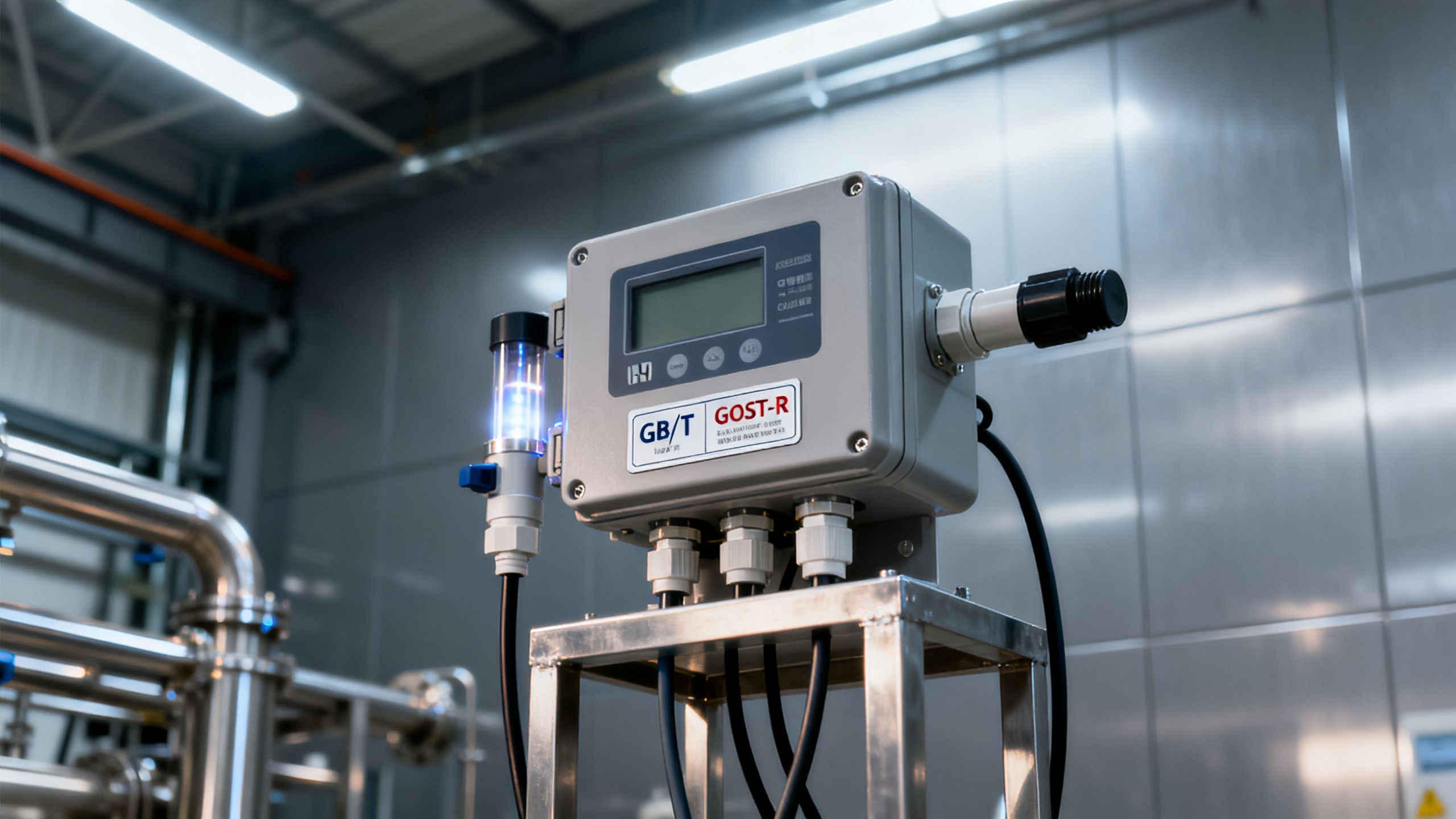
On May 22, 2026, the leaders of Russia and China jointly declared the formation of the China-Russia Trade and Investment Council. The Council’s initial scope includes mutual recognition of technical standards for 37 categories of industrial products, specifically: transformer oil (under Transformers & Switchgears), explosion-proof respirators (under PPE & Workwear), and online industrial water quality analyzers (under Testing & Measurement). China has launched a fast-track dual-standard certification program aligning GB/T and GOST-R requirements; 12 enterprises have received mutual recognition credentials to date.
Industries Affected by Sector and Role
Direct Exporters & Importers of Industrial Goods
These companies face revised conformity assessment pathways for entering the Russian market (or exporting from Russia to China). Impact centers on reduced time-to-market for certified products — but only for items explicitly listed in the initial 37-category mutual recognition framework. Non-listed categories remain subject to full, independent GOST-R or GB/T certification.
Manufacturers of Power Infrastructure Components
Firms producing transformer oils, insulating fluids, or related substation materials are directly included in the first wave. Impact includes eligibility for expedited regulatory clearance in both jurisdictions — provided product specifications and test reports meet the jointly agreed technical benchmarks, not just nominal standard alignment.
PPE Producers Serving Hazardous-Environment Industries
Suppliers of explosion-proof respirators — particularly those certified to EN 149 or ISO 16900 series — may now engage with Russian certification bodies under streamlined procedures. However, impact is limited to models falling precisely within the defined scope; ancillary components (e.g., filters, harnesses) or adjacent PPE types (e.g., flame-resistant garments) are not covered.
Industrial Instrumentation & Sensor Manufacturers
Producers of online water quality monitoring systems (e.g., pH, conductivity, turbidity, heavy metal analyzers) benefit from harmonized performance validation protocols. Impact manifests as reduced need for redundant field testing in Russia — if calibration methods, data traceability, and environmental operating ranges conform to the agreed parameters.
Supply Chain & Certification Support Providers
Third-party labs, conformity assessment bodies, and technical documentation consultants must adapt service offerings to support dual-standard compliance. Impact includes demand for joint audit capability (GB/T + GOST-R), bilingual test reporting templates, and familiarity with the Council’s published scope documents — not general GOST-R advisory services.
Key Points for Enterprises and Practitioners to Monitor and Act On
Track official updates to the mutual recognition list
The initial 37-item list is not exhaustive. Enterprises should monitor announcements from China’s State Administration for Market Regulation (SAMR) and Russia’s Federal Agency for Technical Regulating and Metrology (Rosstandart) for expansions — especially into adjacent categories such as electrical insulation materials or gas detection sensors.
Verify exact scope coverage before initiating certification
Mutual recognition applies only to specific product definitions and performance criteria outlined in the Council’s annexes — not entire HS codes or broad categories. Companies must cross-reference their product’s technical specifications against the published scope, not assume coverage based on category name alone.
Distinguish between policy launch and operational readiness
The Council’s formation and the issuance of 12 dual-certification credentials mark a procedural milestone — not full implementation. Enterprises should confirm with authorized certification bodies whether local Rosstandart offices and Chinese provincial SAMR branches have activated the fast-track workflow before submitting applications.
Prepare technical documentation for dual-standard alignment
Eligible firms should compile test reports, design validation records, and manufacturing process documentation that satisfy both GB/T and GOST-R evidentiary requirements — e.g., using SI-traceable calibration, Russian-language user manuals, and compatibility with Cyrillic labeling regulations — prior to application.
Editorial Perspective / Industry Observation
Observably, this Council represents a coordinated institutional response to longstanding friction in industrial goods market access — not merely a symbolic gesture. Analysis shows it prioritizes pragmatic, high-impact categories where regulatory duplication has historically delayed deployment of critical infrastructure components. However, it remains an early-phase mechanism: the absence of a published roadmap for list expansion or dispute resolution procedures means its scalability is still unproven. From an industry perspective, the initiative is best understood as a signal of intent to deepen technical cooperation — one requiring sustained follow-up to evolve from pilot framework to operational norm.
Conclusively, the Council’s establishment marks a structured step toward reducing non-tariff barriers for select industrial goods between China and Russia. Its significance lies less in immediate volume impact and more in the precedent it sets for bilateral standards alignment — one that privileges technical specificity over political rhetoric. Currently, it is more appropriately understood as a procedural enabler than a market-access guarantee; real-world utility will depend on transparency, consistent implementation, and measurable expansion beyond the initial 37 items.
Source: Official joint announcement by the Russian and Chinese heads of state, May 22, 2026; publicly confirmed details regarding the 37-item mutual recognition scope, GB/T–GOST-R dual-certification fast track, and initial 12 enterprise credentials.
Note: Expansion timeline for the mutual recognition list, operational guidelines for regional certification authorities, and Council governance structure remain pending public disclosure and are subject to ongoing observation.
Technical Specifications
- How to Select Electronic Hotel Key Card Locks for Guest Rooms and Staff AreasAuthor :Safety Compliance Lead
- How to Select Lab Instruments for Reliable Chemical Analysis WorkflowsAuthor :Precision Metrology Expert
- How to Size a UPS for Server Rooms: Load, Runtime, and Redundancy FactorsAuthor :Grid Infrastructure Analyst
Expert Insights

Chief Security Architect
Dr. Thorne specializes in the intersection of structural engineering and digital resilience. He has advised three G7 governments on industrial infrastructure security.
Related Analysis
- Sep 17, 2026How to Select Electronic Hotel Key Card Locks for Guest Rooms and Staff AreasAuthor :Safety Compliance Lead
- Sep 16, 2026How to Select Lab Instruments for Reliable Chemical Analysis WorkflowsAuthor :Precision Metrology Expert
- Sep 15, 2026How to Size a UPS for Server Rooms: Load, Runtime, and Redundancy FactorsAuthor :Grid Infrastructure Analyst
Core Sector // 01
Security & Safety
- How to Size a UPS for Server Rooms: Load, Runtime, and Redundancy FactorsAuthor :Grid Infrastructure Analyst

- How to Choose a Step-Down Transformer for a Control Panel: Key Sizing FactorsAuthor :Grid Infrastructure Analyst

- How Often Should Overseas Power Systems Undergo Safety Inspections?Author :Grid Infrastructure Analyst

- How to Choose Panels for Extreme-Cold Industrial Sites?Author :Grid Infrastructure Analyst

- What Should a Cross-Border EPC Equipment Procurement Reference Include?Author :Grid Infrastructure Analyst

- How to Compare Low-Voltage Equipment for Panel IntegrationAuthor :Grid Infrastructure Analyst

- IEC-Compliant Power Infrastructure: Key Design and Verification RequirementsAuthor :Grid Infrastructure Analyst

- Updated EN 61000-6-4:2026 Raises EMC Compliance Bar for EU-Bound Industrial EquipmentAuthor :Grid Infrastructure Analyst