SAMR Accelerates Revision of 1800 Standards: Export Compliance Window Narrows for Industrial Cables and Circuit Breakers
Author
Date Published
Reading Time
China’s State Administration for Market Regulation (SAMR) announced the launch of the ‘Industrial Basic Components Standardization Campaign’ on May 14, 2026, with a deadline of November 30, 2026, for full implementation. The initiative targets 1,800 national standard revisions—including GB/T 12706 (power cables) and GB/T 14048 (low-voltage circuit breakers)—with 327 revisions introducing new or tightened export-mandatory compliance requirements. Manufacturers and exporters of industrial cables and low-voltage protective devices must act promptly, as non-compliant products risk invalidation of CE, UKCA, and GCC certifications after the deadline.
Event Overview
On May 14, 2026, SAMR publicly notified the initiation of the ‘Industrial Basic Components Standardization Campaign’. It confirmed that 1,800 national standards will undergo revision in 2026, including GB/T 12706 (Power cables), GB/T 14048 (Low-voltage switchgear and controlgear), GB/T 18380.33-2026 (Flame retardancy), GB/T 3048.8-2026 (Halogen content), and GB/T 14048.2-2026 (Short-circuit withstand capability). Of these, 327 standards incorporate mandatory export compliance clauses. The official deadline for completing conformity assessment and certification updates is November 30, 2026.
Industries Affected by Sector
Direct Export Trading Enterprises
These enterprises face direct regulatory exposure, as updated standards affect product declarations and technical documentation submitted to EU Notified Bodies, UK Approved Bodies, and GCC Conformity Assessment Bodies. Non-updated test reports or certificates may lead to rejection of CE/UKCA/GCC applications or withdrawal of existing certificates post-deadline.
Raw Material Suppliers
Suppliers of insulation compounds, halogen-free flame-retardant additives, and copper/aluminum conductors must verify whether their current material specifications meet revised limits—particularly under GB/T 3048.8-2026 (halogen content) and GB/T 18380.33-2026 (flame propagation class). Supply contracts referencing legacy standards may require renegotiation.
Manufacturing Enterprises (Cable & Circuit Breaker Producers)
Producers must revalidate design parameters, production processes, and factory test protocols against the revised GB/T 12706 and GB/T 14048 series. Key changes include stricter short-circuit withstand verification (GB/T 14048.2-2026) and enhanced flame-spread classification (GB/T 18380.33-2026), potentially requiring equipment recalibration or line requalification.
Distribution & Certification Support Service Providers
Third-party testing labs, certification consultants, and logistics documentation agents must update their internal checklists, template reports, and client advisories to reflect the 2026 editions. Delayed alignment may result in submission errors, extended certification timelines, or client liability exposure.
Key Focus Areas and Recommended Actions for Enterprises
Monitor Official Standard Publication Status
Track the formal release dates of final draft standards via SAMR’s official website and the Standardization Administration of China (SAC) portal. Only officially published versions—not draft notifications or working documents—constitute enforceable requirements.
Prioritize Review of High-Impact Standards
Focus initial compliance efforts on the three most consequential revisions: GB/T 18380.33-2026 (flame retardancy), GB/T 3048.8-2026 (halogen content), and GB/T 14048.2-2026 (short-circuit performance), as these directly impact CE/UKCA/GCC eligibility and carry high technical validation burden.
Distinguish Policy Signal from Operational Enforcement
The May 14 announcement signals intent and timeline—but does not yet constitute enforcement. Enterprises should treat the November 30, 2026 deadline as binding only once corresponding SAC announcements confirm standard publication and transitional arrangements; absence of such confirmation means no immediate legal effect.
Initiate Internal Cross-Functional Alignment Now
Convene R&D, quality assurance, procurement, and export compliance teams to audit current product certifications, raw material specs, and test lab partnerships. Where gaps are identified, initiate supplier engagement and schedule pre-assessment testing before Q3 2026 to avoid bottlenecks.
Editorial Perspective / Industry Observation
Observably, this campaign reflects a structural shift—not merely a periodic update—toward harmonizing domestic standards with international regulatory expectations, particularly in fire safety and environmental toxicity. Analysis shows the inclusion of 327 export-mandatory clauses signals SAMR’s intent to strengthen upstream control over global market access, rather than relying solely on downstream certification bodies. From an industry perspective, this is currently more of a coordinated policy signal than an already enforced outcome: while the timeline is fixed, actual enforcement hinges on the publication status of individual standards and explicit transitional provisions. Continued monitoring is warranted, especially for GB/T 12706 and GB/T 14048 revisions, where legacy editions remain valid until superseded.
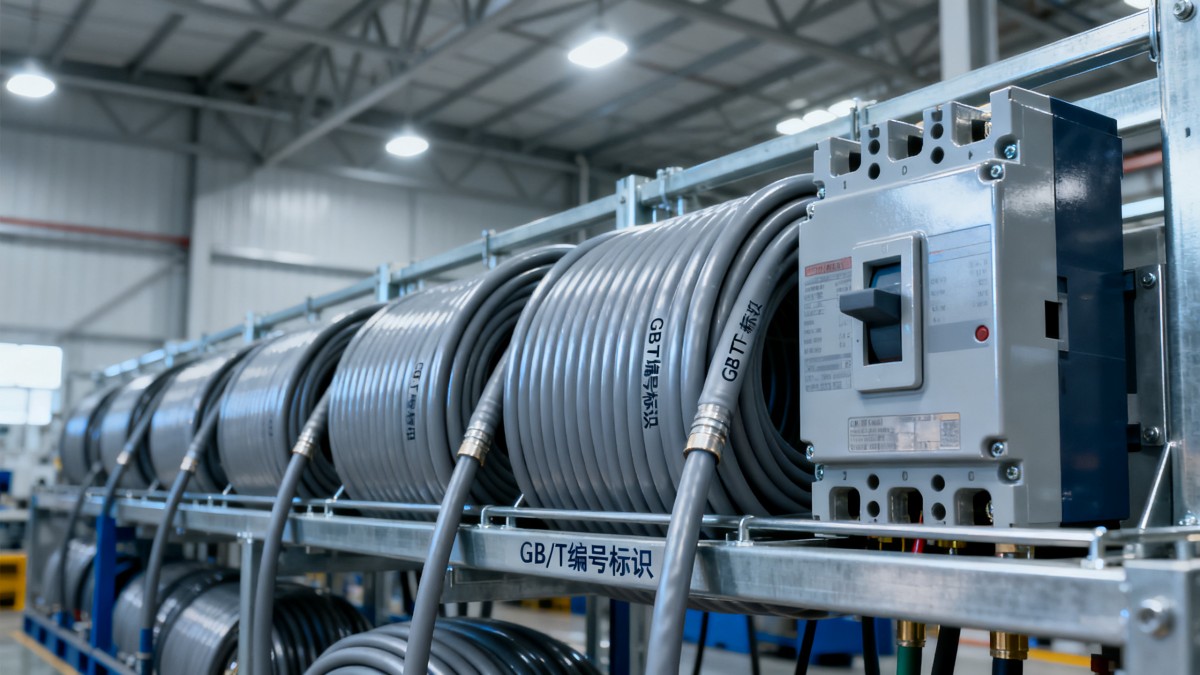
In summary, the SAMR initiative marks a tightening of technical gateways for industrial cable and low-voltage circuit breaker exports—not through new external regulations, but through accelerated domestic standard upgrades that cascade into international conformity requirements. It is best understood not as an isolated deadline, but as a synchronized calibration point across supply chain layers, where timing, traceability, and version control of standards become operational imperatives.
Source: State Administration for Market Regulation (SAMR), official notification issued May 14, 2026. Note: Final text of revised standards (e.g., GB/T 18380.33-2026) remains pending official publication by the Standardization Administration of China (SAC); ongoing observation required for exact scope and transition rules.
Technical Specifications
- How to Select Electronic Hotel Key Card Locks for Guest Rooms and Staff AreasAuthor :Safety Compliance Lead
- How to Select Lab Instruments for Reliable Chemical Analysis WorkflowsAuthor :Precision Metrology Expert
- How to Size a UPS for Server Rooms: Load, Runtime, and Redundancy FactorsAuthor :Grid Infrastructure Analyst
Expert Insights

Chief Security Architect
Dr. Thorne specializes in the intersection of structural engineering and digital resilience. He has advised three G7 governments on industrial infrastructure security.
Related Analysis
- Sep 17, 2026How to Select Electronic Hotel Key Card Locks for Guest Rooms and Staff AreasAuthor :Safety Compliance Lead
- Sep 16, 2026How to Select Lab Instruments for Reliable Chemical Analysis WorkflowsAuthor :Precision Metrology Expert
- Sep 15, 2026How to Size a UPS for Server Rooms: Load, Runtime, and Redundancy FactorsAuthor :Grid Infrastructure Analyst
Core Sector // 01
Security & Safety
- Selecting PTFE Insulated Hookup Wire for High-Temperature Control PanelsAuthor :Grid Infrastructure Analyst

- How Contractors Can Evaluate EPC Sourcing Solutions for Cost, Lead Time, and RiskAuthor :Grid Infrastructure Analyst

- What Drives Silicone Cable Bulk Price in Industrial Orders?Author :Grid Infrastructure Analyst

- EN 61000-6-4:2026 Takes Effect for EU-Bound ControlsAuthor :Grid Infrastructure Analyst

- How to Choose Low Smoke Cables and Wiring for Safer Commercial Buildings?Author :Grid Infrastructure Analyst

- Medium Voltage Armored Cable Selection Guide: Voltage Rating, Armor Type, and InstallationAuthor :Grid Infrastructure Analyst

- EU Publishes EN IEC 61000-6-4:2026 for Industrial EMCAuthor :Grid Infrastructure Analyst

- Choosing an XLPE Power Cable Manufacturer: 7 Checks for Voltage Class and ComplianceAuthor :Grid Infrastructure Analyst