Electrical & Power Quotation Delays: Common Causes and Fixes
Author
Date Published
Reading Time
Electrical & Power quotation delays can disrupt tender schedules, weaken response credibility, and reduce conversion opportunities across industrial supply chains.
In infrastructure-focused markets, quotation speed is not only a sales metric. It is also a signal of technical readiness, supplier control, and operational reliability.
A slow Electrical & Power quotation process often creates hidden costs. These include missed bid windows, repeated clarification cycles, pricing disputes, and avoidable engineering rework.
For industrial channels handling cables, switchgear, transformers, protection systems, meters, and power accessories, quotation discipline directly affects market competitiveness.
This article explains common causes behind Electrical & Power quotation delays and outlines practical fixes that improve response speed, pricing accuracy, and execution confidence.
What Electrical & Power Quotation Delays Usually Mean
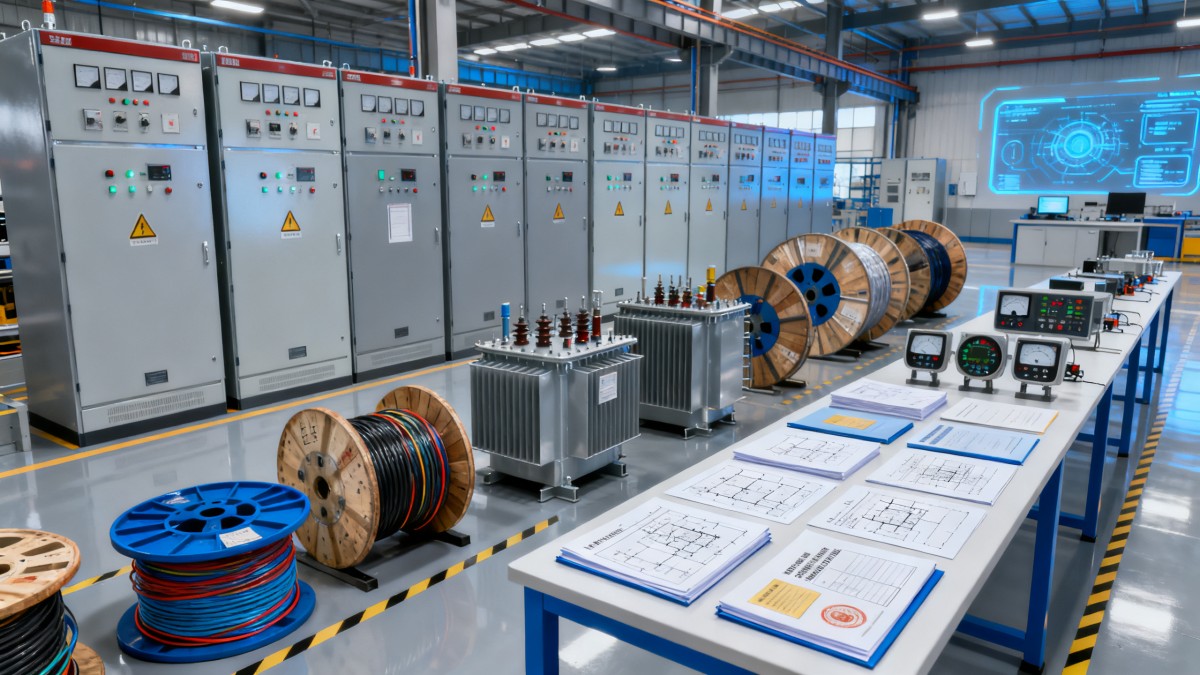
An Electrical & Power quotation is more than a price sheet. It usually combines technical review, compliance checks, sourcing validation, logistics assumptions, and commercial risk control.
Delays happen when one or more of these steps lack structure. In industrial environments, even a small missing detail can stop the entire quotation workflow.
Typical examples include absent load data, unclear voltage classes, incomplete drawings, unconfirmed certifications, or uncertain delivery terms.
Because many projects involve strict standards such as CE, UL, IEC, and ISO, the Electrical & Power quotation process must balance speed with technical and legal accuracy.
Current Industry Signals Behind Slower Quotation Cycles
Electrical & Power quotation delays are becoming more visible due to wider market complexity, tighter compliance demands, and growing pressure on industrial delivery reliability.
Several sector signals explain why quotation timelines are harder to control today.
These factors make the Electrical & Power quotation function increasingly cross-disciplinary. Sales, application engineering, sourcing, quality, and logistics must align quickly.
Common Causes of Electrical & Power Quotation Delays
Incomplete technical input
The most frequent cause is missing or inconsistent specification data. Without complete inputs, teams cannot price accurately or confirm technical suitability.
Missing details often include enclosure rating, short-circuit capacity, frequency, installation environment, cable length, or communication protocol requirements.
Overreliance on manual workflows
Spreadsheet-based quotation systems slow coordination. Version confusion, duplicate files, and email-based approvals often create hidden bottlenecks.
A manual Electrical & Power quotation process also increases human error, especially when multiple SKUs and accessory combinations are involved.
Weak supplier response control
Quotations often depend on upstream responses for components, certifications, testing records, or factory lead times. Slow vendor feedback directly delays final submission.
This issue is common in products using imported breakers, relays, busbar materials, or specialized measurement devices.
Pricing approval complexity
Special discounts, project pricing, currency adjustments, and freight assumptions often require layered internal approval. Each step adds cycle time.
Where governance is unclear, the Electrical & Power quotation can remain pending even after technical work is complete.
Compliance uncertainty
If the required standard is unclear, quotation teams hesitate. Quoting a non-compliant alternative creates commercial and reputational risk.
This is especially true in power distribution, hazardous environments, and export-oriented projects where documentation must be defensible.
Business Impact of Faster Electrical & Power Quotation Processes
A stronger Electrical & Power quotation process improves more than response time. It also raises quality, consistency, and trust across the full bid lifecycle.
- More bids submitted within valid tender windows
- Fewer clarification rounds after quotation release
- Better alignment between quoted scope and delivered scope
- Lower pricing leakage from outdated cost assumptions
- Stronger confidence in lead time and compliance statements
In practical terms, speed matters most when it is combined with precision. A fast but inaccurate Electrical & Power quotation can create even larger downstream losses.
Typical Delay Scenarios Across Electrical and Power Categories
Different product groups generate different quotation risks. Understanding these patterns helps set realistic response workflows.
Practical Fixes for a More Reliable Electrical & Power Quotation Workflow
Build a mandatory input framework
Create structured inquiry templates for each product family. Make critical fields non-optional before an Electrical & Power quotation enters review.
This reduces back-and-forth communication and helps engineering teams assess feasibility faster.
Use quotation segmentation rules
Separate standard requests from engineered requests. Simple catalog items should not wait behind custom assemblies or compliance-heavy project packages.
A segmented Electrical & Power quotation process improves throughput without lowering review standards.
Maintain approved technical libraries
Store validated datasheets, certificates, test reports, BOM references, and pricing logic in one controlled location.
When information is searchable and current, teams spend less time chasing historical files.
Set supplier response deadlines
Use service expectations for critical vendors. Track quotation turnaround, lead-time accuracy, and document completeness.
This turns supplier support into a measurable part of the Electrical & Power quotation chain.
Clarify approval authority
Define who can approve discount ranges, freight assumptions, alternates, and validity periods. Avoid waiting for unnecessary escalations.
Track quotation performance indicators
Useful metrics include average turnaround time, first-pass completeness, revision frequency, and quote-to-order conversion by category.
These metrics show where the Electrical & Power quotation process is losing time or quality.
Implementation Priorities and Operational Cautions
Improvement efforts work best when introduced in stages. Overengineering the process can create new delays instead of removing old ones.
- Map the current quotation workflow from inquiry to release.
- Identify recurring delay points by product category.
- Standardize forms, review gates, and documentation rules.
- Digitize version control and approval records.
- Review results monthly and adjust response standards.
It is also important to protect technical accuracy. A rushed Electrical & Power quotation that ignores standards, sizing logic, or exclusions can damage future project execution.
Next-Step Focus for Better Quotation Control
Electrical & Power quotation delays rarely come from one isolated problem. They usually result from incomplete inputs, fragmented coordination, unclear approvals, and weak supplier discipline.
The strongest response is a controlled system that combines technical structure, faster data access, and measurable workflow accountability.
For organizations active in industrial infrastructure, improving the Electrical & Power quotation process is a practical way to strengthen bid quality and operational resilience.
A useful first step is simple: review the last ten delayed quotations, identify repeated failure points, and convert those findings into a standard response framework.
With that discipline in place, each Electrical & Power quotation can move faster, stay more accurate, and support stronger project outcomes.
Technical Specifications
- How to Select Electronic Hotel Key Card Locks for Guest Rooms and Staff AreasAuthor :Safety Compliance Lead
- How to Select Lab Instruments for Reliable Chemical Analysis WorkflowsAuthor :Precision Metrology Expert
- How to Size a UPS for Server Rooms: Load, Runtime, and Redundancy FactorsAuthor :Grid Infrastructure Analyst
Expert Insights

Chief Security Architect
Dr. Thorne specializes in the intersection of structural engineering and digital resilience. He has advised three G7 governments on industrial infrastructure security.
Related Analysis
- Sep 17, 2026How to Select Electronic Hotel Key Card Locks for Guest Rooms and Staff AreasAuthor :Safety Compliance Lead
- Sep 16, 2026How to Select Lab Instruments for Reliable Chemical Analysis WorkflowsAuthor :Precision Metrology Expert
- Sep 15, 2026How to Size a UPS for Server Rooms: Load, Runtime, and Redundancy FactorsAuthor :Grid Infrastructure Analyst
Core Sector // 01
Security & Safety
- Selecting PTFE Insulated Hookup Wire for High-Temperature Control PanelsAuthor :Grid Infrastructure Analyst

- How Contractors Can Evaluate EPC Sourcing Solutions for Cost, Lead Time, and RiskAuthor :Grid Infrastructure Analyst

- What Drives Silicone Cable Bulk Price in Industrial Orders?Author :Grid Infrastructure Analyst

- EN 61000-6-4:2026 Takes Effect for EU-Bound ControlsAuthor :Grid Infrastructure Analyst

- How to Choose Low Smoke Cables and Wiring for Safer Commercial Buildings?Author :Grid Infrastructure Analyst

- Medium Voltage Armored Cable Selection Guide: Voltage Rating, Armor Type, and InstallationAuthor :Grid Infrastructure Analyst

- EU Publishes EN IEC 61000-6-4:2026 for Industrial EMCAuthor :Grid Infrastructure Analyst

- Choosing an XLPE Power Cable Manufacturer: 7 Checks for Voltage Class and ComplianceAuthor :Grid Infrastructure Analyst