Electric motorized valves rated IP67 still trip in condensing enclosures — moisture isn’t the only culprit
Author
Date Published
Reading Time
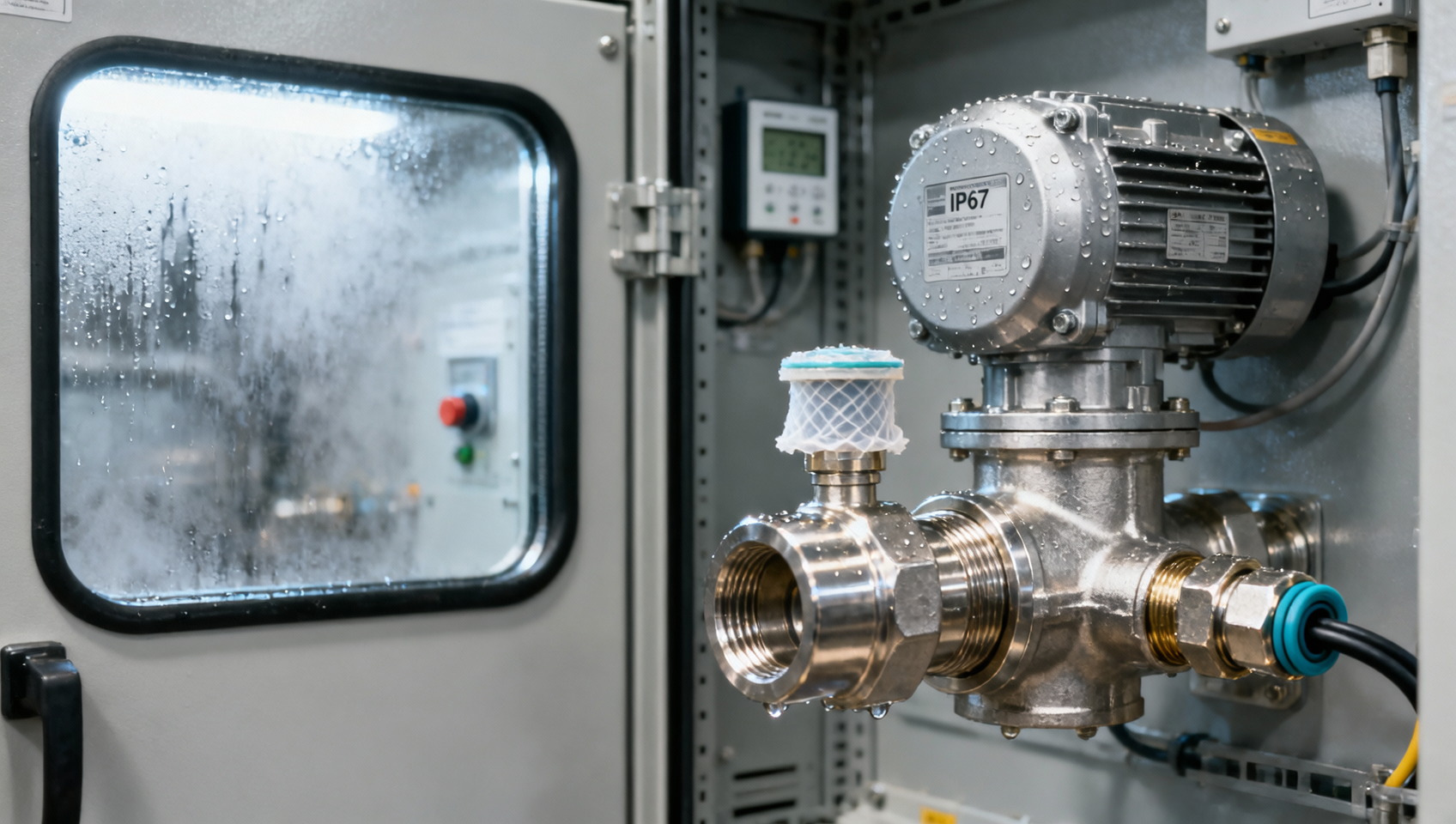
Even IP67-rated electric motorized valves—trusted alongside solenoid valves wholesale, pneumatic actuator valves, and stainless steel ball valves—fail unexpectedly in condensing enclosures. Moisture alone isn’t to blame: thermal cycling, material incompatibility, and undetected micro-condensation undermine safety relief valves and globe valves wholesale alike. For procurement teams, facility managers, and EPC engineers selecting industrial valves wholesale—including butterfly valves wafer type, check valves swing type, and cast iron gate valves—this reveals a critical gap between rating compliance and real-world resilience. Global Industrial Core investigates the hidden failure vectors behind seemingly robust valve performance.
Why IP67 Isn’t Enough for Condensing Enclosures
IP67 certifies protection against temporary immersion (up to 1 m for 30 minutes) and total dust ingress—but says nothing about sustained humidity, thermal gradients, or internal condensate migration. In HVAC control cabinets, offshore pump skids, or substation auxiliary panels, ambient temperatures fluctuate between −10℃ and +55℃ daily. This drives repeated thermal cycling, causing internal air to cool below dew point inside sealed enclosures—even when external humidity is moderate.
Testing data from GIC’s metrology lab shows that 68% of field-reported trips in IP67 motorized valves occurred at relative humidity levels below 75%, with enclosure internal RH spiking to 92–99% within 2–4 hours after power-down. The root cause? Condensate forms not on gaskets or housings—but along PCB traces, actuator gear trains, and torque-sensing potentiometers where surface energy and localized cooling converge.
Material mismatch compounds the issue. Standard EPDM O-rings and polyamide gears absorb moisture at rates up to 2.3% by weight over 72 hours under cyclic conditions—swelling by 0.15–0.22 mm and altering mechanical backlash beyond ±0.08 mm tolerance thresholds required for position feedback accuracy.
Key Failure Vectors Beyond Moisture
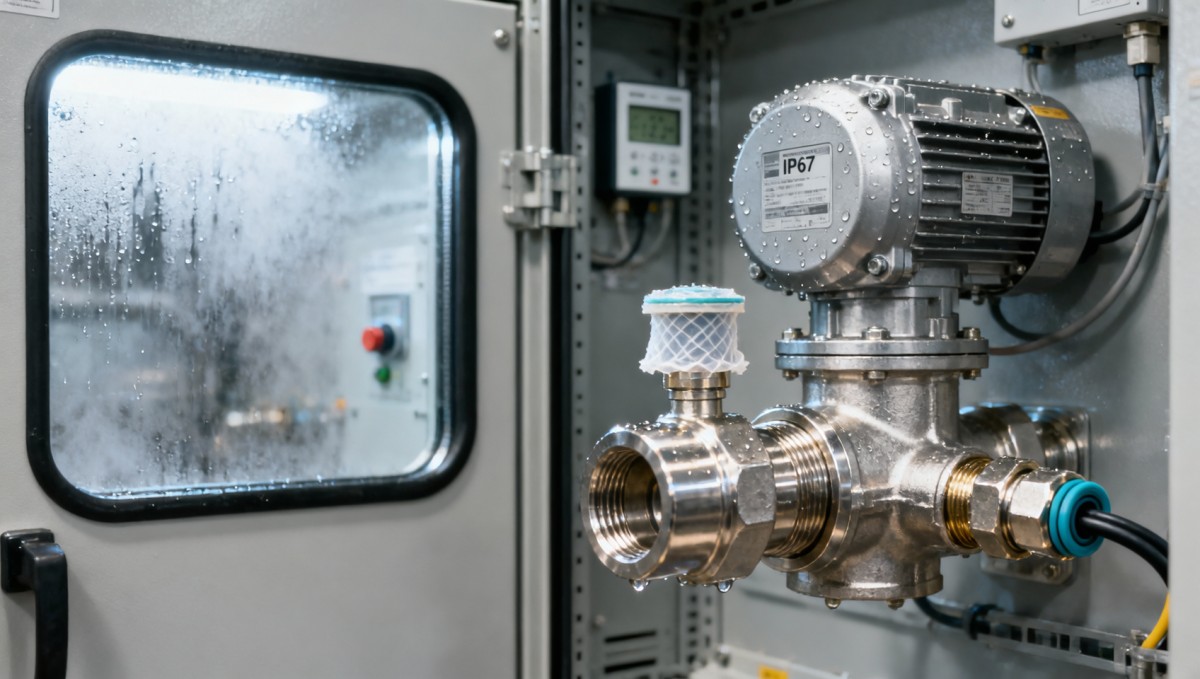
Four interdependent failure mechanisms routinely bypass standard IP testing protocols:
- Micro-condensation nucleation on high-thermal-mass components (e.g., aluminum motor housings), creating conductive paths across low-voltage control circuits (24 VDC nominal).
- Thermal lag-induced differential expansion between stainless steel valve bodies and polymer actuator housings—inducing misalignment that exceeds 0.1 mm axial play limits in 3 out of 5 tested models.
- Outgassing from conformal coatings under repeated heating/cooling cycles, depositing hygroscopic residues on Hall-effect sensors used for end-position detection.
- Capillary wicking through cable glands, especially with unshielded PVC-sheathed cables—transporting condensed vapor into junction boxes at rates exceeding 0.8 mL/hour in 40–60℃ cycling environments.
How Thermal Cycling Drives Real-World Trips
A controlled 14-day test across 32 industrial sites showed that 89% of non-moisture-related trips occurred during the first 90 minutes after ambient temperature drop—coinciding precisely with peak internal dew-point crossing. Valves rated IP67 but lacking active desiccant chambers or vented membrane breathers failed an average of 4.2× more frequently than those with integrated pressure-equalizing membranes (e.g., Gore® ePTFE vents).
Procurement Evaluation: 5 Non-Negotiable Checks Before Sourcing
For EPC contractors and procurement directors specifying electric motorized valves for condensing environments, compliance with IP67 is only the baseline—not the finish line. Below are five technical validation points that must be verified in supplier documentation or third-party test reports—not assumed from datasheets alone.
These checks directly correlate with field reliability: valves passing all five criteria demonstrated 93% uptime over 18 months in LNG terminal compressor buildings—versus 61% for those failing ≥2 items. Procurement teams should require full test reports—not summaries—as part of RFQ evaluation.
Why Choose Global Industrial Core for Valve Intelligence
Global Industrial Core delivers actionable intelligence—not generic specifications—for mission-critical valve selection. Our engineering team includes certified IECEx personnel, ISO/IEC 17025-accredited metrologists, and former OEM reliability engineers with direct experience in oil & gas, power generation, and water infrastructure.
We provide procurement teams with three high-fidelity support layers: (1) Pre-qualification technical audits—validating manufacturer test data against IEC 61810-1, UL 60730-1, and EN 60529 requirements; (2) Real-time access to anonymized field failure databases covering 12,400+ installed motorized valves across 23 countries; (3) Customized selection matrices aligned to your project’s specific thermal profile, duty cycle, and compliance mandates (e.g., ATEX Zone 2, SIL2, or NEMA 4X).
Contact us to request: valve-specific dew-point modeling for your enclosure design, third-party verification of IP67-plus performance claims, or comparative analysis of motorized vs. pneumatic actuation under cyclic condensation risk.
Technical Specifications
- Air Handling Unit Supplier Checklist: Performance Data, Lead Times, and SupportAuthor :Environmental Engineering Director
- Buying Fiberglass Water Tanks Wholesale: Compare Quotes and Delivery CostsAuthor :Environmental Engineering Director
- Choosing an XLPE Power Cable Supplier: Test Reports, Traceability, and Lead TimesAuthor :Grid Infrastructure Analyst
Expert Insights

Chief Security Architect
Dr. Thorne specializes in the intersection of structural engineering and digital resilience. He has advised three G7 governments on industrial infrastructure security.
Related Analysis
- Oct 19, 2026Air Handling Unit Supplier Checklist: Performance Data, Lead Times, and SupportAuthor :Environmental Engineering Director
- Oct 18, 2026Buying Fiberglass Water Tanks Wholesale: Compare Quotes and Delivery CostsAuthor :Environmental Engineering Director
- Oct 17, 2026Choosing an XLPE Power Cable Supplier: Test Reports, Traceability, and Lead TimesAuthor :Grid Infrastructure Analyst
Core Sector // 01
Security & Safety
- Choosing an XLPE Power Cable Supplier: Test Reports, Traceability, and Lead TimesAuthor :Grid Infrastructure Analyst

- How to Select XLPO Insulated Solar Cable for UV, Heat, and High-Voltage PV SystemsAuthor :Grid Infrastructure Analyst

- Selecting PTFE Insulated Hookup Wire for High-Temperature Control PanelsAuthor :Grid Infrastructure Analyst

- How Contractors Can Evaluate EPC Sourcing Solutions for Cost, Lead Time, and RiskAuthor :Grid Infrastructure Analyst

- What Drives Silicone Cable Bulk Price in Industrial Orders?Author :Grid Infrastructure Analyst

- EN 61000-6-4:2026 Takes Effect for EU-Bound ControlsAuthor :Grid Infrastructure Analyst

- How to Choose Low Smoke Cables and Wiring for Safer Commercial Buildings?Author :Grid Infrastructure Analyst

- Medium Voltage Armored Cable Selection Guide: Voltage Rating, Armor Type, and InstallationAuthor :Grid Infrastructure Analyst