Electrical & Power Quotations That Look Low but Cost More Later
Author
Date Published
Reading Time
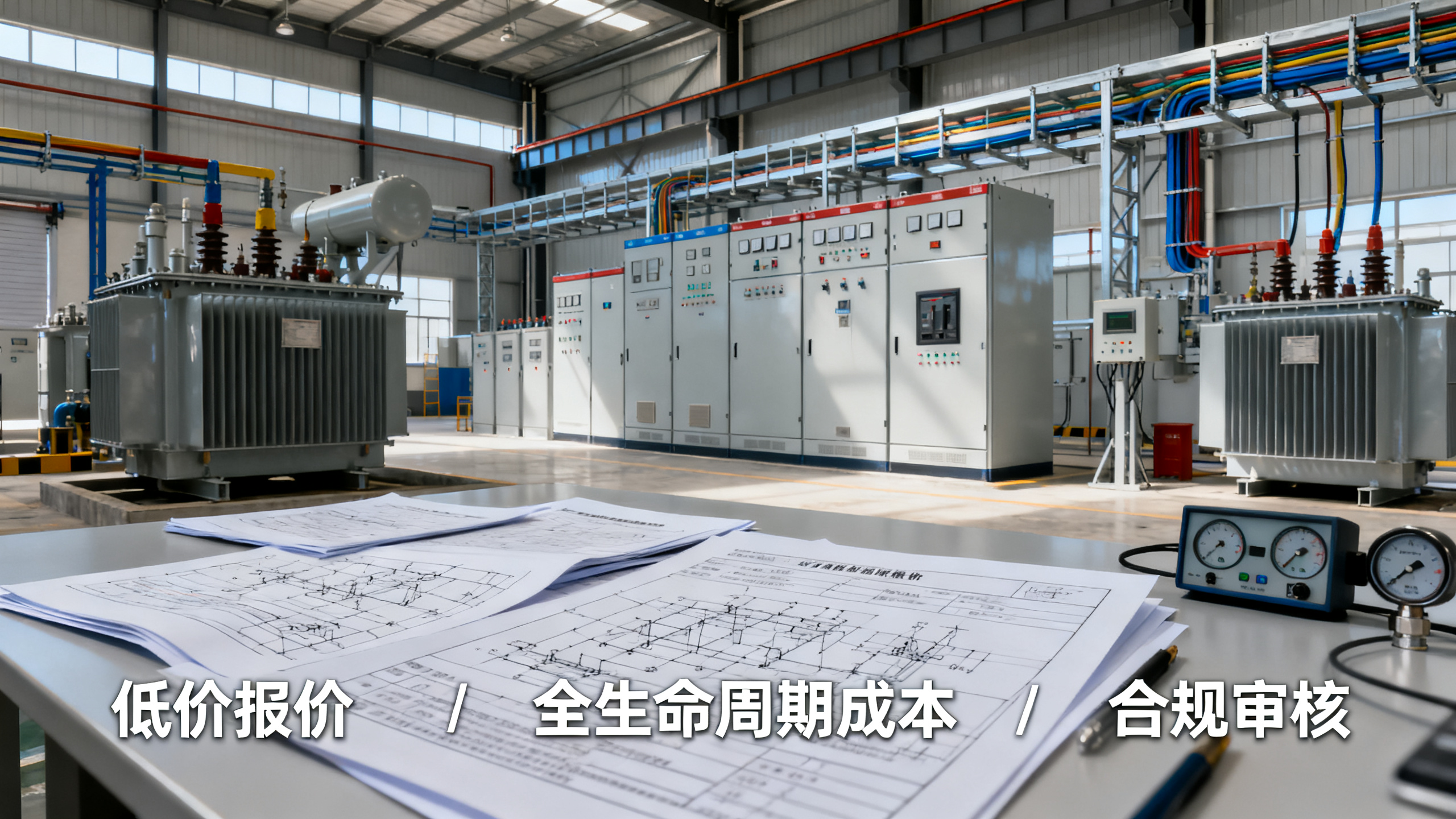
An Electrical & Power quotation that appears competitive on paper can quietly introduce compliance risks, lifecycle inefficiencies, and expensive change orders after approval.
For financial decision-makers, the real issue is not the initial price but the total cost of ownership, project continuity, and long-term asset reliability.
This article examines why low-looking quotes often cost more later—and how to evaluate them with greater confidence.
Why a Low Electrical & Power Quotation Can Become an Expensive Approval
The core search intent behind an Electrical & Power quotation review is practical: buyers want to know whether the lowest bid is truly cheaper or simply structured to defer cost.
For finance approvers, the concern is rarely the listed price alone. It is whether the quote will hold through procurement, installation, commissioning, compliance review, and operational use.
A quotation can look attractive because it excludes accessories, understates testing scope, uses lower-grade components, or leaves commercial assumptions deliberately vague.
That creates a familiar pattern in industrial purchasing: initial savings disappear through variation orders, rework, downtime exposure, delayed energization, or shortened asset life.
In other words, the cheapest-looking offer often wins only at the approval stage. It may lose badly over the full lifecycle of the project.
What Financial Decision-Makers Usually Want to Know Before Signing Off
Most finance leaders are not trying to compare cable insulation classes, relay logic, or transformer cooling details line by line.
They want answers to five business questions: Is the quote complete, is the supplier credible, are compliance risks covered, what costs may appear later, and what failure exposure remains?
That means the most useful quotation review is not a technical audit in isolation. It is a commercial risk screen built around total spend predictability.
If a proposal cannot support cost certainty, implementation continuity, and defensible procurement governance, its low headline price has limited meaning.
This is especially true in electrical and power projects, where one missing certification or one underspecified component can affect the entire installation schedule.
The Most Common Reasons “Low” Quotes End Up Costing More Later
The first reason is scope omission. Vendors may quote core equipment only, while excluding terminations, enclosures, mounting hardware, protection devices, labeling, or commissioning services.
These omissions may not look serious during desk review. In practice, they become urgent purchases once site work begins and time pressure weakens price discipline.
The second reason is specification downgrading. A vendor may substitute lower-performance materials, reduced ingress protection, lighter-duty switchgear, or less robust monitoring capability.
Such substitutions may still appear compliant at a glance, yet they can reduce reliability in heat, dust, humidity, vibration, or unstable load conditions.
The third reason is compliance ambiguity. If CE, UL, IEC, ISO, local grid codes, or testing documentation are not explicitly tied to the quoted items, approval risk remains open.
The fourth reason is commercial elasticity. Some suppliers intentionally leave freight, taxes, customs support, installation assumptions, training, software licenses, or warranty response undefined.
That allows a low initial number while preserving multiple pathways for later price expansion.
The fifth reason is service weakness. A lower quote from a supplier without stable after-sales support can create larger downstream costs through delays, troubleshooting gaps, and spare-part exposure.
How Hidden Costs Usually Show Up After Approval
Hidden costs in an Electrical & Power quotation rarely arrive as one dramatic invoice. They emerge gradually across project milestones.
One common trigger is engineering clarification. The supplier confirms after award that the quoted design assumed fewer interfaces, lower fault levels, or simpler control integration than the project requires.
Another trigger is factory testing and documentation. Additional FAT requirements, witness testing, drawings, manuals, and certification packs may be billed separately if not defined upfront.
Site conditions also expose weak quotations. Cable runs may be longer than assumed, ambient conditions harsher, or mounting arrangements more complex than the vendor priced.
Then come schedule-related costs. If the supplier misses submittal deadlines, approval cycles stretch, and downstream contractors may incur standby, acceleration, or resequencing charges.
Finally, operational costs appear after handover. Lower-efficiency equipment, higher maintenance frequency, shorter replacement intervals, and weaker fault tolerance all affect lifecycle economics.
What a Finance Approver Should Check in an Electrical & Power Quotation
Financial reviewers do not need to become engineers. They need a disciplined checklist that reveals whether a quote is low because it is efficient or low because it is incomplete.
Start with scope completeness. Ask for a line-by-line confirmation of inclusions, exclusions, assumptions, and buyer responsibilities.
Then check standards and certifications. The quote should identify which products comply with which standards, and whether supporting documents are available before shipment.
Review commercial boundaries carefully. Clarify currency terms, validity period, Incoterms, duties, taxes, packaging, freight, insurance, installation support, commissioning, and warranty obligations.
Look at lead time realism. An unrealistically short delivery promise may signal future schedule slippage or later substitution requests.
Ask whether spare parts, consumables, software, calibration, and training are included. These items often sit outside the first-page price but inside the real project budget.
Finally, assess supplier capacity. A vendor’s ability to execute consistently matters as much as the bid amount, especially for critical infrastructure applications.
Red Flags That Often Signal a Future Cost Escalation
If two quotations differ widely in price, the cheapest one deserves more scrutiny, not faster approval.
A major red flag is vague wording such as “as applicable,” “by others,” “standard testing,” or “typical documentation” without precise definition.
Another warning sign is a quotation that mirrors the RFQ title but does not map clearly to technical schedules, drawings, load data, or site conditions.
Watch for unusually short quote validity. It can indicate pricing instability or a strategy to reopen negotiation after conditional award.
Be cautious when critical components are described generically rather than by rating, make, model, or performance requirement.
Also question any offer that lacks exception lists. Every complex quote contains assumptions. If none are declared, they may surface later in dispute form.
And if post-award support is thin, the buyer may absorb coordination costs that were never visible at tender stage.
How to Compare Quotations Beyond the First-Line Price
The best way to compare suppliers is to normalize quotations into the same commercial and technical frame.
Create a comparison matrix covering scope, compliance, delivery, documentation, testing, commissioning, warranty, service response, and lifecycle implications.
Then convert missing items into estimated cost exposures. Even rough allowances are better than pretending omissions have no budget impact.
It is also useful to score quotations by risk, not just price. A bid that is 6 percent lower but carries high execution uncertainty may be financially inferior overall.
Finance teams should also request a “fully landed cost” view. That includes logistics, installation dependencies, energization readiness, and expected operating costs over time.
In many industrial environments, the smarter question is not “Which quote is lowest?” but “Which quote is least likely to generate unplanned spend?”
Why Total Cost of Ownership Matters More in Power Projects
Electrical and power systems are not disposable purchases. They become part of the facility’s operating backbone for years.
Because of that, small differences in quality, efficiency, serviceability, and fault resilience can create large financial consequences over the asset life.
A lower-priced panel, cable system, UPS, transformer, or measurement package may consume more energy, fail sooner, or require more maintenance interventions.
Those costs do not always sit in the procurement budget. They migrate into operations, maintenance, production continuity, and risk management accounts.
For a finance approver, this matters because the cheapest approval can produce the worst cross-functional cost outcome.
Total cost of ownership brings the decision back to business reality: lifecycle value, uptime protection, and avoidance of expensive surprises.
Questions Finance Teams Should Ask Suppliers Before Approval
A few direct questions can dramatically improve quotation quality and reduce post-award friction.
Ask the supplier to confirm all exclusions in one section, with commercial impact if later added.
Ask whether the quoted configuration fully meets the issued specification, or whether any deviations, substitutions, or performance limitations apply.
Request documentary evidence for certifications, test capability, and critical component traceability.
Ask what assumptions were made about site conditions, interfaces, utilities, and installation responsibilities.
Clarify warranty coverage, response times, spare availability, and support channels for commissioning and early operation.
Finally, ask the supplier which items most commonly trigger change orders on similar projects. The answer often reveals where cost risk is hiding.
A Practical Approval Standard for Better Procurement Decisions
For financial approvers, a sound Electrical & Power quotation should satisfy three tests at once: price credibility, scope completeness, and execution confidence.
If a quote is cheaper because the supplier is efficient, standardized, and operationally strong, that is a real advantage.
If it is cheaper because it is ambiguous, stripped down, or commercially elastic, it is not a saving. It is deferred cost.
The most defensible approvals are based on transparent comparisons, documented assumptions, and a clear view of lifecycle consequences.
That approach protects budget integrity while also supporting compliance, project continuity, and long-term asset reliability.
In electrical and power procurement, disciplined quotation review is not administrative caution. It is a financial control mechanism.
Conclusion
A low-looking Electrical & Power quotation can be genuinely competitive, but only when the scope, standards, and delivery obligations are fully defined.
For finance decision-makers, the real job is to separate efficient pricing from incomplete pricing before approval, not after problems appear.
When quotations are evaluated through total cost of ownership, hidden-risk exposure, and supplier execution capability, better decisions follow.
The result is not just cost control at purchase. It is stronger project certainty, fewer surprises, and more reliable long-term value from every approved investment.
Technical Specifications
- Air Handling Unit Supplier Checklist: Performance Data, Lead Times, and SupportAuthor :Environmental Engineering Director
- Buying Fiberglass Water Tanks Wholesale: Compare Quotes and Delivery CostsAuthor :Environmental Engineering Director
- Choosing an XLPE Power Cable Supplier: Test Reports, Traceability, and Lead TimesAuthor :Grid Infrastructure Analyst
Expert Insights

Chief Security Architect
Dr. Thorne specializes in the intersection of structural engineering and digital resilience. He has advised three G7 governments on industrial infrastructure security.
Related Analysis
- Oct 19, 2026Air Handling Unit Supplier Checklist: Performance Data, Lead Times, and SupportAuthor :Environmental Engineering Director
- Oct 18, 2026Buying Fiberglass Water Tanks Wholesale: Compare Quotes and Delivery CostsAuthor :Environmental Engineering Director
- Oct 17, 2026Choosing an XLPE Power Cable Supplier: Test Reports, Traceability, and Lead TimesAuthor :Grid Infrastructure Analyst
Core Sector // 01
Security & Safety
- Choosing an XLPE Power Cable Supplier: Test Reports, Traceability, and Lead TimesAuthor :Grid Infrastructure Analyst

- How to Select XLPO Insulated Solar Cable for UV, Heat, and High-Voltage PV SystemsAuthor :Grid Infrastructure Analyst

- Selecting PTFE Insulated Hookup Wire for High-Temperature Control PanelsAuthor :Grid Infrastructure Analyst

- How Contractors Can Evaluate EPC Sourcing Solutions for Cost, Lead Time, and RiskAuthor :Grid Infrastructure Analyst

- What Drives Silicone Cable Bulk Price in Industrial Orders?Author :Grid Infrastructure Analyst

- EN 61000-6-4:2026 Takes Effect for EU-Bound ControlsAuthor :Grid Infrastructure Analyst

- How to Choose Low Smoke Cables and Wiring for Safer Commercial Buildings?Author :Grid Infrastructure Analyst

- Medium Voltage Armored Cable Selection Guide: Voltage Rating, Armor Type, and InstallationAuthor :Grid Infrastructure Analyst