Electrical & Power solutions that scale without costly rework
Author
Date Published
Reading Time
For enterprise decision-makers, scaling infrastructure without disruption requires Electrical & Power solutions that balance compliance, reliability, and long-term cost control. From grid integration to facility upgrades, the right strategy prevents costly rework, reduces operational risk, and supports resilient growth. This article explores how to evaluate scalable power systems that meet global standards while strengthening industrial performance.
In heavy industry, power architecture is rarely a standalone purchase. It is a long-horizon operational decision that affects uptime, safety, expansion capacity, maintenance planning, and procurement efficiency across multiple sites. Whether the project involves a new process line, a brownfield retrofit, a substation modernization, or a utility interface upgrade, the wrong design assumptions made in month 1 often become expensive constraints by year 3.
For EPC contractors, facility managers, and procurement directors, the challenge is not simply to buy more equipment. It is to select Electrical & Power solutions that can absorb load growth, comply with CE, UL, and ISO-driven requirements, and remain serviceable across a 10- to 20-year asset life. That requires a structured view of capacity, redundancy, environmental conditions, protection coordination, digital monitoring, and supply-chain resilience.
Why scalable power design matters before capacity becomes urgent
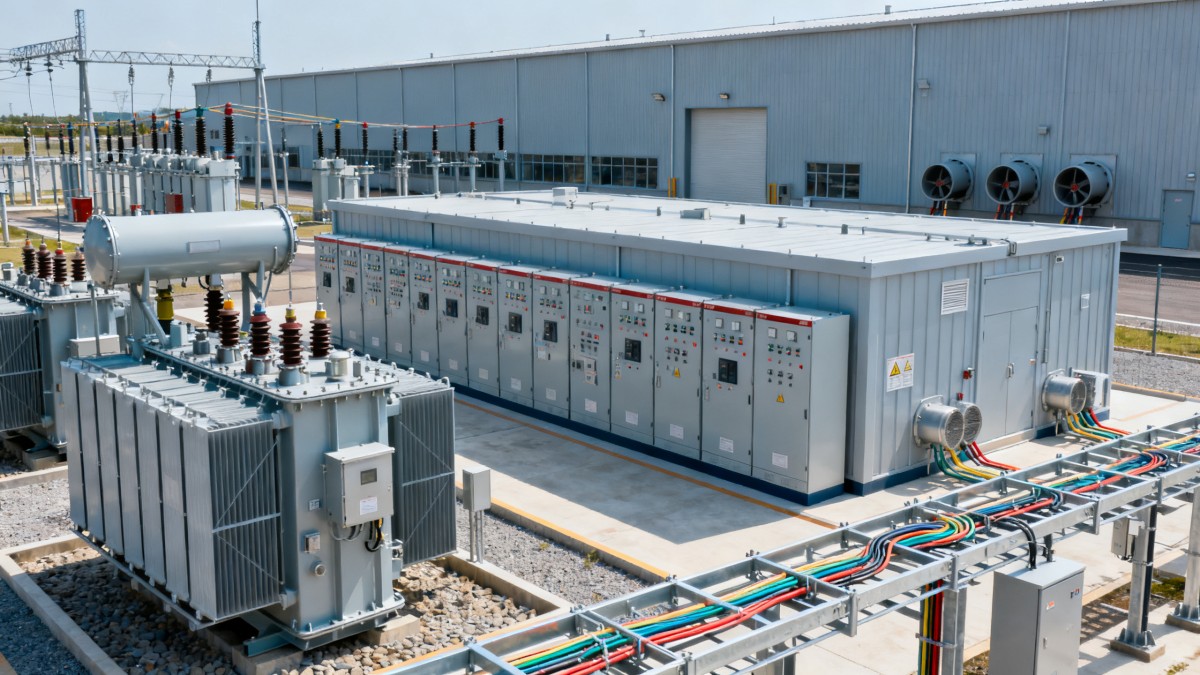
In many industrial projects, rework does not start with visible equipment failure. It begins with undersized switchgear, limited feeder space, transformer loading above the intended operating range, or control architecture that cannot support future automation layers. A system may meet today’s demand at 70% utilization, yet become operationally rigid once production increases by 15% to 30%.
Scalable Electrical & Power solutions are built around staged growth. Instead of treating expansion as an exception, they reserve physical, thermal, and electrical headroom from the beginning. In practice, that can mean leaving spare breaker ways, planning busbar expansion, using modular UPS blocks, or specifying cable trays and conduit routes with 20% to 40% future capacity.
The true cost of rework in industrial environments
Costly rework extends far beyond replacement hardware. It often includes shutdown windows, hot work controls, new approvals, revised single-line diagrams, retesting, and contractor mobilization. In a live plant, even a 6-hour shutdown can affect output, safety procedures, and downstream logistics. In high-load facilities, rework may also trigger new arc flash studies and protection-setting reviews.
Decision-makers should therefore compare lifecycle impact instead of first-cost alone. A panel that is 8% cheaper at purchase may be significantly more expensive if it forces a full replacement after 24 months because expansion was not engineered into the original footprint.
Where scaling pressure appears first
- Incoming utility connections that cannot support peak load growth or power quality changes.
- Transformers operating near thermal limits during seasonal demand or process expansion.
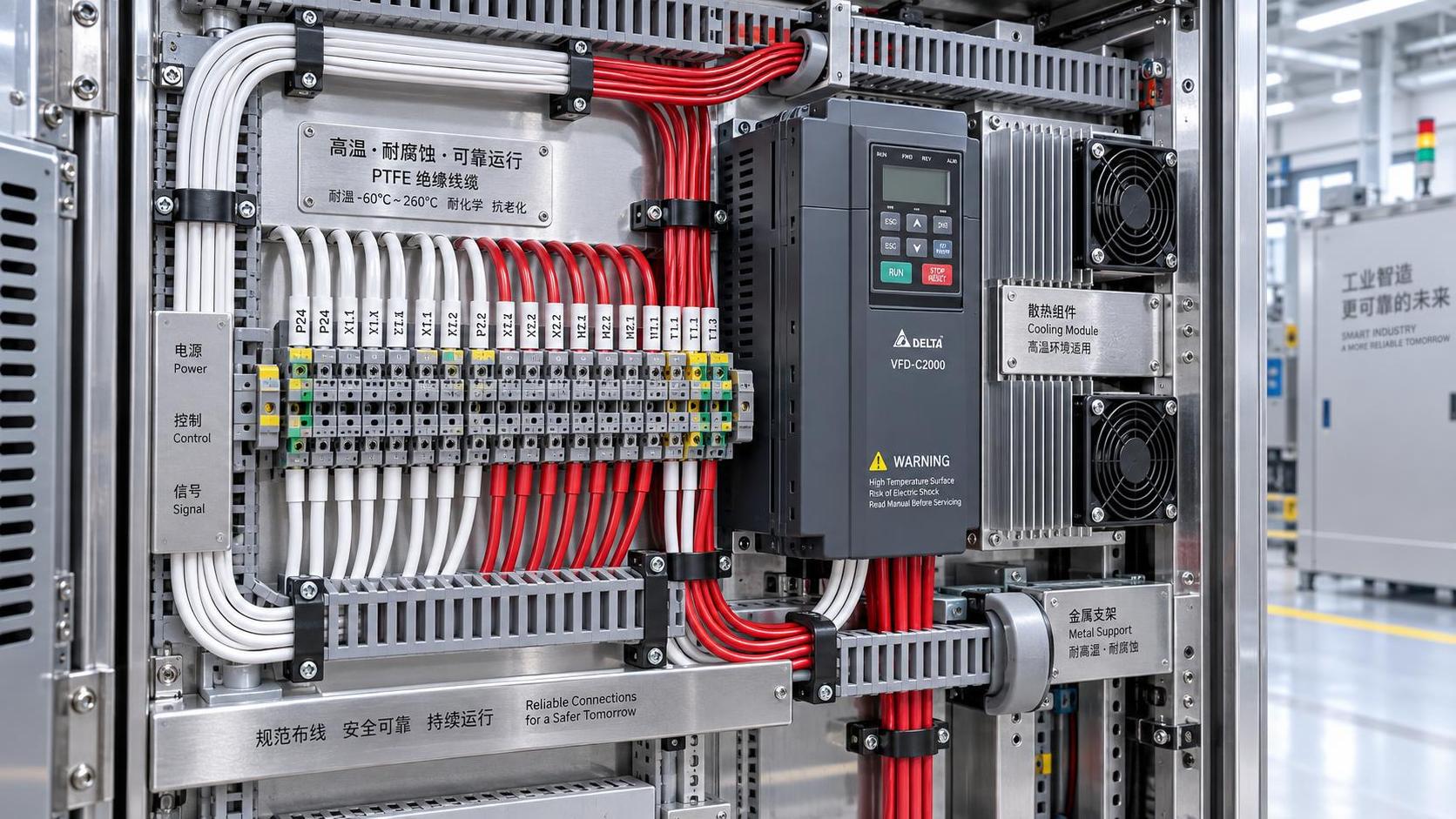
- Switchboards with no spare compartments for additional feeders or motor control sections.
- Backup systems sized only for critical loads defined in phase 1, not later digital infrastructure.
- Monitoring platforms that collect data from 20 devices but struggle when the site reaches 80 to 100 nodes.
A practical threshold for early redesign
As a general planning principle, once a core power asset operates above roughly 80% of its intended continuous capacity for sustained periods, expansion options should be reviewed immediately. That does not mean the system is failing. It means the margin for maintenance bypass, transient loading, and future add-ons is narrowing.
How to evaluate Electrical & Power solutions for industrial scale
A scalable procurement framework should cover at least 6 dimensions: load profile, compliance, redundancy, maintainability, digital visibility, and supplier support. These criteria help buyers compare options on operational fit rather than on price sheets alone. For industrial decision-makers, this reduces the risk of selecting equipment that performs well in a datasheet review but poorly in real operating conditions.
Core technical and commercial checkpoints
The table below summarizes a practical review structure for Electrical & Power solutions in manufacturing plants, processing facilities, utilities, and infrastructure projects. It can be used during prequalification, bid comparison, or design validation meetings.
The key takeaway is that scalable Electrical & Power solutions must be validated as systems, not as isolated components. A strong transformer specification loses value if switchgear access, cabling, and monitoring architecture cannot support future load or maintenance strategy.
Questions procurement and engineering teams should ask together
- What is the expected load growth over the next 36 to 60 months?
- How much redundancy is required: N, N+1, or segmented critical-load protection?
- Which assets must remain energized during maintenance or partial shutdowns?
- What ambient temperature, dust, vibration, or corrosion conditions will affect derating?
- Can replacement parts be sourced within 7 to 21 days in the target region?
Why documentation quality is a buying criterion
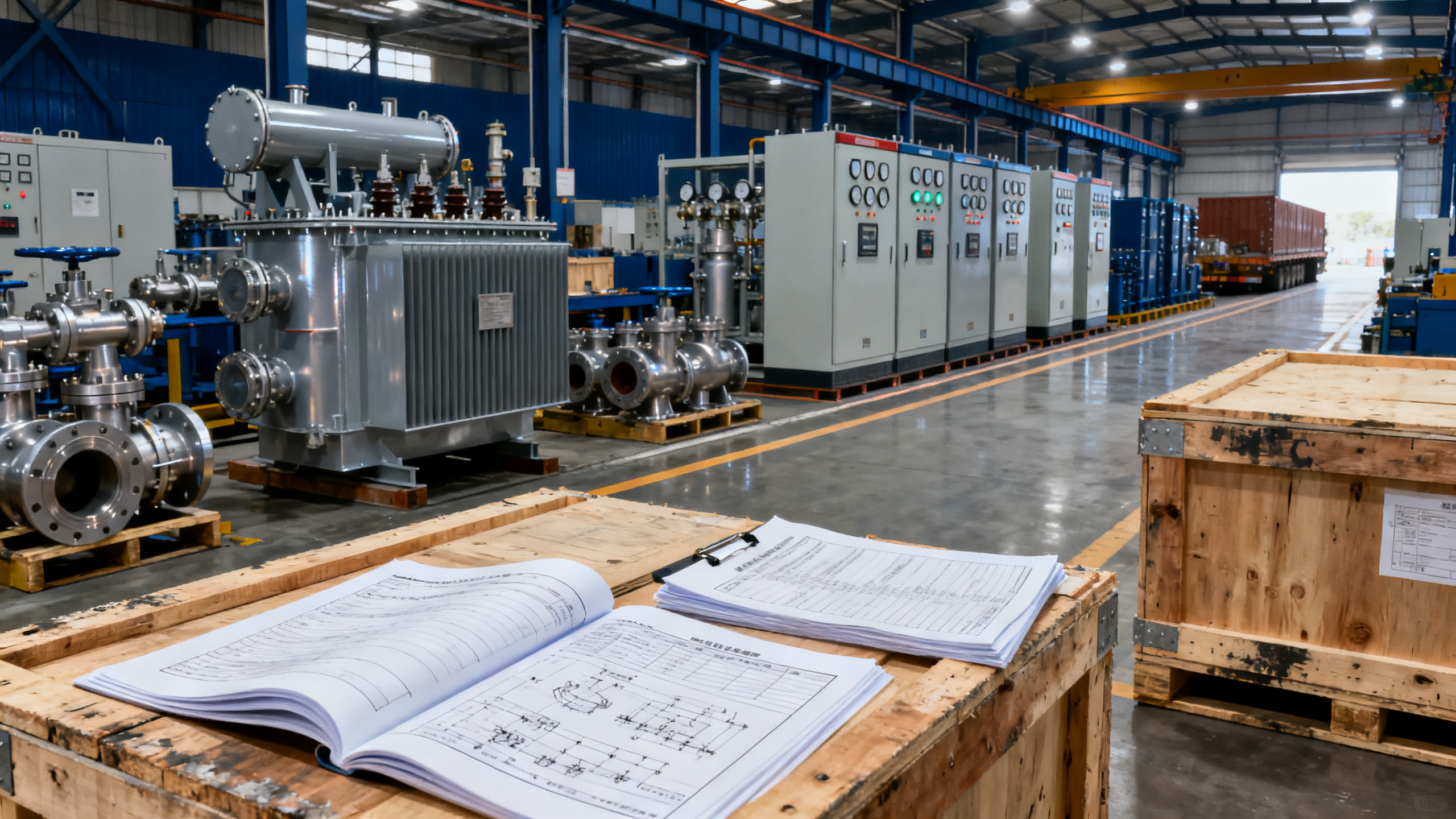
In global industrial sourcing, documentation is often the difference between a smooth commissioning sequence and a delayed handover. Buyers should expect complete wiring diagrams, protection settings, testing records, material lists, and installation instructions. Missing documentation can add days or weeks to site integration even when the equipment itself arrives on time.
Typical scalable architectures for different industrial scenarios
Not every site needs the same power topology. A metals plant, water treatment facility, logistics hub, and pharmaceutical plant may all require robust Electrical & Power solutions, but their scaling logic differs. Load continuity, harmonics, process sensitivity, and maintenance windows shape the architecture.
Common deployment patterns
The table below outlines common scenarios and the features that usually matter most during expansion planning. These are broad planning references rather than rigid design prescriptions.
The most effective architecture is usually the one that matches site conditions and expansion sequence, not the one with the highest specification in every category. Overdesign can lock in unnecessary capital expenditure, while underdesign creates repeated disruption. The goal is targeted flexibility.
Balancing centralization and modularity
Centralized power distribution can simplify oversight and protection coordination, especially in facilities with stable layouts. However, modular or distributed approaches often accelerate staged expansion. For example, skid-based units, sectional switchboards, or containerized substations can reduce on-site rework and shorten deployment by 2 to 6 weeks in some project schedules.
Decision-makers should assess where modularity creates the most value: incoming power, backup systems, process-level control power, or remote operational zones. The answer depends on how frequently the site layout changes and how costly each outage event would be.
Implementation risks that drive hidden cost
Even well-specified Electrical & Power solutions can underperform if implementation discipline is weak. In industrial settings, hidden costs often emerge from poor sequencing, incomplete protection studies, late cable route changes, and acceptance tests that do not match actual site conditions. Preventing rework requires technical alignment from design through commissioning.
Four recurring failure points
- Load assumptions based on nameplate values instead of measured operating patterns.
- Protection coordination completed too late, after equipment selection is effectively locked.
- Insufficient allowance for ambient temperatures above 40°C, contamination, or altitude-related derating.
- Commissioning plans that test individual assets but not the full operational sequence under realistic switching conditions.
A 5-step implementation discipline
- Validate actual and projected load categories: continuous, intermittent, critical, and expandable.
- Freeze the single-line concept only after redundancy and maintenance scenarios are agreed.
- Review compliance, enclosure, grounding, and environmental assumptions before procurement release.
- Run FAT and pre-commissioning checks against the real control and protection philosophy.
- Capture as-built documentation within the first 30 days after startup.
This sequence helps management teams control both schedule risk and technical debt. A project that saves 2% on equipment but delays energization by 2 weeks may create a far larger business impact than expected, especially when multiple contractors or production commitments are involved.
What enterprise buyers should prioritize in supplier selection
Supplier choice influences long-term performance just as much as equipment design. For enterprise procurement, the best Electrical & Power solutions usually come from vendors and technical partners who can support documentation, compliance interpretation, spare parts planning, and regional execution. This is especially important for companies managing more than one plant or operating across different regulatory environments.
Commercial and operational selection criteria
Procurement teams should test suppliers against both bid quality and post-award support. A technically compliant quotation is only the starting point. Buyers should also examine lead times, engineering response speed, training support, and the availability of equivalent replacement parts over a multi-year period.
- Lead time transparency for standard versus configured assemblies, often ranging from 4 to 16 weeks.
- Clarity on factory testing scope, witness options, and documentation handover.
- Regional service support for startup, troubleshooting, and maintenance training.
- Ability to support phased expansion without redesigning the entire system.
- Commercial flexibility on spare kits, framework agreements, and lifecycle support.
Why intelligence-led sourcing improves outcomes
For global industrial buyers, sourcing decisions are stronger when technical evaluation and market intelligence are connected. That means comparing not just product claims, but also standards alignment, application fit, material robustness, and implementation practicality. A disciplined sourcing process reduces the risk of selecting an option that appears equivalent on paper but introduces field complications later.
Global Industrial Core supports this decision model by focusing on the systems that power, protect, and sustain industrial operations. For organizations navigating complex upgrades, cross-border procurement, or multi-phase infrastructure expansion, insight quality can be as important as component quality.
Scalable Electrical & Power solutions are not defined by size alone. They are defined by how well they support future load, maintain compliance, simplify maintenance, and reduce the probability of disruptive rework. For enterprise decision-makers, the strongest outcomes come from early capacity planning, disciplined technical review, and supplier selection tied to lifecycle performance rather than short-term price.
If your team is planning a facility upgrade, grid integration project, or phased industrial expansion, now is the time to assess whether your current power strategy can scale cleanly. Contact us to discuss your requirements, request a tailored evaluation framework, or explore more Electrical & Power solutions aligned with resilient industrial growth.
Technical Specifications
- How to Select an Emissions Monitoring System Analyzer for Compliance ReportingAuthor :Precision Metrology Expert
- How to Select an Access Control Management System for Multi-Site FacilitiesAuthor :Safety Compliance Lead
- Portable Gas Monitor Calibration: How Often Is It Needed for Safe Confined-Space Work?Author :Precision Metrology Expert
Expert Insights

Chief Security Architect
Dr. Thorne specializes in the intersection of structural engineering and digital resilience. He has advised three G7 governments on industrial infrastructure security.
Related Analysis
- Sep 21, 2026How to Select an Emissions Monitoring System Analyzer for Compliance ReportingAuthor :Precision Metrology Expert
- Sep 20, 2026How to Select an Access Control Management System for Multi-Site FacilitiesAuthor :Safety Compliance Lead
- Sep 19, 2026Portable Gas Monitor Calibration: How Often Is It Needed for Safe Confined-Space Work?Author :Precision Metrology Expert
Core Sector // 01
Security & Safety
- Selecting PTFE Insulated Hookup Wire for High-Temperature Control PanelsAuthor :Grid Infrastructure Analyst

- How Contractors Can Evaluate EPC Sourcing Solutions for Cost, Lead Time, and RiskAuthor :Grid Infrastructure Analyst

- What Drives Silicone Cable Bulk Price in Industrial Orders?Author :Grid Infrastructure Analyst

- EN 61000-6-4:2026 Takes Effect for EU-Bound ControlsAuthor :Grid Infrastructure Analyst

- How to Choose Low Smoke Cables and Wiring for Safer Commercial Buildings?Author :Grid Infrastructure Analyst

- Medium Voltage Armored Cable Selection Guide: Voltage Rating, Armor Type, and InstallationAuthor :Grid Infrastructure Analyst

- EU Publishes EN IEC 61000-6-4:2026 for Industrial EMCAuthor :Grid Infrastructure Analyst

- Choosing an XLPE Power Cable Manufacturer: 7 Checks for Voltage Class and ComplianceAuthor :Grid Infrastructure Analyst