Global Industrial Cable Lead Times Alert: LSZH Material Costs Up 23%, REACH Annex XVII Phthalate Restrictions Expand
Author
Date Published
Reading Time
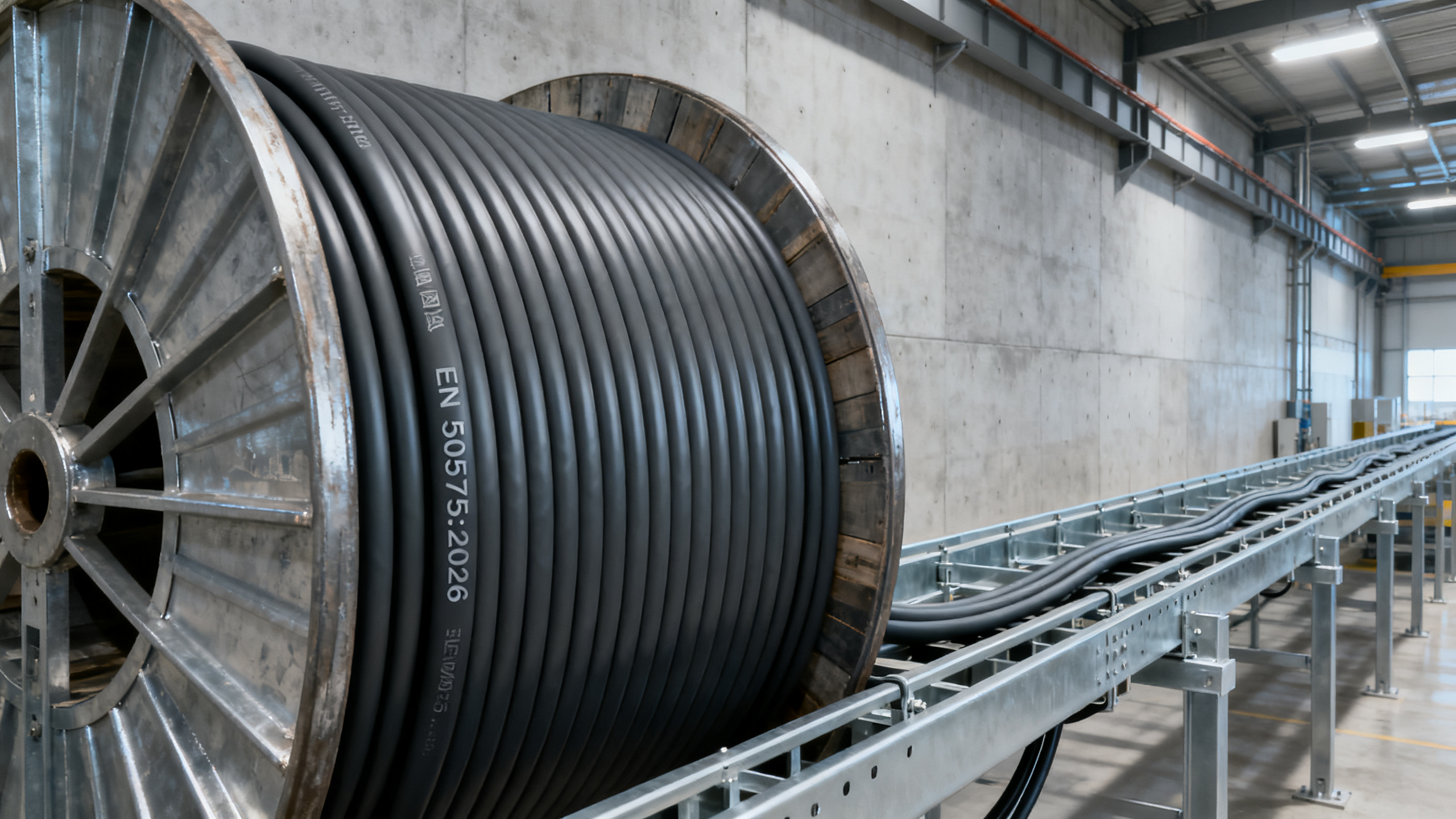
On May 9, 2026, the International Cable Association (ICA) issued a supply chain alert highlighting sharp cost and lead time pressures across global industrial cable markets—driven by new EU REACH Annex XVII restrictions on phthalates and surging demand for EN 50575:2026-compliant LSZH (Low Smoke Zero Halogen) cable compounds. Industrial end users in building infrastructure, rail transport, data centers, and industrial automation should monitor this development closely, as it signals material availability constraints and extended procurement timelines that are already impacting project planning and budgeting.
Event Overview
According to the ICA’s report dated May 9, 2026, the European Union has added three phthalate substances—DEHP, BBP, and DBP—to REACH Annex XVII, with enforcement effective August 2026. As a result, LSZH cable sheathing compound prices compliant with EN 50575:2026 rose 23% month-on-month. Concurrently, container shipping capacity remains tight, pushing average delivery lead times for industrial-grade multi-core cables to 22 weeks.
Impact on Specific Industry Segments
Direct Trading Enterprises: Exporters and importers of finished industrial cables face margin compression due to sudden raw material cost increases and longer transit windows. Pricing renegotiation clauses and forward freight booking become more critical, especially for EU-bound shipments post-August 2026.
Raw Material Procurement Entities: Buyers sourcing LSZH compounds—particularly from Chinese or Southeast Asian suppliers—are experiencing steep price volatility and allocation constraints. Spot purchases are increasingly unavailable; contracts now require longer minimum order quantities and earlier deposit terms.
Manufacturing & Assembly Firms: Cable producers using LSZH-sheathed products for fire-rated applications (e.g., public buildings, tunnels, mass transit) must reassess BOM costs and validate alternative compound formulations against EN 50575:2026. Production scheduling is affected by both material lead times and certification recertification cycles.
Distribution & Channel Partners: Distributors holding legacy inventory risk obsolescence if stock does not meet updated phthalate limits. Inventory turnover slows, and technical documentation (e.g., DoC, test reports per EN 50575:2026) gains heightened importance during customer audits.
Supply Chain Service Providers: Logistics and customs compliance specialists must update classification guidance for LSZH cables entering the EU. Harmonized System (HS) code verification, REACH declaration readiness, and pre-shipment conformity checks are now higher-priority service offerings.
Key Considerations and Practical Responses
Monitor official EU regulatory updates and national transposition timelines
While Annex XVII entry takes effect in August 2026, national enforcement protocols—including testing frequency, documentation requirements, and market surveillance scope—may vary. Track updates from ECHA and EU Member State competent authorities, particularly for cables classified under Construction Products Regulation (CPR).
Prioritize validation of LSZH compound certifications and supplier declarations
Confirm that current and prospective LSZH material suppliers provide updated test reports covering DEHP, BBP, and DBP per EN 14582 or ISO 16000-23. Cross-check supplier Declarations of Conformity against EN 50575:2026 Annex ZA.
Distinguish between regulatory signal and operational impact
The 23% price increase reflects immediate market reaction—not yet full regulatory implementation. However, the 22-week lead time indicates structural bottlenecks in compound production capacity and logistics coordination. Treat current pricing and timelines as near-term baselines, not temporary anomalies.
Initiate dual-sourcing assessments and buffer stock planning for high-risk SKUs
Identify LSZH-dependent cable SKUs with longest lead times and highest EU exposure. Evaluate feasibility of staggered procurement, safety stock thresholds, and qualification of secondary compound suppliers—even if at premium cost—to mitigate single-source disruption risk.
Editorial Perspective / Industry Observation
Observably, this development functions less as an isolated regulatory change and more as a convergence point: tightening environmental compliance, constrained specialty chemical supply, and persistent maritime logistics friction. Analysis shows the 23% LSZH price jump is not solely cost-pass-through but reflects reallocation of production capacity toward REACH-compliant batches—a shift that may persist beyond August 2026. From an industry perspective, the 22-week lead time signals that downstream manufacturers have limited ability to absorb delays without affecting project milestones. This is not yet a crisis—but it is a measurable inflection point in industrial cable supply chain resilience.
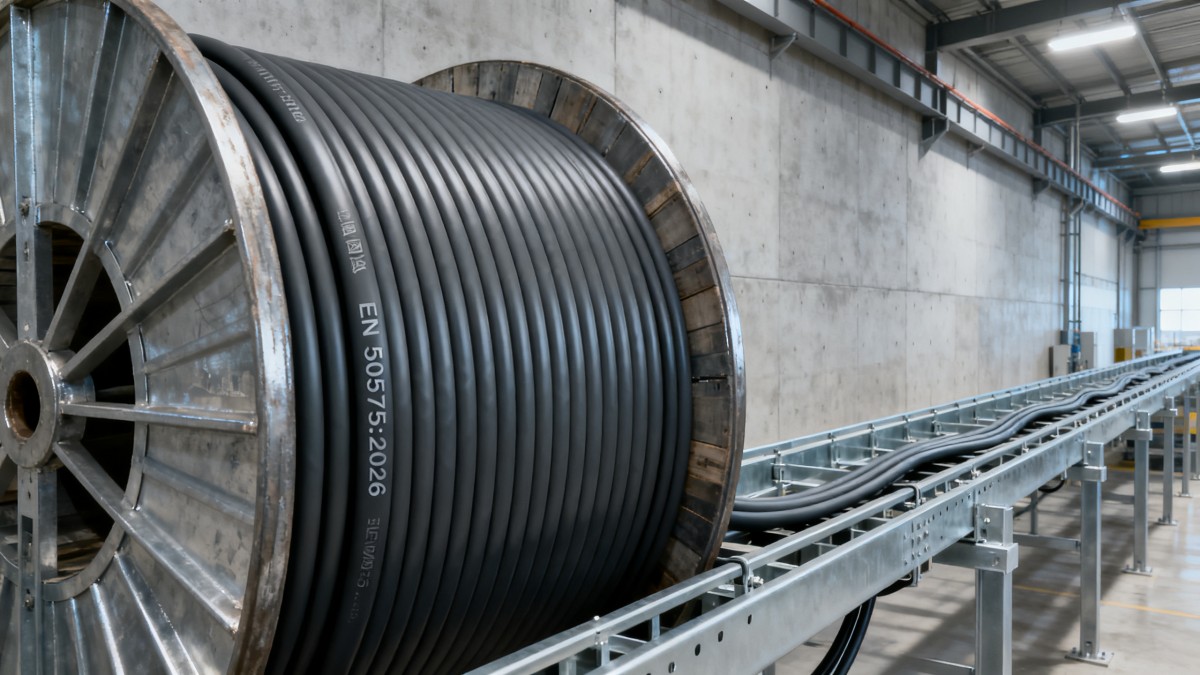
It is more accurate to interpret this alert as an early-stage systemic stress indicator rather than a one-off policy shock. The combination of compound scarcity, certification transition, and freight scarcity suggests cumulative pressure—not transient volatility.
Conclusion
This alert underscores how environmental regulation—when intersecting with material science constraints and global logistics realities—can rapidly reshape procurement economics and delivery expectations in industrial cable markets. Rather than viewing the REACH update as a standalone compliance task, stakeholders should treat it as a catalyst for reviewing end-to-end supply chain visibility, material traceability, and technical documentation readiness. Currently, the situation is best understood as an operational inflection requiring proactive calibration—not reactive firefighting.
Source Attribution
Main source: International Cable Association (ICA), “Supply Chain Alert: LSZH Material Cost and Lead Time Impacts”, May 9, 2026.
Noted for ongoing observation: National implementation approaches by EU Member States under REACH Annex XVII, and potential adjustments to EN 50575:2026 harmonized standards by CEN.
Technical Specifications
- Air Handling Unit Supplier Checklist: Performance Data, Lead Times, and SupportAuthor :Environmental Engineering Director
- Buying Fiberglass Water Tanks Wholesale: Compare Quotes and Delivery CostsAuthor :Environmental Engineering Director
- Choosing an XLPE Power Cable Supplier: Test Reports, Traceability, and Lead TimesAuthor :Grid Infrastructure Analyst
Expert Insights

Chief Security Architect
Dr. Thorne specializes in the intersection of structural engineering and digital resilience. He has advised three G7 governments on industrial infrastructure security.
Related Analysis
- Oct 19, 2026Air Handling Unit Supplier Checklist: Performance Data, Lead Times, and SupportAuthor :Environmental Engineering Director
- Oct 18, 2026Buying Fiberglass Water Tanks Wholesale: Compare Quotes and Delivery CostsAuthor :Environmental Engineering Director
- Oct 17, 2026Choosing an XLPE Power Cable Supplier: Test Reports, Traceability, and Lead TimesAuthor :Grid Infrastructure Analyst
Core Sector // 01
Security & Safety
- Choosing an XLPE Power Cable Supplier: Test Reports, Traceability, and Lead TimesAuthor :Grid Infrastructure Analyst

- How to Select XLPO Insulated Solar Cable for UV, Heat, and High-Voltage PV SystemsAuthor :Grid Infrastructure Analyst

- Selecting PTFE Insulated Hookup Wire for High-Temperature Control PanelsAuthor :Grid Infrastructure Analyst

- How Contractors Can Evaluate EPC Sourcing Solutions for Cost, Lead Time, and RiskAuthor :Grid Infrastructure Analyst

- What Drives Silicone Cable Bulk Price in Industrial Orders?Author :Grid Infrastructure Analyst

- EN 61000-6-4:2026 Takes Effect for EU-Bound ControlsAuthor :Grid Infrastructure Analyst

- How to Choose Low Smoke Cables and Wiring for Safer Commercial Buildings?Author :Grid Infrastructure Analyst

- Medium Voltage Armored Cable Selection Guide: Voltage Rating, Armor Type, and InstallationAuthor :Grid Infrastructure Analyst