How to read an Electrical & Power quotation without missing costs
Author
Date Published
Reading Time
An Electrical & Power quotation can look straightforward at first glance, yet hidden line items, compliance charges, and lifecycle costs often escape financial review. For approvers responsible for budget control and risk reduction, knowing how to read a quotation thoroughly is essential. This guide helps you identify missing costs, verify technical and commercial details, and make more confident approval decisions.
Why financial approvers often miss cost exposure in an Electrical & Power quotation
In industrial procurement, an Electrical & Power quotation is rarely just a price list. It is a commercial summary of technical scope, compliance responsibility, packaging assumptions, delivery conditions, and risk allocation between buyer and supplier.
Finance teams usually review totals, payment terms, and tax. Engineering teams focus on ratings, drawings, and performance. The gap appears when no one checks whether the quoted scope fully matches the project requirement, installation environment, and regulatory obligations.
That gap can lead to unplanned spend on cable accessories, testing, supervision, field commissioning, protective enclosures, document legalization, or compliance upgrades required by the end user or EPC contract.
- Quoted equipment appears complete, but essential auxiliaries are listed as optional or excluded.
- Commercial wording seems standard, but freight, duties, preservation, and insurance are shifted to the buyer.
- Technical compliance is mentioned generally, yet project-specific standards, witness tests, or certification copies are not included.
- Warranty is stated, but field conditions, commissioning support, and spare parts coverage are limited.
For financial approvers in heavy industry, the most important question is not “Is this price acceptable?” It is “What costs and liabilities remain outside this quotation?” That is where disciplined quotation reading protects both budget and schedule.
What an Electrical & Power quotation should contain before approval
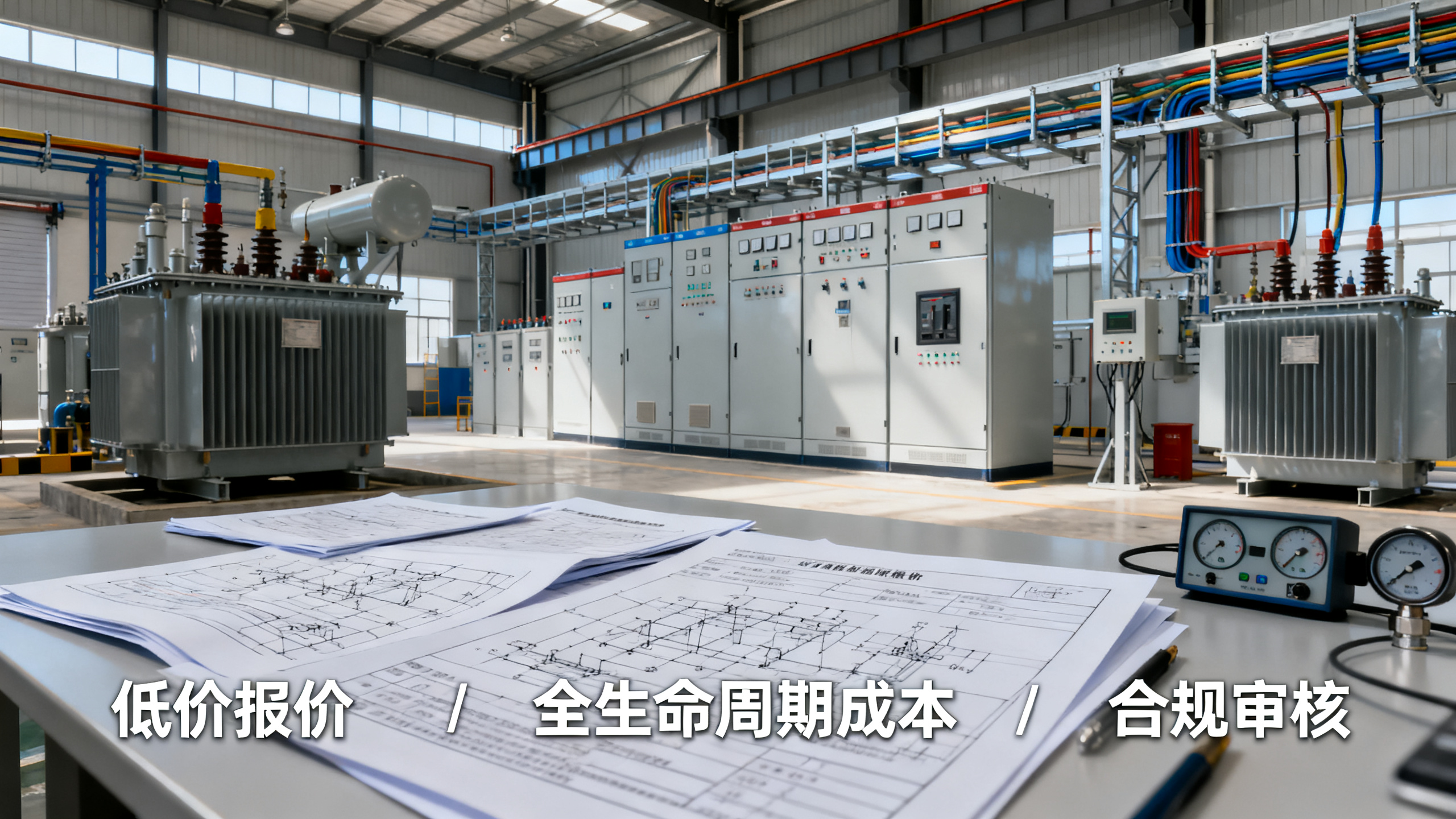
Before approving any Electrical & Power quotation, finance should confirm the document covers both commercial and technical completeness. A low headline price with missing scope is often more expensive than a higher but well-defined offer.
Use the checklist below to test whether the supplier has described the offer with enough detail for reliable approval and later contract enforcement.
A complete Electrical & Power quotation should let a reviewer trace each cost back to a defined scope element. If any cost appears as a lump sum without technical basis, ask for a line-by-line clarification before approval.
Key documents that should support the quotation
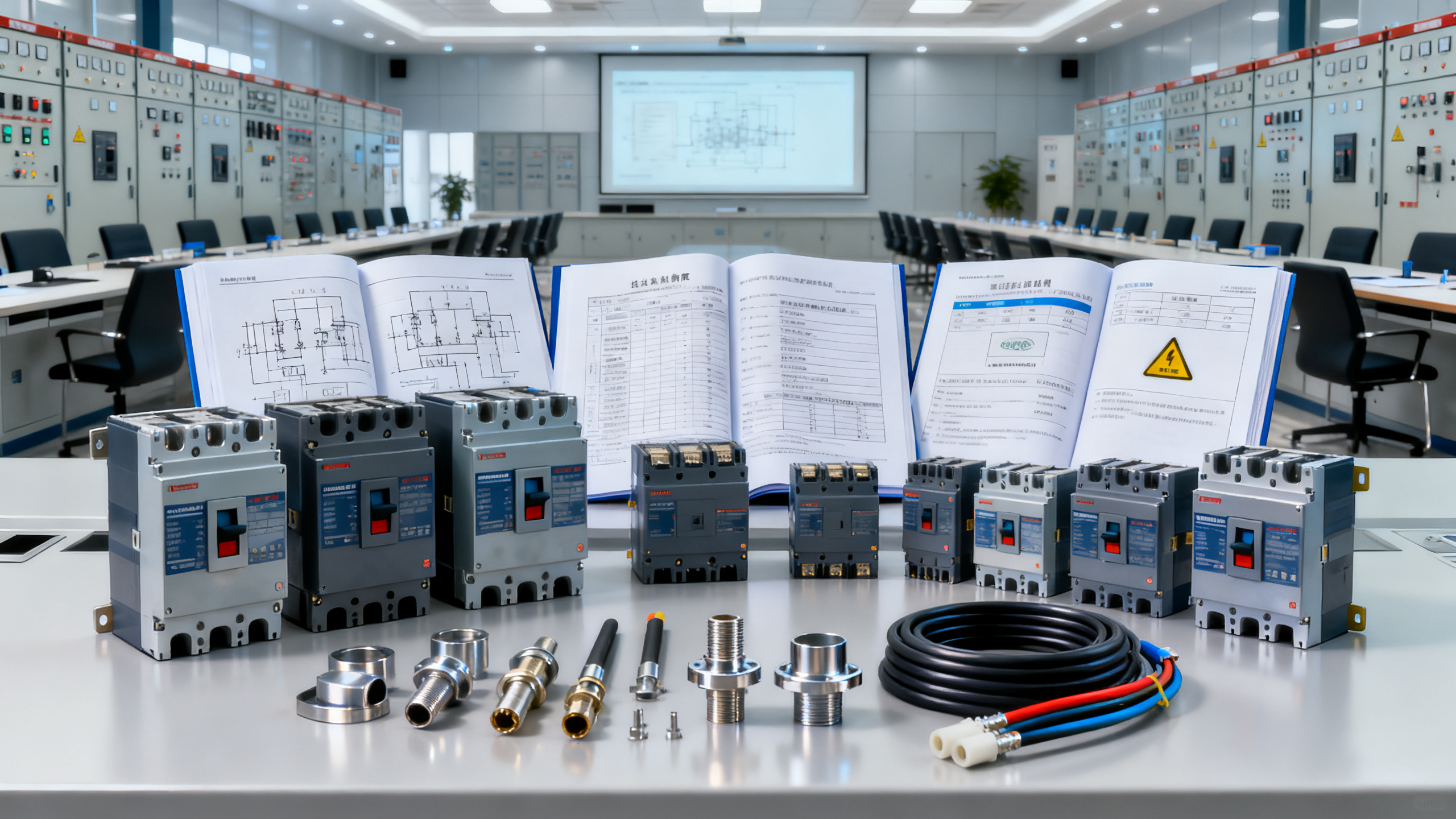
- Data sheets showing voltage, current, frequency, interrupting capacity, insulation class, and environmental limits.
- Single-line diagrams, general arrangement drawings, or bill of materials summaries.
- Compliance references for CE, UL, ISO-related quality processes, or other contractually required standards.
- Deviation list identifying where the supplier proposal differs from the inquiry package.
How to spot the hidden costs line by line
The most reliable way to review an Electrical & Power quotation is to separate direct purchase cost from deferred cost. Deferred cost appears later as change orders, installation complications, logistics claims, commissioning delays, or compliance corrections.
1. Scope exclusions
Read the exclusions as carefully as the included items. Suppliers may exclude cable termination kits, earth bars, surge protection devices, interconnecting cables, communication modules, panel space heaters, or special coatings needed for corrosive locations.
2. Site and environmental assumptions
Check ambient temperature, altitude, humidity, hazardous area classification, seismic requirement, and ingress protection. If the quotation assumes standard indoor conditions while the actual site is coastal, hot, dusty, or hazardous, extra engineering and replacement costs often follow.
3. Logistics and packaging
Wooden crates, export preservation, shock monitoring, container loading restrictions, and marine transit protection are not always included. For overseas industrial supply, these items can materially affect the real landed cost.
4. Testing, inspection, and certification
A quotation may include routine factory tests but exclude third-party witness testing, project-specific FAT procedures, document legalization, or notarized certificates. These are common additions in EPC and regulated infrastructure projects.
5. Commissioning and after-sales support
Start-up supervision, remote troubleshooting, software configuration, relay setting support, and operator training may be priced separately. If your team assumes these services are included, the approved budget can fail during execution.
Which cost categories are most often missing from an Electrical & Power quotation
Financial approvers benefit from grouping quotation exposure into predictable categories. This makes cross-bid comparison easier and helps reveal whether a low quote is actually under-scoped.
The table below highlights frequent omissions found in industrial electrical purchasing across utility interfaces, manufacturing plants, water treatment facilities, and process sites.
This structure helps finance compare quotations on total ownership logic rather than procurement headline price. It is especially useful when supplier formats differ and one bidder appears cheaper simply because scope detail is thinner.
How to compare suppliers without rewarding incomplete pricing
An Electrical & Power quotation should be compared on normalized scope. If one supplier includes FAT, certificates, export packing, and commissioning documents while another excludes them, the numbers are not comparable.
Build a finance-side comparison matrix
- List required commercial elements: base price, taxes, freight basis, payment schedule, warranty, and validity.
- List required technical elements: ratings, standards, inspection, accessories, documentation, and site conditions.
- Assign a yes, no, or extra-cost marker to each bidder.
- Add expected cost uplift for every missing or uncertain item.
- Review the adjusted total before approving the award recommendation.
This method prevents under-scoped quotations from winning on paper and losing in execution. In large industrial programs, even a small omission in each electrical package can cascade into major budget erosion.
Warning signs during bid review
- Too many notes such as “by others,” “if required,” or “not in our scope.”
- No explicit reference to inquiry revision or technical specification version.
- Large lump sums with no bill-of-material breakdown.
- Short validity period in a volatile metals or components market.
Why standards and certification lines matter to finance, not only engineering
Compliance costs in an Electrical & Power quotation are often misunderstood as optional engineering detail. In reality, they affect insurability, acceptance, customs clearance, and the legal defensibility of the procurement decision.
Depending on project geography and end-use environment, the quotation may need to address CE marking relevance, UL-recognized components, ISO-controlled manufacturing processes, environmental declarations, or test evidence aligned with contract specifications.
Questions finance should ask before sign-off
- Are required certifications included in the commercial scope or priced later as document support?
- Does the supplier proposal state who bears the cost if the client requests additional test evidence?
- If local code differs from manufacturing standard, is redesign included?
- Will missing documentation delay payment milestones or project handover?
GIC’s value in this stage is practical: it helps bridge the language between engineering specification and financial exposure, so quotation review is based on operating reality rather than assumptions.
Practical approval workflow for an Electrical & Power quotation
A repeatable workflow reduces approval risk, especially when multiple sites, EPC packages, or urgent shutdown schedules are involved. Financial approvers do not need to become design engineers, but they do need a disciplined review path.
Recommended approval sequence
- Match the quotation against the inquiry document, scope matrix, and latest revision drawings.
- Identify all exclusions, qualifications, and assumptions in a separate approval note.
- Ask engineering to confirm functional completeness, not only nameplate compliance.
- Ask procurement to normalize freight, taxes, duties, and service charges across suppliers.
- Approve only after contingency for unresolved items is visible and accepted.
This process is particularly useful in integrated industrial projects where electrical packages interact with safety systems, instrumentation, mechanical drives, and environmental controls. A quotation error in one pillar often generates costs in another.
FAQ: common approval questions about an Electrical & Power quotation
How detailed should an Electrical & Power quotation be before finance approval?
It should be detailed enough to confirm scope, ratings, standards, delivery basis, testing, documentation, and warranty responsibilities. If major accessories or services cannot be traced, the approval should remain conditional.
Is the lowest quoted price usually the lowest project cost?
Not necessarily. In many industrial procurements, the lowest initial Electrical & Power quotation becomes more expensive after freight adjustments, missing compliance documents, additional site support, or late design corrections are added.
What line items deserve extra attention in international supply?
Export packing, preservation, Incoterms, insurance, customs documentation, certificate legalization, and destination-country compliance requirements deserve close review. These items often sit outside the base equipment price.
When should finance ask for a revised quotation?
Ask for revision when scope is unclear, optional items are actually mandatory, engineering deviations are not priced, or testing and certification responsibilities remain ambiguous. A revised document is better than approving a weak commercial baseline.
Why choose us for quotation review support and sourcing guidance
Global Industrial Core supports financial approvers, procurement leaders, and EPC stakeholders who need more than supplier marketing language. Our focus is on foundational industrial systems where quotation gaps create operational, contractual, and safety consequences.
We help you examine an Electrical & Power quotation through the lenses that matter most to approval quality: scope completeness, standards alignment, total landed cost, documentation risk, and execution exposure across interconnected industrial packages.
- Parameter confirmation for ratings, environmental conditions, and interface requirements.
- Quotation comparison support to normalize supplier scope and reveal hidden cost gaps.
- Guidance on delivery lead time, inspection expectations, and documentation checkpoints.
- Advice on certification requirements, testing scope, and commercial clarifications before approval.
- Discussion of alternative sourcing paths when budget, schedule, or compliance pressure changes the procurement strategy.
If you are reviewing an Electrical & Power quotation and need support on technical-commercial alignment, scope validation, delivery assumptions, or approval risk, contact GIC with your inquiry package, supplier offer, and project conditions. That makes quotation communication faster, comparison cleaner, and approval decisions more defensible.
Technical Specifications
- Fuling, Chongqing Targets $20B Advanced Materials Cluster; Light Alloy Auto Parts Export Certification AcceleratesAuthor :Heavy Industry Strategist
- Ningxia's 'Green Power + Computing' Drives Zero-Carbon Export Certification for Industrial SensorsAuthor :Environmental Engineering Director
- Dongning Black Fungus Output to Exceed $390M; Demand Rises for Food-Grade Stainless Steel Conveyor BeltsAuthor :Environmental Engineering Director
Expert Insights

Chief Security Architect
Dr. Thorne specializes in the intersection of structural engineering and digital resilience. He has advised three G7 governments on industrial infrastructure security.
Related Analysis
- May 13, 2026Fuling, Chongqing Targets $20B Advanced Materials Cluster; Light Alloy Auto Parts Export Certification AcceleratesAuthor :Heavy Industry Strategist
- May 13, 2026Ningxia's 'Green Power + Computing' Drives Zero-Carbon Export Certification for Industrial SensorsAuthor :Environmental Engineering Director
- May 13, 2026Dongning Black Fungus Output to Exceed $390M; Demand Rises for Food-Grade Stainless Steel Conveyor BeltsAuthor :Environmental Engineering Director
Core Sector // 01
Security & Safety
- SAMR to Complete 1,800+ Standards Revisions by 2026Author :Grid Infrastructure Analyst

- How to read an Electrical & Power quotation without missing costsAuthor :Grid Infrastructure Analyst

- EU REACH Annex XVII Adds Phthalates Restriction for Industrial CablesAuthor :Grid Infrastructure Analyst

- Electrical & Power Quotations That Look Low but Cost More LaterAuthor :Grid Infrastructure Analyst

- EU REACH Annex XVII Adds Phthalates Restrictions for Industrial CablesAuthor :Grid Infrastructure Analyst

- Global Industrial Cable Lead Times Alert: LSZH Material Costs Up 23%, REACH Annex XVII Phthalate Restrictions ExpandAuthor :Grid Infrastructure Analyst

- Electrical & Power standards that often get missed in upgradesAuthor :Grid Infrastructure Analyst

- Electrical & Power solutions that scale without costly reworkAuthor :Grid Infrastructure Analyst