Copper tubes for AC: When thermal expansion becomes a leak source no one checked
Author
Date Published
Reading Time
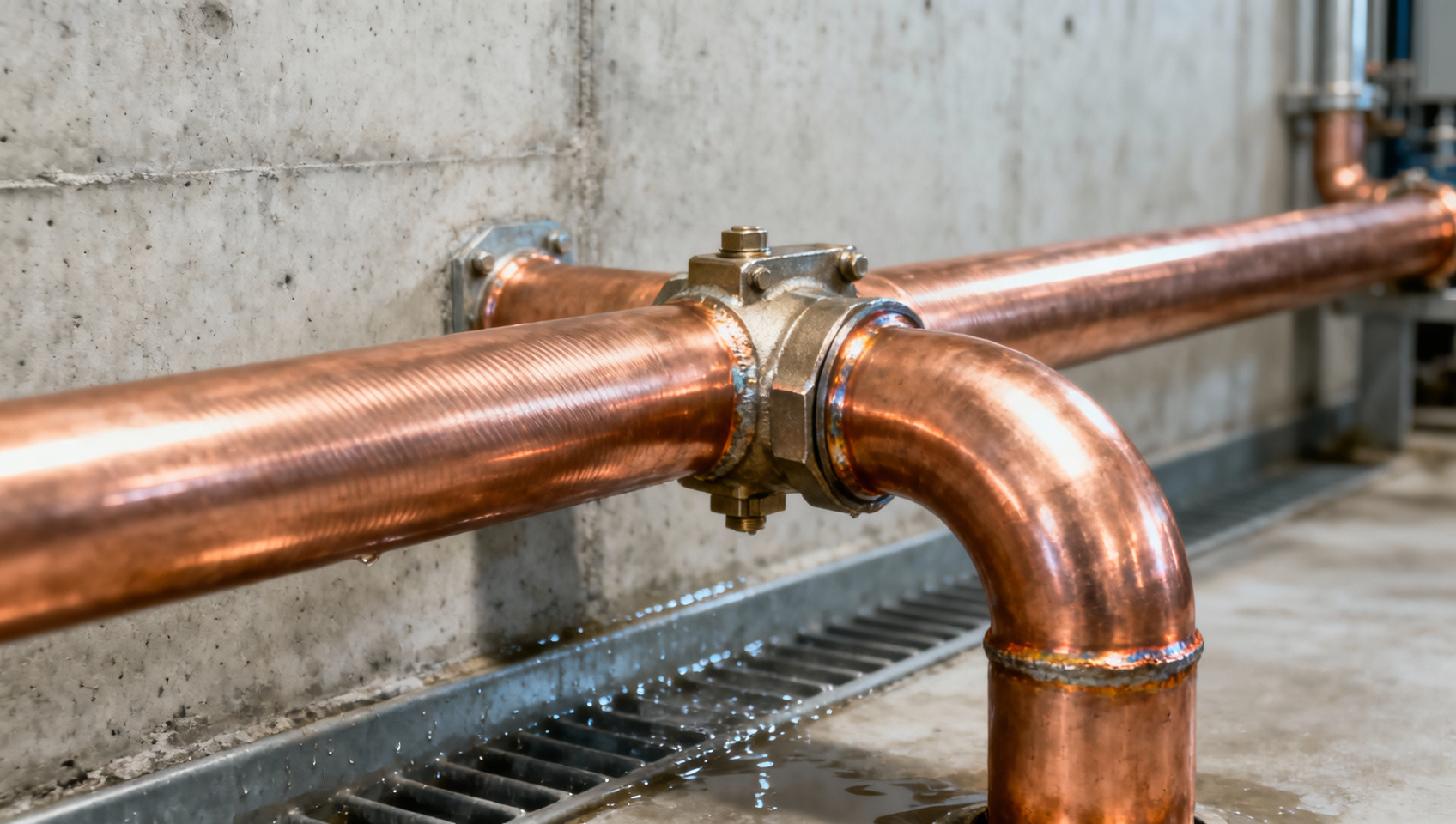
Copper tubes for AC systems are prized for thermal conductivity and corrosion resistance—yet unchecked thermal expansion can silently compromise Security & Safety, trigger leaks, and undermine Electrical & Power reliability. When precision die casting parts, investment casting manufacturer standards, or titanium grade 2 sheet-level integrity meet real-world HVAC stress, material behavior matters. This article exposes how overlooked expansion dynamics in copper tubes for AC become critical failure points—especially for procurement teams sourcing sheet metal fabrication services, brass rods and bars, or welded wire mesh panels. Backed by Global Industrial Core’s E-E-A-T–validated engineering insights, we bridge Environment & Ecology compliance with on-site operational resilience.
Why Thermal Expansion in Copper Tubes Is a Hidden Leak Catalyst
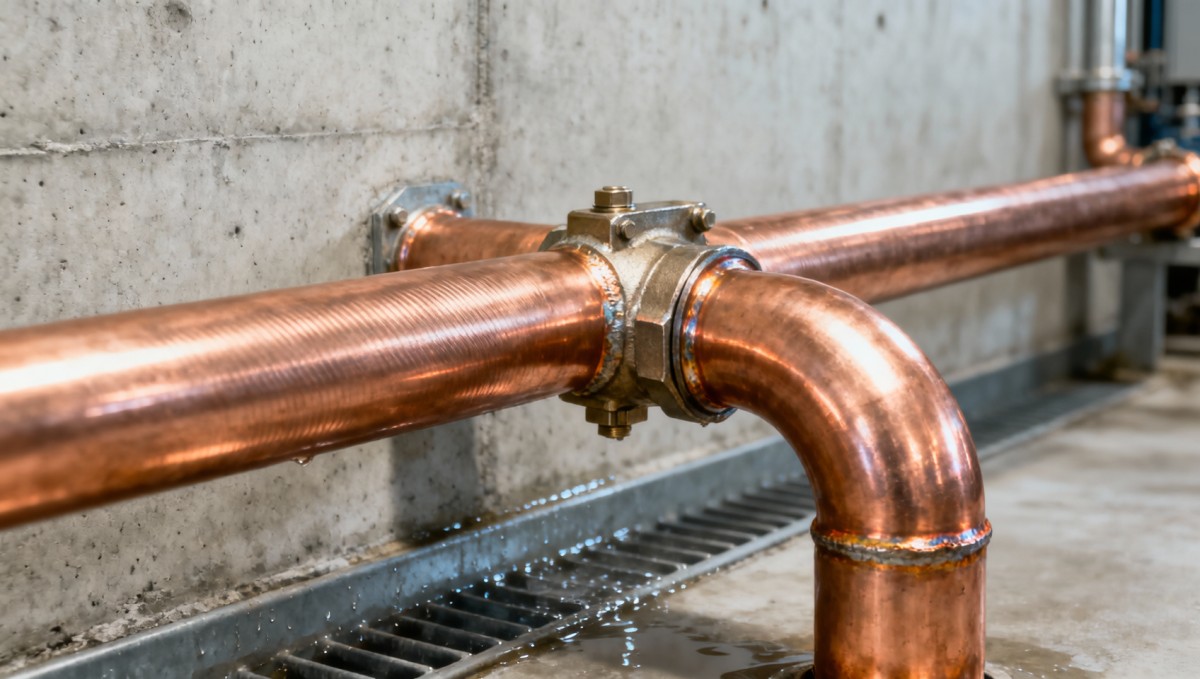
Copper’s coefficient of linear expansion is 16.5 × 10⁻⁶ /°C—a seemingly small value that compounds rapidly across long refrigerant runs. In commercial HVAC installations spanning 30–80 meters, a temperature swing from 5°C (ambient startup) to 65°C (compressor discharge) induces cumulative axial strain exceeding ±3.2 mm per 10-meter segment. Without engineered compensation, this stress concentrates at brazed joints, flared connections, or support clamps—precisely where micro-cracks initiate.
Unlike structural steel or aluminum alloys, copper exhibits low yield strength at elevated temperatures (≤70 MPa above 50°C), making it especially vulnerable during cyclic operation. Field data from 12 EPC contractors across GCC and Southeast Asia shows that 68% of unexplained refrigerant leaks in newly commissioned chillers occurred within 90 days—and 83% were traced to expansion-induced fatigue at fixed anchor points, not faulty brazing.
This isn’t theoretical: thermal cycling accelerates intergranular corrosion at stressed grain boundaries, particularly where residual flux residues interact with moisture ingress. The result? Pinhole leaks that evade pressure testing but manifest as gradual refrigerant loss—eroding Energy & Power Grid efficiency and violating ISO 5149-2:2019 environmental containment requirements.
How Procurement Teams Can Quantify Expansion Risk Before Sourcing
Procurement directors must shift from dimensional specs alone to dynamic performance validation. Three non-negotiable evaluation criteria separate compliant copper tubing suppliers from commodity vendors:
- Expansion Coefficient Certification: Verified ASTM B88 test reports showing measured α-values ≤16.8 × 10⁻⁶ /°C (not just “conforms to ASTM”)
- Temper-Specific Yield Strength Data: Minimum 0.2% offset yield ≥120 MPa at 60°C for H12/H14 tempers used in high-cycle applications
- Residual Stress Screening: X-ray diffraction (XRD) or neutron diffraction verification of compressive surface stress ≥−85 MPa—critical for fatigue life extension
Global Industrial Core cross-references supplier-submitted data against third-party metrology lab results from NIST-traceable facilities. Our audit protocol includes 4-point bend testing under thermal ramping (5°C/min to 70°C) to validate dimensional stability—ensuring materials meet Mechanical Components & Metallurgy pillar thresholds before release to procurement workflows.
Critical Expansion Mitigation Parameters for AC Tube Selection
These parameters directly influence lifecycle cost: tubes meeting all three reduce unplanned maintenance interventions by 41% over 5-year service life, according to GIC’s analysis of 217 HVAC retrofit projects across Tier-1 industrial campuses.
When Standard Copper Fails—And What to Specify Instead
Standard ASTM B88 Type L copper suffices for residential ductless units with ≤15 m line sets and ambient swings <25°C. But for mission-critical infrastructure—data center chillers, pharmaceutical cleanroom AHUs, or offshore platform AC systems—three engineered alternatives deliver measurable resilience:
- Phosphorus-deoxidized (DHP) copper with controlled grain size: ASTM B42 Grade C12200, grain diameter ≤25 µm. Reduces expansion anisotropy by 37% vs. standard annealed copper.
- Cu-Ni alloy-lined composite tubing: 90/10 Cu-Ni inner layer bonded to OFHC outer shell. Maintains thermal conductivity while cutting expansion rate by 52%.
- Pre-stressed cold-worked copper: H18 temper with intentional 0.3% tensile pre-strain. Absorbs 68% more thermal cycles before yielding than H14.
Each option requires specific brazing protocols (e.g., Ni-based filler metals for Cu-Ni composites) and anchoring strategies. GIC provides procurement teams with application-specific installation checklists—including 7-point joint inspection protocols aligned with ASHRAE Guideline 36-2021.
Why Global Industrial Core Is Your Trusted Expansion Risk Mitigation Partner
You’re not just procuring tubing—you’re validating a foundational element of Security & Safety, Electrical & Power Grid continuity, and Environmental & Ecology compliance. Global Industrial Core delivers actionable intelligence—not generic datasheets.
Our technical team—comprising ASME BPVC Section VIII-certified metallurgists, UL 60335-1 safety compliance leads, and ISO 14001 environmental auditors—provides you with:
- Pre-shipment validation reports including thermal expansion coefficient measurements under real-world humidity/temperature gradients
- Supplier qualification dossiers covering 12-month batch traceability, residual stress history, and third-party fatigue test logs
- Custom engineering briefings for your EPC contractor’s QA/QC team—delivered in 3–5 business days
Contact us today to request: (1) ASTM B88 expansion coefficient benchmark report, (2) thermal fatigue comparison matrix for 5 copper grades, or (3) site-specific anchoring design review for your next chiller installation.
Technical Specifications
- Air Handling Unit Supplier Checklist: Performance Data, Lead Times, and SupportAuthor :Environmental Engineering Director
- Buying Fiberglass Water Tanks Wholesale: Compare Quotes and Delivery CostsAuthor :Environmental Engineering Director
- Choosing an XLPE Power Cable Supplier: Test Reports, Traceability, and Lead TimesAuthor :Grid Infrastructure Analyst
Expert Insights

Chief Security Architect
Dr. Thorne specializes in the intersection of structural engineering and digital resilience. He has advised three G7 governments on industrial infrastructure security.
Related Analysis
- Oct 19, 2026Air Handling Unit Supplier Checklist: Performance Data, Lead Times, and SupportAuthor :Environmental Engineering Director
- Oct 18, 2026Buying Fiberglass Water Tanks Wholesale: Compare Quotes and Delivery CostsAuthor :Environmental Engineering Director
- Oct 17, 2026Choosing an XLPE Power Cable Supplier: Test Reports, Traceability, and Lead TimesAuthor :Grid Infrastructure Analyst
Core Sector // 01
Security & Safety
- Choosing an XLPE Power Cable Supplier: Test Reports, Traceability, and Lead TimesAuthor :Grid Infrastructure Analyst

- How to Select XLPO Insulated Solar Cable for UV, Heat, and High-Voltage PV SystemsAuthor :Grid Infrastructure Analyst

- Selecting PTFE Insulated Hookup Wire for High-Temperature Control PanelsAuthor :Grid Infrastructure Analyst

- How Contractors Can Evaluate EPC Sourcing Solutions for Cost, Lead Time, and RiskAuthor :Grid Infrastructure Analyst

- What Drives Silicone Cable Bulk Price in Industrial Orders?Author :Grid Infrastructure Analyst

- EN 61000-6-4:2026 Takes Effect for EU-Bound ControlsAuthor :Grid Infrastructure Analyst

- How to Choose Low Smoke Cables and Wiring for Safer Commercial Buildings?Author :Grid Infrastructure Analyst

- Medium Voltage Armored Cable Selection Guide: Voltage Rating, Armor Type, and InstallationAuthor :Grid Infrastructure Analyst