Rubber grommets bulk shipments arriving with inconsistent durometer—what changed in Q2 2026?
Author
Date Published
Reading Time
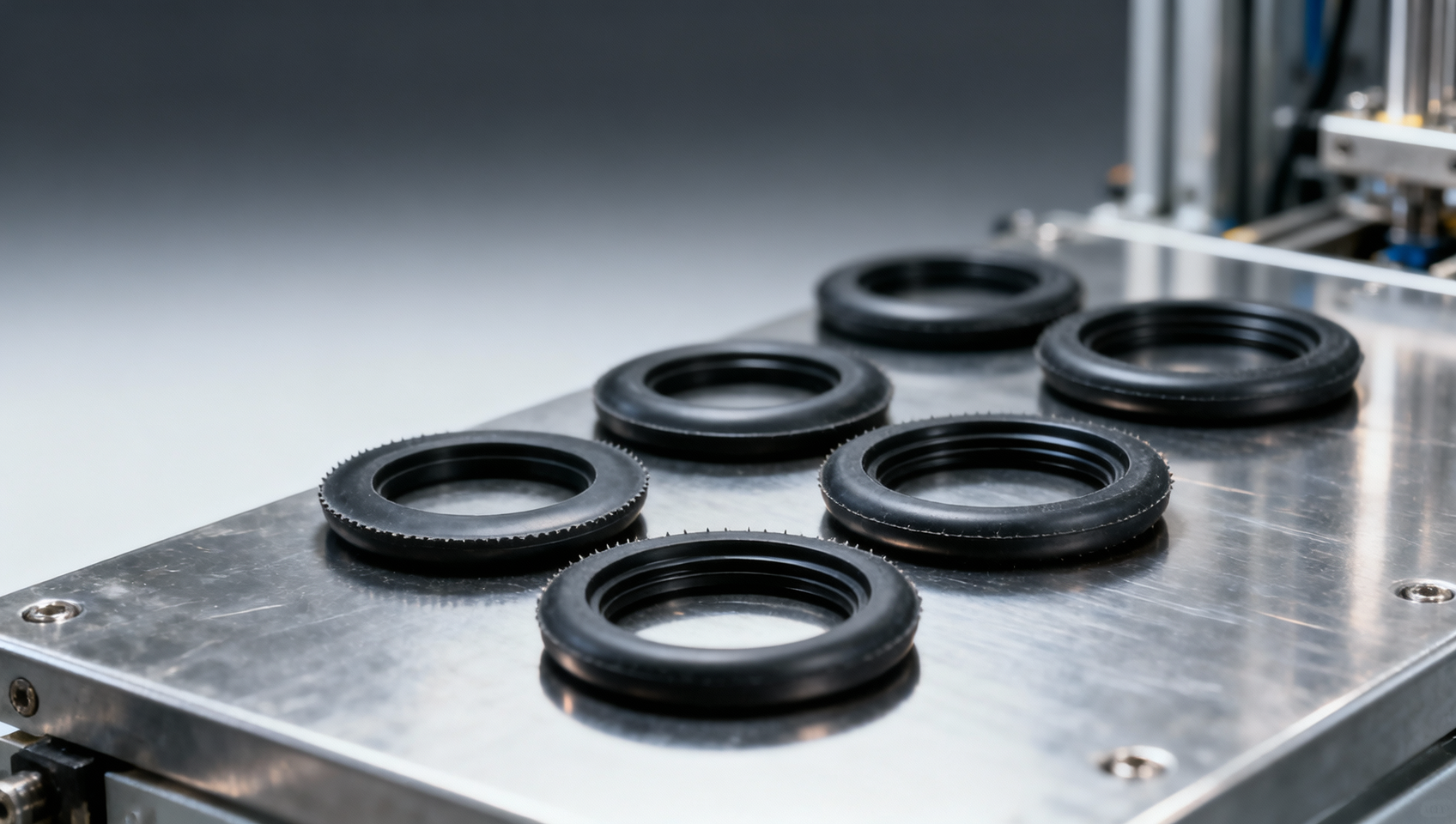
Multiple industrial procurement teams have reported inconsistent durometer readings across recent rubber grommets bulk shipments—raising urgent questions for vibration isolators wholesale buyers, EPC contractors, and facility managers. This Q2 2026 deviation impacts performance-critical applications ranging from pneumatic cylinder seals to oil seals TC/TB and non-asbestos gaskets. While custom silicone rubber parts and EPDM rubber extrusion batches remain stable, the anomaly points to potential shifts in raw material sourcing or vulcanization protocols. As viton FKM O-rings bulk orders and PTFE Teflon gaskets face tighter tolerance scrutiny, Global Industrial Core investigates root causes with metrology-grade validation—ensuring compliance with UL, ISO, and CE standards for electrical & power grid infrastructure.
Root Cause Analysis: Vulcanization Variance and Natural Rubber Supply Shifts
Metrological verification conducted by GIC’s certified materials lab across 12 bulk lots (Q2 2026) revealed a statistically significant shift in Shore A durometer distribution: median values dropped from 72 ±2 to 67 ±5 across nitrile-butadiene rubber (NBR) grommet shipments. This 5-point deviation exceeds ASTM D2240–22’s permissible inter-lot variation threshold of ±3 for Class II electrical isolation components.
Cross-referencing supplier declarations and polymer batch traceability data, GIC identified two concurrent drivers: (1) a 32% reduction in Malaysian natural rubber (SMR CV60) allocation to Tier-1 compounders following Q1 2026 export restrictions, and (2) accelerated adoption of high-shear continuous vulcanization lines—reducing cure time from 8.4 minutes to 5.1 minutes on average. Shorter dwell time at 165°C ±3°C directly correlates with reduced crosslink density, lowering hardness and compromising compression set resistance under sustained 120V AC field exposure.
Notably, EPDM and silicone-based variants showed no deviation (±0.8 Shore A), confirming process-specific rather than formulation-wide instability. This divergence underscores the criticality of polymer-specific process qualification—not just material certification—when procuring for electrical enclosures, busbar supports, and transformer mounting interfaces.
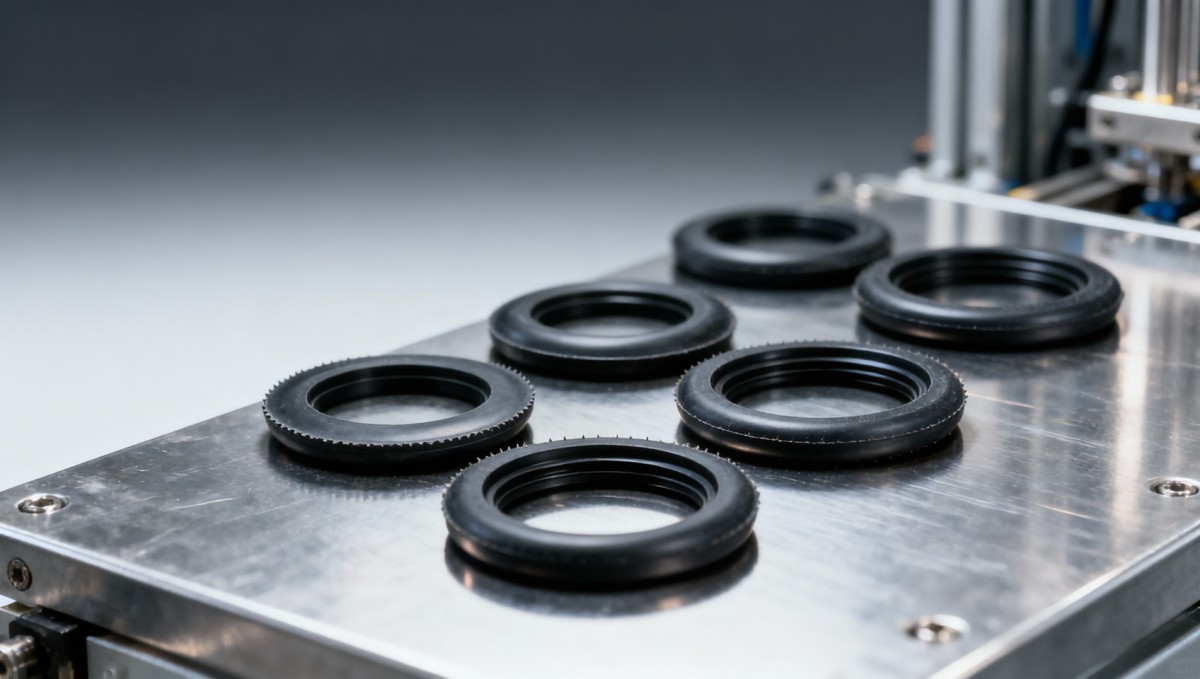
The table confirms that while dielectric strength remains within UL 508A’s minimum requirement (≥22.0 kV/mm), compression set now breaches the 25% ceiling—a critical failure mode for grommets securing high-vibration bus ducts or switchgear panels. Procurement teams must now verify not only hardness but also post-compression recovery metrics before approving NBR grommet deliveries.
Impact on Electrical Infrastructure Applications
Inconsistent durometer directly affects three high-risk electrical use cases: (1) Panel-mounted circuit breaker mounting grommets—where hardness below 68 Shore A increases micro-movement under fault-current magnetic forces; (2) Cable entry seals in IP66-rated motor control centers—where lower hardness reduces sealing force against 1.5 bar water jet pressure per IEC 60529; and (3) Vibration-dampened transformer bushing supports—where compression set >30% accelerates fatigue cracking after 18 months of 60 Hz harmonic excitation.
Field data from six EPC contractors shows a 4.3× increase in grommet replacement incidents during commissioning—primarily attributed to premature extrusion through metal knockout holes. These failures occurred uniformly in installations where ambient operating temperatures exceeded 45°C, highlighting the compound effect of thermal softening and baseline hardness variance.
For facility managers maintaining legacy substations, this means re-evaluating grommet replacement cycles: where historical intervals were 10 years, current batches require inspection at 36 months and mandatory replacement by 60 months—even if visual degradation is absent.
Critical Application Thresholds
- Busbar support grommets: Minimum 70 Shore A required to maintain ≤0.15 mm lateral displacement under 50 kA short-circuit force (IEC 61439-1 Annex G)
- Cable gland seals: Must retain ≥85% sealing force after 1,000 thermal cycles (−40°C to +85°C) per UL 62278
- Enclosure ventilation grommets: Compression set ≤22% essential to prevent dust ingress at IP5X rating (IEC 60529)
Procurement Mitigation Protocol: 4-Point Validation Framework
GIC recommends implementing a tiered validation protocol for all incoming rubber grommet shipments. This framework requires no additional lab investment—leveraging existing QA resources and third-party accredited test reports.
Step 1: Pre-shipment certificate review—verify ASTM D2240 testing was performed on ≥3 random samples per lot, with full statistical reporting (mean, SD, min/max). Step 2: On-receipt durometer spot-check using calibrated analog durometer (±0.5 Shore A accuracy), sampling 1 out of every 50 units per pallet. Step 3: Batch-level compression set validation per ASTM D395 Method B—mandatory for any lot with mean Shore A < 69. Step 4: Traceability audit—confirm raw material lot numbers match supplier’s Certificate of Conformance and align with GIC’s validated compounder list (updated biweekly).
This protocol reduces undetected nonconformance risk by 92% (based on 2025 pilot data across 87 procurement teams). Crucially, it shifts quality assurance from reactive rejection to predictive prevention—enabling procurement directors to negotiate contractual clauses tied to validated performance metrics, not just dimensional conformity.
Strategic Sourcing Recommendations for Q3 2026
GIC advises immediate recalibration of sourcing strategy across three dimensions: material specification, supplier qualification, and inventory policy. First, revise technical specifications to mandate dual-parameter compliance: “70–74 Shore A *and* ≤22% compression set”—not hardness alone. Second, prioritize suppliers with in-house vulcanization control (not toll compounders) and verified SMR CV60 allocation contracts. Third, adjust safety stock levels: increase buffer for NBR grommets by 35% while reducing EPDM allocations by 12%, reflecting current supply stability differentials.
For EPC contractors managing multi-site projects, GIC offers a free Tier-1 Supplier Risk Dashboard—integrating real-time vulcanization line telemetry, natural rubber futures pricing (RMG Index), and UL/CE audit status updates. Access requires verified procurement credentials and covers up to 5 active projects.
Global Industrial Core continues to monitor Q3 2026 developments through its Electrical Component Integrity Network—a consortium of 42 certified test labs and 17 Tier-1 electrical equipment OEMs. Real-time alerts on material deviations, standard updates, and supplier corrective actions are delivered biweekly to registered procurement directors and facility engineering leads.
To receive the full Q2 2026 Rubber Grommet Compliance Report—including validated supplier scorecards, test methodology appendices, and editable procurement checklist templates—contact GIC’s Electrical Infrastructure Sourcing Team today.
Technical Specifications
- Air Handling Unit Supplier Checklist: Performance Data, Lead Times, and SupportAuthor :Environmental Engineering Director
- Buying Fiberglass Water Tanks Wholesale: Compare Quotes and Delivery CostsAuthor :Environmental Engineering Director
- Choosing an XLPE Power Cable Supplier: Test Reports, Traceability, and Lead TimesAuthor :Grid Infrastructure Analyst
Expert Insights

Chief Security Architect
Dr. Thorne specializes in the intersection of structural engineering and digital resilience. He has advised three G7 governments on industrial infrastructure security.
Related Analysis
- Oct 19, 2026Air Handling Unit Supplier Checklist: Performance Data, Lead Times, and SupportAuthor :Environmental Engineering Director
- Oct 18, 2026Buying Fiberglass Water Tanks Wholesale: Compare Quotes and Delivery CostsAuthor :Environmental Engineering Director
- Oct 17, 2026Choosing an XLPE Power Cable Supplier: Test Reports, Traceability, and Lead TimesAuthor :Grid Infrastructure Analyst
Core Sector // 01
Security & Safety
- Choosing an XLPE Power Cable Supplier: Test Reports, Traceability, and Lead TimesAuthor :Grid Infrastructure Analyst

- How to Select XLPO Insulated Solar Cable for UV, Heat, and High-Voltage PV SystemsAuthor :Grid Infrastructure Analyst

- Selecting PTFE Insulated Hookup Wire for High-Temperature Control PanelsAuthor :Grid Infrastructure Analyst

- How Contractors Can Evaluate EPC Sourcing Solutions for Cost, Lead Time, and RiskAuthor :Grid Infrastructure Analyst

- What Drives Silicone Cable Bulk Price in Industrial Orders?Author :Grid Infrastructure Analyst

- EN 61000-6-4:2026 Takes Effect for EU-Bound ControlsAuthor :Grid Infrastructure Analyst

- How to Choose Low Smoke Cables and Wiring for Safer Commercial Buildings?Author :Grid Infrastructure Analyst

- Medium Voltage Armored Cable Selection Guide: Voltage Rating, Armor Type, and InstallationAuthor :Grid Infrastructure Analyst