EU REACH Annex XVII Adds Phthalates Restrictions for Industrial Cables
Author
Date Published
Reading Time
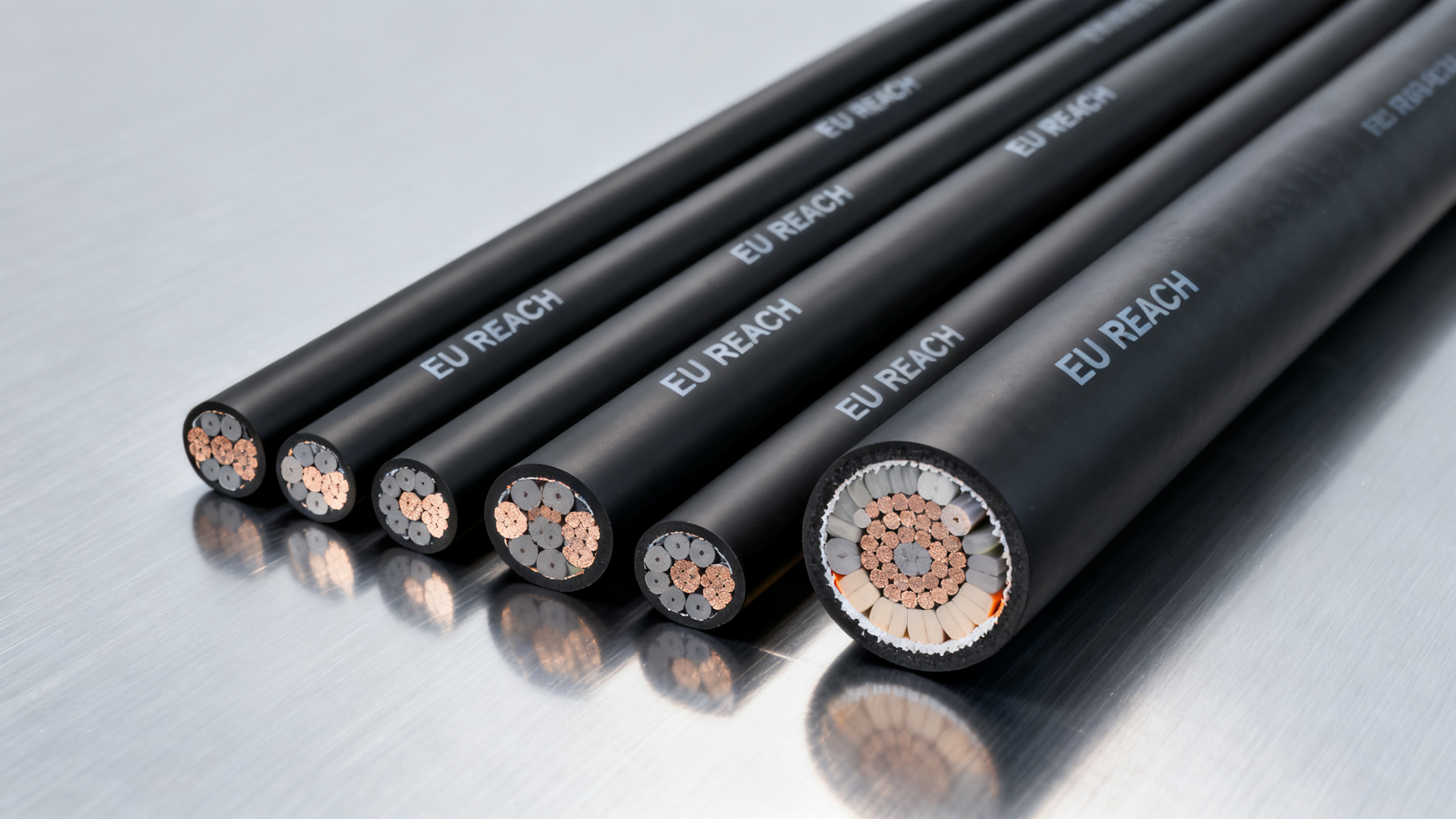
On 10 May 2026, the European Chemicals Agency (ECHA) officially updated Annex XVII of the EU REACH Regulation to restrict four phthalates — DIBP, DPENP, DHEXP, and DCHP — in cable sheathing and insulation materials at concentrations exceeding 0.1% w/w. This change directly affects exporters of industrial cables, control cables, and power cables to the EU market, triggering immediate updates to SVHC declarations, Safety Data Sheets (SDS), and SCIP database submissions.
Event Overview
Effective 10 May 2026, ECHA published an amendment to REACH Annex XVII introducing concentration limits (≤0.1% w/w) for diisobutyl phthalate (DIBP), dipentyl phthalate (DPENP), di(2-ethylhexyl) phthalate (DHEXP), and dicyclohexyl phthalate (DCHP) in cable sheaths and insulation layers. The restriction applies to all industrial cables, control cables, and power cables placed on the EU market. Compliance requires updated SDS documentation and SCIP notifications; failure may result in customs delays or full shipment rejection.
Which Subsectors Are Affected
Direct Exporters (Cables & Wiring Manufacturers)
Manufacturers exporting industrial, control, or power cables to the EU must verify material composition against the new limits. Impact manifests in mandatory retesting of cable compounds, revision of regulatory documentation (SDS, SCIP), and potential redesign of formulations if legacy materials exceed thresholds.
Raw Material Suppliers (Polymer & Additive Producers)
Suppliers of PVC, TPE, or other polymer-based insulation/sheath compounds containing plasticizers are affected because DIBP, DPENP, DHEXP, and DCHP are commonly used as alternative phthalates. Their customers now require updated declarations of conformity and full substance disclosure down to batch level.
Contract Manufacturers & Cable Assemblers
Entities performing final cable assembly — including jacketing, stranding, or termination — must obtain verified material declarations from upstream suppliers. Absence of compliant documentation breaks the traceability chain required under SCIP, exposing them to compliance liability even if they do not formulate base polymers.
Supply Chain Service Providers (Testing Labs, Regulatory Consultants, Customs Agents)
Third-party service providers face increased demand for phthalate-specific testing (e.g., GC-MS per EN 14372 or ISO 18856), SCIP submission support, and REACH compliance audits. Their role shifts toward verification intermediaries between producers and EU importers.
What Enterprises or Practitioners Should Focus On Now
Monitor official ECHA guidance and national enforcement interpretations
ECHA has not yet published detailed Q&A or application notes on scope boundaries (e.g., whether ‘industrial cable’ includes bundled low-voltage data cables). National competent authorities may issue divergent interpretations — especially regarding legacy stock and transitional provisions — warranting close tracking of national notices post-10 May 2026.
Prioritise verification for high-volume export SKUs and critical raw material lots
Not all cable types carry equal risk: those using recycled PVC, flexible thermoplastic elastomers, or older compound batches are more likely to contain restricted phthalates. Companies should triage based on material origin, production date, and historical test data — not apply blanket retesting across entire product portfolios.
Distinguish between regulatory signal and enforceable obligation
The Annex XVII entry is legally binding as of 10 May 2026, but enforcement timelines for customs inspections and market surveillance vary by Member State. A formal notification does not automatically trigger retroactive checks on shipments cleared before that date — however, documentation submitted after 10 May must reflect compliance.
Update internal documentation workflows and supplier communication protocols
Companies must revise procurement clauses to require SVHC declarations covering all four newly restricted phthalates; update SDS authoring templates to include new Annex XVII references; and assign internal responsibility for SCIP submissions — particularly where EU importers lack in-house regulatory capacity and rely on foreign manufacturers for data input.
Editorial Perspective / Industry Observation
Observably, this amendment signals a tightening of REACH’s substance-by-substance control logic — moving beyond the original ‘big four’ phthalates (DEHP, BBP, DBP, DIBP) to capture structural analogues with similar endocrine-disrupting profiles. Analysis shows it is less a standalone policy shift and more a continuation of the EU’s broader strategy to phase out functional classes of hazardous substances in articles with long service life and high environmental release potential. From an industry standpoint, this update is already operational — not prospective — meaning affected enterprises must treat it as an active compliance requirement, not a future consideration. Continued attention is warranted as ECHA prepares further Annex XVII proposals targeting additional plasticizers and flame retardants in electrical and electronic equipment.
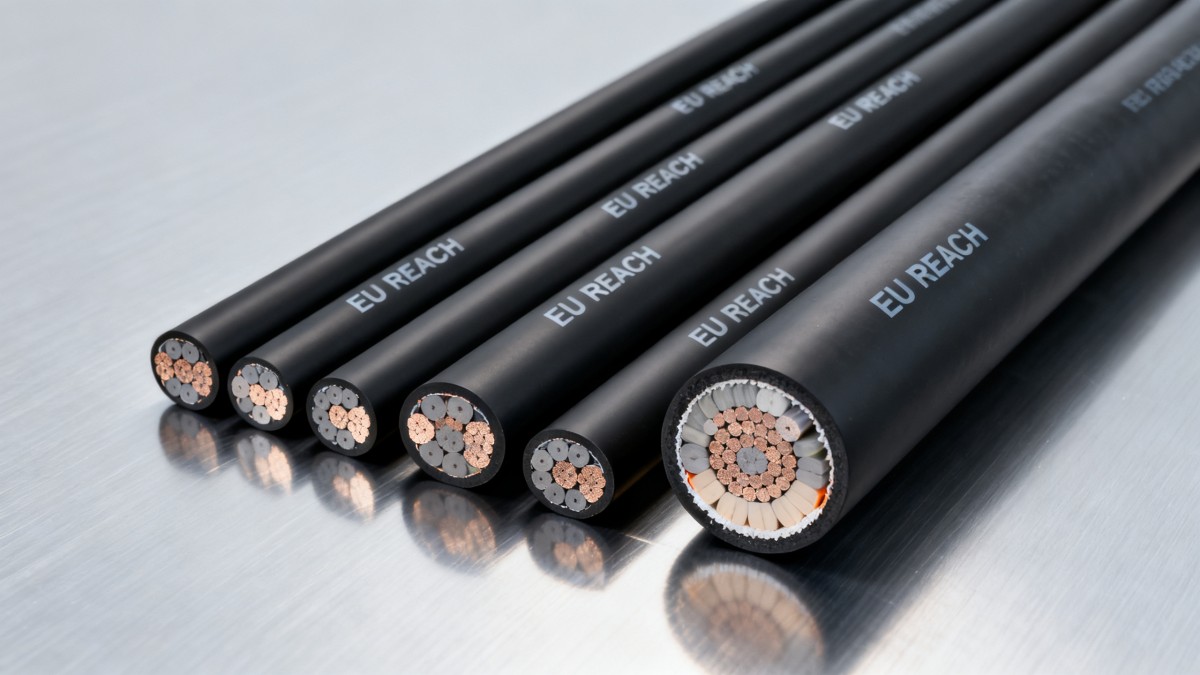
This update marks a concrete step in the EU’s chemical safety framework — one that reshapes technical due diligence for cable supply chains. It is neither a warning nor a proposal, but an enforceable condition for market access. Current practice suggests treating the 10 May 2026 date as a hard deadline for documentation readiness, while recognising that practical enforcement maturity will evolve over the following 6–12 months across EU ports and market surveillance bodies.
Source: European Chemicals Agency (ECHA), Official Journal of the European Union, REACH Annex XVII Entry 72 (as amended, effective 10 May 2026).
Note: Ongoing monitoring is recommended for national implementation guidance issued by EU Member State authorities, which remains pending as of publication.
Technical Specifications
- Air Handling Unit Supplier Checklist: Performance Data, Lead Times, and SupportAuthor :Environmental Engineering Director
- Buying Fiberglass Water Tanks Wholesale: Compare Quotes and Delivery CostsAuthor :Environmental Engineering Director
- Choosing an XLPE Power Cable Supplier: Test Reports, Traceability, and Lead TimesAuthor :Grid Infrastructure Analyst
Expert Insights

Chief Security Architect
Dr. Thorne specializes in the intersection of structural engineering and digital resilience. He has advised three G7 governments on industrial infrastructure security.
Related Analysis
- Oct 19, 2026Air Handling Unit Supplier Checklist: Performance Data, Lead Times, and SupportAuthor :Environmental Engineering Director
- Oct 18, 2026Buying Fiberglass Water Tanks Wholesale: Compare Quotes and Delivery CostsAuthor :Environmental Engineering Director
- Oct 17, 2026Choosing an XLPE Power Cable Supplier: Test Reports, Traceability, and Lead TimesAuthor :Grid Infrastructure Analyst
Core Sector // 01
Security & Safety
- Choosing an XLPE Power Cable Supplier: Test Reports, Traceability, and Lead TimesAuthor :Grid Infrastructure Analyst

- How to Select XLPO Insulated Solar Cable for UV, Heat, and High-Voltage PV SystemsAuthor :Grid Infrastructure Analyst

- Selecting PTFE Insulated Hookup Wire for High-Temperature Control PanelsAuthor :Grid Infrastructure Analyst

- How Contractors Can Evaluate EPC Sourcing Solutions for Cost, Lead Time, and RiskAuthor :Grid Infrastructure Analyst

- What Drives Silicone Cable Bulk Price in Industrial Orders?Author :Grid Infrastructure Analyst

- EN 61000-6-4:2026 Takes Effect for EU-Bound ControlsAuthor :Grid Infrastructure Analyst

- How to Choose Low Smoke Cables and Wiring for Safer Commercial Buildings?Author :Grid Infrastructure Analyst

- Medium Voltage Armored Cable Selection Guide: Voltage Rating, Armor Type, and InstallationAuthor :Grid Infrastructure Analyst