China's EV Ultra-Fast Charging Tech Enters Mass Production
Author
Date Published
Reading Time
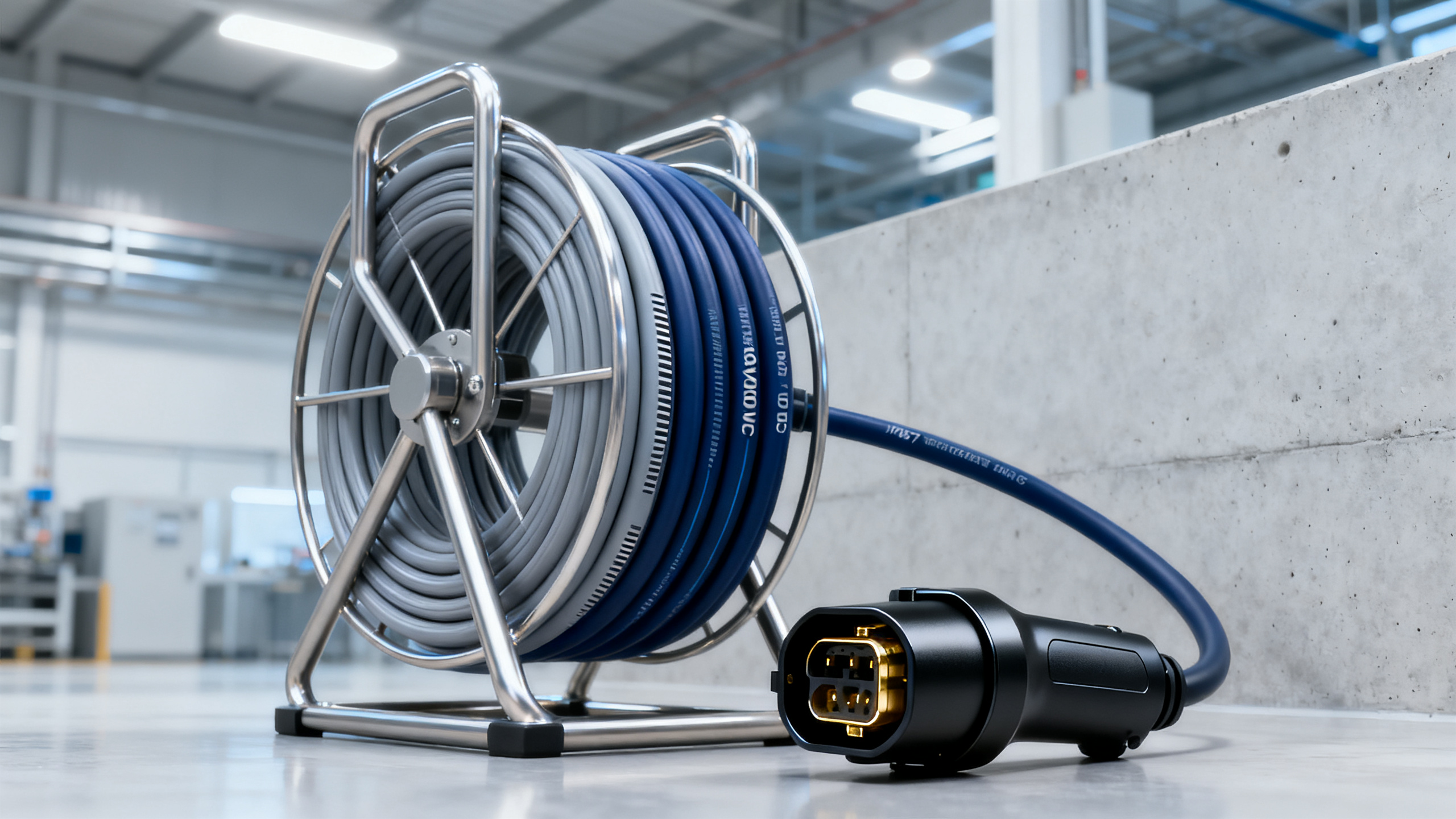
On May 15, 2026, China’s Ministry of Industry and Information Technology confirmed the mass production and deployment of liquid-cooled ultra-fast charging technology capable of delivering 80% battery charge in 15 minutes — now operational at BYD, CATL, and other leading firms. This development directly impacts industrial cable manufacturers, connector suppliers, and export-oriented component exporters, particularly those engaged in high-voltage DC power transmission systems for electric vehicles.
Event Overview
On May 15, 2026, the Ministry of Industry and Information Technology (MIIT) officially confirmed that liquid-cooled ultra-fast charging technology — achieving 80% state-of-charge in 15 minutes — has entered mass production at enterprises including BYD and Contemporary Amperex Technology Co. Limited (CATL). The technology imposes stricter requirements on industrial-grade high-voltage, high-current cables (e.g., rated for 1000 V DC and 500 A) and automotive-grade connectors (with IP67 or higher ingress protection). Chinese cable manufacturers have initiated certification upgrades to UL 2251 and IEC 62196-3 standards; export unit prices are projected to rise by 12–18% starting in Q3 2026.
Industries Affected
Direct Exporters of Industrial Cables and Connectors
These companies supply high-voltage DC cables and sealed, high-cycle-life connectors to EV OEMs and charging infrastructure integrators. They are affected because the new ultra-fast charging architecture demands higher insulation integrity, thermal management performance, and mechanical durability — especially under repeated high-current plugging/unplugging cycles. Impact manifests as increased certification costs, longer lead times for qualified product ramp-up, and tighter margin pressure ahead of price adjustments.
Raw Material Suppliers for Cable Insulation and Connector Housings
Suppliers of specialty polymers (e.g., cross-linked polyolefins, silicone elastomers) and high-thermal-conductivity metal alloys face revised material specifications. The shift toward 1000 V DC-rated insulation and IP67+ sealing requires enhanced dielectric strength, thermal stability, and environmental resistance — prompting technical requalification of existing formulations and potential qualification delays for new grades.
Contract Manufacturers and Tier-2 Component Assemblers
Firms involved in final assembly, testing, and integration of cable harnesses or connector modules must adapt production lines for tighter tolerances, improved thermal validation protocols (e.g., real-time temperature monitoring during current cycling), and enhanced traceability for automotive-grade compliance. This affects process control, equipment calibration, and workforce training requirements — especially where ISO/TS 16949 or IATF 16949 certification is not yet fully implemented.
Distribution and Certification Support Providers
Third-party testing labs, certification consultants, and logistics partners specializing in automotive-grade exports are seeing rising demand for UL 2251 and IEC 62196-3 conformance verification services. Lead times for test scheduling and report issuance are extending, and documentation expectations (e.g., full thermal aging reports, contact resistance drift data over 10,000 mating cycles) are becoming more prescriptive.
What Enterprises and Practitioners Should Monitor and Act On
Track official implementation timelines from MIIT and CNCA
While MIIT confirmed mass production status on May 15, 2026, formal technical guidelines, conformity assessment roadmaps, and enforcement dates for mandatory certification remain pending. Enterprises should monitor updates from the China National Certification and Accreditation Administration (CNCA) and provincial MIIT offices — particularly regarding transitional periods for legacy products and grandfathering clauses.
Validate certification readiness for key export markets
UL 2251 and IEC 62196-3 are baseline requirements — but regional variations apply. For example, EU market access may require additional EN 62196-3:2018 + A1:2022 alignment, while North American projects often mandate UL 2251 Edition 4 with specific flame propagation testing. Exporters should prioritize certification scope mapping per destination, rather than assuming global harmonization.
Distinguish between policy announcement and commercial rollout pace
Mass production confirmation does not imply immediate fleet-wide adoption. BYD and CATL deployments are currently limited to select vehicle platforms and proprietary charging networks. Widespread third-party charger compatibility and cross-OEM interoperability remain subject to ongoing GB/T standard revisions. Companies should avoid overcommitting capacity based solely on the May 15 announcement.
Prepare procurement and inventory buffers for certified materials
Lead times for UL/IEC-certified insulating compounds and connector housings are lengthening. Firms should audit current stock levels of pre-certified raw materials, assess supplier certification timelines, and consider staggered dual-sourcing strategies — especially for thermally conductive fillers and high-purity copper alloys — to mitigate Q3 2026 supply constraints.
Editorial Perspective / Industry Observation
Observably, this milestone signals a structural shift — not just a technical upgrade — in China’s EV supply chain positioning. The move into mass-produced 15-minute charging reflects maturing system-level integration capabilities, where cable and connector performance can no longer be treated as commoditized subcomponents. Analysis shows the 12–18% export price uplift anticipated from Q3 2026 is less about premium pricing and more about cost pass-through from upgraded material specs, extended testing cycles, and tighter compliance overhead. From an industry perspective, this is best understood not as an isolated regulatory event, but as an early indicator of tightening functional safety and thermal resilience expectations across the entire high-power EV charging stack — expectations that will increasingly cascade downstream to secondary suppliers and raw material vendors.
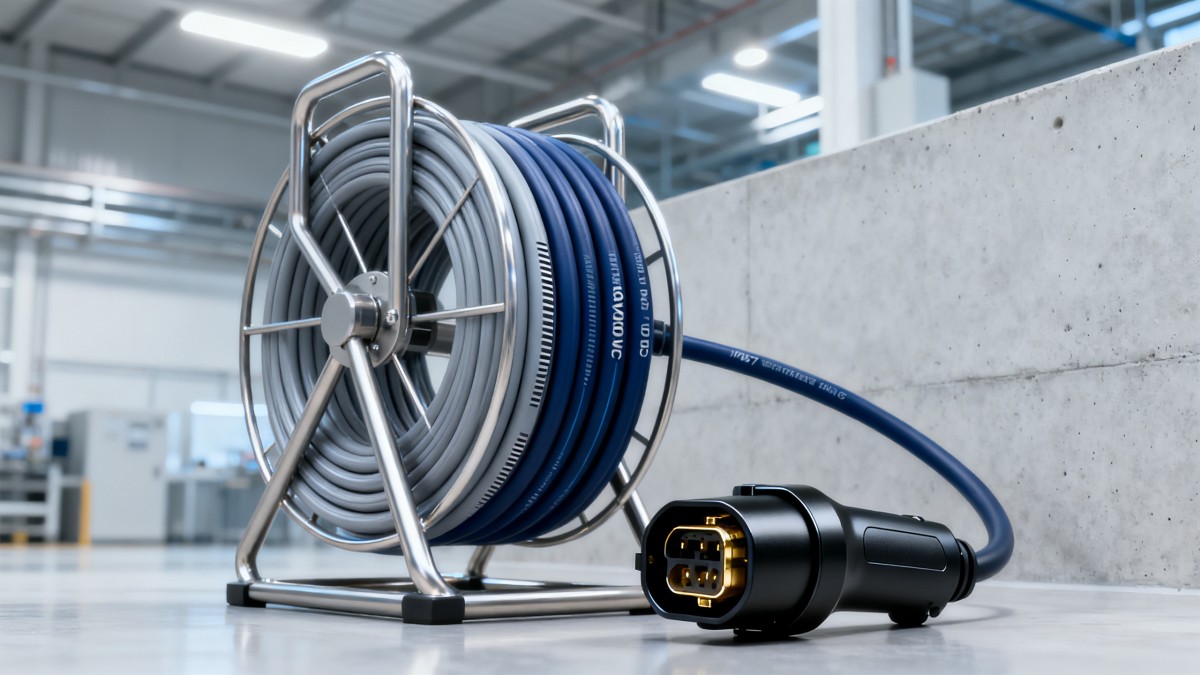
Conclusion: This development marks a step-change in performance benchmarks for EV power delivery components — with tangible implications for export competitiveness, certification strategy, and supply chain agility. It is neither a near-term demand surge nor a distant R&D concept, but a concrete inflection point where specification-driven differentiation begins to replace volume-based competition. Current interpretation should focus on capability alignment — not just compliance — and treat certification timelines as operational constraints, not merely administrative checkboxes.
Source: Ministry of Industry and Information Technology (MIIT), People’s Republic of China — official announcement dated May 15, 2026.
Noted for ongoing observation: Final implementation schedule and enforcement mechanisms for UL 2251/IEC 62196-3 alignment under China’s mandatory certification framework remain pending formal release by CNCA.
Technical Specifications
- How to Select Electronic Hotel Key Card Locks for Guest Rooms and Staff AreasAuthor :Safety Compliance Lead
- How to Select Lab Instruments for Reliable Chemical Analysis WorkflowsAuthor :Precision Metrology Expert
- How to Size a UPS for Server Rooms: Load, Runtime, and Redundancy FactorsAuthor :Grid Infrastructure Analyst
Expert Insights

Chief Security Architect
Dr. Thorne specializes in the intersection of structural engineering and digital resilience. He has advised three G7 governments on industrial infrastructure security.
Related Analysis
- Sep 17, 2026How to Select Electronic Hotel Key Card Locks for Guest Rooms and Staff AreasAuthor :Safety Compliance Lead
- Sep 16, 2026How to Select Lab Instruments for Reliable Chemical Analysis WorkflowsAuthor :Precision Metrology Expert
- Sep 15, 2026How to Size a UPS for Server Rooms: Load, Runtime, and Redundancy FactorsAuthor :Grid Infrastructure Analyst
Core Sector // 01
Security & Safety
- Selecting PTFE Insulated Hookup Wire for High-Temperature Control PanelsAuthor :Grid Infrastructure Analyst

- How Contractors Can Evaluate EPC Sourcing Solutions for Cost, Lead Time, and RiskAuthor :Grid Infrastructure Analyst

- What Drives Silicone Cable Bulk Price in Industrial Orders?Author :Grid Infrastructure Analyst

- EN 61000-6-4:2026 Takes Effect for EU-Bound ControlsAuthor :Grid Infrastructure Analyst

- How to Choose Low Smoke Cables and Wiring for Safer Commercial Buildings?Author :Grid Infrastructure Analyst

- Medium Voltage Armored Cable Selection Guide: Voltage Rating, Armor Type, and InstallationAuthor :Grid Infrastructure Analyst

- EU Publishes EN IEC 61000-6-4:2026 for Industrial EMCAuthor :Grid Infrastructure Analyst

- Choosing an XLPE Power Cable Manufacturer: 7 Checks for Voltage Class and ComplianceAuthor :Grid Infrastructure Analyst