Baltic Yachts Delivers 37m Bluewater Sailboat with UL 94-V0 Cables & IP68 Explosion-Proof Boxes
Author
Date Published
Reading Time
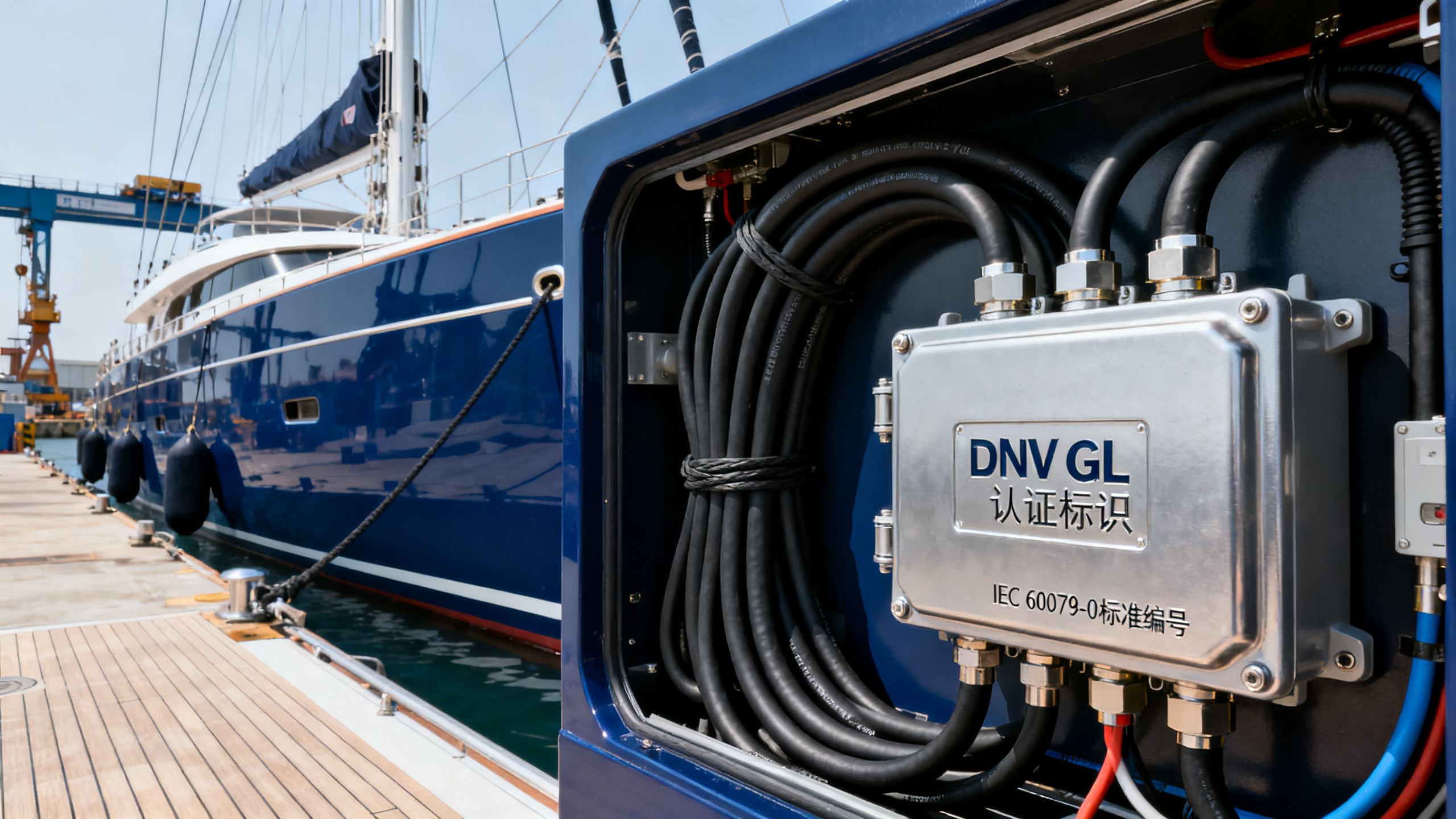
On May 22, 2026, Finnish shipbuilder Baltic Yachts delivered the custom-built Baltic 121 — a 37-meter bluewater cruising sailboat — featuring full-ship electrical systems compliant with UL 94-V0 flame-retardant cable standards and IP68-rated explosion-proof junction boxes (certified to IEC 60079-0), all verified by DNV GL. This delivery signals heightened reliability expectations for marine cabling, wiring, circuit breakers, and relays in extreme offshore environments — a benchmark now gaining traction among Mediterranean yacht refit operators.
Event Overview
On May 22, 2026, Baltic Yachts launched and delivered the Baltic 121, a 37-meter bluewater sailboat. The vessel’s entire electrical infrastructure uses UL 94-V0-rated flame-retardant cables and IP68-certified explosion-proof junction boxes, conforming to IEC 60079-0. Certification was conducted end-to-end by DNV GL. No further technical or commercial details beyond these specifications have been publicly disclosed.
Industries Affected
Marine Electrical Component Manufacturers
Manufacturers of marine-grade cables, junction boxes, and protective devices are directly affected: UL 94-V0 and IEC 60079-0 compliance represent stricter material and design thresholds than standard marine certifications (e.g., ISO 8846, ABYC E-11). Adoption in high-end newbuilds raises baseline expectations for thermal stability, arc resistance, and ingress/explosion protection — potentially compressing margins for non-compliant suppliers.
Yacht Refit & Retrofit Service Providers
Refit yards operating in the Mediterranean — explicitly cited as ‘quickly following’ this standard — face rising technical and certification overhead. Integrating UL 94-V0 cables and IP68 boxes into legacy systems requires updated installation protocols, crew training, and third-party verification workflows, increasing labor time and documentation burden per project.
Marine Certification & Classification Bodies
DNV GL’s involvement confirms growing reliance on classification societies to validate niche electrical safety claims. Other bodies (e.g., Lloyd’s Register, RINA) may see increased demand for equivalent verification services — particularly for retrofits seeking alignment with newbuild benchmarks — though no formal policy updates have been announced.
Specialized Marine Distributors & Channel Partners
Distributors handling certified electrical components must now verify traceability of UL 94-V0 batch certifications and IP68 test reports for each shipment. Stock management becomes more complex, as non-certified inventory risks obsolescence in premium refit tenders where spec sheets explicitly reference these standards.
What Relevant Enterprises or Practitioners Should Monitor and Do Now
Track DNV GL and EU Maritime Safety Agency (EMSA) guidance on voluntary adoption pathways
While UL 94-V0 and IEC 60079-0 are currently applied voluntarily in leisure marine contexts, analysis shows that classification society endorsements — like DNV GL’s here — often precede broader regulatory uptake. Monitoring EMSA’s upcoming guidelines on fire safety in recreational craft (expected Q4 2026) is advisable.
Validate current product portfolio against UL 94-V0 flammability testing and IEC 60079-0 explosion protection requirements
Manufacturers and distributors should audit existing cable and junction box SKUs for applicable test reports. If certifications are absent, initiate third-party testing early: UL 94-V0 testing requires specific material formulations and construction; IEC 60079-0 validation includes mechanical impact, temperature cycling, and explosive gas mixture exposure tests — lead times exceed 12 weeks.
Distinguish between specification-driven demand and enforceable regulation
Observably, this is a specification-led shift — not a regulatory mandate. Clients in the Mediterranean refit market are adopting it selectively, not universally. Companies should avoid over-investing in full re-certification until tender language consistently references these standards across ≥3 major refit yards.
Prepare technical documentation packages for customer-facing verification
Suppliers should compile ready-to-share dossiers including: (1) UL 94-V0 test report excerpts showing vertical burn rating; (2) IEC 60079-0 certificate number and scope; (3) DNV GL type approval letter referencing the Baltic 121 project. These accelerate quoting and approval cycles in competitive refit bids.
Editorial Perspective / Industry Observation
This delivery is best understood as a signal — not yet an outcome — of tightening electrical safety expectations in high-performance leisure marine applications. Analysis shows that while UL 94-V0 and IEC 60079-0 are long-established in offshore oil & gas and military naval sectors, their appearance in a bluewater sailboat reflects a deliberate transfer of industrial-grade reliability criteria into premium leisure markets. From an industry perspective, it underscores how top-tier builders increasingly treat electrical infrastructure not as a commoditized subsystem, but as a critical safety and performance differentiator — one that cascades downstream to component suppliers and service providers. Sustained attention is warranted because such specification shifts typically evolve from boutique adoption to de facto standard within 2–3 years in adjacent segments.
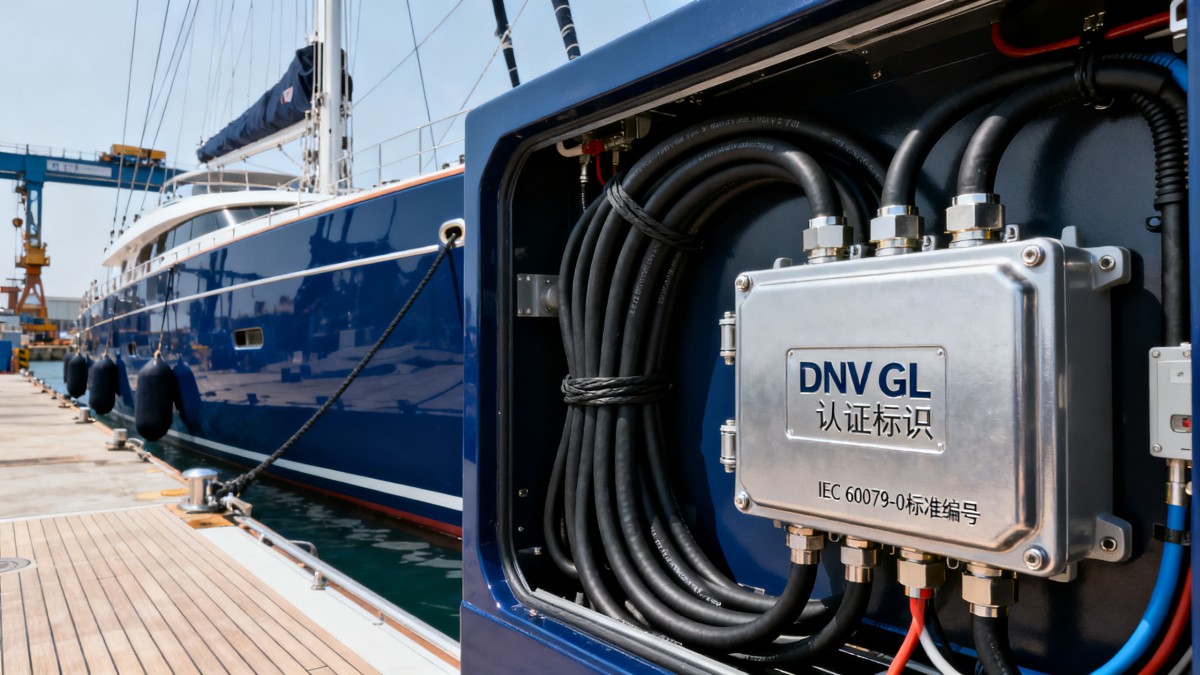
Conclusion: This event does not indicate an immediate regulatory change, nor does it reflect broad-based adoption across the marine sector. It marks the emergence of a new reliability benchmark in a high-visibility segment — one that influences procurement priorities, certification strategies, and technical service capabilities upstream and downstream. Current interpretation should emphasize its role as an early indicator of shifting expectations, rather than evidence of widespread compliance requirements.
Source: Public announcement by Baltic Yachts (date: May 22, 2026); DNV GL certification confirmation (no additional documentation publicly released).
Note: Ongoing observation is recommended regarding Mediterranean refit yard tender specifications and EMSA’s forthcoming recreational craft fire safety guidance.
Technical Specifications
- How to Select Electronic Hotel Key Card Locks for Guest Rooms and Staff AreasAuthor :Safety Compliance Lead
- How to Select Lab Instruments for Reliable Chemical Analysis WorkflowsAuthor :Precision Metrology Expert
- How to Size a UPS for Server Rooms: Load, Runtime, and Redundancy FactorsAuthor :Grid Infrastructure Analyst
Expert Insights

Chief Security Architect
Dr. Thorne specializes in the intersection of structural engineering and digital resilience. He has advised three G7 governments on industrial infrastructure security.
Related Analysis
- Sep 17, 2026How to Select Electronic Hotel Key Card Locks for Guest Rooms and Staff AreasAuthor :Safety Compliance Lead
- Sep 16, 2026How to Select Lab Instruments for Reliable Chemical Analysis WorkflowsAuthor :Precision Metrology Expert
- Sep 15, 2026How to Size a UPS for Server Rooms: Load, Runtime, and Redundancy FactorsAuthor :Grid Infrastructure Analyst
Core Sector // 01
Security & Safety
- Selecting PTFE Insulated Hookup Wire for High-Temperature Control PanelsAuthor :Grid Infrastructure Analyst

- How Contractors Can Evaluate EPC Sourcing Solutions for Cost, Lead Time, and RiskAuthor :Grid Infrastructure Analyst

- What Drives Silicone Cable Bulk Price in Industrial Orders?Author :Grid Infrastructure Analyst

- EN 61000-6-4:2026 Takes Effect for EU-Bound ControlsAuthor :Grid Infrastructure Analyst

- How to Choose Low Smoke Cables and Wiring for Safer Commercial Buildings?Author :Grid Infrastructure Analyst

- Medium Voltage Armored Cable Selection Guide: Voltage Rating, Armor Type, and InstallationAuthor :Grid Infrastructure Analyst

- EU Publishes EN IEC 61000-6-4:2026 for Industrial EMCAuthor :Grid Infrastructure Analyst

- Choosing an XLPE Power Cable Manufacturer: 7 Checks for Voltage Class and ComplianceAuthor :Grid Infrastructure Analyst