Russia-China Trade & Investment Council Launched
Author
Date Published
Reading Time
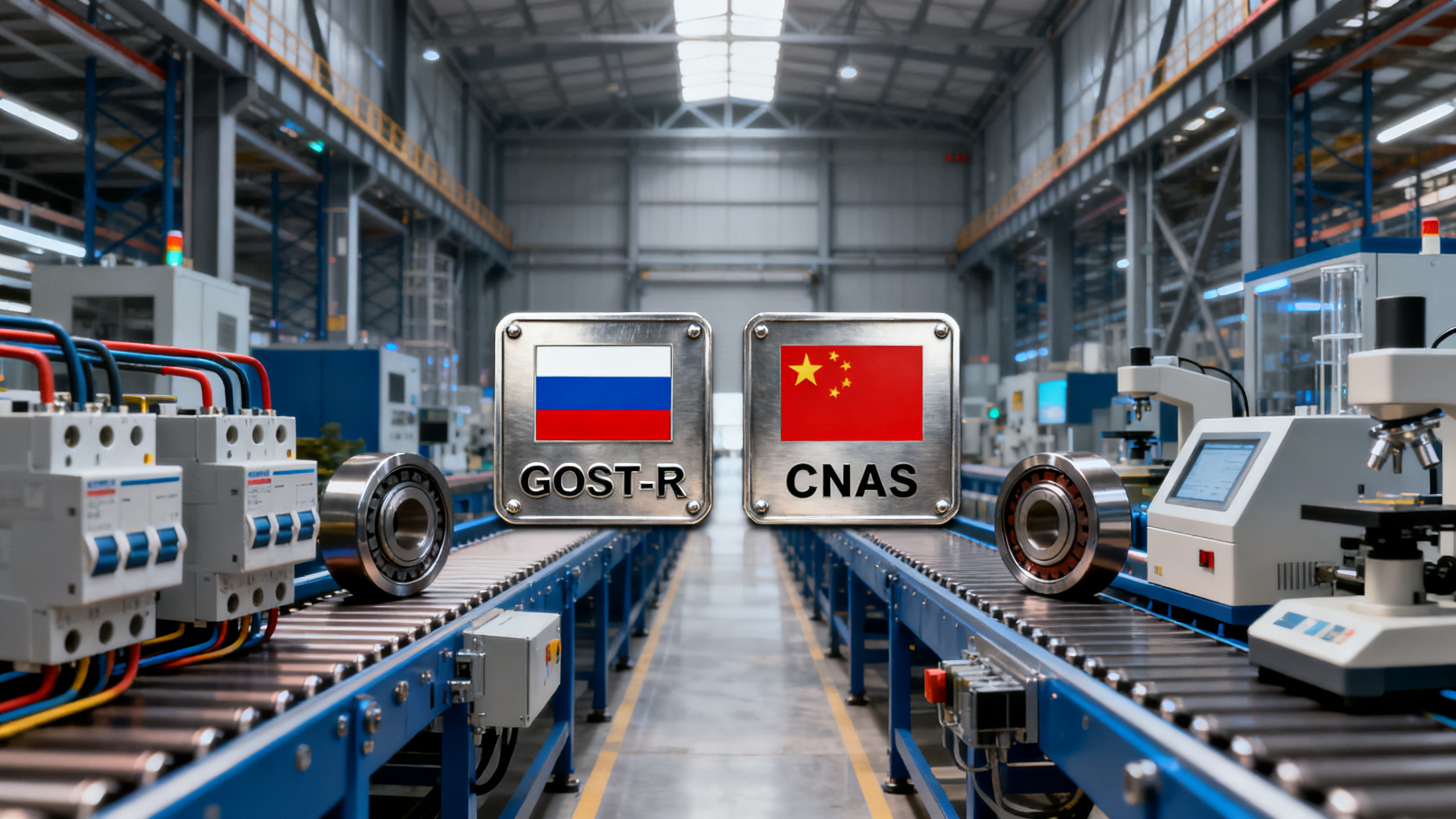
On May 20, 2026, following President Vladimir Putin’s two-day state visit to China (May 19–20), both governments announced the establishment of the Russia-China Trade and Investment Council. The initiative targets structural bottlenecks in bilateral industrial trade—particularly technical barriers rooted in divergent standards, certification regimes, and conformity assessment procedures. Its immediate impact is expected across electrical equipment, precision mechanical components, environmental technology, and analytical instrumentation sectors.
Event Overview
During the May 19–20, 2026 visit, the Russian and Chinese governments agreed to establish the Russia-China Trade and Investment Council. The Council’s initial work program focuses on mutual recognition of technical standards and mutual acceptance of inspection and test reports for transformer oil, industrial bearings, and solid waste sorting equipment. Separately, Russia will streamline GOST-R registration for Chinese-made circuit breakers, air filters, and laboratory analyzers, aiming to reduce average certification duration from 180 days to 60 days by end-2026.
Industries Affected
Direct trading enterprises — Exporters and importers handling cross-border shipments of the prioritized product categories face significantly reduced time-to-market and lower compliance overhead. For example, a Chinese manufacturer exporting circuit breakers to Russia may now plan quarterly shipment cycles instead of semi-annual ones, improving cash flow predictability. However, eligibility hinges on consistent adherence to newly aligned testing protocols—not just faster processing.
Raw material procurement enterprises — Firms sourcing critical inputs (e.g., high-purity insulating oils for transformers or bearing-grade steel) from either market may see tighter specification alignment over time. While not an immediate effect, the Council’s standardization mandate increases pressure on upstream suppliers to document traceability and batch-level conformity—potentially raising audit frequency and documentation requirements.
Manufacturing enterprises — Domestic producers supplying components into the prioritized final goods (e.g., bearing manufacturers supplying OEMs that export to Russia, or filter media producers for Chinese air filtration system integrators) face indirect but tangible ripple effects. Their quality management systems may need revalidation against updated joint test methods, especially where prior certification relied solely on national lab reports without cross-recognition.
Supply chain service enterprises — Certification consultants, testing laboratories, and customs brokers with Russia-China specialization will likely experience increased demand for bilingual technical documentation support and pre-submission conformity gap analysis. Yet this growth is conditional: only labs accredited under both CNAS and Rosaccreditation frameworks—and actively participating in the Council’s pilot verification schemes—will qualify for mutual result acceptance.
Key Focus Areas and Recommended Actions
Verify participation in the Council’s pilot technical alignment program
Companies exporting transformer oil, industrial bearings, or waste sorting equipment should confirm whether their current testing reports originate from laboratories included in the Council’s inaugural list of mutually recognized facilities—publication of which is expected by Q3 2026.
Prepare for accelerated GOST-R registration timelines—but do not assume automatic approval
While Russia commits to reducing certification duration for circuit breakers, air filters, and lab analyzers, applicants must still submit complete technical dossiers—including Russian-language user manuals, safety assessments, and electromagnetic compatibility (EMC) test reports meeting GOST IEC/IEEE standards. Expedited review applies only after dossier completeness is confirmed.
Map internal quality control processes against emerging joint test protocols
Manufacturers should proactively review draft protocols published by the Council’s Technical Working Group (anticipated June 2026). Early alignment helps avoid rework—for instance, if new vibration endurance criteria for industrial bearings differ from existing GB/T or ISO 15242 specifications.
Editorial Perspective / Industry Observation
Observably, this Council is less a standalone policy instrument than a formalized coordination channel within an already accelerating de-dollarization and supply chain diversification trend. Analysis shows its real significance lies not in immediate tariff changes, but in institutionalizing technical dialogue—making future regulatory convergence more iterative and less reactive. From an industry perspective, it signals a shift toward ‘certification by collaboration’ rather than ‘certification by duplication’. Current evidence does not suggest harmonization of entire standard families; instead, the focus remains narrowly scoped to specific high-volume, high-friction product lines. That narrowness makes near-term impact measurable—but also limits systemic spillover beyond the listed categories.
Conclusion
The launch of the Russia-China Trade and Investment Council marks a procedural inflection point—not a sudden market opening. Its value will be determined not by headline timelines, but by the durability of mutual trust in testing infrastructure and the consistency with which alignment translates into actual customs clearance outcomes. For industry participants, sustained engagement with technical working groups matters more than passive monitoring of announcements.
Source Attribution
Official joint statement released by the Ministry of Commerce of the People’s Republic of China and the Ministry of Industry and Trade of the Russian Federation, May 20, 2026. Annexed technical annexes remain unpublished pending inter-agency review. Further details—including the official roster of recognized laboratories and full text of pilot protocols—are pending release and subject to ongoing observation.
Technical Specifications
- How to Select Electronic Hotel Key Card Locks for Guest Rooms and Staff AreasAuthor :Safety Compliance Lead
- How to Select Lab Instruments for Reliable Chemical Analysis WorkflowsAuthor :Precision Metrology Expert
- How to Size a UPS for Server Rooms: Load, Runtime, and Redundancy FactorsAuthor :Grid Infrastructure Analyst
Expert Insights

Chief Security Architect
Dr. Thorne specializes in the intersection of structural engineering and digital resilience. He has advised three G7 governments on industrial infrastructure security.
Related Analysis
- Sep 17, 2026How to Select Electronic Hotel Key Card Locks for Guest Rooms and Staff AreasAuthor :Safety Compliance Lead
- Sep 16, 2026How to Select Lab Instruments for Reliable Chemical Analysis WorkflowsAuthor :Precision Metrology Expert
- Sep 15, 2026How to Size a UPS for Server Rooms: Load, Runtime, and Redundancy FactorsAuthor :Grid Infrastructure Analyst
Core Sector // 01
Security & Safety
- Can SPDs Handle Repeated Voltage Spikes in Tropical Grids?Author :Grid Infrastructure Analyst

- How to Evaluate IEC-Compliant Power Protection Devices for Industrial PanelsAuthor :Grid Infrastructure Analyst

- How to Choose Smart Industrial Control Equipment for Harsh Plant EnvironmentsAuthor :Grid Infrastructure Analyst

- EU EMC Update Triggers Re-Certification for BreakersAuthor :Grid Infrastructure Analyst

- How to Select the Right SPD for Solar Inverter Protection in PV Systems?Author :Grid Infrastructure Analyst

- Industrial Valve Systems Factory Checklist: What Buyers Should Verify Before OrderingAuthor :Grid Infrastructure Analyst

- Breaker and Relay Lead Times Hit 24 WeeksAuthor :Grid Infrastructure Analyst

- IEC 61850-10-3 Sets Cybersecurity Bar for Grid DevicesAuthor :Grid Infrastructure Analyst