Customs Adjusts Export Declaration: New 'Restriction ID' Required
Author
Date Published
Reading Time
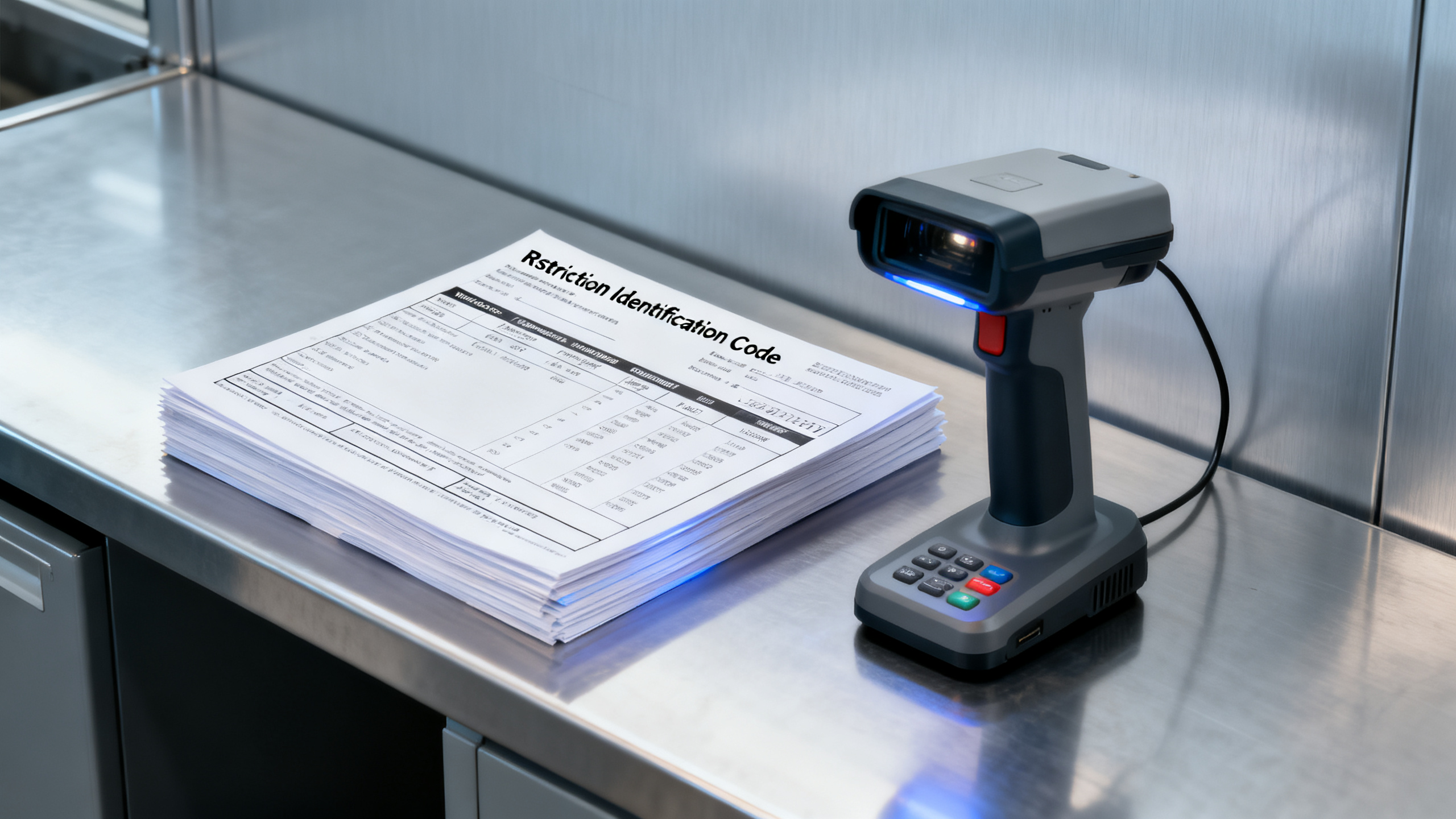
On May 8, 2026, the General Administration of Customs of China announced a mandatory update to export customs declarations—requiring the inclusion of a newly introduced ‘Restriction Identification Code’ (RIC) and its associated declaration elements. This change directly affects exporters of industrial goods subject to dual-use controls, environmental restrictions, or mandatory safety certifications, prompting immediate operational adjustments across multiple supply chain tiers.
Event Overview
The General Administration of Customs issued an official notice effective May 8, 2026, mandating that all export customs declarations for goods falling under regulated categories must include a ‘Restriction Identification Code’ and corresponding declarable attributes. Applicable categories include dual-use items, environmentally restricted substances, and products requiring compulsory safety certification. The measure applies uniformly to all export consignments processed through Chinese customs ports.
Industries and Functions Most Affected
Direct trading enterprises: These entities bear primary responsibility for accurate RIC submission at declaration. Inaccurate or omitted entries trigger automated risk flags, leading to higher on-site inspection rates and extended clearance timelines—especially for time-sensitive shipments such as spare parts or contract-managed deliveries.
Raw material procurement enterprises: While not directly filing declarations, these firms often supply components integrated into final export products (e.g., specialized alloys for certified lab instruments). Their upstream documentation—such as material compliance certificates or origin statements—now serves as critical input for RIC assignment. Gaps in traceability or inconsistent nomenclature may delay downstream declaration readiness.
Manufacturing enterprises: Factories producing regulated equipment—including circuit breakers, relays, industrial dust collectors, and analytical laboratory instruments—must now align internal product classification with national restriction catalogs. Internal ERP or PLM systems require updates to capture and validate RIC-relevant attributes (e.g., ECCN-like codes, environmental substance thresholds), adding complexity to pre-shipment data preparation.
Supply chain service providers: Customs brokers, freight forwarders, and third-party compliance consultants face increased verification workload. They must cross-check client-submitted RICs against official regulatory lists, verify supporting documents (e.g., import licenses, technical specifications), and maintain audit-ready records. Service-level agreements may need revision to reflect added validation steps and liability boundaries.
Key Focus Areas and Recommended Actions
Verify product eligibility against updated restriction catalogs
Enterprises should consult the latest version of the Regulated Export Items Catalogue and related annexes published by the Ministry of Commerce and the General Administration of Customs. Cross-reference product technical parameters—not just HS codes—to determine applicable RIC categories.
Update internal data governance protocols
Assign ownership for RIC-related data fields across departments (R&D, procurement, quality, logistics). Integrate RIC validation checkpoints into existing export workflow systems, including pre-declaration data entry interfaces and document generation modules.
Engage early with customs brokers and certification bodies
Where RIC assignment relies on external attestations (e.g., safety certification reports, dual-use licensing letters), initiate coordination at least 10 working days prior to shipment. Confirm broker familiarity with RIC logic and request documented confirmation of code assignment before e-declaration submission.
Editorial Perspective / Industry Observation
Analysis shows this is less a standalone procedural tweak and more a structural step toward digitalized, attribute-driven export control enforcement. The RIC system appears designed to feed into broader inter-agency data sharing frameworks—potentially linking customs declarations with MOFCOM licensing platforms and MIIT technology control databases. Observably, the emphasis on granular, product-level attributes (rather than broad category labels) signals a shift from volume-based oversight to risk-based, item-specific scrutiny. From an industry perspective, this raises the bar for technical documentation discipline—but also creates opportunities for firms investing in standardized, machine-readable compliance metadata.
Conclusion
This requirement marks a measurable escalation in the granularity and enforceability of China’s export compliance infrastructure. Rather than signaling heightened trade barriers per se, it reflects an institutional move toward precision regulation—one that rewards proactive classification rigor and penalizes documentation opacity. For global industrial exporters, consistent RIC application will increasingly serve as a proxy for overall regulatory maturity.
Source Attribution
Official Announcement No. 2026-17, General Administration of Customs of China (issued May 8, 2026); supplementary guidance referenced from the Export Control Law Implementation Rules (2025 revision) and the Environmental Restrictions on Industrial Goods List (MOE Notice No. 2026-04). Continued monitoring is advised for forthcoming technical implementation bulletins and RIC lookup tool releases—both expected by Q3 2026.
Technical Specifications
- How to Select Electronic Hotel Key Card Locks for Guest Rooms and Staff AreasAuthor :Safety Compliance Lead
- How to Select Lab Instruments for Reliable Chemical Analysis WorkflowsAuthor :Precision Metrology Expert
- How to Size a UPS for Server Rooms: Load, Runtime, and Redundancy FactorsAuthor :Grid Infrastructure Analyst
Expert Insights

Chief Security Architect
Dr. Thorne specializes in the intersection of structural engineering and digital resilience. He has advised three G7 governments on industrial infrastructure security.
Related Analysis
- Sep 17, 2026How to Select Electronic Hotel Key Card Locks for Guest Rooms and Staff AreasAuthor :Safety Compliance Lead
- Sep 16, 2026How to Select Lab Instruments for Reliable Chemical Analysis WorkflowsAuthor :Precision Metrology Expert
- Sep 15, 2026How to Size a UPS for Server Rooms: Load, Runtime, and Redundancy FactorsAuthor :Grid Infrastructure Analyst
Core Sector // 01
Security & Safety
- Can SPDs Handle Repeated Voltage Spikes in Tropical Grids?Author :Grid Infrastructure Analyst

- How to Evaluate IEC-Compliant Power Protection Devices for Industrial PanelsAuthor :Grid Infrastructure Analyst

- How to Choose Smart Industrial Control Equipment for Harsh Plant EnvironmentsAuthor :Grid Infrastructure Analyst

- EU EMC Update Triggers Re-Certification for BreakersAuthor :Grid Infrastructure Analyst

- How to Select the Right SPD for Solar Inverter Protection in PV Systems?Author :Grid Infrastructure Analyst

- Industrial Valve Systems Factory Checklist: What Buyers Should Verify Before OrderingAuthor :Grid Infrastructure Analyst

- Breaker and Relay Lead Times Hit 24 WeeksAuthor :Grid Infrastructure Analyst

- IEC 61850-10-3 Sets Cybersecurity Bar for Grid DevicesAuthor :Grid Infrastructure Analyst